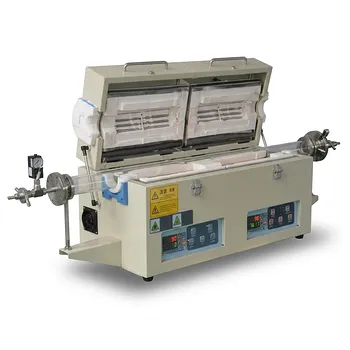
How does a slanted tube furnace contribute to the crystal growth of Sr4Os3O12? Optimize Thermal Fields and Purity
Updated 3 months ago
A slanted tube furnace facilitates the growth of $Sr_4Os_3O_{12}$ crystals by using a specific inclination angle to create a controlled thermal field and gas circulation. During a 48-hour thermal treatment at 800°C, this setup optimizes the convection and condensation of gaseous $OsO_4$ within a sealed quartz tube, ensuring that crystals grow in an ordered manner at specific nucleation sites.
Core Takeaway: The primary function of the furnace's slant is to induce a subtle temperature gradient that drives the chemical vapor transport of osmium precursors. By managing how gaseous $OsO_4$ moves and settles, the system transforms a standard heating process into a precision growth environment for high-quality $Sr_4Os_3O_{12}$ crystals.
The Role of Inclination in Gas Dynamics
Inducing a Subtle Temperature Gradient
Unlike traditional horizontal furnaces, a slanted orientation uses gravity and heat rising to create a localized thermal differential. Even when the furnace is set to a constant temperature, the tilt ensures that the gas inside the sealed tube does not remain static.
Optimizing Convection Currents
The inclination angle is critical for establishing specific convection patterns within the quartz tube. These currents act as a delivery system, moving the reactive gaseous species from the bulk material to the growth interface.
Regulating Gas Circulation
Controlled circulation prevents the chaotic movement of precursors, which can lead to irregular crystal shapes. By stabilizing the path of the gaseous $OsO_4$, the slanted furnace ensures a steady supply of material to the growing crystal face.
Chemical Transport and Nucleation Mechanics
The Criticality of Gaseous $OsO_4$
In the synthesis of $Sr_4Os_3O_{12}$, osmium often travels in the form of volatile $OsO_4$. The furnace must manage this gas carefully to ensure it reacts with strontium at the correct rate and location.
Managing Controlled Condensation
As the $OsO_4$ gas moves through the subtle temperature gradient created by the slant, it reaches a point of supersaturation and condensation. This phase change is what allows the solid crystal to precipitate out of the vapor phase.
Precision at Nucleation Sites
By aligning the thermal field with the tube's geometry, the furnace encourages growth at specific nucleation sites. This results in an ordered crystal lattice rather than a collection of random, polycrystalline fragments.
Understanding the Trade-offs
Sensitivity to the Angle of Inclination
The success of this method depends heavily on the precision of the slant. If the angle is too steep, the convection may become too aggressive, while an insufficient angle may fail to create the necessary transport gradient.
Limitations of Constant Temperature Processing
While the 48-hour 800°C process is effective for $Sr_4Os_3O_{12}$, it lacks the independent control found in dual-zone furnaces. In more complex syntheses, a single-zone slanted furnace might not provide a gradient sharp enough to drive high-volume material transport.
Sealing and Pressure Constraints
Because this process relies on gaseous precursors like $OsO_4$, the integrity of the quartz tube seal is paramount. Any leak not only ruins the crystal growth by altering the internal pressure but also poses significant safety risks given the volatility of osmium oxides.
How to Apply This to Your Project
When utilizing a slanted tube furnace for crystal growth, consider your primary objective to determine the best configuration.
- If your primary focus is high crystal purity: Ensure the inclination angle is calibrated to provide the slowest possible convection rate to avoid incorporating impurities.
- If your primary focus is large crystal size: Extend the duration of the 800°C thermal treatment beyond 48 hours to allow more time for gaseous condensation at the nucleation sites.
- If your primary focus is repeatable morphology: Strictly standardize the positioning of the quartz tube within the furnace to maintain a consistent thermal field across different batches.
By mastering the subtle interplay between gravity and temperature gradients, you can transform a standard thermal treatment into a sophisticated tool for advanced materials synthesis.
Summary Table:
| Feature | Function in Sr4Os3O12 Growth |
|---|---|
| Inclination Angle | Induces subtle thermal gradients and regulates gas circulation |
| Convection Dynamics | Acts as a delivery system for reactive gaseous species ($OsO_4$) |
| Thermal Gradient | Drives chemical vapor transport and managed condensation |
| Nucleation Control | Ensures ordered lattice growth at specific sites over 48 hours |
Elevate Your Materials Research with THERMUNITS
Are you looking to master complex crystal growth or advanced thermal processing? THERMUNITS is a leading manufacturer of high-performance laboratory equipment designed for the rigors of material science and industrial R&D.
We provide a comprehensive range of thermal solutions, including:
- Tube & Rotary Furnaces (Ideal for chemical vapor transport and slanted setups)
- Muffle, Vacuum, & Atmosphere Furnaces
- Hot Press Furnaces & CVD/PECVD Systems
- Dental Furnaces, Electric Rotary Kilns, & Vacuum Induction Melting (VIM)
- High-Quality Thermal Elements and specialized heat treatment tools.
Our equipment offers the precision temperature control and stability required for high-purity synthesis like $Sr_4Os_3O_{12}$.
Ready to optimize your lab's performance?
Contact our technical experts today to find the perfect thermal processing solution for your unique requirements!
References
- Gohil S. Thakur, Michael Ruck. Sr<sub>4</sub>Os<sub>3</sub>O<sub>12</sub> – A Layered Osmate(V,VI) that is Magnetic Close to Room Temperature. DOI: 10.1002/zaac.202400109
Mentioned Products
- 1200°C High Temperature 4 Inch Tube Furnace with Sliding Flange for CVD Systems
- Automated Sliding Tube Furnace for Fast Heating and Cooling 2 Inch OD 1100C Max
- 1200C High Temperature 5 Inch Sliding Tube Furnace for Rapid Thermal Processing RTP and Wafer Annealing
- 1200C Max Sliding Tube Furnace with 80mm OD Quartz Tube and Vacuum Flanges for Rapid Thermal Processing Fast Heating and Cooling
- 1200C Dual Temperature Zone Slidable Tube Furnace for 2D Material Growth and TCVD Synthesis
People Also Ask
- Why is a Tube Furnace typically utilized for CVD? Achieve Precision in Graphene and 2D Material Synthesis
- What core function does the high-temperature tube furnace perform in MWCNT synthesis? Essential for CVD Precision
- Why use a tube furnace for oxygen annealing LaCrO3/LaMnO3? Optimize Phase Transition & Magnetic Performance.
- How is a laboratory high-temperature tube furnace utilized to research the products of aluminothermic reduction? Advanced Metallurgical Solutions
- What key role does a laboratory high-temperature tube furnace play in the production of carbon nanofibers? Guide

Tech Team · ThermUnits
Last updated on Jun 02, 2026
Related Products
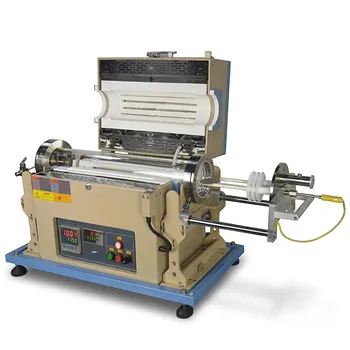
1200°C High Temperature 4 Inch Tube Furnace with Sliding Flange for CVD Systems
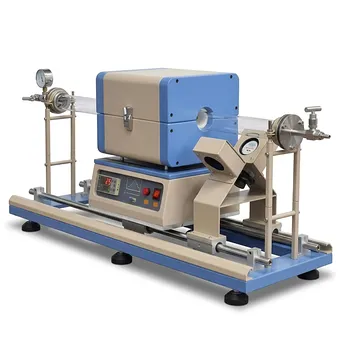
Automated Sliding Tube Furnace for Fast Heating and Cooling 2 Inch OD 1100C Max
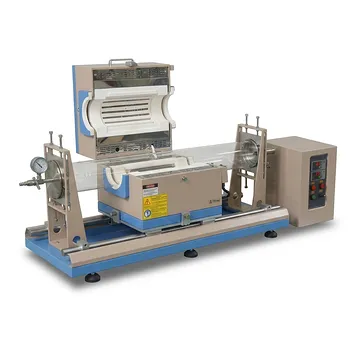
1200C High Temperature 5 Inch Sliding Tube Furnace for Rapid Thermal Processing RTP and Wafer Annealing
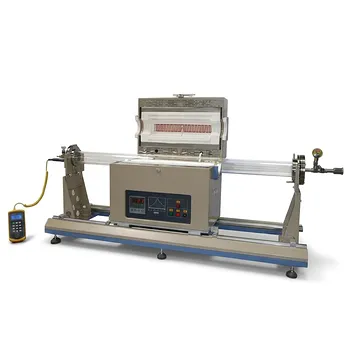
1200C Max Sliding Tube Furnace with 80mm OD Quartz Tube and Vacuum Flanges for Rapid Thermal Processing Fast Heating and Cooling
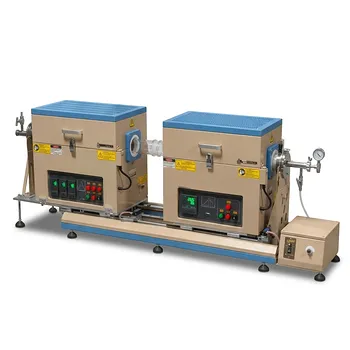
1200C Dual Temperature Zone Slidable Tube Furnace for 2D Material Growth and TCVD Synthesis
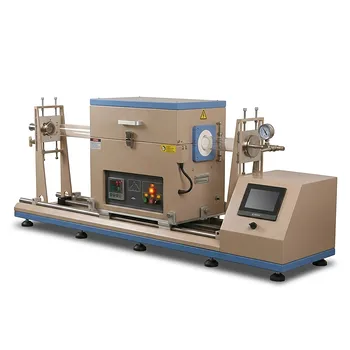
1200C Sliding Tube Furnace for Rapid Thermal Processing and CVD Graphene Growth with 100mm OD Capacity
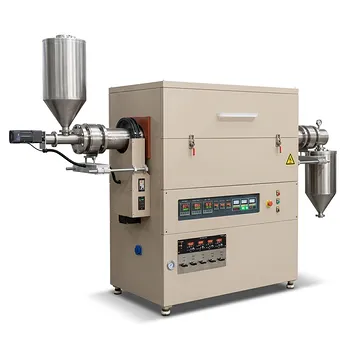
High Temperature Tilting Rotary Tube Furnace with Integrated Mass Flow Control and Multi Zone Heating
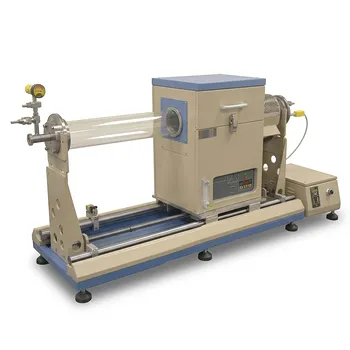
Rapid Thermal Processing Sliding Tube Furnace with 4 Inch OD Quartz Tube and 900C IR Heating
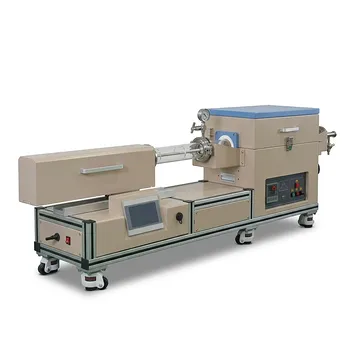
1200C Sliding Internal Crucible Tube Furnace for Controlled Atmosphere Thin Film Deposition and Material Sublimation Research
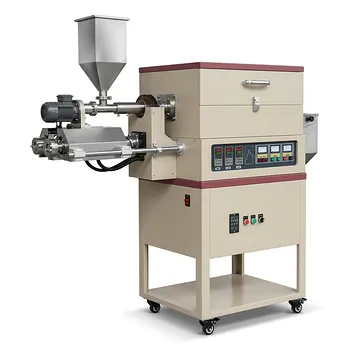
Laboratory Tilting Rotary Tubular Furnaces for Material Science and Industrial Heat Treatment
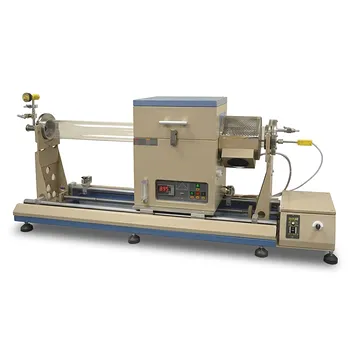
900 ºC Max Sliding RTP Tube Furnace with Rapid IR Heating and 4 Inch OD Quartz Tube
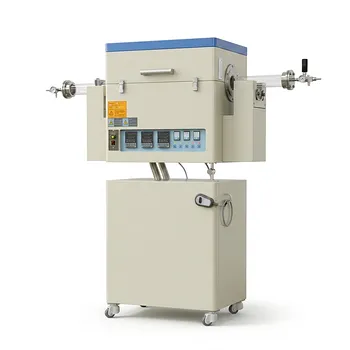
Three Temperature Zone Rotating Tube Furnace for Material Sintering and Controlled Atmospheric Heat Treatment
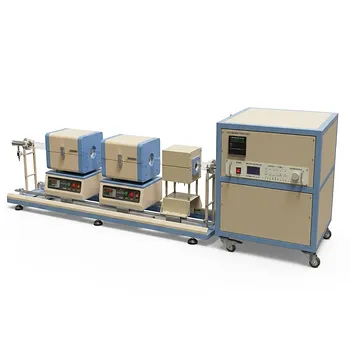
1200C Dual Sliding Tube Furnace with Dual Tubes and Flanges for PECVD Processes
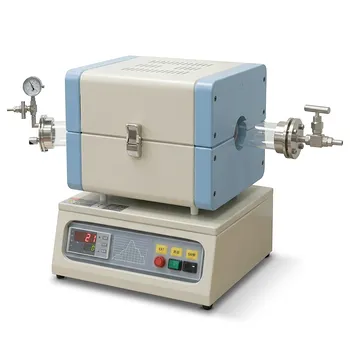
1200C Tube Furnace with Internal Magnetic Sample Sliding for Direct Vaporizing Deposition and Rapid Thermal Processing
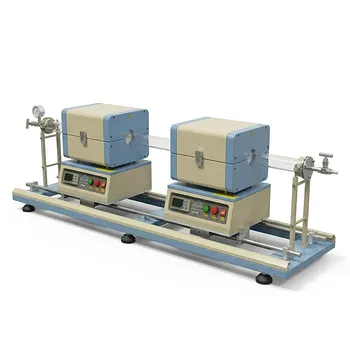
1200C Max Dual Sliding Tube Furnace with 50 mm Tube Flanges for CVD
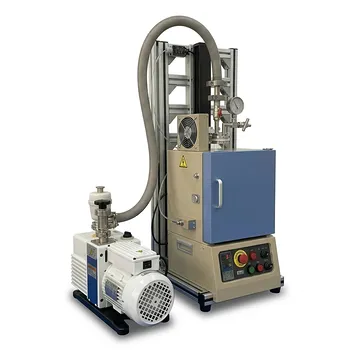
1200C High Temperature Vertical Sliding Furnace with Rapid Thermal Processing and Vacuum Tube Hybrid Capabilities
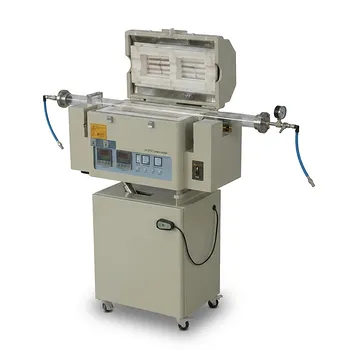
Double Temperature Revolving Tube Furnace with Precision Rotation and Adjustable Inclination for Advanced Material Research
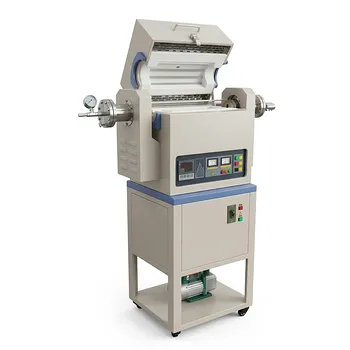
High Temperature Rotary Tilt Tubular Furnaces for Advanced Powder Sintering and Material Processing
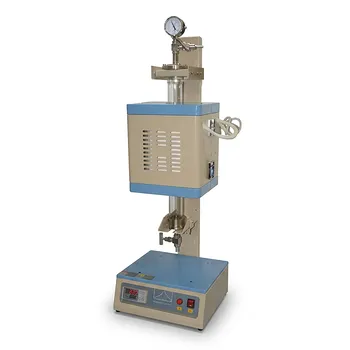
Compact Vertical Split Quartz Tube Furnace with Stainless Steel Vacuum Flanges for Rapid Thermal Quenching and Controlled Atmosphere Material Processing