What are the technical requirements for a rectangular ceramic crucible boat? Expert Guide for Coal Combustion Analysis
Updated 3 months ago
A rectangular ceramic crucible boat for coal combustion must be engineered for extreme thermal endurance and total chemical inertness. At temperatures reaching 1200 °C, these vessels must support approximately 15g of coal without interacting with the fuel or the resulting ash, regardless of whether the atmosphere is oxidizing or reducing.
Core Takeaway: To ensure accurate coal burnout analysis and quantitative mineralogical testing, ceramic crucible boats must serve as an entirely neutral platform that resists both extreme thermal stress and chemical attack from corrosive coal ash components.
Essential Thermal and Structural Performance
Crucible boats are subjected to harsh cycling that can compromise the integrity of the sample if the material is not properly specified.
High-Temperature Refractoriness
The boat must maintain complete structural integrity at temperatures up to 1200 °C. It is critical that the material does not soften, deform, or crack during extended heating periods in a tube furnace.
Resistance to Atmospheric Flux
Coal combustion experiments often oscillate between oxidizing and reducing atmospheres. The ceramic material must remain stable in both environments to ensure the vessel does not contribute to or detract from the chemical reactions occurring in the coal sample.
Thermal Stability and Longevity
Beyond surviving a single peak temperature, the boat must withstand extended soak times exceeding 800°C. High thermal stability prevents micro-cracking, which could otherwise trap residual ash and skew the results of subsequent tests.
Chemical Inertness and Sample Integrity
The primary goal of using a ceramic boat is to collect residual ash that precisely reflects the coal's burnout degree and mineral composition.
Prevention of Ash-Substrate Reactions
The ceramic must not react with the coal or the resulting ash. This is particularly vital for quantitative ash analysis and mineralogical testing, such as X-ray diffraction (XRD), where even minor contamination can invalidate the data.
Resistance to Corrosive Oxides and Alkalis
Coal ash often contains aggressive substances like alkali metals (potassium) and acidic oxides (silica). The crucible boat must be chemically resilient enough to prevent these elements from leaching into the ceramic or bonding with the vessel wall.
Maintenance of High-Purity Collected Samples
By remaining entirely inert, the boat ensures that the collected ash is a pure representation of the fuel's mineral matter. This allows researchers to calculate the burnout degree with high precision.
Geometric and Fluid Dynamic Requirements
The physical design of the rectangular boat significantly influences the environment surrounding the coal sample.
Optimized Opening Area
The surface area of the boat's opening directly influences gas flow diffusion patterns. In a tube furnace, the geometry determines how efficiently oxygen reaches the coal and how quickly combustion gases are removed.
Spatial Positioning and Partial Pressure
The placement of the boat within the quartz tube affects the local partial pressure of vapors. Precise rectangular dimensions allow for consistent positioning, which is critical for maintaining uniform growth rates or combustion kinetics across different samples.
Understanding the Trade-offs and Pitfalls
Selecting the wrong ceramic grade or ignoring physical wear can lead to significant experimental errors.
The Risk of Porous Ceramics
Using a ceramic with high porosity can lead to sample absorption. Small amounts of molten ash can infiltrate the pores, making it impossible to recover the full mass of the ash for accurate quantitative analysis.
Thermal Shock and Fatigue
While a boat may be rated for 1200 °C, rapid cooling can cause thermal shock. Repeated cycling eventually leads to material fatigue, which may cause the boat to fail mid-experiment, potentially damaging the furnace heating elements or the quartz tube.
Geometry-Induced Diffusion Limits
A boat that is too deep may create a "dead zone" where gas diffusion is restricted. This can result in incomplete combustion of the lower coal layers, leading to an inaccurate representation of the coal's true burnout characteristics.
Applying These Requirements to Your Project
Choosing the right crucible depends on the specific analytical goals of your combustion study.
- If your primary focus is Precise Quantitative Ashing: Prioritize boats with ultra-low porosity and high resistance to alkali metals to ensure 100% sample recovery.
- If your primary focus is High-Temperature Burnout Kinetics: Select high-alumina or specialized refractories rated for continuous use at 1200 °C in varying atmospheres.
- If your primary focus is Mineralogical XRD Testing: Use high-purity ceramic boats (99% Alumina) to prevent any trace element contamination from the vessel itself.
By strictly adhering to these technical requirements, you ensure that your experimental data is a true reflection of coal behavior rather than an artifact of vessel failure.
Summary Table:
| Requirement | Technical Specification | Importance in Coal Combustion |
|---|---|---|
| Max Temperature | Up to 1200°C | Prevents deformation & cracking during high-temp burnout. |
| Chemical Inertness | Neutral to alkalis & acidic oxides | Ensures accurate quantitative ash analysis & XRD testing. |
| Atmosphere Stability | Oxidizing and Reducing | Maintains integrity across varying experimental environments. |
| Porosity | Ultra-low / Non-porous | Prevents ash absorption for 100% sample recovery. |
| Design/Geometry | Rectangular with optimized area | Regulates gas diffusion and ensures uniform combustion kinetics. |
Precision Thermal Processing Solutions for Your Research
At THERMUNITS, we understand that even the smallest component—like a ceramic crucible boat—can dictate the success of your material science research. As a leading manufacturer of high-temperature laboratory equipment, we provide the reliable tools needed for precise industrial R&D and coal combustion studies.
Our comprehensive range of thermal solutions includes:
- Advanced Furnaces: Muffle, Vacuum, Atmosphere, Tube, Rotary, and Hot Press Furnaces.
- Specialized Systems: CVD/PECVD systems, Dental Furnaces, and Vacuum Induction Melting (VIM) units.
- Support & Components: Electric rotary kilns, high-purity thermal elements, and specialized heat treatment lab equipment.
Enhance your laboratory’s efficiency and data accuracy today. Whether you need custom ceramic labware or a complete furnace system, our experts are ready to assist you.
References
- Machodi Mathaba. Effect of combustion temperature on the unburnt carbon during ammonia co-firing with coal combustion. DOI: 10.1038/s41598-024-73553-y
Mentioned Products
- Automatic 10 Crucible Induction Melting and Casting System with Stirring Function and Glovebox Integration 2000C
- 1200C Sliding Internal Crucible Tube Furnace for Controlled Atmosphere Thin Film Deposition and Material Sublimation Research
- 1100C Crucible Melting Furnace with Stirring Function for Glovebox and Air Sensitive Alloy Research
- Compact Crucible Melting Furnace 1100C Programmable Temperature Controller Metal Sintering Equipment
- Vertical Crucible Furnace 1000C High Temperature Laboratory Equipment 4.7 Inch Diameter Chamber SS316 Anti Corrosive Enclosure
People Also Ask
- Why must high-purity argon gas be used as a protective atmosphere during high-temperature reduction smelting experiments?
- How should the choice between a Quartz crucible and an Alumina crucible be made for La2O2S? Optimize Material Purity
- How does Vacuum Induction Melting mitigate hydrogen embrittlement? Ensure Structural Integrity for Critical Alloys
- What role does Vacuum Induction Melting play in medical implants? Ensure High-Purity Alloys for Superior Performance
- Why is Vacuum Induction Melting preferred for manufacturing corrosion-resistant alloys? Ensure Ultra-High Purity

Tech Team · ThermUnits
Last updated on Jun 03, 2026
Related Products
Automatic 10 Crucible Induction Melting and Casting System with Stirring Function and Glovebox Integration 2000C
1200C Sliding Internal Crucible Tube Furnace for Controlled Atmosphere Thin Film Deposition and Material Sublimation Research
1100C Crucible Melting Furnace with Stirring Function for Glovebox and Air Sensitive Alloy Research
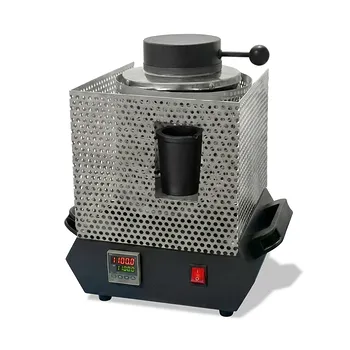
Compact Crucible Melting Furnace 1100C Programmable Temperature Controller Metal Sintering Equipment
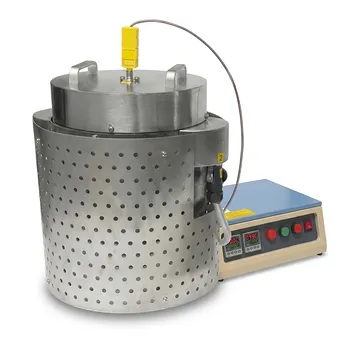
Vertical Crucible Furnace 1000C High Temperature Laboratory Equipment 4.7 Inch Diameter Chamber SS316 Anti Corrosive Enclosure
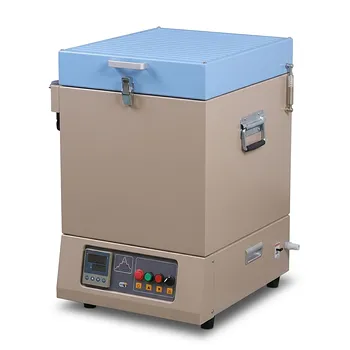
High Temperature Vertical Crucible Furnace with 22L Heating Chamber and 1200C Maximum Temperature
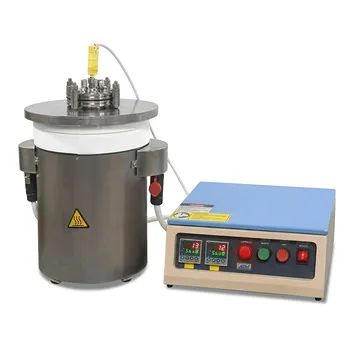
600°C Vertical Crucible Furnace with SS316 Alloy Reactor and 6 Port Vacuum Flange