What are the typical operating temperature ranges for porcelain firing and zirconia sintering? Optimize Restorations
Updated 5 months ago
Precision in dental restorative work relies heavily on meeting the exacting thermal requirements of different ceramic materials. For standard porcelain and glass-ceramic firing, dental furnaces typically operate between 800°C and 1200°C, while the more intensive process of zirconia sintering requires significantly higher temperatures ranging from 1400°C to 1700°C.
To achieve optimal restorative results, you must match the furnace capabilities to the material's specific thermal needs: lower temperatures for aesthetic layering and glazing, and extreme heat for the structural densification of oxide ceramics.
The Science of Porcelain Firing (800°C to 1200°C)
Purpose and Material Transformation
Porcelain firing is primarily used for layering, glazing, and bonding ceramic materials to frameworks. At these temperatures, the material undergoes a controlled melt or fusion to create a smooth, translucent finish without losing its intended shape.
The Role of Vacuum Environments
Many porcelain furnaces utilize a vacuum pump during the firing cycle. This removes trapped air from the ceramic body, increasing the translucency and density of the final restoration by preventing internal porosity.
Thermal Precision and Cooling
Accurate temperature control in the 800°C to 1200°C range is critical for maintaining the coefficient of thermal expansion (CTE) compatibility. If the temperature fluctuates or the cooling is too rapid, the porcelain can "craze" or crack away from the underlying metal or zirconia substructure.
The Mechanics of Zirconia Sintering (1400°C to 1700°C)
Achieving Full Densification
Zirconia sintering is a high-energy process that transforms a porous "green" state material into a highly dense, polycrystalline structure. The extreme heat of 1400°C to 1700°C provides the energy required for solid-state diffusion, where individual particles fuse at an atomic level.
The Four Stages of the Sintering Cycle
The process begins with preheating/drying to remove residual moisture, followed by a controlled ramp to the peak sintering temperature. A dwell or soak period then maintains that peak to ensure uniform densification, concluding with a controlled cooling phase to prevent microcracking.
Equipment Requirements
Unlike porcelain furnaces, zirconia sintering units are built with specialized heating elements (such as MoSi2 or SiC) capable of withstanding prolonged exposure to extreme heat. These units typically do not require a vacuum but focus instead on thermal stability and peak temperature reach.
Understanding the Trade-offs
Temperature Precision vs. Speed
While "fast-sintering" programs are popular, they often operate at the higher end of the temperature scale to trade time for energy. This can sometimes result in a slight loss of translucency or hydrothermal stability if the dwell time is insufficient for complete grain growth.
Material Specificity and Shrinkage
Zirconia undergoes approximately 20-25% shrinkage during the sintering process. Using the incorrect temperature range (even by 50°C) can lead to dimensional inaccuracies, meaning the crown or bridge will not fit the prepared tooth or abutment correctly.
Impact of Contamination
At the 1400°C+ range, heating elements can oxidize or shed particles. Regular decontamination cycles and using high-purity saggars (sintering trays) are essential to prevent the zirconia from discoloring or losing its aesthetic properties.
Selecting the Optimal Cycle for Your Workflow
How to Apply This to Your Project
To ensure the longevity and aesthetics of your dental restorations, tailor your furnace settings to the specific material grade and manufacturer recommendations.
- If your primary focus is aesthetic glazing or layering: Use a porcelain furnace capable of maintaining high-vacuum levels within the 800°C to 1200°C range.
- If your primary focus is structural zirconia frameworks: Invest in a dedicated high-temperature furnace reaching at least 1600°C with programmable multi-stage ramping to ensure full material densification.
- If your primary focus is glass-ceramic (e.g., Lithium Disilicate) crystallization: Target the mid-range of porcelain furnace capabilities, ensuring a precise dwell time to trigger the transition from the blue state to the final shade.
Understanding the distinct thermal boundaries of these materials is the most critical step toward producing durable and lifelike dental restorations.
Summary Table:
| Process | Temperature Range | Primary Purpose | Key Equipment Requirement |
|---|---|---|---|
| Porcelain Firing | 800°C – 1,200°C | Layering, Glazing, & Bonding | Vacuum pump for translucency |
| Zirconia Sintering | 1,400°C – 1,700°C | Full Densification (Solid-state diffusion) | High-temp elements (MoSi2/SiC) |
| Glass-Ceramic | Mid-range (variable) | Crystallization | Precise dwell time control |
Elevate Your Dental Lab Precision with THERMUNITS
As a leading manufacturer of high-temperature laboratory equipment for material science, THERMUNITS provides the specialized thermal processing solutions required for flawless restorative outcomes. Our high-performance Dental Furnaces are engineered to handle the extreme demands of zirconia sintering and the delicate precision of porcelain glazing.
Beyond the dental lab, we offer a comprehensive range of equipment for industrial R&D, including:
- Muffle, Vacuum, and Atmosphere Furnaces
- Tube, Rotary, and Hot Press Furnaces
- CVD/PECVD Systems & Vacuum Induction Melting (VIM) Furnaces
- Electric Rotary Kilns & Premium Thermal Elements
Ready to achieve superior material density and aesthetic perfection? Contact our experts today to discover how our advanced thermal solutions can enhance your laboratory's efficiency and output quality.
Mentioned Products
- Dental Porcelain Zirconia Sintering Ceramic Vacuum Press Furnace
- Vacuum Dental Porcelain Sintering Furnace for High Precision Ceramic Restorations
- Dental Porcelain Zirconia Sintering Ceramic Furnace Chairside with Transformer
- Ultra High Temperature Bench Top Muffle Furnace 1750C Sintering System with Kanthal Super Heating Elements and Precision Digital Control
- 1800C Bench Top Muffle Furnace 18 Liters with Kanthal Super 1900 Heating Elements for High Purity Ceramic Sintering and Material Research
People Also Ask
- How do zirconia sintering furnaces differ from porcelain firing furnaces? Key Technical & Performance Differences
- How do sintering and firing differ in a dental furnace? Master the key techniques for flawless restorations.
- What is the importance of dental furnaces in material science research and development? Keys to Ceramic Innovation
- What are the specific stages of the zirconia sintering process in a dental furnace? 4 Key Steps for Strength & Aesthetics
- How does a dental furnace prevent material cracking during rapid thermal cycles? Master Precision Thermal Control

Tech Team · ThermUnits
Last updated on Apr 14, 2026
Related Products
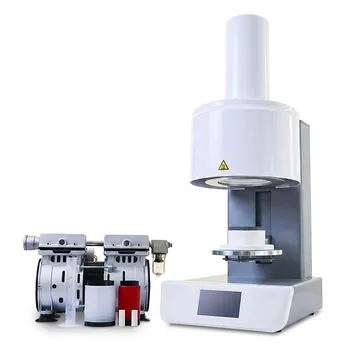
Dental Porcelain Zirconia Sintering Ceramic Vacuum Press Furnace
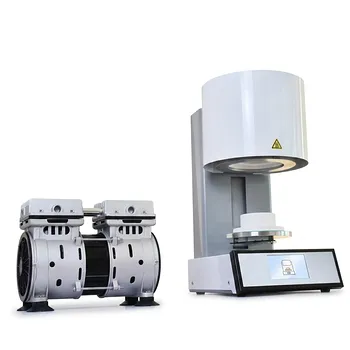
Vacuum Dental Porcelain Sintering Furnace for High Precision Ceramic Restorations
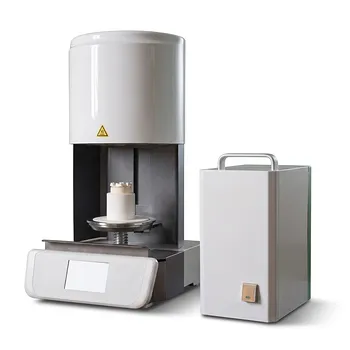
Dental Porcelain Zirconia Sintering Ceramic Furnace Chairside with Transformer
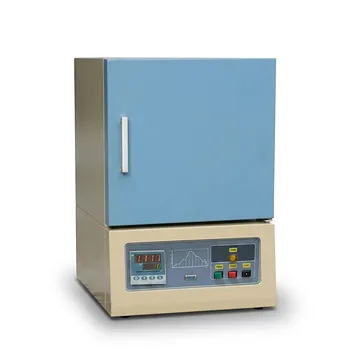
Ultra High Temperature Bench Top Muffle Furnace 1750C Sintering System with Kanthal Super Heating Elements and Precision Digital Control
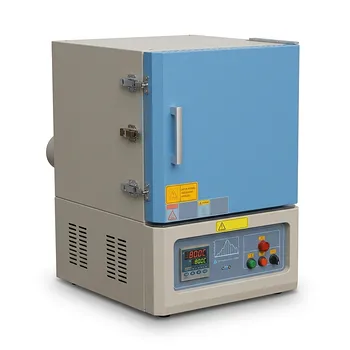
1800C Bench Top Muffle Furnace 18 Liters with Kanthal Super 1900 Heating Elements for High Purity Ceramic Sintering and Material Research
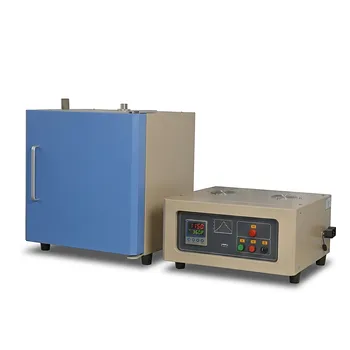
High Temperature Muffle Furnace with Alloy Chamber for Debinding and Sintering Applications
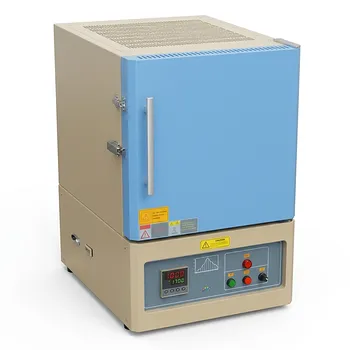
Large Bench Top 1700C High Temperature Muffle Furnace with 19L Chamber for Advanced Material Sintering and Annealing
1100°C High Temperature Quartz Chamber Furnace 8 Inch OD with 7.6 Liter Capacity and Vacuum Atmosphere Capability
1700C Compact Hybrid Furnace with Dual Layer Box Sintering and Controlled Atmosphere Alumina Tubes
High Temperature 1500C Benchtop Muffle Furnace 3.6L Alumina Fiber Chamber Programmable Controller Sintering Annealing Carbonization Thermal Processing System
Five Side Heating Muffle Furnace High Purity Alumina Fiber 27L Chamber 1200C High Temperature Thermal Processing System for Sintering Annealing and Materials Research
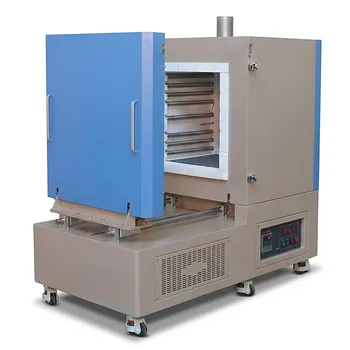
1200C Five Side Heating Muffle Furnace with Sliding Door 125L Volume High Temperature Heat Treatment System for Large Scale Sintering and Annealing
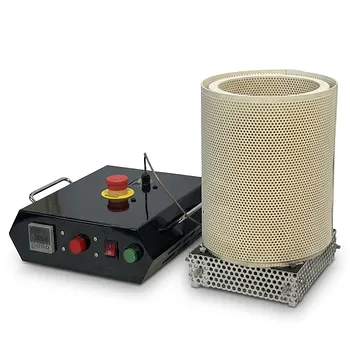
1250 C Compact Vertical Box Furnace for Glovebox Material Research Air Sensitive Samples
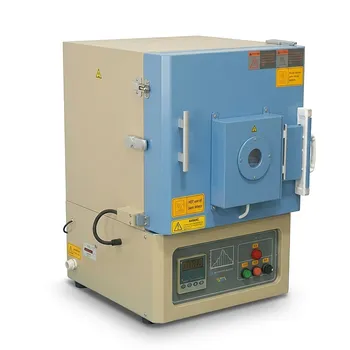
High Temperature Benchtop Muffle Furnace 1500C with 3.6L Chamber and Quartz Observation Window
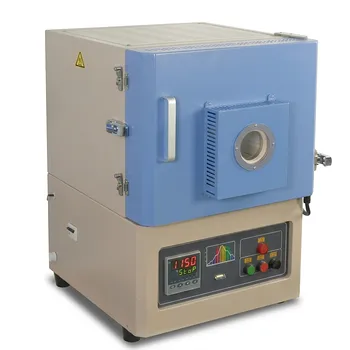
High Temperature Benchtop Muffle Furnace with Quartz Observation Window for Thermal Imaging and Material Analysis
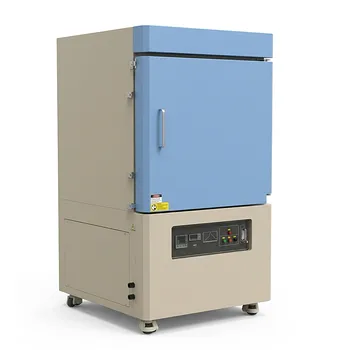
Industrial Large Box Furnace 1700C 216L High Temp Muffle Sintering System

1200°C 5 Inch Vertical Quartz Tube Furnace with Stainless Steel Vacuum Flanges
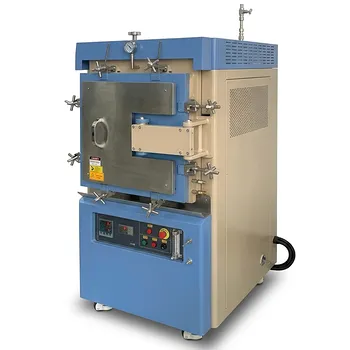
Atmosphere Controlled Muffle Furnace 1700C Maximum Temperature 80L High Capacity Vacuum Inert Gas Box Furnace
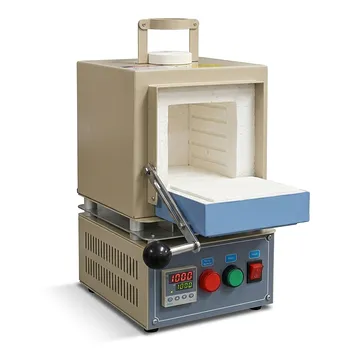
Compact 1000C Muffle Furnace with Programmable Controller and 2 Inch Top Port for Vacuum and Atmosphere Material Research