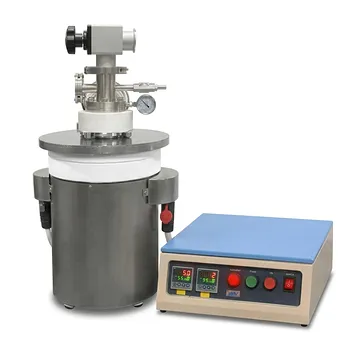
How does a dental furnace prevent material cracking during rapid thermal cycles? Master Precision Thermal Control
Updated 5 months ago
Modern dental furnaces prevent material cracking by strictly controlling the thermal gradient within the ceramic. By utilizing advanced PID controllers and automated cooling phases, these systems ensure that the internal and external temperatures of a restoration remain synchronized. This precision eliminates the internal stresses caused by differential expansion, which is the primary cause of fractures during rapid heating and cooling.
Successful dental firing relies on the furnace's ability to modulate energy transfer with extreme precision. By balancing high-speed "ramp rates" with uniform heat distribution, the system protects the structural integrity of the ceramic while maximizing clinical efficiency.
Managing Thermal Stress through Programming
The Role of Programmable Ramp Rates
Modern furnaces allow technicians to set specific ramp rates, typically ranging from 20°C to 220°C per minute. By slowing the rate of temperature increase, the furnace ensures that heat penetrates the core of the restoration at the same speed it affects the surface. This prevents the outer "shell" of the ceramic from expanding faster than the interior, which would otherwise lead to immediate cracking.
Controlled Cooling Cycles
The cooling phase is often the most dangerous part of the thermal cycle for dental ceramics. Furnaces use controlled cooling stages to gradually bring the temperature down, preventing the material from experiencing thermal shock. If a restoration is removed too quickly from a hot chamber, the rapid contraction of the surface can cause "clinking" or microscopic spiderweb fractures.
Precision Control and Thermal Uniformity
Closed-Loop PID Modulation
The "brain" of a dental furnace is the closed-loop PID (Proportional-Integral-Derivative) control system. This technology constantly monitors the internal temperature and modulates power to the heating elements in real-time. This ensures that the actual temperature does not "overshoot" or fluctuate, providing a stable environment that prevents sudden thermal spikes.
All-Round Heating Elements
To prevent cold spots, many furnaces feature all-round heating, where elements are arranged concentrically or on multiple sides of the chamber. This configuration maintains temperature consistency within a range of ±5 K or better. Uniform heat distribution ensures that every part of the restoration—regardless of its position in the chamber—expands and contracts at the same rate.
High-Purity Refractory Insulation
The use of ceramic fiber or lightweight refractory bricks is essential for stabilizing the internal environment. These high-purity materials minimize heat loss and prevent external ambient temperatures from influencing the internal firing process. This insulation creates a "thermal buffer" that is critical for maintaining the accuracy of the programmed cycle.
Understanding the Trade-offs
Throughput vs. Material Longevity
While rapid cycles (above 200°C/min) significantly increase laboratory throughput, they also reduce the margin for error. If the restoration is particularly thick or has a complex geometry, the extreme speed can still induce stress despite the furnace's best efforts.
Component Wear and Maintenance
Frequent use of high-speed thermal cycles places significant stress on the furnace’s heating elements and insulation. While the software prevents the material from cracking, the hardware itself undergoes rapid expansion and contraction. Over time, this can lead to element fatigue, requiring more frequent calibration to ensure temperature accuracy remains within the ±5 K tolerance.
Optimizing Your Firing Protocols
When configuring your furnace for a specific material, consider the following goals:
- If your primary focus is maximum productivity: Utilize the highest validated ramp rate (up to 220°C/min) for small, single-unit restorations that can handle rapid energy transfer.
- If your primary focus is structural integrity for large cases: Prioritize slower ramp rates and extended cooling phases for multi-unit bridges to ensure the entire mass cools uniformly.
- If your primary focus is aesthetic consistency: Ensure the chamber is not overloaded, allowing the "all-round heating" elements to maintain the tightest possible temperature tolerance.
Mastering the balance between speed and thermal stability is the key to producing durable, fracture-free dental restorations.
Summary Table:
| Feature | Mechanism | Benefit to Restoration |
|---|---|---|
| PID Controllers | Real-time power modulation | Prevents thermal spikes and temperature overshoot |
| Ramp Rate Control | Managed heating (20°C - 220°C/min) | Synchronizes internal and surface expansion |
| All-Round Heating | Concentric element arrangement | Ensures thermal uniformity within ±5 K |
| Controlled Cooling | Automated multi-stage cooling | Eliminates thermal shock and spiderweb fractures |
| Refractory Insulation | High-purity ceramic fiber | Creates a stable thermal buffer against ambient air |
Elevate Your Lab's Precision with THERMUNITS
Are you looking to eliminate material fractures and optimize your heat treatment workflow? THERMUNITS is a leading manufacturer of high-temperature laboratory equipment dedicated to material science and industrial R&D.
We provide a comprehensive range of thermal processing solutions, including high-precision Dental Furnaces, Muffle, Vacuum, Atmosphere, and Tube furnaces, as well as CVD/PECVD systems and Vacuum Induction Melting (VIM) furnaces. Our equipment is engineered to provide the tightest temperature tolerances and advanced programming required for stress-free restorations and advanced material research.
Ready to enhance your lab's efficiency and product quality?
Contact our technical experts today to find the ideal furnace solution for your specific requirements!
Mentioned Products
- Dental Porcelain Zirconia Sintering Ceramic Vacuum Press Furnace
- Vacuum Dental Porcelain Sintering Furnace for High Precision Ceramic Restorations
- Dental Porcelain Zirconia Sintering Ceramic Furnace Chairside with Transformer
- Ultra High Temperature Bench Top Muffle Furnace 1750C Sintering System with Kanthal Super Heating Elements and Precision Digital Control
- 1800C Bench Top Muffle Furnace 18 Liters with Kanthal Super 1900 Heating Elements for High Purity Ceramic Sintering and Material Research
People Also Ask
- How do zirconia sintering furnaces differ from porcelain firing furnaces? Key Technical & Performance Differences
- How do sintering and firing differ in a dental furnace? Master the key techniques for flawless restorations.
- What is the importance of dental furnaces in material science research and development? Keys to Ceramic Innovation
- What are the specific stages of the zirconia sintering process in a dental furnace? 4 Key Steps for Strength & Aesthetics
- What is the role of a programmable logic controller (PLC) in modern dental furnace operations? Enhance Sintering Precision.

Tech Team · ThermUnits
Last updated on Apr 14, 2026
Related Products
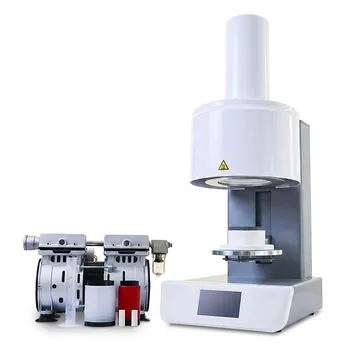
Dental Porcelain Zirconia Sintering Ceramic Vacuum Press Furnace
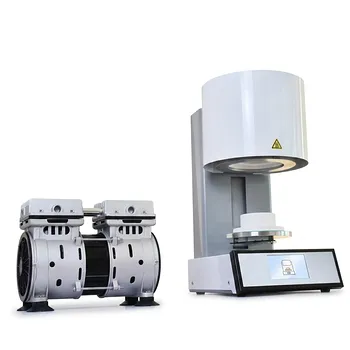
Vacuum Dental Porcelain Sintering Furnace for High Precision Ceramic Restorations
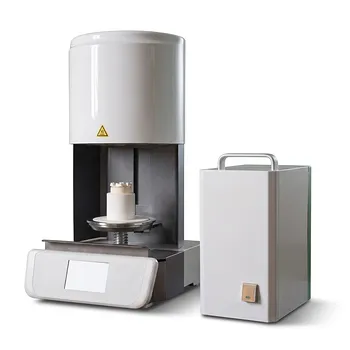
Dental Porcelain Zirconia Sintering Ceramic Furnace Chairside with Transformer
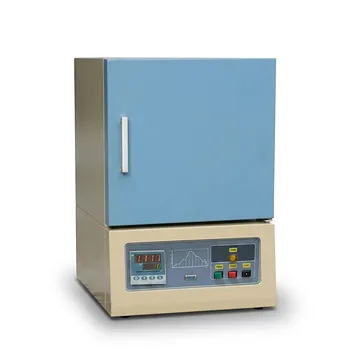
Ultra High Temperature Bench Top Muffle Furnace 1750C Sintering System with Kanthal Super Heating Elements and Precision Digital Control
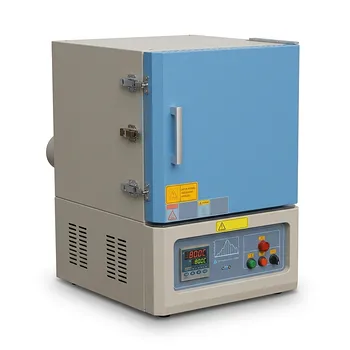
1800C Bench Top Muffle Furnace 18 Liters with Kanthal Super 1900 Heating Elements for High Purity Ceramic Sintering and Material Research
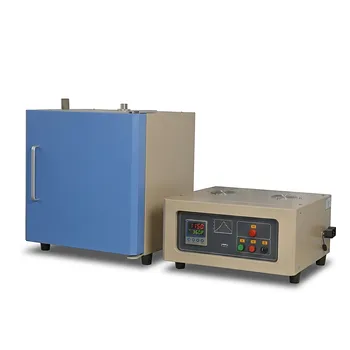
High Temperature Muffle Furnace with Alloy Chamber for Debinding and Sintering Applications
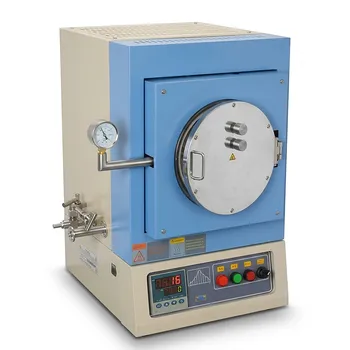
1100°C High Temperature Quartz Chamber Furnace 8 Inch OD with 7.6 Liter Capacity and Vacuum Atmosphere Capability
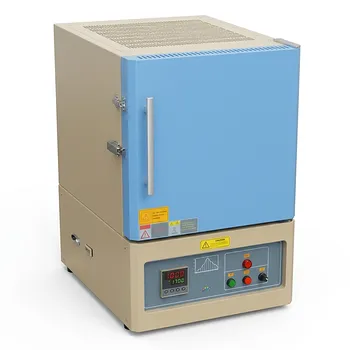
Large Bench Top 1700C High Temperature Muffle Furnace with 19L Chamber for Advanced Material Sintering and Annealing
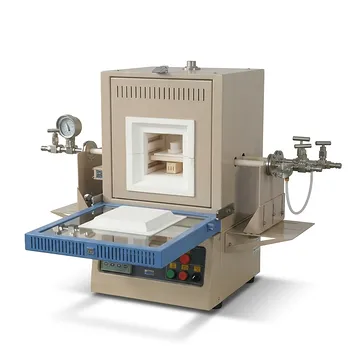
1700C Compact Hybrid Furnace with Dual Layer Box Sintering and Controlled Atmosphere Alumina Tubes
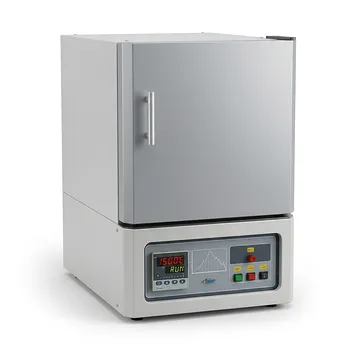
High Temperature 1500C Benchtop Muffle Furnace 3.6L Alumina Fiber Chamber Programmable Controller Sintering Annealing Carbonization Thermal Processing System
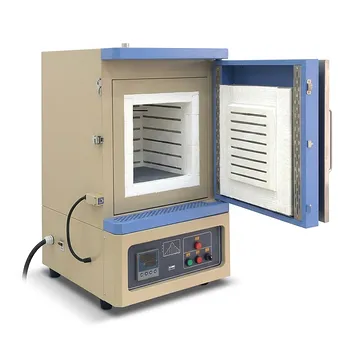
Five Side Heating Muffle Furnace High Purity Alumina Fiber 27L Chamber 1200C High Temperature Thermal Processing System for Sintering Annealing and Materials Research
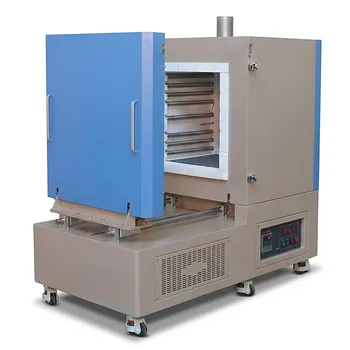
1200C Five Side Heating Muffle Furnace with Sliding Door 125L Volume High Temperature Heat Treatment System for Large Scale Sintering and Annealing
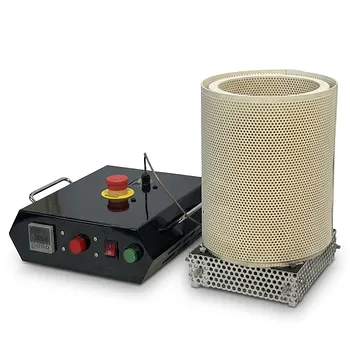
1250 C Compact Vertical Box Furnace for Glovebox Material Research Air Sensitive Samples
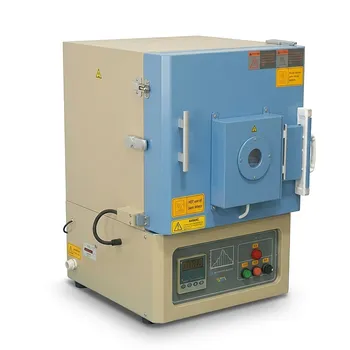
High Temperature Benchtop Muffle Furnace 1500C with 3.6L Chamber and Quartz Observation Window
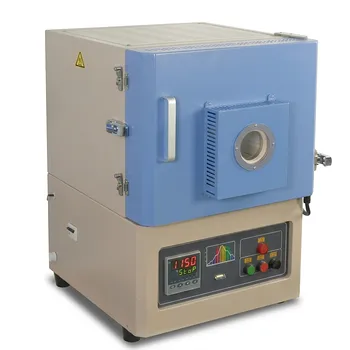
High Temperature Benchtop Muffle Furnace with Quartz Observation Window for Thermal Imaging and Material Analysis
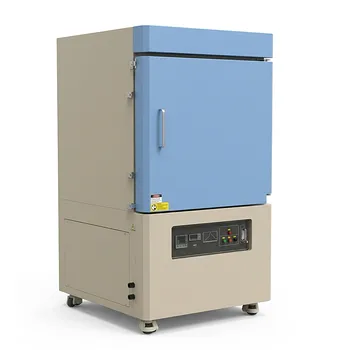
Industrial Large Box Furnace 1700C 216L High Temp Muffle Sintering System

1200°C 5 Inch Vertical Quartz Tube Furnace with Stainless Steel Vacuum Flanges
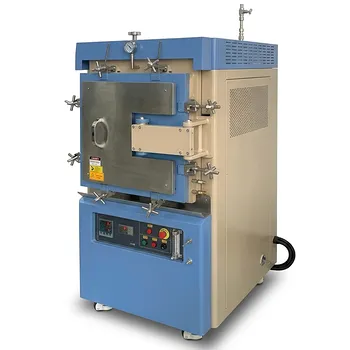
Atmosphere Controlled Muffle Furnace 1700C Maximum Temperature 80L High Capacity Vacuum Inert Gas Box Furnace
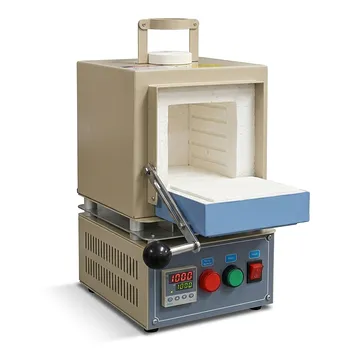
Compact 1000C Muffle Furnace with Programmable Controller and 2 Inch Top Port for Vacuum and Atmosphere Material Research