What is the mechanism of using FGA to activate AlOx thin films? Enhancing Passivation & Silicon Device Performance
Updated 6 months ago
Forming Gas Annealing (FGA) activates Aluminum Oxide (AlOx) thin films by facilitating the migration of hydrogen atoms to the silicon/alumina interface. This thermal process allows hydrogen to chemically bond with and repair atomic "dangling bonds," effectively neutralizing electronic traps that would otherwise degrade device performance.
Core Takeaway: FGA "activates" AlOx by using a hydrogen-nitrogen environment to chemically passivate the silicon interface, reducing defect density and significantly improving both electrical performance and impurity gettering efficiency.
The Fundamental Mechanism of Hydrogen Migration
Diffusion Through the AlOx Matrix
During the annealing process, the forming gas—typically a mixture of hydrogen ($H_2$) and nitrogen ($N_2$)—provides a source of hydrogen atoms. These atoms diffuse through the AlOx layer, which acts as a conduit to reach the critical junction where the film meets the silicon substrate.
Chemical Passivation of Dangling Bonds
The primary mechanism of activation is the repair of dangling bonds at the Si/AlOx interface. Hydrogen atoms saturate these unsatisfied chemical bonds (often silicon radicals), creating stable Si-H bonds that eliminate active recombination centers.
Impact on Interface and Electrical Properties
Reducing Interface Defect Density ($D_{it}$)
By neutralizing dangling bonds, FGA significantly modifies the interface defect density. A lower $D_{it}$ is essential for high-efficiency silicon devices, as it minimizes the loss of charge carriers through non-radiative recombination.
Enhancing Impurity Segregation and Gettering
The modification of the interface properties during FGA has a direct impact on impurity segregation. An activated AlOx interface influences how effectively impurities are pulled away from active device regions, a process known as gettering, which is vital for maintaining material purity.
Understanding the Trade-offs
Temperature Sensitivity
The success of AlOx activation is highly dependent on the annealing temperature. If the temperature is too low, hydrogen migration is insufficient; if it is too high, the hydrogen can desorb, or the AlOx film may begin to crystallize, degrading its passivation quality.
Hydrogen Concentration and Safety
While higher hydrogen concentrations can speed up the passivation process, forming gas is used specifically for safety. Using pure hydrogen poses significant explosion risks, while the nitrogen-diluted mixture provides a controlled, non-flammable environment for the reaction.
How to Apply This to Your Project
When implementing Forming Gas Annealing for AlOx activation, your process parameters should align with your specific device architecture.
- If your primary focus is Maximum Passivation Quality: Ensure your thermal budget allows for a steady soak at temperatures typically between 350°C and 450°C to maximize hydrogen saturation at the interface.
- If your primary focus is Impurity Gettering: Focus on the cooling rate post-anneal, as the interface defect modification during FGA will dictate how effectively impurities are trapped away from the bulk silicon.
- If your primary focus is Long-term Stability: Verify the thickness of your AlOx capping layer, as thicker films may require longer FGA durations to ensure hydrogen atoms fully penetrate to the silicon interface.
Properly executed FGA transforms AlOx from a simple dielectric into a high-performance functional layer that is essential for modern silicon photovoltaics and microelectronics.
Summary Table:
| Key Aspect | Mechanism of Action | Main Benefit |
|---|---|---|
| Hydrogen Migration | $H_2$ atoms diffuse through AlOx matrix to the Si/AlOx interface | Provides a uniform source for chemical repair |
| Chemical Passivation | Hydrogen bonds with and repairs "dangling bonds" (Si-H) | Significantly lowers Interface Defect Density ($D_{it}$) |
| Thermal Control | Precise annealing temperature (typically 350°C - 450°C) | Ensures optimal hydrogen saturation without desorption |
| Gettering Efficiency | Modification of the interface properties during heat treatment | Improved impurity segregation and carrier lifetime |
Elevate Your Silicon R&D with Precision Thermal Solutions
To achieve superior AlOx activation and precise Forming Gas Annealing, your lab requires reliable, high-performance thermal equipment. THERMUNITS is a leading manufacturer specializing in high-temperature laboratory solutions for material science and industrial R&D.
We offer a comprehensive range of thermal processing equipment tailored for advanced electronics and photovoltaics, including:
- Atmosphere and Vacuum Furnaces for precise gas environment control.
- Tube and Muffle Furnaces for uniform heat treatment.
- CVD/PECVD Systems for advanced thin-film deposition.
- Rotary, Hot Press, and Vacuum Induction Melting (VIM) Furnaces for diverse material synthesis.
- Dental Furnaces and Thermal Elements to support specialized laboratory needs.
Whether you are focusing on reducing interface defect density or enhancing impurity gettering, our equipment provides the stability and control your research demands.
Ready to optimize your thin-film processing? Contact THERMUNITS today for a consultation and discover how our advanced thermal solutions can drive your innovation forward!
References
- Tien T. Le, AnYao Liu. Gettering of iron by aluminum oxide thin films on silicon wafers: Kinetics and mechanisms. DOI: 10.1063/5.0182127
Mentioned Products
- Inclined Rotary Plasma Enhanced Chemical Vapor Deposition PECVD System for Thin Film Deposition and Nanomaterial Synthesis
- 950C Rapid Thermal Processing Furnace for 12 Inch Wafer CSS Coating with Rotating Substrate Holder
- Radio Frequency Plasma Enhanced Chemical Vapor Deposition RF PECVD System for Laboratory and Industrial Thin Film Growth
- High Temperature 800C Rapid Thermal Processing Furnace with Rotating Sample Holder for Close Spaced Sublimation and Thin Film Solar Cell Research
- High Temperature 1500C Benchtop Muffle Furnace 3.6L Alumina Fiber Chamber Programmable Controller Sintering Annealing Carbonization Thermal Processing System
People Also Ask
- What types of materials can be deposited using PECVD systems? Explore Versatile Thin-Film Coating Solutions
- How does the non-equilibrium nature of plasma facilitate low-temperature deposition in PECVD systems? Pro Tips for R&D
- How is Plasma-Enhanced Chemical Vapor Deposition (PECVD) utilized in the production of photovoltaic solar cells? Study
- How do RF frequency and power settings influence the characteristics of a PECVD process? Master Quality & Efficiency
- What are the advantages of PECVD systems for nano flame retardant films? Protect Heat-Sensitive Polymers with Precision

Tech Team · ThermUnits
Last updated on Apr 14, 2026
Related Products
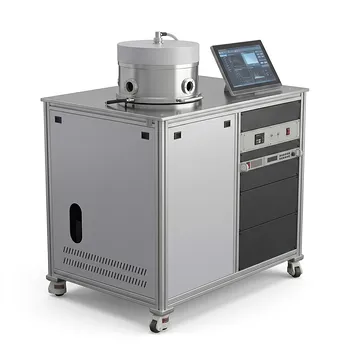
Inclined Rotary Plasma Enhanced Chemical Vapor Deposition PECVD System for Thin Film Deposition and Nanomaterial Synthesis
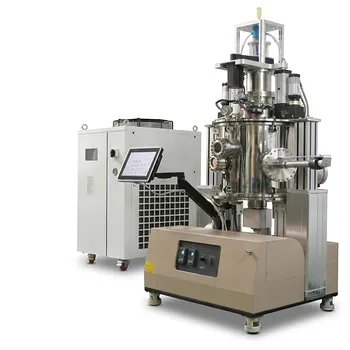
950C Rapid Thermal Processing Furnace for 12 Inch Wafer CSS Coating with Rotating Substrate Holder
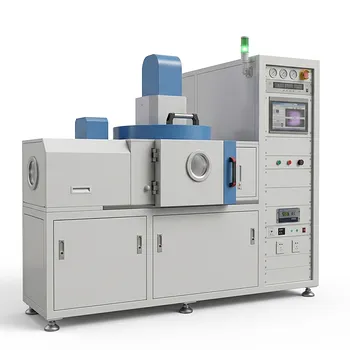
Radio Frequency Plasma Enhanced Chemical Vapor Deposition RF PECVD System for Laboratory and Industrial Thin Film Growth
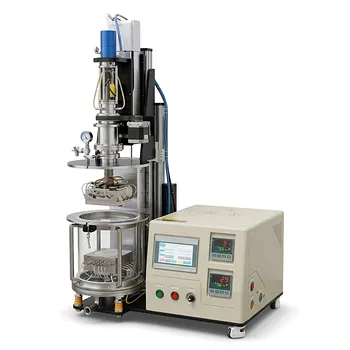
High Temperature 800C Rapid Thermal Processing Furnace with Rotating Sample Holder for Close Spaced Sublimation and Thin Film Solar Cell Research
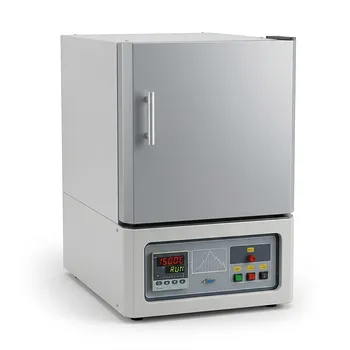
High Temperature 1500C Benchtop Muffle Furnace 3.6L Alumina Fiber Chamber Programmable Controller Sintering Annealing Carbonization Thermal Processing System
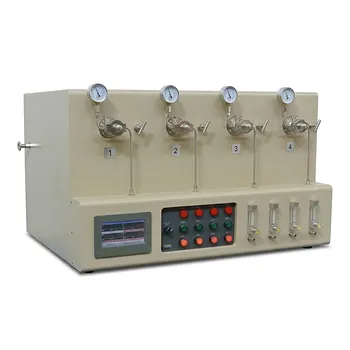
High Temperature 1700C 4 Channel Tube Furnace 1 Inch Alumina Tube for Hi-Throughput Annealing
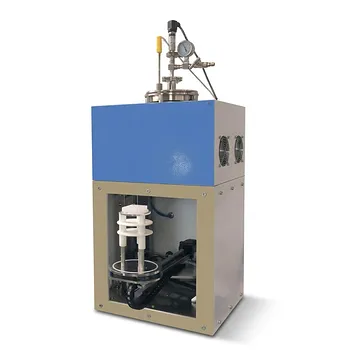
Rapid Thermal Processing Furnace 1100C Atmosphere Controlled Bottom Loading RTP System for Wafer Annealing and Catalysis Research