What is the necessity of performing in-situ pre-treatment on Barium Titanate (BTO) films? Boost Catalyst Efficiency
Updated 3 months ago
The necessity of in-situ pre-treatment for Barium Titanate (BTO) films lies in its ability to clean the catalyst surface and engineer its electronic state. By heating the films to 250 °C within the reaction environment, researchers can eliminate interfering substances like moisture and adsorbed gases that naturally accumulate on the material. This process not only purifies the surface but also regulates surface defect states, which are primary drivers for increasing the initial efficiency of converting carbon dioxide ($CO_2$) into carbon monoxide ($CO$).
Pre-treating BTO films through controlled in-situ heating transforms a contaminated surface into a high-activity catalyst by simultaneously removing performance-inhibiting impurities and optimizing the material's defect chemistry.
The Role of In-Situ Pre-treatment in Catalyst Optimization
Eliminating Surface Contaminants and Moisture
BTO films naturally adsorb atmospheric moisture and gaseous impurities during storage or handling. These contaminants occupy active sites on the catalyst surface, physically blocking $CO_2$ molecules from interacting with the material.
In-situ heating at 250 °C provides the thermal energy required to desorb these species. This ensures that the first step of the reduction reaction begins with a pristine surface, maximizing the available area for chemical conversion.
Regulating Surface Defect States
The performance of a photocatalyst is heavily dependent on the presence of surface defects, such as oxygen vacancies. The pre-treatment process allows for the intentional regulation of these defect states based on the gas environment used.
By applying heat in the presence of specific gases like Argon, Oxygen, or Hydrogen, the electronic properties of the BTO film are "tuned." This tuning facilitates better charge carrier separation, which is essential for driving the photoreduction of $CO_2$ to $CO$.
Integration with Fluidized Bed Systems
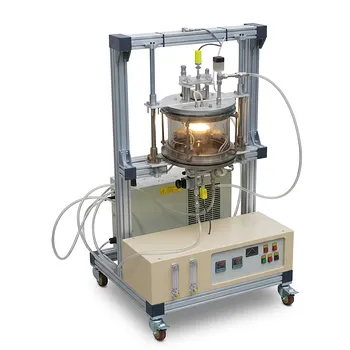
The use of a fluidized bed reactor is a strategic choice for this pre-treatment. This setup ensures that the heating is uniform across all BTO film surfaces, preventing localized "cold spots" that could harbor impurities.
Fluidization allows for intimate contact between the BTO films and the chosen gas (Ar, $O_2$, or $H_2$). This results in a highly consistent and repeatable catalyst state before the $CO_2$ reduction reaction commences.
Understanding the Trade-offs and Limitations
The Impact of Gas Environment Choice
While pre-treatment is necessary, the choice of gas environment involves significant trade-offs. For example, a reducing atmosphere like Hydrogen may create more surface defects, whereas an Oxygen environment might heal them, leading to vastly different reaction kinetics.
Energy Costs vs. Catalytic Gain
Thermal pre-treatment at 250 °C adds an extra layer of energy consumption to the overall process. This cost must be weighed against the significant enhancement in initial activity to determine the economic viability of the method for large-scale applications.
Potential for Thermal Degradation
Repetitive heating and cooling cycles can sometimes stress the structural integrity of thin-film catalysts. It is vital to ensure that the 250 °C threshold effectively cleans the surface without inducing sintering or phase changes that could permanently damage the BTO structure.
Applying Pre-treatment to Your Research Goals
Effective catalyst preparation requires matching the pre-treatment environment to the specific desired outcome of the $CO_2$ reduction process.
- If your primary focus is maximizing initial reaction rates: Utilize a Hydrogen or Argon environment during the 250 °C pre-treatment to maximize the creation of beneficial surface defects.
- If your primary focus is ensuring long-term catalyst stability: Focus on the 250 °C heating cycle to prioritize the complete removal of residual moisture, which can lead to unwanted side reactions over time.
- If your primary focus is studying the impact of electronic states: Perform comparative pre-treatments under Oxygen and Argon to isolate the specific role that surface defects play in your BTO film's performance.
By meticulously controlling the surface environment of Barium Titanate before a reaction begins, you ensure the highest possible efficiency and clarity in your carbon dioxide reduction results.
Summary Table:
| Feature | Pre-treatment Role | Impact on CO2 Reduction |
|---|---|---|
| Temperature (250°C) | Removes moisture & adsorbed gases | Clears active sites for CO2 molecules |
| Gas Environment | Regulates surface defect states | Optimizes charge carrier separation |
| Fluidized Bed | Ensures uniform thermal distribution | Provides repeatable & consistent catalyst states |
| Electronic Tuning | Adjusts oxygen vacancies | Increases conversion efficiency of CO2 to CO |
Optimize Your Catalyst Research with Precision Thermal Solutions
Achieving the perfect surface state for Barium Titanate (BTO) films requires absolute control over temperature and atmosphere. THERMUNITS is a leading manufacturer of high-temperature laboratory equipment specifically designed for material science and industrial R&D.
Whether you need to regulate defect states or ensure pristine surface cleaning, our comprehensive range of thermal processing solutions—including Tube, Atmosphere, Vacuum, and Rotary furnaces, as well as CVD/PECVD systems—provides the uniformity and precision your research demands.
Enhance your lab's efficiency and reaction accuracy today.
Contact THERMUNITS Experts to find the ideal furnace for your high-temperature heat treatment needs.
References
- Mahsa Abedi, Zsolt Pap. Influence of Rapid Heat Treatment on the Photocatalytic Activity and Stability of Barium Titanates Against a Broad Range of Pollutants. DOI: 10.3390/molecules29225350
Mentioned Products
- Gas Pre-Heating Tube Furnace for High Temperature Pyrolysis Reactors and Material Science Research
- Induction Heating System with Temperature Control for High Temperature Vacuum Sintering and Melting
- High Temperature Ultrafast Heating Pressing Furnace 2900C Max 100kgf Rapid Thermal Processing System
- High Temperature Bottom Loading Vertical Furnace 1700C Dual Stage Sample Processing System 18L Large Capacity Thermal Treatment Equipment
- High Temperature Tube Furnace 1500C with Sliding Flanges and 50mm OD for Rapid Thermal Processing Fast Heating and Cooling
People Also Ask
- What is the function of a preheated high-temperature tube furnace in the rapid pyrolysis synthesis of carbon nitride films?
- What is the role of a high-temperature tube furnace in coal powder pyrolysis benchmarking? Achieve Precise Baselines.
- Why is high-precision temperature control essential in a pyrolysis furnace? Master Pd NPs/NO-C Catalyst Synthesis
- How does a high-temperature tube furnace facilitate the pyrolysis of PR-ZS hybrid aerogels into carbon aerogels?
- How is a laboratory tube heating furnace applied during the evaluation of denitration catalysts? Essential Guide

Tech Team · ThermUnits
Last updated on Jun 02, 2026
Related Products
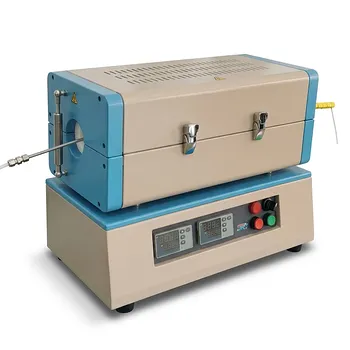
Gas Pre-Heating Tube Furnace for High Temperature Pyrolysis Reactors and Material Science Research
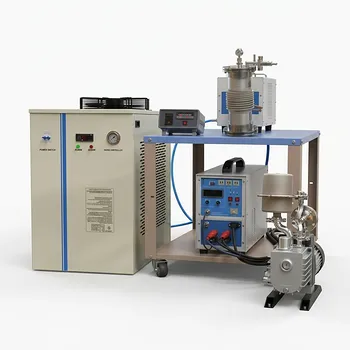
Induction Heating System with Temperature Control for High Temperature Vacuum Sintering and Melting
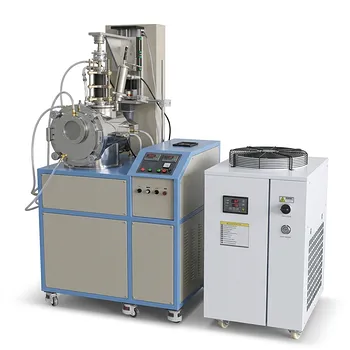
High Temperature Ultrafast Heating Pressing Furnace 2900C Max 100kgf Rapid Thermal Processing System
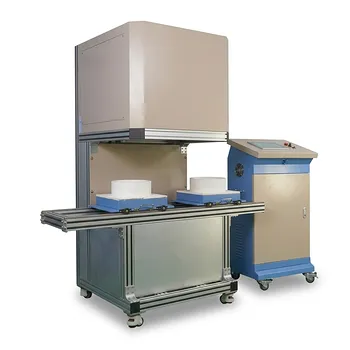
High Temperature Bottom Loading Vertical Furnace 1700C Dual Stage Sample Processing System 18L Large Capacity Thermal Treatment Equipment
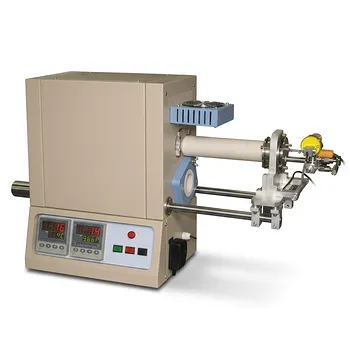
High Temperature Tube Furnace 1500C with Sliding Flanges and 50mm OD for Rapid Thermal Processing Fast Heating and Cooling
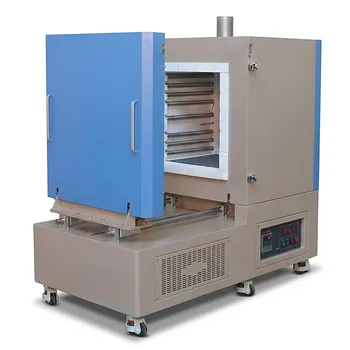
1200C Five Side Heating Muffle Furnace with Sliding Door 125L Volume High Temperature Heat Treatment System for Large Scale Sintering and Annealing
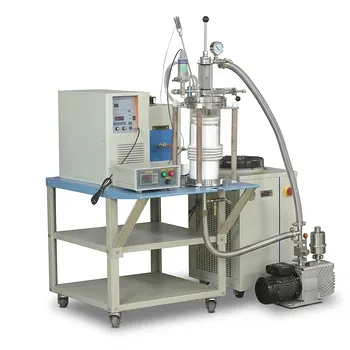
15KW 1700C Max Induction Heater 6 Inch Tube with Dose Feeding and Melt Stirring Function
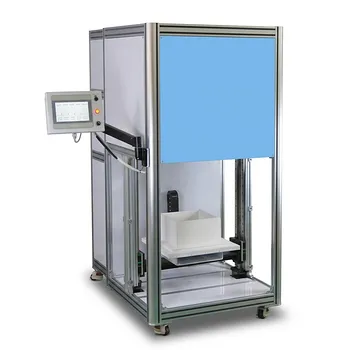
High Temperature 1600°C Three Zone Heated Bottom Loading Box Furnace with Rapid Thermal Processing Chamber 72L Volume
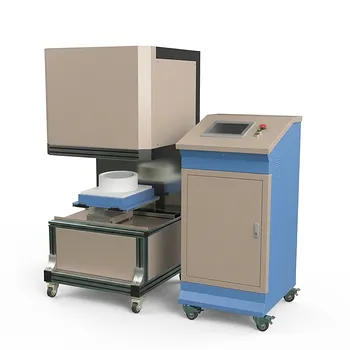
High Temperature Bottom Loading Box Furnace for Rapid Thermal Processing 1700C 40L Capacity
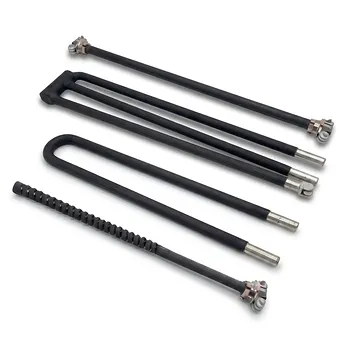
Silicon Carbide SiC Thermal Heating Elements for Industrial Electric Furnaces
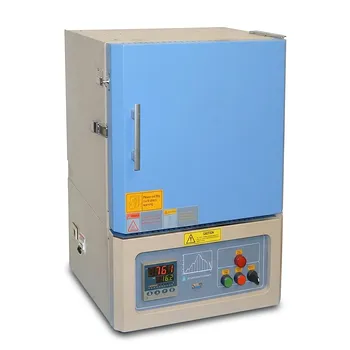
High Temperature 1700C Bench Top Muffle Furnace with Alumina Fiber Insulation and 3.6L Chamber Capacity for Precision Sintering and Heat Treatment
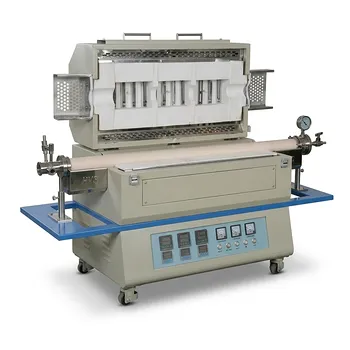
Three Temperature Zone Fast Heating Furnace 1500C Laboratory High Precision Thermal Processing System
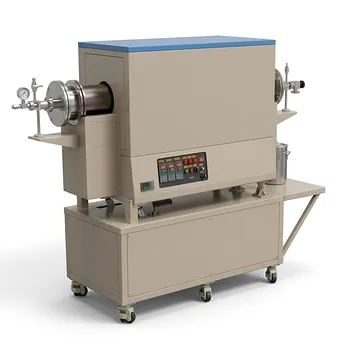
900°C Max Rotary Tube Furnace with 8 Inch 310S Alloy Tube and Optional Multi Zone Heating for Industrial Material Calcination
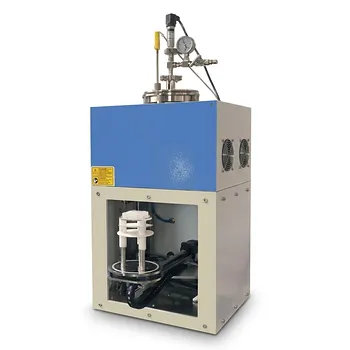
Rapid Thermal Processing Atmosphere Controlled Bottom Loading Furnace 1100C with 50C Per Second Heating Rate for Wafer Annealing