What is the necessity of using programmable temperature control for benzoxazine curing? Optimize PBz network formation.
Updated 3 months ago
Programmable temperature control is the essential mechanism for regulating the ring-opening polymerization rate of benzoxazine monomers. By utilizing precise, stepwise thermal treatment—typically spanning from 100°C to 250°C—operators can guide the steady formation of the polybenzoxazine (PBz) network. This specific thermal management is required to minimize internal stresses and reduce thermal shrinkage, which are critical factors in producing a structurally robust, self-curing material.
Core Takeaway: Programmable heating equipment transforms a volatile chemical reaction into a controlled curing process. By managing the heating ramp and "soak" periods, it prevents structural defects like shrinkage and internal stress that would otherwise compromise the material's integrity.
Regulating the Kinetics of Ring-Opening Polymerization
Precise Control of Reaction Rates
The transition from EEd-Bzo monomers to a polybenzoxazine network relies on ring-opening polymerization. Programmable equipment allows for a stepwise thermal treatment that ensures the reaction proceeds at a manageable pace rather than a runaway spike.
Managing Thermal Thresholds
Different chemical transitions within the material occur at specific temperatures. Precise control allows the user to navigate these thresholds—such as the 100°C to 250°C range—ensuring each stage of the molecular cross-linking is completed before advancing to the next.
Differentiation of Reaction Stages
Just as in the synthesis of complex alloys, polymer curing involves distinct kinetic stages. Programmable ramps allow for the clear differentiation of these stages, preventing the overlapping of reactions that could lead to unpredictable material properties.
Ensuring Structural Integrity and Robustness
Minimizing Internal Stresses
Rapid, uncontrolled heating can cause uneven curing, where the exterior of the material hardens while the interior remains volatile. A stable heating ramp ensures a uniform reaction throughout the bulk of the material, significantly minimizing internal stresses.
Reducing Thermal Shrinkage
Polymeric materials are prone to volume changes during the transition from monomer to network. By guiding the steady formation of the PBz network, programmable systems mitigate the "pulling" effect of rapid curing, thereby reducing thermal shrinkage.
Achieving Accurate Stoichiometry
Uniform temperature distribution ensures that the entire sample reaches the required energy levels for a thorough reaction. This prevents localized overheating, which can cause early degradation of additives or incomplete phase reconstruction.
Understanding the Trade-offs and Pitfalls
The Risk of Rapid Heating
While fast heating cycles may seem more efficient, they often lead to sudden pressure fluctuations or "hot spots." In polybenzoxazine, this usually manifests as brittle structures or voids caused by trapped gases that couldn't escape during a gradual ramp.
Equipment and Energy Investment
Implementing high-precision programmable furnaces, such as muffle or tube furnaces, requires a higher initial investment than basic ovens. However, the cost of "off-spec" material and structural failure in the field far outweighs the initial equipment expenditure.
Complexity of Programming
Establishing the ideal "heating recipe" (e.g., 3°C/min or 5°C/min) requires significant testing. If the ramp is too slow, production efficiency drops; if too fast, reaction loss of control can generate undesirable by-products or inferior mechanical properties.
How to Apply This to Your Project
Recommendations for Implementation
To achieve the highest quality polybenzoxazine networks, your heating protocol should be tailored to the specific geometry and volume of your material.
- If your primary focus is Maximum Structural Robustness: Prioritize a slow, stepwise ramp (e.g., 3°C per minute) with extended thermal soaking at the 250°C peak to ensure complete cross-linking and stress relaxation.
- If your primary focus is Preventing Volatile Outgassing: Utilize a programmable system to maintain a precise, low-intensity heating rate during the early stages (100°C–150°C) to allow decomposition gases to release fully before the network densifies.
- If your primary focus is High-Volume Consistency: Invest in a furnace with high thermal uniformity to prevent localized overheating, ensuring that every part of the batch achieves the same stoichiometric ratio.
By mastering the thermal ramp, you ensure the polybenzoxazine network transitions from a liquid monomer to a high-performance solid without compromising its molecular foundation.
Summary Table:
| Curing Phase / Feature | Function of Programmable Control | Key Benefit to PBz Network |
|---|---|---|
| Ring-Opening Polymerization | Regulates reaction kinetics (100°C-250°C) | Prevents runaway spikes and volatile reactions |
| Stepwise Thermal Ramp | Manages molecular cross-linking stages | Minimizes internal stresses and structural voids |
| Uniform Heat Distribution | Ensures accurate stoichiometry | Eliminates localized overheating and degradation |
| Controlled Thermal Soak | Facilitates steady network formation | Significantly reduces thermal shrinkage and brittleness |
Achieve Precision in Your Benzoxazine Curing Today
As a leading manufacturer of high-temperature laboratory equipment for material science, THERMUNITS provides the advanced thermal processing solutions required to master polybenzoxazine (PBz) networks. Our programmable systems—including Muffle, Vacuum, Atmosphere, and Tube furnaces—ensure the precise temperature ramps (100°C–250°C) necessary to eliminate internal stress and optimize material robustness.
Empower your industrial R&D with our comprehensive range of solutions, including CVD/PECVD systems, Dental Furnaces, electric rotary kilns, vacuum induction melting furnaces (VIM), and specialized Thermal Elements.
Ready to enhance your material's structural integrity?
Contact our technical experts today to find the ideal heat treatment equipment for your specific application!
References
- Shakila Parveen Asrafali, Jaewoong Lee. High-Performance Supercapacitors Using Compact Carbon Hydrogels Derived from Polybenzoxazine. DOI: 10.3390/gels10080509
Mentioned Products
- 1100C Tube Furnace with Vacuum Flange and Programmable Temperature Controller for Material Science and Industrial Heat Treatment
- Induction Heating System with Temperature Control for High Temperature Vacuum Sintering and Melting
- High Temperature 1500C Benchtop Muffle Furnace 3.6L Alumina Fiber Chamber Programmable Controller Sintering Annealing Carbonization Thermal Processing System
- High Temperature Compact Muffle Furnace 1700 C with 30 Segment Programmable Controller and 1.7L Cubic Chamber
- 1200°C Small Box Furnace 4.2 Liter Programmable Muffle Furnace with High Purity Alumina Insulation and PID Control
People Also Ask
- What are the advantages of 1100°C tube furnaces for ORR catalysts? Boost Conductivity and Structural Stability.
- What role does a tube furnace play in PS template removal? Ensure ZnO/SiO2 Structural Integrity & High Performance.
- What core functions does a high-temperature vacuum tube furnace provide? Optimize np-CuSn Sintering & Joint Integrity
- What is the role of a high-temperature tube furnace in the calcination process of ZnO/In2O3 nanocomposites?
- What impact does the heating rate of a tube furnace have on biochar microstructure? Optimize Your Material R&D.

Tech Team · ThermUnits
Last updated on Jun 02, 2026
Related Products

1100C Tube Furnace with Vacuum Flange and Programmable Temperature Controller for Material Science and Industrial Heat Treatment
Induction Heating System with Temperature Control for High Temperature Vacuum Sintering and Melting

High Temperature 1500C Benchtop Muffle Furnace 3.6L Alumina Fiber Chamber Programmable Controller Sintering Annealing Carbonization Thermal Processing System
High Temperature Compact Muffle Furnace 1700 C with 30 Segment Programmable Controller and 1.7L Cubic Chamber
1200°C Small Box Furnace 4.2 Liter Programmable Muffle Furnace with High Purity Alumina Insulation and PID Control
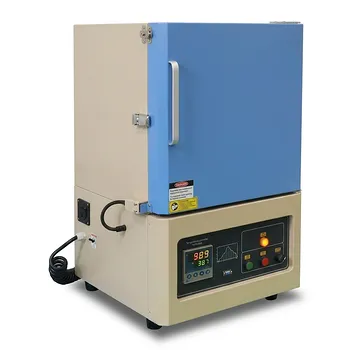
1200°C High Temperature Muffle Furnace 19L Chamber with 50 Segment Programmable Controller
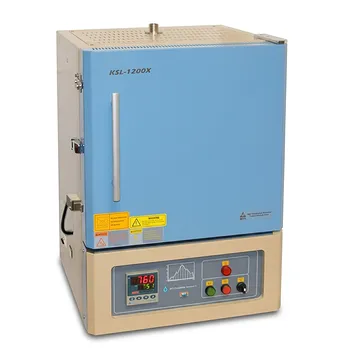
High Temperature 1200C Muffle Furnace 27L Volume 12x12x12 Chamber with Programmable PID Controller for Laboratory Material Science
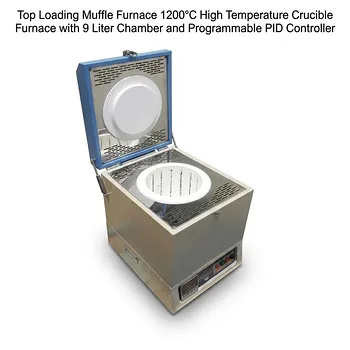
Top Loading Muffle Furnace 1200°C High Temperature Crucible Furnace with 9 Liter Chamber and Programmable PID Controller
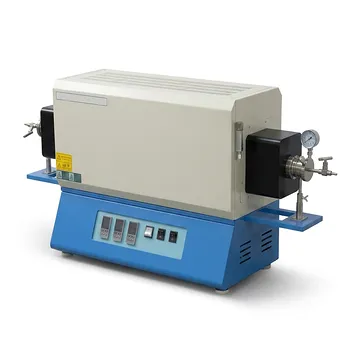
High Temperature Three Temperature Zone Tube Furnace for Advanced Material Science Sintering and Chemical Vapor Deposition Applications
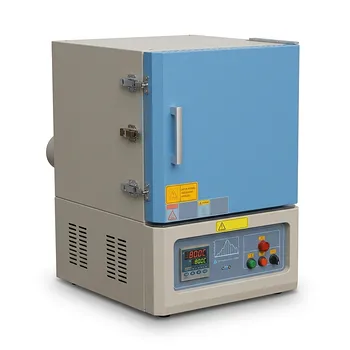
1800C Bench Top Muffle Furnace 18 Liters with Kanthal Super 1900 Heating Elements for High Purity Ceramic Sintering and Material Research
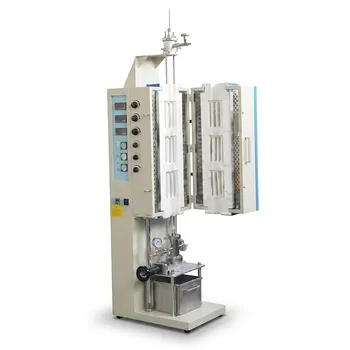
High Temperature Dual Zone Tube Furnace for Material Science Research and Professional Thermal Processing
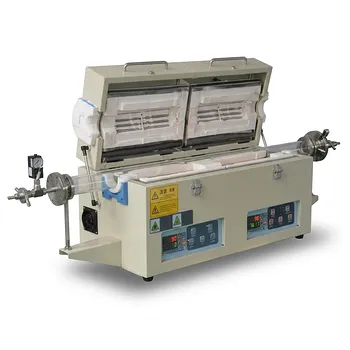
Elongated Two Temperature Zone Pipe Furnace for Industrial Heat Treatment and Material Science Research
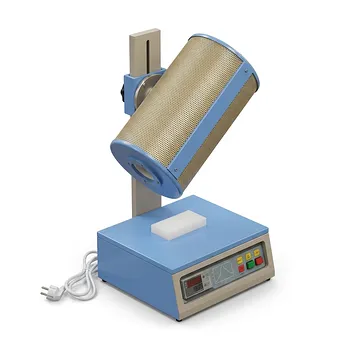
1100°C Vertical Laboratory Furnace for DIY Tubular Reactors with PID Temperature Controller
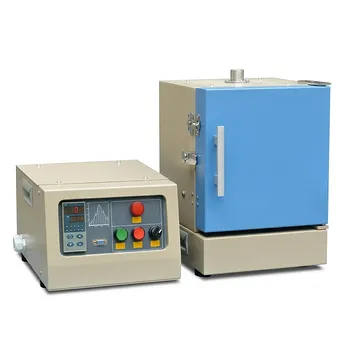
1200C Small Box Muffle Furnace with Separated Programmable Controller and 4.2L Alumina Fiber Chamber

High Temperature Tube Furnace 1500C with Sliding Flanges and 50mm OD for Rapid Thermal Processing Fast Heating and Cooling
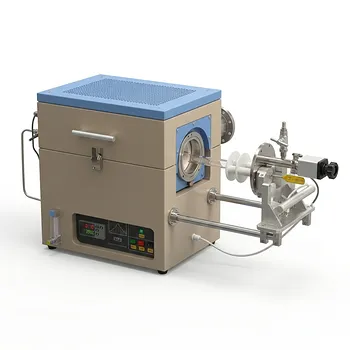
Compact Atmosphere Controlled Rapid Thermal Processing RTP Furnace with 4 Inch ID Quartz Tube 1100C