How does the precision temperature control system of a laboratory tube furnace affect the structural evolution of SiCN(Ni)/BN ceramics?
Updated 3 months ago
The precision temperature control system of a laboratory tube furnace dictates the structural evolution of SiCN(Ni)/BN ceramics by strictly governing the thermal kinetics of the polymer-to-ceramic transformation. This high-precision management ensures the successful execution of multi-stage heating programs, specifically holding at 600°C for precursor stabilization and sintering at 1100°C to finalize the ceramic matrix.
Core Takeaway: Precision thermal control is the "master regulator" of ceramic microstructure; it determines the specific nucleation of crystalline phases and the growth of catalytic nanostructures that define the material’s final electromagnetic properties.
Governing the Kinetics of Phase Transformation
The transition from a pre-ceramic polymer to a stable SiCN(Ni)/BN ceramic is not a single-step event but a series of temperature-dependent chemical reactions. High-precision systems allow for the exact control required to navigate these transitions without compromising the material's integrity.
Strict Execution of Multi-Stage Heating
The furnace must precisely maintain a holding temperature, such as 600°C, to allow for controlled decomposition and off-gassing of organic components. This stage is critical for preventing internal pressure build-up that could lead to structural defects or macro-cracks in the final ceramic body.
Regulation of Polymer-to-Ceramic Conversion
Accurate thermal curves ensure that the conversion kinetics favor the desired atomic rearrangements. By maintaining stable heating rates, the system prevents localized "hot spots" that could lead to non-uniform density or premature sintering of the SiCN matrix.
Influencing Microstructural and Catalytic Growth
The microscopic features of SiCN(Ni)/BN ceramics, which provide their functional value, are highly sensitive to even minor temperature fluctuations during the sintering phase.
Catalytic Growth of Carbon Nanowires
The precision of the thermal environment directly determines the efficiency of the catalytic growth of carbon nanowires. If the temperature deviates from the set point, the growth kinetics are altered, leading to inconsistent nanowire length, diameter, and distribution throughout the ceramic.
Nucleation of Ni3Si Crystalline Phases
The formation of Ni3Si crystalline phases is a temperature-governed nucleation process. Precise control at the sintering temperature (1100°C) ensures that these phases precipitate uniformly, which is essential for optimizing the impedance matching characteristics of the final material.
Maintaining Structural Skeletons
Drawing from broader ceramic principles, precise temperature control (often using rates as low as 2°C/min) protects the structural skeleton of the material. This prevents structural collapse caused by rapid thermal expansion or the sudden release of stress during the transition from a flexible polymer to a rigid ceramic.
Understanding the Trade-offs and Risks
While precision is the goal, the thermal processing of complex ceramics like SiCN(Ni)/BN involves inherent trade-offs that researchers must balance.
Over-Sintering vs. Incomplete Conversion
If the furnace temperature exceeds the target due to poor control, over-sintering can occur, leading to grain coarsening and the loss of the desired nanostructure. Conversely, insufficient temperature precision may result in an incomplete polymer-to-ceramic transition, leaving residual organic groups that degrade mechanical and thermal stability.
Volatilization and Stoichiometry Shift
At high temperatures, certain elements may become volatile. Precise management is required to reach the sintering point without exceeding the threshold where essential components begin to vaporize, which would fundamentally alter the stoichiometry and phase purity of the ceramic.
Applying Precision Control to Your Research
To achieve the desired structural evolution in SiCN(Ni)/BN ceramics, your thermal processing strategy must be aligned with your specific performance targets.
- If your primary focus is Electromagnetic Interference (EMI) Shielding: Prioritize the precision of the 1100°C sintering stage to ensure consistent Ni3Si phase nucleation and optimal impedance matching.
- If your primary focus is Mechanical Structural Integrity: Focus on ultra-slow heating rates (e.g., 2°C/min - 4°C/min) during the 200–600°C range to manage the decomposition of ligands and prevent micro-cracking.
- If your primary focus is High-Surface Area Nanostructures: Ensure a highly uniform thermal field to catalyze the growth of carbon nanowires without causing them to aggregate or collapse.
Mastering the thermal curve of a laboratory tube furnace is the definitive factor in transforming a polymer precursor into a high-performance, nanostructured SiCN(Ni)/BN ceramic.
Summary Table:
| Thermal Process Stage | Target Temperature/Rate | Key Structural Outcome |
|---|---|---|
| Precursor Stabilization | 600°C (Holding) | Controlled off-gassing & defect prevention |
| Ceramic Sintering | 1100°C | Ni3Si phase nucleation & matrix finalization |
| Catalytic Growth | Precise Sintering Temp | Uniform carbon nanowire distribution |
| Heating Rate Control | 2°C/min - 4°C/min | Preservation of structural skeleton & integrity |
Elevate Your Material Research with THERMUNITS Precision
Achieving the perfect SiCN(Ni)/BN ceramic microstructure requires more than just heat; it requires absolute thermal authority. As a leading manufacturer of high-temperature laboratory equipment, THERMUNITS provides the precision technology needed for advanced material science and industrial R&D.
Whether you are focusing on EMI shielding or high-surface-area nanostructures, our comprehensive range of solutions—including Tube Furnaces, Vacuum/Atmosphere Furnaces, Muffle Furnaces, Rotary Kilns, CVD/PECVD systems, and Hot Press Furnaces—is designed to deliver the stable heating rates and uniform thermal fields your research demands.
Ready to optimize your sintering curves? Contact THERMUNITS Today to discuss your specific heat treatment requirements and discover how our advanced thermal elements and furnaces can transform your laboratory's capabilities.
References
- Yanchun Tong, Shigang Wu. Enhanced electromagnetic wave absorption properties of SiCN(Ni)/BN ceramics by <i>in situ</i> generated Ni and Ni<sub>3</sub>Si. DOI: 10.1039/d3ra07877a
Mentioned Products
- Multi Position Tube Furnace 1100C for Laboratory Material Research and Advanced Industrial Thermal Processing
- Ten Zone Multi Orientation Laboratory Tube Furnace for 1200C High Temperature Gradient Thermal Processing
- High Temperature 1200C Split Tube Furnace with Hinged Vacuum Flanges and 4 Inch Quartz Tube for Laboratory Research
- High Temperature Automated 5 Inch Tube Furnace for Autonomous Material Research and Advanced Laboratory R&D
- 1800C High Temperature Compact Vacuum Tube Furnace with 60mm OD Alumina Tube and Kanthal MoSi2 Heating Elements
People Also Ask
- Why use a tube furnace for oxygen annealing LaCrO3/LaMnO3? Optimize Phase Transition & Magnetic Performance.
- What key role does a laboratory high-temperature tube furnace play in the production of carbon nanofibers? Guide
- How is a laboratory high-temperature tube furnace utilized to research the products of aluminothermic reduction? Advanced Metallurgical Solutions
- What is the role of a laboratory tube furnace in the carbonization process of porous carbon foam (PCF)? Master 3D Synthesis
- What role does a laboratory tube furnace play in the pyrolysis and carbonization of biomass? Optimize Thermal Research.

Tech Team · ThermUnits
Last updated on Jun 02, 2026
Related Products
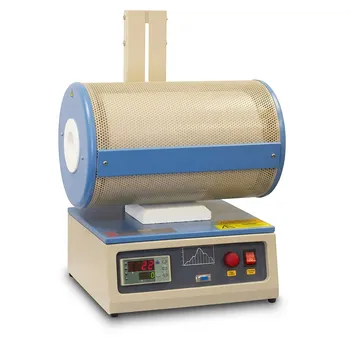
Multi Position Tube Furnace 1100C for Laboratory Material Research and Advanced Industrial Thermal Processing
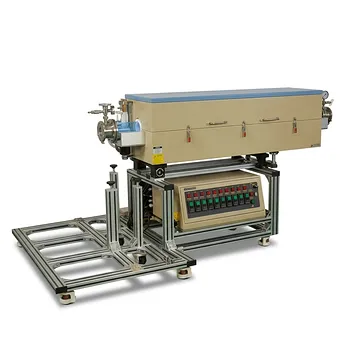
Ten Zone Multi Orientation Laboratory Tube Furnace for 1200C High Temperature Gradient Thermal Processing
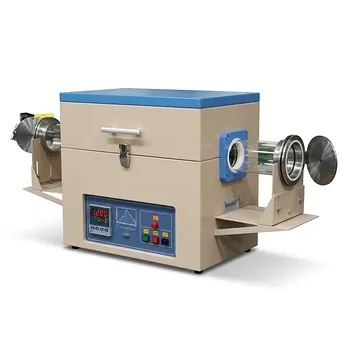
High Temperature 1200C Split Tube Furnace with Hinged Vacuum Flanges and 4 Inch Quartz Tube for Laboratory Research

High Temperature Automated 5 Inch Tube Furnace for Autonomous Material Research and Advanced Laboratory R&D

1800C High Temperature Compact Vacuum Tube Furnace with 60mm OD Alumina Tube and Kanthal MoSi2 Heating Elements
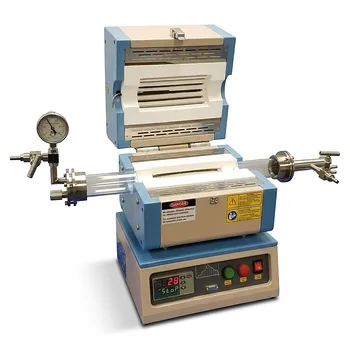
Compact Split Tube Furnace with Integrated Vacuum System and Precision Temperature Calibrator
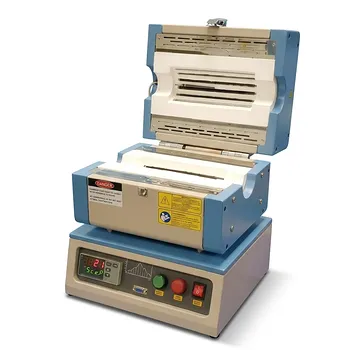
1250C Compact Split Tube Furnace with 8 Inch Heating Zone and Programmable Controller
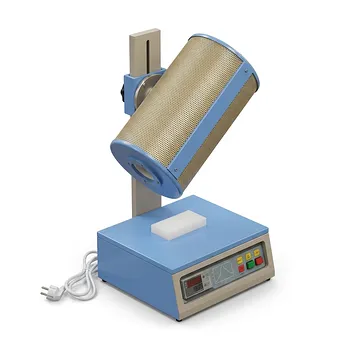
1100°C Vertical Laboratory Furnace for DIY Tubular Reactors with PID Temperature Controller
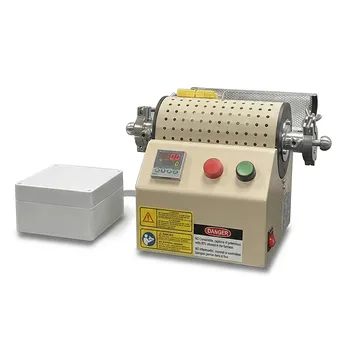
1000C Mini Tube Furnace with 20mm Quartz Tube and Vacuum Flanges for Material Science Research and Controlled Atmosphere Small Sample Processing
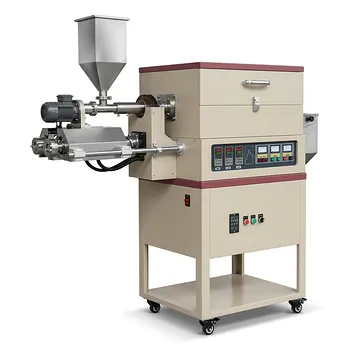
Laboratory Tilting Rotary Tubular Furnaces for Material Science and Industrial Heat Treatment
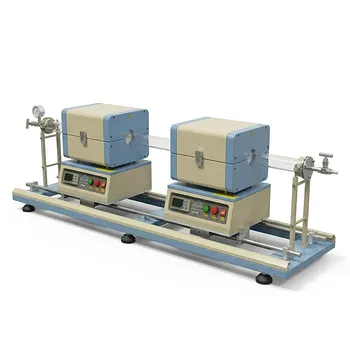
1200C Max Dual Sliding Tube Furnace with 50 mm Tube Flanges for CVD
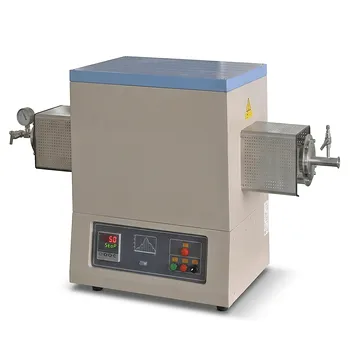
High Temperature 1700C Tube Furnace with 4 Inch OD Alumina Tube and Vacuum Sealing Flanges
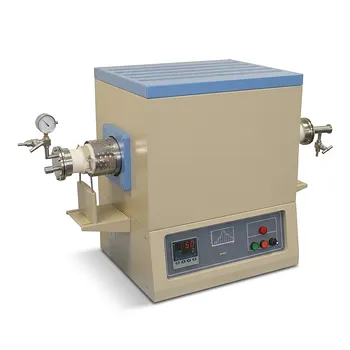
1700C High Temperature Alumina Tube Furnace with 18 Inch Heated Zone and Vacuum Sealing Flanges
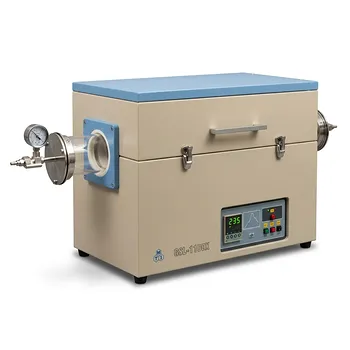
Single Zone Tube Furnace 5 Inch Quartz Tube 36 Inch Heating Zone Vacuum Flanges
High Temperature Hybrid Muffle and Tube Furnace with Vacuum Capability and PID Control
Hybrid High Temperature Tube and Box Furnace 1700C with 2 Inch Alumina Tube for Material Research
1200°C High Temperature 4 Inch Tube Furnace with Sliding Flange for CVD Systems
1200C High Throughput Multi Channel Tube Furnace with 50mm Quartz Tubes for Annealing and Material Phase Diagram Research

High Temperature 1700C Vertical Tube Furnace for Powder Spherification and Material Sintering
