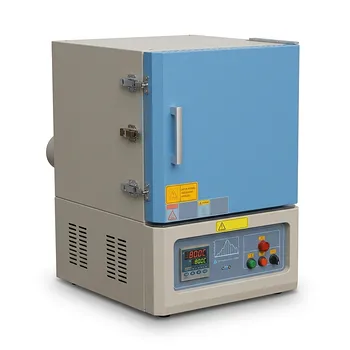
What is the technical role of a muffle furnace in cathode material precursors? Essential Steps for Battery Synthesis
Updated 3 months ago
The primary technical role of a high-temperature muffle furnace in cathode material synthesis is to facilitate the initial calcination of precursors. By providing a stable environment (typically around 700°C), the furnace enables the thermal decomposition of carbonates, the release of carbon dioxide, and the initiation of solid-state reactions that establish the foundational oxide framework required for subsequent phase transitions.
Core Takeaway: A high-temperature muffle furnace serves as a precision thermal reactor that drives the chemical decomposition, ionic diffusion, and structural crystallization necessary to transform raw metal precursors into electrochemically active cathode materials.
Facilitating Chemical Decomposition and Phase Formation
Thermal Decomposition of Precursors
The furnace provides the intense thermal energy required to break chemical bonds in precursor materials, such as carbonates or nitrates. As these compounds decompose, volatile components like carbon dioxide or moisture are released, leaving behind reactive metal oxides.
Establishing the Initial Oxide Framework
During the calcination stage, the furnace promotes preliminary solid-state reactions between these metal oxides. This process creates a stable structural scaffold that acts as the blueprint for the more complex crystal structures that form during higher-temperature sintering.
Homogenization Through Ionic Diffusion
The muffle furnace drives the solid-phase diffusion of ions, such as lithium and nickel, from the particle surface into the core. This thermal induction ensures a uniform chemical composition throughout the material, which is critical for consistent electrochemical performance.
Driving Structural Evolution and Crystallization
Controlled Crystal Growth
By maintaining a constant temperature for extended periods—sometimes reaching up to 950°C for 15 hours—the furnace allows metal ions to migrate into specific arrangements. This precisely controlled environment is essential for developing high-purity layered structures (such as the alpha-NaFeO2 type) that define modern cathode performance.
Phase Purity and Crystallinity
The accuracy of the furnace’s temperature control directly dictates the crystallinity of the final product. Even minor fluctuations can lead to phase impurities, which degrade the energy density and cycle life of the resulting battery cells.
Coating and Surface Stabilization
In multi-stage processes, muffle furnaces are used to sinter protective coatings onto cathode particles at lower temperatures (e.g., 400°C). This ensures the coating converts into a stable crystal phase that protects the underlying material without causing thermal damage to the core structure.
Enabling Material Purification and Recycling
Decomposition of Organic Binders
In the recycling of spent lithium-ion batteries, the muffle furnace is used at moderate temperatures (400°C–450°C) to decompose organic binders like PVDF and residual electrolytes. This step removes physical barriers, allowing the active cathode material to be separated from the current collector.
Oxidation of Residual Impurities
During the regeneration of recovered materials, the furnace operates in an air atmosphere to oxidize residual carbon components. This purification step is vital for restoring the high electrochemical performance of "second-life" cathode powders.
Understanding the Trade-offs and Technical Pitfalls
The Risk of Thermal Damage
While high temperatures are necessary for diffusion, excessive heat or prolonged exposure can lead to grain overgrowth. Large grains can reduce the rate capability of the battery by increasing the distance ions must travel during charge and discharge.
Atmospheric Sensitivity
Muffle furnaces must often maintain a specific atmosphere (e.g., air or oxygen-rich) to ensure proper oxidation states. Failure to control the gas environment during heating can result in oxygen vacancies or the presence of unwanted metal ions (like Ni2+ in lithium sites), which causes "cation mixing" and reduces capacity.
Energy Consumption vs. Precision
Achieving high phase purity often requires long "soak times" at peak temperatures, which increases energy overhead. Manufacturers must balance the need for perfect crystallinity with the economic realities of industrial-scale production.
Applying Furnace Technology to Your Objectives
How to Apply This to Your Project
- If your primary focus is initial material synthesis: Prioritize a furnace with high ramp-rate control to manage the initial decomposition of carbonates and the release of $CO_2$ without structural cracking.
- If your primary focus is recycling or regeneration: Focus on a furnace with excellent ventilation and atmosphere control to safely remove decomposed organic binders and electrolytes.
- If your primary focus is maximizing energy density: Invest in a unit with high thermal uniformity (minimal temperature gradients) to ensure consistent crystal growth and phase purity across the entire batch.
The high-temperature muffle furnace is the definitive tool for bridging the gap between raw chemical precursors and the highly ordered, crystalline structures required for advanced energy storage.
Summary Table:
| Process Stage | Primary Function | Key Technical Outcome |
|---|---|---|
| Calcination | Thermal decomposition | Release of volatiles (CO2) and initial oxide framework formation |
| Sintering | Solid-state diffusion | Ionic migration (Li/Ni) and development of layered structures |
| Crystallization | Controlled cooling/soaking | High phase purity, uniform grain growth, and electrochemical stability |
| Recycling | Thermal purification | Decomposition of organic binders (PVDF) and impurity oxidation |
Optimize Your Cathode Synthesis with THERMUNITS
As a leading manufacturer of high-temperature laboratory equipment for material science and industrial R&D, THERMUNITS offers the precision tools necessary to master battery material synthesis. Whether you are developing next-generation layered oxides or perfecting recycling processes, our comprehensive range of Muffle, Vacuum, Atmosphere, Tube, and Rotary furnaces provides the thermal uniformity and atmospheric control your research demands.
Achieve superior phase purity and structural stability in your materials today. Contact our technical experts for a custom solution!
References
- Xu Zhang, Haijun Yu. High‐Energy Earth‐Abundant Cathodes with Enhanced Cationic/Anionic Redox for Sustainable and Long‐Lasting Na‐Ion Batteries. DOI: 10.1002/adma.202310659
Mentioned Products
- Large Bench Top 1700C High Temperature Muffle Furnace with 19L Chamber for Advanced Material Sintering and Annealing
- 1200C High Temperature Muffle Furnace with Motorized Door and Automated PC Control for Industrial Sintering and Material Processing 27 Liter
- 1750C Compact Muffle Furnace 1.7L Ultra High Temperature Laboratory Sintering System for Advanced Ceramics and Material Science Research
- High Temperature Muffle Furnace with Alloy Chamber for Debinding and Sintering Applications
- High Temperature 1700C Bench Top Muffle Furnace with Alumina Fiber Insulation and 3.6L Chamber Capacity for Precision Sintering and Heat Treatment
People Also Ask
- What is the function of a high-temp muffle furnace in Ni-V oxide synthesis? Optimize your material's performance.
- What is the purpose of using muffle or tube furnaces in glass synthesis? Achieve Precise Melt-Quenching & Homogeneity
- What role does a high-temperature muffle furnace play in evaluating the mineral composition of rock samples? LOI & XRF Guide
- What is the function of a high-temperature muffle furnace in phosphorus-modified zeolite catalyst preparation?
- What is the function of a muffle furnace in aluminoborosilicate glass prep? Stabilize Raw Materials for Superior Purity

Tech Team · ThermUnits
Last updated on Jun 02, 2026
Related Products
Large Bench Top 1700C High Temperature Muffle Furnace with 19L Chamber for Advanced Material Sintering and Annealing
1200C High Temperature Muffle Furnace with Motorized Door and Automated PC Control for Industrial Sintering and Material Processing 27 Liter
1750C Compact Muffle Furnace 1.7L Ultra High Temperature Laboratory Sintering System for Advanced Ceramics and Material Science Research
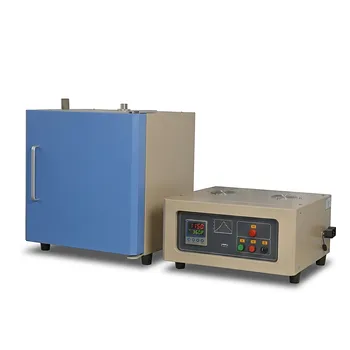
High Temperature Muffle Furnace with Alloy Chamber for Debinding and Sintering Applications
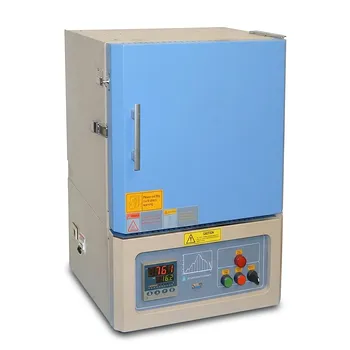
High Temperature 1700C Bench Top Muffle Furnace with Alumina Fiber Insulation and 3.6L Chamber Capacity for Precision Sintering and Heat Treatment
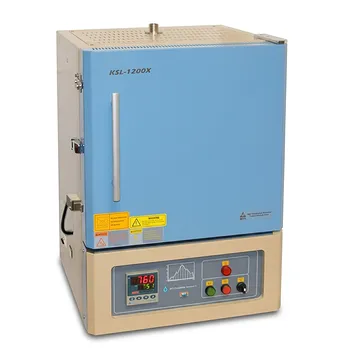
High Temperature 1200C Muffle Furnace 27L Volume 12x12x12 Chamber with Programmable PID Controller for Laboratory Material Science
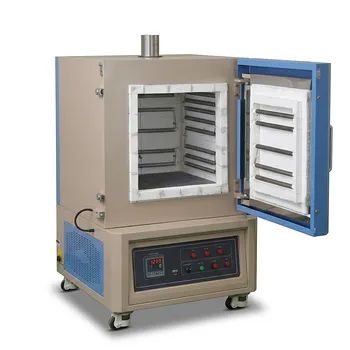
1200C High Temperature 125L Muffle Furnace 5 Side Heating for Large Batch Sintering with Optional Alloy Debinding Chamber
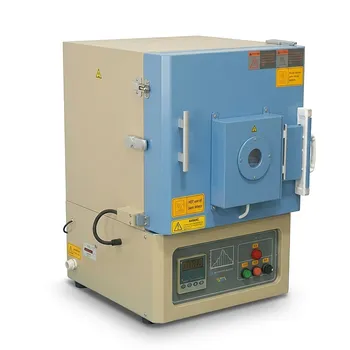
High Temperature Benchtop Muffle Furnace 1500C with 3.6L Chamber and Quartz Observation Window
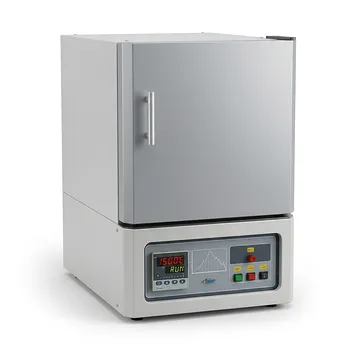
High Temperature 1500C Benchtop Muffle Furnace 3.6L Alumina Fiber Chamber Programmable Controller Sintering Annealing Carbonization Thermal Processing System
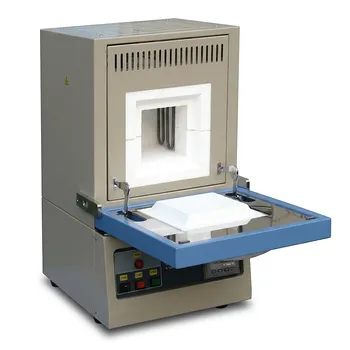
High Temperature 1800C Compact Muffle Furnace with Kanthal Super 1900 Heating Elements and 1.7L Alumina Chamber
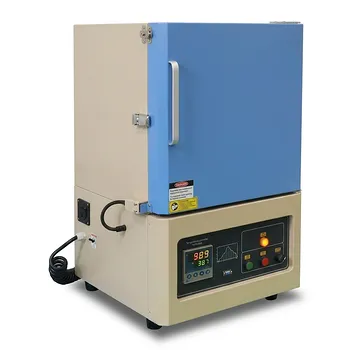
1200°C High Temperature Muffle Furnace 19L Chamber with 50 Segment Programmable Controller
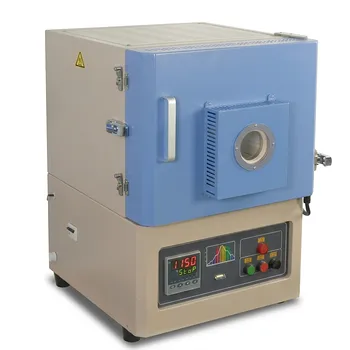
High Temperature Benchtop Muffle Furnace with Quartz Observation Window for Thermal Imaging and Material Analysis
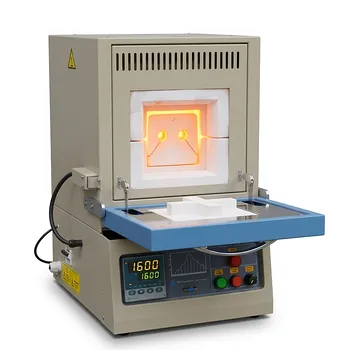
High Temperature Compact Muffle Furnace 1700 C with 30 Segment Programmable Controller and 1.7L Cubic Chamber
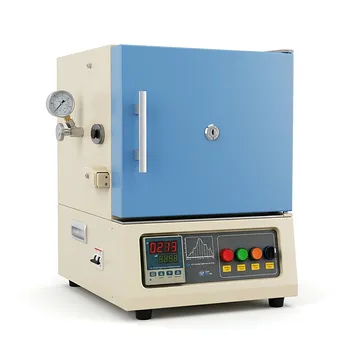
1200C Hybrid Muffle and Tube Furnace for Material Research with Dual Atmosphere Control Quartz Tubes
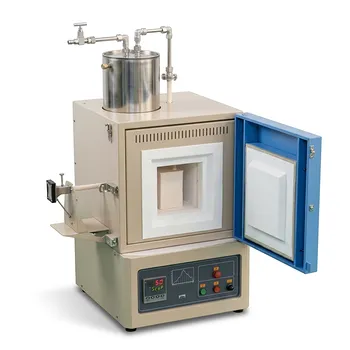
High Temperature Bench Top Muffle Furnace 1700C with Integrated Evaporating Particle Collection and 8x8x8 Alumina Fiber Chamber
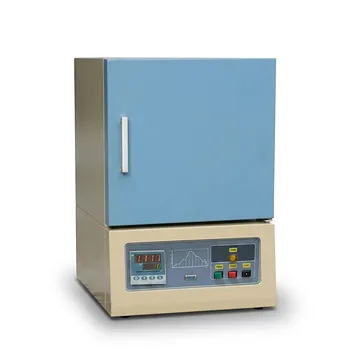
Ultra High Temperature Bench Top Muffle Furnace 1750C Sintering System with Kanthal Super Heating Elements and Precision Digital Control
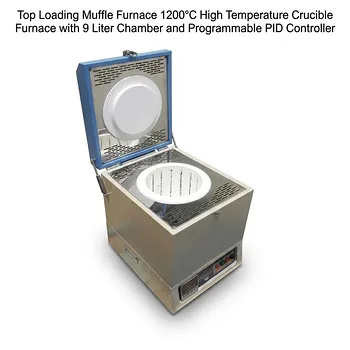
Top Loading Muffle Furnace 1200°C High Temperature Crucible Furnace with 9 Liter Chamber and Programmable PID Controller
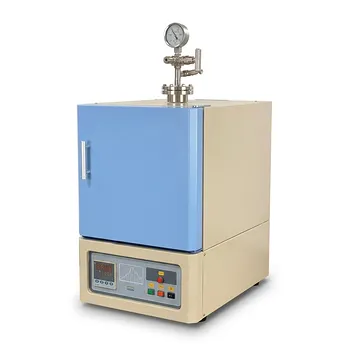
Hybrid High Temperature Muffle and Tube Furnace with 1500C Capability and Vacuum Flange Assembly
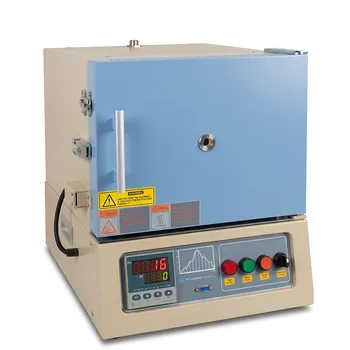
1200C Muffle Furnace 12x8x5 7.2L Heating Chamber with Quartz Observation Window and Vent Port