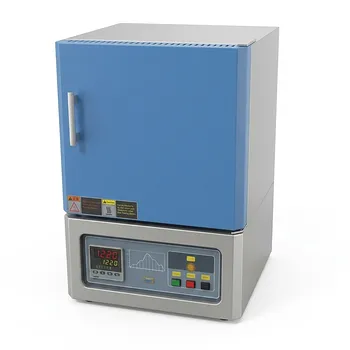
What is the purpose of the 1200°C pre-firing treatment in high-entropy pyrochlore ceramics? Optimize Phase & Density
Updated 3 months ago
The 1200°C pre-firing treatment serves as a critical preparatory phase designed to initiate solid-state reactions and stabilize the ceramic's internal architecture. By fostering crystal nucleus formation through thermal diffusion and pre-releasing internal lattice strain, this process ensures the final high-entropy pyrochlore ceramic achieves maximum density and a pure, defect-free phase structure.
Pre-firing acts as a thermal "buffer" that manages atomic diffusion and physical volume changes early in the production cycle. This prevents the structural defects and excessive shrinkage that typically occur when raw materials are moved directly to high-temperature sintering.
Optimizing Solid-State Kinetics
Initiating Thermal Diffusion
At 1200°C, the raw material components gain sufficient thermal energy to begin moving across grain boundaries. This thermal diffusion is essential for the different oxide powders to start blending at a molecular level.
Promoting Crystal Nucleus Formation
This stage is where the unique pyrochlore crystal structure begins to take shape. By establishing these initial nuclei at 1200°C, the material develops a "blueprint" that guides uniform grain growth during the subsequent, higher-temperature sintering stages.
Establishing Phase Purity
A controlled pre-firing step helps ensure that the final product reaches a purer phase structure. It allows secondary phases or impurities to be consumed or integrated into the high-entropy matrix before the structure is "locked in" by final densification.
Enhancing Structural Integrity and Density
Managing Volume Shrinkage
One of the primary technical challenges in ceramic production is the dramatic change in volume during heating. Pre-firing effectively reduces the volume shrinkage rate during the final sintering stage, leading to better dimensional stability and fewer cracks.
Pre-releasing Lattice Strain
High-entropy materials often experience significant internal lattice strain due to the variety of ionic radii occupying the same lattice sites. Treatment at 1200°C allows this strain to be released in a controlled environment, preventing sudden mechanical failure during final cooling.
Achieving Higher Final Density
By managing the reaction kinetics and shrinkage early, the material can achieve a higher theoretical density. This is vital for industrial applications where porosity would compromise the material's strength or electrical properties.
Understanding the Trade-offs
Process Complexity vs. Material Quality
Adding a 1200°C pre-firing step increases the total production time and energy consumption. However, skipping this stage often results in macroscopic defects or phase separation, which renders the ceramic useless for high-performance applications.
Temperature Precision
If the pre-firing temperature is too low, the solid-state reaction will be incomplete, leading to an inhomogeneous final product. Conversely, if it is too high, premature sintering may occur, making it difficult to grind or shape the material for the final processing steps.
Applying These Principles to Production
Strategic Recommendations
Effective production of high-entropy pyrochlores requires balancing thermal history with desired performance outcomes.
- If your primary focus is Maximum Phase Purity: Ensure the 1200°C hold time is sufficient to complete the initial solid-state synthesis and eliminate raw material precursors.
- If your primary focus is Dimensional Precision: Use the pre-firing stage specifically to "pre-shrink" the material, allowing for more accurate molds and tighter tolerances in the final sintering.
- If your primary focus is Long-term Electrical Stability: Couple the pre-firing treatment with high-entropy strategies to suppress anion sublattice disordering, which minimizes resistance drift in extreme environments.
By mastering the 1200°C pre-firing stage, manufacturers can transform raw oxide powders into highly stable, high-density ceramics capable of withstanding the most demanding industrial conditions.
Summary Table:
| Functional Aspect | Mechanism at 1200°C | Impact on Final Product |
|---|---|---|
| Kinetics | Initiates thermal diffusion | Molecular blending & homogeneous structure |
| Crystallization | Promotes crystal nucleus formation | Guided uniform grain growth & stability |
| Phase Control | Consumes secondary impurities | High phase purity & defect-free matrix |
| Physical Integrity | Manages volume shrinkage | Better dimensional stability & crack prevention |
| Strain Relief | Pre-releases internal lattice strain | Prevents mechanical failure during cooling |
| Densification | Regulates reaction kinetics | Achievement of higher theoretical density |
Elevate Your Advanced Material Research with THERMUNITS
Achieving the precise thermal conditions for high-entropy pyrochlore ceramics requires laboratory equipment that delivers unmatched accuracy. THERMUNITS is a leading manufacturer of high-temperature solutions specifically designed for material science and industrial R&D.
Whether you need the uniform heating of a Muffle or Atmosphere Furnace for pre-firing or the specialized environment of a Vacuum Induction Melting (VIM) or CVD/PECVD system, we provide the tools to ensure your materials achieve maximum density and phase purity. Our comprehensive range also includes Tube, Rotary, and Hot Press furnaces, as well as Thermal Elements tailored for demanding heat treatment cycles.
Ready to optimize your ceramic production? Contact our engineering team today to discover how THERMUNITS can provide the thermal precision your high-performance projects demand!
References
- Yi‐An Chen, Bo Gao. High-Entropy Thermistor Ceramics (La1/3Nd1/3M1/3)2(Zr1/2Sn1/2)2O7 (M = Sm, Eu, Gd, or Dy) with High Sensitivity for High-Temperature Measurements. DOI: 10.3390/s24237523
Mentioned Products
- 1200C High Temperature Muffle Furnace with Motorized Door and Automated PC Control for Industrial Sintering and Material Processing 27 Liter
- Top Loading Muffle Furnace 1200°C High Temperature Crucible Furnace with 9 Liter Chamber and Programmable PID Controller
- 1200C Five Side Heating Muffle Furnace with Sliding Door 125L Volume High Temperature Heat Treatment System for Large Scale Sintering and Annealing
- 1200°C High Temperature Muffle Furnace 19L Chamber with 50 Segment Programmable Controller
- High Temperature Vertical Crucible Furnace with 22L Heating Chamber and 1200C Maximum Temperature
People Also Ask
- What is the role of a High-Temperature Muffle Furnace in the synthesis of bulk graphitic carbon nitride (CN)? Expert Guide
- What is the purpose of preheating charcoal in a high-temperature muffle furnace? Ensure Accuracy in Zinc Reduction.
- What safety features are standard in high-temperature muffle furnaces? Essential Guide to Laboratory Equipment Safety
- What is the role of a high-temperature muffle furnace or tube furnace in the preparation of Na2WO4/SiO2 catalysts?
- How is a high-temperature muffle furnace utilized to convert composite materials into PCC@Co3O4? Precision Thermal Guide

Tech Team · ThermUnits
Last updated on Jun 02, 2026
Related Products
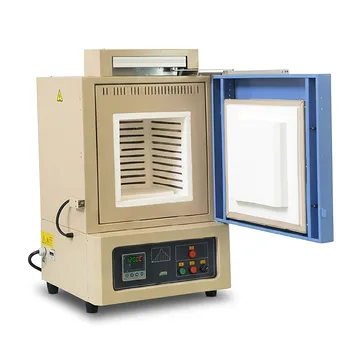
1200C High Temperature Muffle Furnace with Motorized Door and Automated PC Control for Industrial Sintering and Material Processing 27 Liter
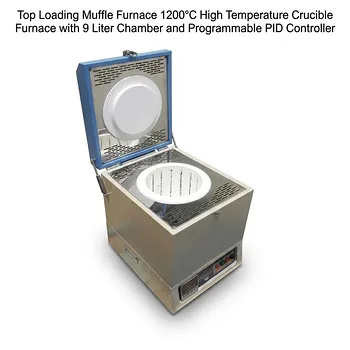
Top Loading Muffle Furnace 1200°C High Temperature Crucible Furnace with 9 Liter Chamber and Programmable PID Controller
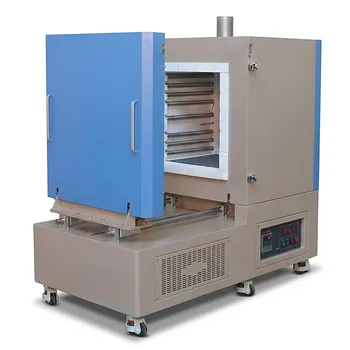
1200C Five Side Heating Muffle Furnace with Sliding Door 125L Volume High Temperature Heat Treatment System for Large Scale Sintering and Annealing
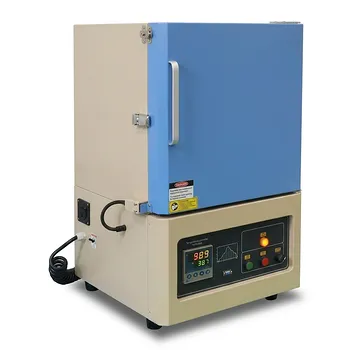
1200°C High Temperature Muffle Furnace 19L Chamber with 50 Segment Programmable Controller
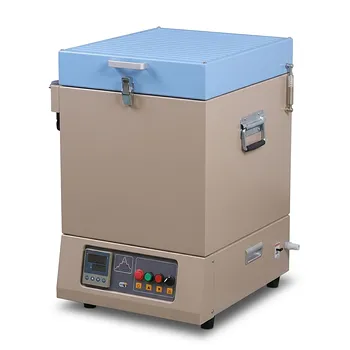
High Temperature Vertical Crucible Furnace with 22L Heating Chamber and 1200C Maximum Temperature
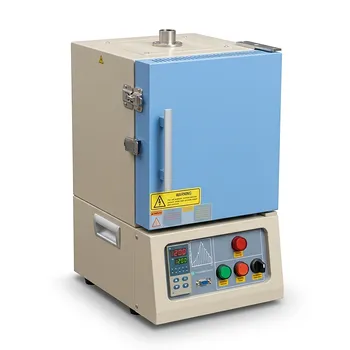
1200°C Small Box Furnace 4.2 Liter Programmable Muffle Furnace with High Purity Alumina Insulation and PID Control
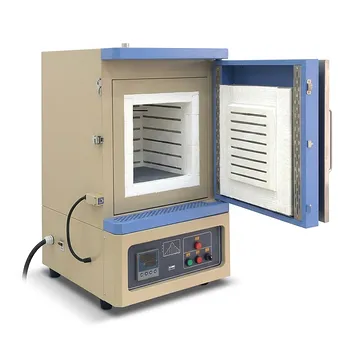
Five Side Heating Muffle Furnace High Purity Alumina Fiber 27L Chamber 1200C High Temperature Thermal Processing System for Sintering Annealing and Materials Research
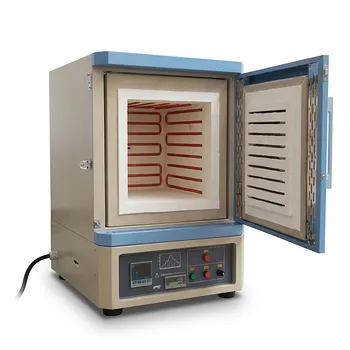
Five Side Heating Muffle Furnace 1200C High Uniformity 64L Chamber 16x16x16 Inch Industrial Heat Treatment
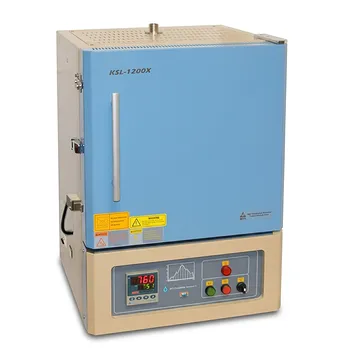
High Temperature 1200C Muffle Furnace 27L Volume 12x12x12 Chamber with Programmable PID Controller for Laboratory Material Science
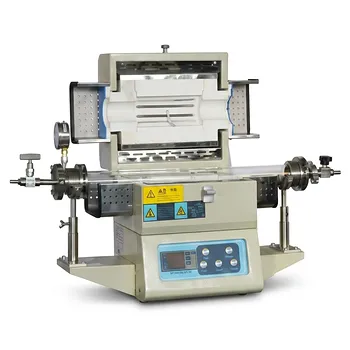
High Temperature 1200C Split Tube Furnace for CVD Research and Vacuum Atmosphere Heat Treatment
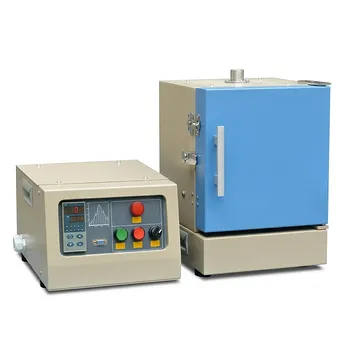
1200C Small Box Muffle Furnace with Separated Programmable Controller and 4.2L Alumina Fiber Chamber
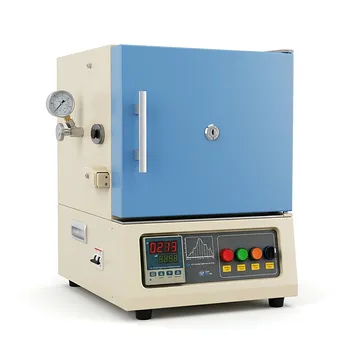
1200C Hybrid Muffle and Tube Furnace for Material Research with Dual Atmosphere Control Quartz Tubes
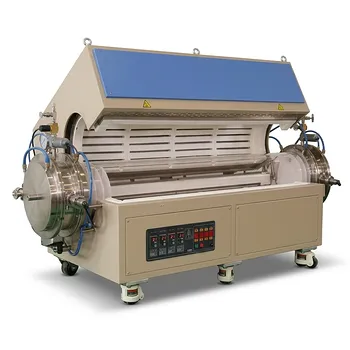
1200C Max Four Zone Split Tube Furnace with Optional Large Diameter Quartz Tubes
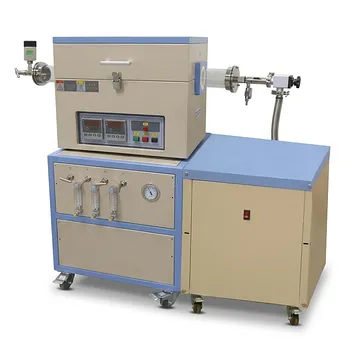
Dual Zone Quartz Tube Furnace with 80mm Diameter 1200C Max Temperature 3 Channel Gas Mixer and Vacuum Pump System
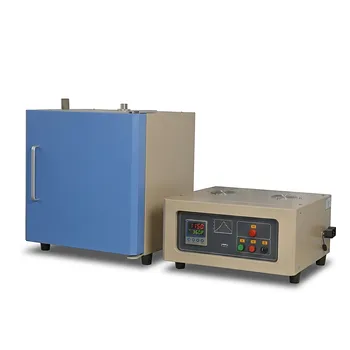
High Temperature Muffle Furnace with Alloy Chamber for Debinding and Sintering Applications
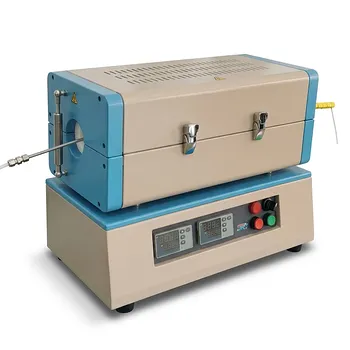
Gas Pre-Heating Tube Furnace for High Temperature Pyrolysis Reactors and Material Science Research
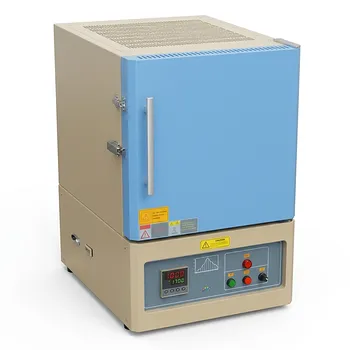
Large Bench Top 1700C High Temperature Muffle Furnace with 19L Chamber for Advanced Material Sintering and Annealing
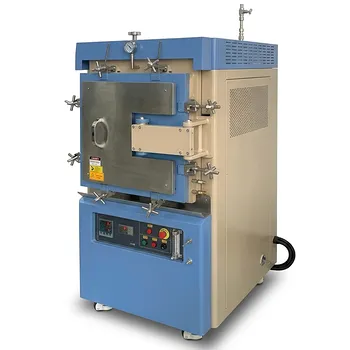
Atmosphere Controlled Muffle Furnace 1700C Maximum Temperature 80L High Capacity Vacuum Inert Gas Box Furnace
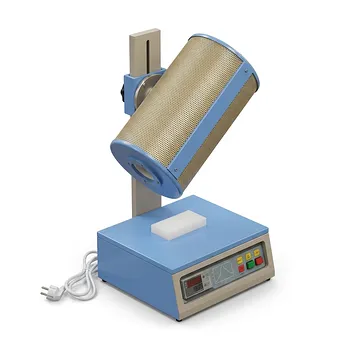
1100°C Vertical Laboratory Furnace for DIY Tubular Reactors with PID Temperature Controller