What is the specific function of high-purity argon gas as a protective medium in the synthesis of intermetallic compounds?
Updated 3 months ago
High-purity argon gas serves as a critical inert barrier that isolates reactive metal components from atmospheric contaminants during synthesis. Its primary function is to prevent the oxidation and nitridation of metals at high temperatures, ensuring that atoms organize into precise, ordered intermetallic phases rather than forming inactive oxide impurities or degraded compounds.
Core Takeaway: In intermetallic synthesis, high-purity argon functions as more than just a shield; it is a process stabilizer that preserves chemical stoichiometry and structural integrity by excluding oxygen and nitrogen while inhibiting the unwanted evaporation of volatile elements.
Preventing Chemical Degradation and Impurity Formation
Isolation from Reactive Atmospheric Gases
High-purity argon displaces air within the reaction chamber to eliminate oxygen and moisture. This isolation is vital when working with highly reactive elements like strontium, rare earth metals, or cadmium, which degrade rapidly if exposed to trace contaminants during heating.
Maintaining Stoichiometric Precision
By preventing the formation of metal oxides, argon ensures that the raw materials remain in their metallic state. This allows metal atoms to bond according to preset atomic ratios, which is the fundamental requirement for forming the correct intermetallic phase rather than a mixture of metal and oxide slag.
Preventing Secondary Oxidation
During processes like smelting or refining, argon flow protects newly formed alloy droplets and carbon reductants from secondary oxidation. This ensures that the observed chemical reactions are the result of the intended synthesis process rather than environmental interference.
Enhancing Structural and Phase Integrity
Protection of Specialized Carriers
In advanced material synthesis, such as multi-metal atom dispersed materials, argon protects sensitive structures like Carbon Nanoboxes. Without this inert environment, the carbon carrier would be eroded by oxygen at high temperatures, leading to the collapse of the material's framework.
Facilitating Selective Nucleation
A controlled argon atmosphere allows metal precursors to undergo selective agglomeration based on their internal cohesive energy. This environment is essential for the precise construction of single-atom structures or atomic clusters within a matrix.
Promoting Displacement and Diffusion
In heat treatment cycles, argon prevents the formation of oxide films on substrates like titanium-aluminum alloys. This lack of an oxide barrier is necessary for halide gases to successfully undergo the displacement and diffusion reactions required for surface alloying.
Managing Thermodynamic and Physical Variables
Inhibiting Element Evaporation
Introducing argon gas after evacuation increases the internal furnace pressure. This higher pressure physically inhibits the excessive evaporation of low-melting-point components, such as aluminum, which is critical for maintaining the specific chemical composition of the final alloy.
Removing Gaseous Byproducts
Continuous argon flow acts as a scavenging agent, removing trace gaseous products generated during the reaction. By flushing these byproducts out of the reaction zone, the argon maintains a pure and consistent environment for the duration of the synthesis.
Establishing Process Repeatability
A stable flow rate of argon helps maintain a consistent positive pressure inside the furnace. This stability prevents the ingress of external air through minor leaks and ensures that experimental results are repeatable across different batches.
Understanding the Trade-offs
The Risk of Residual Impurities
Even "high-purity" argon may contain trace amounts of oxygen or water vapor. In highly sensitive syntheses, failing to use purification media—such as titanium sponges, silica gel, or molecular sieves—can lead to subtle phase impurities that compromise the material's properties.
Pressure vs. Evaporation Control
While increasing argon pressure helps prevent the loss of volatile metals, it can also influence the kinetics of gas-phase reactions. Finding the balance between suppressing evaporation and allowing necessary gaseous diffusion requires precise control over flow rates and pressure settings.
Cost and Complexity
Maintaining a continuous flow of high-purity argon adds significant operational costs. Furthermore, the system must be designed to handle the thermal expansion of the gas to prevent pressure spikes that could damage the reaction vessel or furnace seals.
How to Apply This to Your Project
Recommendations for Synthesis Strategy
- If your primary focus is Phase Purity: Implement secondary purification stages, such as titanium sponge traps, to strip trace oxygen from the argon line before it enters the furnace.
- If your primary focus is Compositional Control: Use argon to establish a slight positive pressure (above 1 atm) to prevent the boiling or evaporation of low-melting-point alloying elements.
- If your primary focus is Surface Modification: Ensure a continuous flow of argon to prevent the "passivation" of the metal surface by oxide films, which would otherwise block diffusion.
- If your primary focus is Catalyst Support: Prioritize a high-flow argon environment to protect carbon-based carriers from oxidative erosion at temperatures exceeding 500 °C.
The strategic use of high-purity argon is the definitive factor in transitioning from a contaminated mixture to a high-performance, phase-pure intermetallic compound.
Summary Table:
| Key Function | Impact on Intermetallic Synthesis |
|---|---|
| Inert Shielding | Prevents oxidation and nitridation of reactive metals at high temperatures. |
| Stoichiometry Control | Preserves precise atomic ratios by maintaining raw materials in a metallic state. |
| Evaporation Suppression | Increases furnace pressure to inhibit the loss of volatile elements like Al. |
| Structural Protection | Protects carbon-based carriers and frameworks from oxidative degradation. |
| Atmosphere Stability | Removes gaseous byproducts and ensures repeatable experimental conditions. |
Optimize Your Synthesis with Precision Atmosphere Control
At THERMUNITS, we understand that achieving phase-pure intermetallic compounds requires rigorous control over thermal and atmospheric variables. As a leading manufacturer of high-temperature laboratory equipment, we offer advanced solutions tailored for material science and industrial R&D.
Our comprehensive range includes:
- Atmosphere and Vacuum Furnaces: Ideal for high-purity argon processing.
- Tube & Rotary Furnaces: For continuous or batch material synthesis.
- CVD/PECVD & Hot Press Systems: For advanced structural and surface engineering.
- Specialized Equipment: Including Dental Furnaces, VIM systems, and high-quality Thermal Elements.
Ensure the integrity of your next project with equipment designed for reliability and precision. Contact THERMUNITS today to find the perfect heat treatment solution for your laboratory.
References
- Zhiquan Hou, Hongxing Dai. Exploring Intermetallic Compounds: Properties and Applications in Catalysis. DOI: 10.3390/catal14080538
Mentioned Products
- High Temperature Vertical Atmosphere Controlled Furnace with Automatic Bottom Loading and 1700°C Capacity for Advanced Material Research
- High Temperature Cold Wall High Vacuum Chamber Furnace 1400C for Advanced Material Processing
- 1200C Max 6 Channel High Cleanliness Hydrogen Furnace for High Throughput Annealing
- High Temperature Economic Hydrogen Gas Box Furnace 1600C Atmosphere Controlled Thermal Processing System 65L Capacity
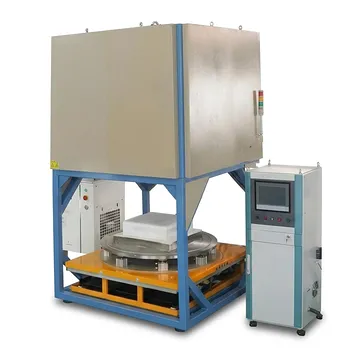
- Bottom Loaded Inert Gas Atmosphere Box Furnace 1400C Maximum Temperature 125L High Capacity Laboratory Heat Treatment System
People Also Ask
- What role does atmosphere control play in technical ceramics and glass? Master Material Purity and Precision
- What is the function of a vertical tube furnace in MnOx-SiO2 research? Precision Control & Quenching
- What's the Role of Tube Furnaces in FeCuS-N-C Synthesis? Precision Pyrolysis & Atmosphere Control
- What role does a high-temperature atmosphere furnace play in the direct electrochemical reduction of CO2? - Key Insights
- What is the function of a high-temperature tube furnace with atmosphere control? Optimize Carbonization of Composites

Tech Team · ThermUnits
Last updated on Jun 03, 2026
Related Products
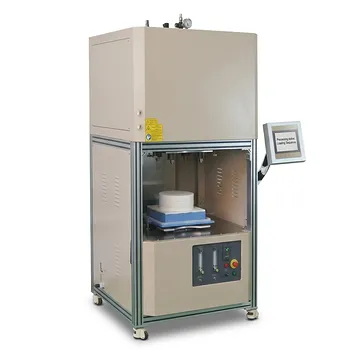
High Temperature Vertical Atmosphere Controlled Furnace with Automatic Bottom Loading and 1700°C Capacity for Advanced Material Research
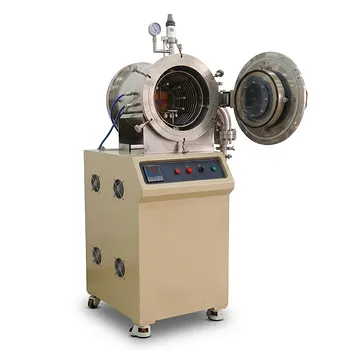
High Temperature Cold Wall High Vacuum Chamber Furnace 1400C for Advanced Material Processing
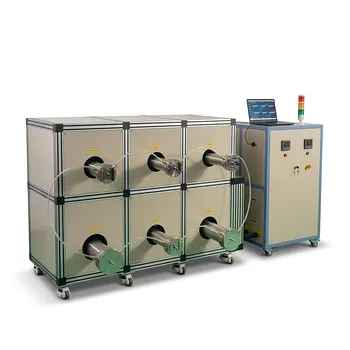
1200C Max 6 Channel High Cleanliness Hydrogen Furnace for High Throughput Annealing
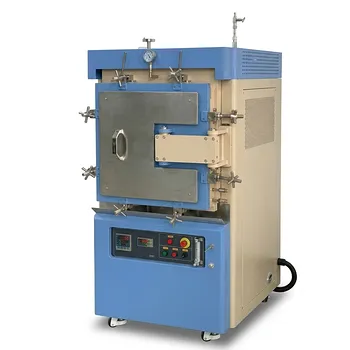
High Temperature Economic Hydrogen Gas Box Furnace 1600C Atmosphere Controlled Thermal Processing System 65L Capacity