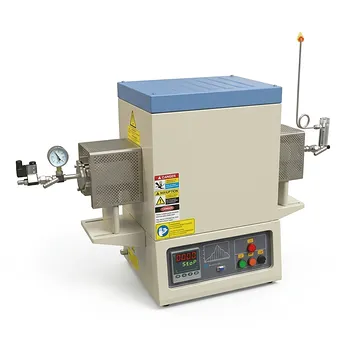
What process conditions does a Tube Furnace provide for Ni3FeN/NF? Achieve High-Performance OER Electrocatalysts
Updated 5 months ago
To prepare nickel-iron nitride ($Ni_3FeN/NF$), a high-temperature tube furnace provides a precisely controlled thermal environment of $500\ ^\circ\text{C}$ with a steady heating rate of $5\ ^\circ\text{C}\ \text{min}^{-1}$. These specific conditions, maintained within a continuous flow of ammonia ($NH_3$) gas, facilitate a thorough reaction that transforms precursors into a catalyst with high metallic conductivity and oxygen evolution reaction (OER) activity.
Core Takeaway: The tube furnace acts as a chemical reactor that combines precise ramp-rate heating with a reducing ammonia atmosphere to replace oxygen atoms with nitrogen, effectively "tuning" the material's electronic structure for high-performance electrocatalysis.
The Role of Controlled Thermal Processing
A tube furnace is essential for $Ni_3FeN/NF$ synthesis because it allows for the exact manipulation of thermal energy, which dictates the kinetics of the nitridation process.
Precise Temperature Regulation
The furnace maintains a constant temperature of $500\ ^\circ\text{C}$, which is the threshold required to trigger the chemical restructuring of the nickel-iron precursor. This stability ensures that the reaction is uniform throughout the material, preventing the formation of undesired phases or incomplete nitridation.
Controlled Heating Rates
A ramp rate of $5\ ^\circ\text{C}\ \text{min}^{-1}$ prevents thermal shock and allows for the gradual release of volatile components from the precursor. Slow heating is critical for maintaining the structural integrity of the nickel-iron framework, ensuring the final nitride retains its intended surface area and catalytic properties.
The Atmospheric Chemistry of Nitridation
Beyond heat, the tube furnace provides a sealed "flow field" that manages the chemical interaction between gases and the solid precursor.
Ammonia ($NH_3$) as a Reducing Agent
The use of an ammonia atmosphere is dual-purpose; it provides the nitrogen necessary for nitridation while acting as a reducing environment. This reducing nitrogen environment is vital for removing oxygen from the precursor, allowing nitrogen atoms to take their place within the crystal lattice.
Induction of Metallic Conductivity
By facilitating the replacement of oxygen with nitrogen, the furnace environment transforms the material into a nitride phase. This transformation is what imparts the metallic conductivity necessary for efficient electron transfer during the oxygen evolution reaction (OER).
Understanding the Trade-offs
While tube furnaces offer unmatched precision, they require careful management of operational variables to avoid synthesis failures.
Gas Flow and Sealing Requirements
Achieving high-quality $Ni_3FeN$ requires a gas-tight environment to prevent oxygen ingress, which would counteract the reduction process. A lack of proper sealing can lead to the formation of oxides instead of nitrides, significantly degrading the catalyst's performance.
Handling Hazardous Exhaust
Using $NH_3$ at high temperatures necessitates robust exhaust and scrubbing systems to manage toxic fumes. While the furnace provides the reaction space, the user must ensure that the flow rate is optimized to balance reaction thoroughness with safety and gas consumption.
Applying These Conditions to Your Project
The specific parameters provided by the tube furnace should be adjusted based on your target material properties and precursor types.
- If your primary focus is Maximum OER Activity: Adhere strictly to the $500\ ^\circ\text{C}$ setpoint and $NH_3$ flow to ensure complete oxygen-to-nitrogen substitution.
- If your primary focus is Structural Integrity of the NF Substrate: Monitor the ramp rate closely; exceeding $5\ ^\circ\text{C}\ \text{min}^{-1}$ may cause mechanical stress or peeling of the active material from the nickel foam.
- If your primary focus is Phase Purity: Ensure the furnace tube is fully purged of oxygen before heating to maintain a pure reducing atmosphere throughout the cycle.
By mastering the balance of temperature, ramp rate, and ammonia flow, you can reliably synthesize high-performance nickel-iron nitride catalysts for advanced energy applications.
Summary Table:
| Parameter | Optimal Setting | Purpose |
|---|---|---|
| Temperature | $500\ ^\circ\text{C}$ | Triggers chemical restructuring and nitridation |
| Heating Rate | $5\ ^\circ\text{C}\ \text{min}^{-1}$ | Prevents thermal shock and maintains structural integrity |
| Atmosphere | Ammonia ($NH_3$) | Acts as a reducing agent and nitrogen source |
| Environment | Gas-tight / Sealed | Prevents oxygen ingress to ensure high nitride phase purity |
| Target Result | Metallic Ni3FeN/NF | High metallic conductivity and optimized OER activity |
Elevate Your Material Research with THERMUNITS
Precise control over temperature and atmosphere is the difference between a failed experiment and a breakthrough in electrocatalysis. THERMUNITS is a leading manufacturer of high-temperature laboratory equipment, providing the rigorous thermal stability required for advanced material science and industrial R&D.
Whether you are synthesizing nickel-iron nitrides or developing new semiconductors, our comprehensive range of thermal solutions—including Tube, Vacuum, Atmosphere, and Muffle furnaces, CVD/PECVD systems, and Vacuum Induction Melting (VIM) furnaces—is engineered for excellence. We empower researchers to achieve exact ramp rates and high-purity environments for every heat treatment application.
Ready to optimize your synthesis process? Contact our engineering team today to discuss your specific requirements and discover how THERMUNITS can provide the perfect furnace for your laboratory or production line.
References
- Huashuai Hu, Minghui Yang. Engineered Nickel–Iron Nitride Electrocatalyst for Industrial‐Scale Seawater Hydrogen Production. DOI: 10.1002/adma.202415421
Mentioned Products
- 1500C 3-Zone Rotary Tube Furnace 60mm with Automatic Powder Feeding and Receiving System for Continuous Material Synthesis
- 1100C High Pressure Rocking Tube Furnace with 2 Inch Super Alloy Processing Tube for Material Synthesis
- 1500C Max Dual Zone Rotary Tube Furnace with 60 mm OD Alumina Tube for High Temperature Material Synthesis
- 24 Inch Three Zone Split Tube Furnace with Optional Quartz Tube and Vacuum Flange System for High Temperature Material Synthesis
- High Temperature Dual Zone Rotating Tube Furnace 1500C Silicon Carbide Heating for Advanced Material Synthesis
People Also Ask
- How does a rotary tube furnace improve the processing of granular materials? Enhance Uniformity and Reaction Kinetics
- In what ways do rotary tube furnaces enhance chemical and specialty mineral processing? Drive Precision and Uniformity.
- Why use a rotary tube furnace for FACS carbonization? Ensure uniform morphology and prevent sphere agglomeration.
- Why is the precise optimization of residence time essential in the catalyst calcination process? Maximize Your Yields.
- What are the typical operating temperature ranges and mechanical specifications for rotary furnaces? A Complete Guide

Tech Team · ThermUnits
Last updated on Apr 14, 2026
Related Products
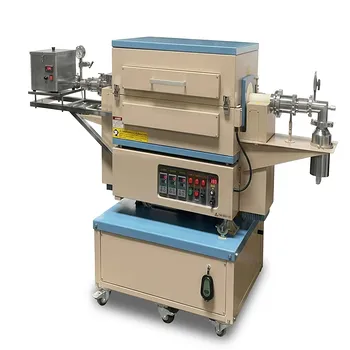
1500C 3-Zone Rotary Tube Furnace 60mm with Automatic Powder Feeding and Receiving System for Continuous Material Synthesis
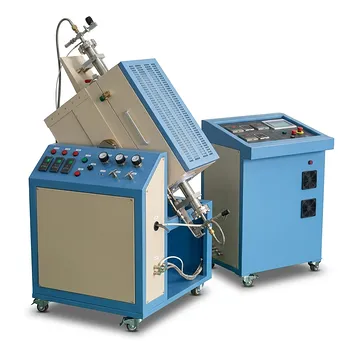
1100C High Pressure Rocking Tube Furnace with 2 Inch Super Alloy Processing Tube for Material Synthesis
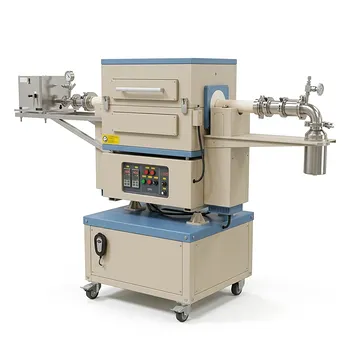
1500C Max Dual Zone Rotary Tube Furnace with 60 mm OD Alumina Tube for High Temperature Material Synthesis
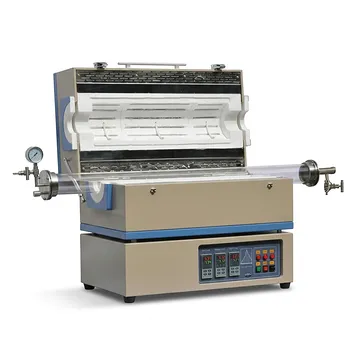
24 Inch Three Zone Split Tube Furnace with Optional Quartz Tube and Vacuum Flange System for High Temperature Material Synthesis
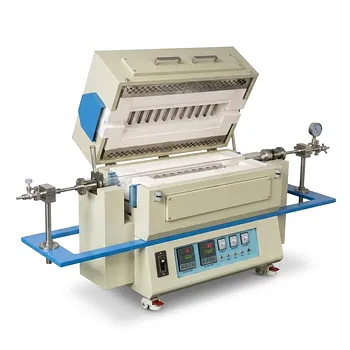
High Temperature Dual Zone Rotating Tube Furnace 1500C Silicon Carbide Heating for Advanced Material Synthesis

High Temperature 1700C Vertical Tube Furnace for Powder Spherification and Material Sintering
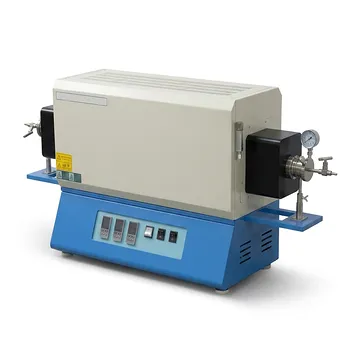
High Temperature Three Temperature Zone Tube Furnace for Advanced Material Science Sintering and Chemical Vapor Deposition Applications
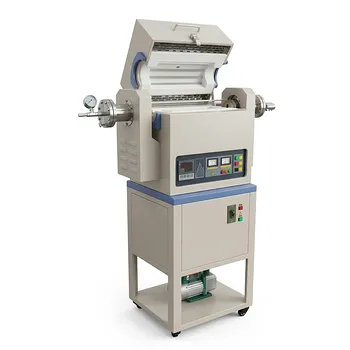
High Temperature Rotary Tilt Tubular Furnaces for Advanced Powder Sintering and Material Processing
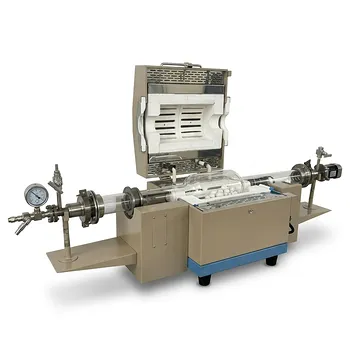
High Temperature Rotary Tube Furnace with Integrated Ball Milling and Gas Flow Function for Powder Nitriding
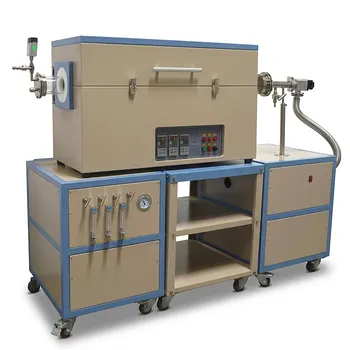
Three Zone Quartz Tube Furnace with 3 Channel Gas Mixer Vacuum Pump and Anti Corrosive Vacuum Gauge

High Temperature Automated 5 Inch Tube Furnace for Autonomous Material Research and Advanced Laboratory R&D
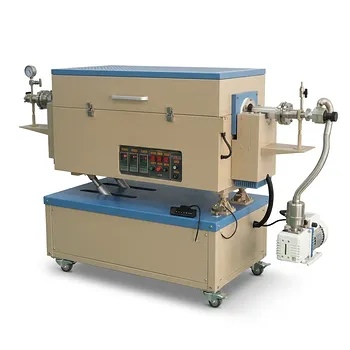
Three Zone Rotary Tube Furnace for High Temperature Powder Processing and Material Research
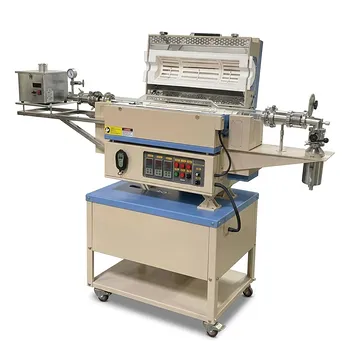
5 Inch Rotary Tube Furnace with Automatic Feeding and Receiving System 1200C Three Zone CVD Powder Processing
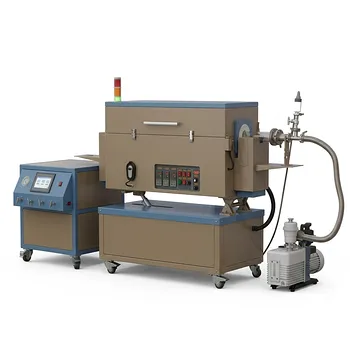
5 Inch Three Zone Rotary Tube Furnace with Integrated Gas Delivery System and 1200C Capability for Advanced Material CVD Processing
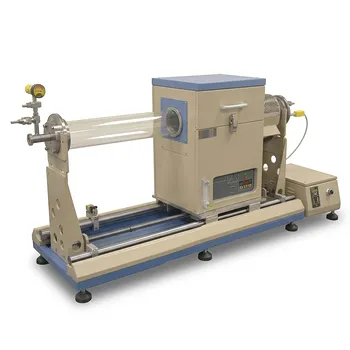
Rapid Thermal Processing Sliding Tube Furnace with 4 Inch OD Quartz Tube and 900C IR Heating

Vertical 1700C Vacuum and Atmosphere Tube Furnace with 80mm Alumina Tube
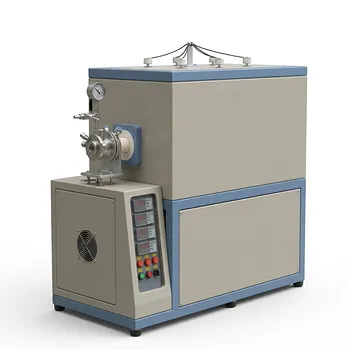
High Temperature 1700C Three Zone Tube Furnace with Alumina Tube 50mm 60mm 80mm OD for Material Research and Industrial Heat Treatment
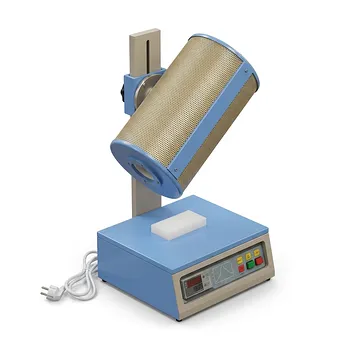
1100°C Vertical Laboratory Furnace for DIY Tubular Reactors with PID Temperature Controller
1200C Max Three Zone Tube Furnace 6 Inch OD Max with Tube and Flange