What protective functions does a covered ceramic boat provide during the high-temperature annealing of catalysts? (Safety Guide)
Updated 3 months ago
A covered ceramic boat provides a critical physical and chemical barrier that prevents the spontaneous ignition of active catalysts while ensuring chemical purity during high-temperature treatment. By acting as a shielded containment vessel, it facilitates uniform heating and prevents accidental oxidation or cross-contamination between the catalyst and the furnace environment.
The covered ceramic boat is a specialized tool designed to maintain the integrity of sensitive materials by isolating them from atmospheric oxygen and corrosive side reactions. Its primary value lies in its ability to transition highly reactive annealed catalysts safely from the furnace to the ambient environment.
Physical Isolation and Atmospheric Control
Prevention of Spontaneous Ignition
The lid of a ceramic boat serves as a vital physical shield that remains in place after the annealing process is complete. This barrier prevents highly active catalysts from coming into direct contact with oxygen, which would otherwise lead to spontaneous ignition or unwanted rapid oxidation.
Control of Gas-Solid Interactions
While the boat itself holds the material, the combination of the boat’s shape and its cover helps manage how flowing gases, such as argon or phosphine, interact with the sample. This configuration ensures that thermal atomization and carbonization reactions proceed uniformly across the entire material layer.
Mitigation of Accidental Oxidation
By restricting the immediate flow of air once the furnace is opened, the cover maintains the intended physicochemical properties of the catalyst. This is essential for preserving the oxidation state and surface morphology required for high-performance catalytic activity.
Chemical Stability and Material Integrity
Inertness at Extreme Temperatures
Ceramic boats are engineered for exceptional chemical inertness, meaning they do not react with the catalyst samples (such as nickel or carbon nanotubes) at temperatures ranging from 600°C to 700°C. This ensures that no metallic or mineral impurities from the container migrate into the synthesized catalyst.
Resistance to Corrosive Agents
During chemical activation, catalysts are often exposed to harsh alkaline agents like KOH or NaOH. The ceramic material is designed with high corrosion resistance to withstand these chemicals without degrading or contaminating the reaction environment.
Prevention of Cross-Contamination
The boat acts as a dedicated containment vessel that prevents the sample from touching the furnace tube directly. This protection is reciprocal: it prevents the furnace tube from contaminating the sample and protects the expensive furnace components from corrosive reaction gases or powders.
Understanding the Trade-offs
Thermal Shock Limitations
While ceramic boats have high-temperature resistance, they can be brittle and susceptible to thermal shock. If heated or cooled too rapidly, the boat or its lid may crack, potentially exposing the catalyst to the atmosphere prematurely.
Gas Diffusion vs. Protection
A tightly covered boat provides maximum protection but may limit the diffusion of necessary process gases, such as phosphorus sources. Finding the right balance between shielding and gas exposure is a common challenge that requires precise lid positioning or specific boat geometries.
Porosity and Cleaning Challenges
Some ceramic materials are slightly porous and may retain trace residues from previous experiments. If not cleaned or "baked out" properly, these residues can cause batch-to-batch contamination, undermining the very purity the boat is meant to protect.
How to Apply This to Your Project
Selecting the Right Approach
Choosing and using a ceramic boat depends on the sensitivity of your catalyst and the chemicals involved in your process.
- If your primary focus is safety with pyrophoric materials: Always ensure the lid is seated properly and remains on the boat until the sample has cooled completely to room temperature.
- If your primary focus is chemical purity: Select a high-purity alumina boat to minimize leaching and ensure the vessel is chemically compatible with any alkaline or acidic activators you are using.
- If your primary focus is uniform gas reaction: Consider using a boat with a loosely fitted lid or a specific depth that allows flowing gases to reach the sample while still providing a physical overhead shield.
By treating the ceramic boat as a functional component of the reaction rather than a simple container, you ensure both the safety of the operator and the integrity of the catalyst.
Summary Table:
| Function | Key Benefit | Critical Value |
|---|---|---|
| Physical Shielding | Blocks oxygen contact | Prevents spontaneous ignition of active catalysts |
| Chemical Inertness | Resists KOH/NaOH corrosion | Maintains sample purity at 600°C - 700°C |
| Atmospheric Control | Regulates gas diffusion | Ensures uniform atomization and carbonization |
| Equipment Protection | Isolates corrosive gases | Extends the lifespan of furnace tubes and elements |
Optimize Your Catalyst Research with THERMUNITS Precision Furnaces
High-performance catalysts require more than just the right container; they require an environment of absolute precision and stability. THERMUNITS is a leading manufacturer of high-temperature laboratory equipment, providing the material science and industrial R&D sectors with advanced thermal solutions.
Our comprehensive range—including Tube, Atmosphere, Vacuum, and CVD/PECVD systems—is engineered to handle sensitive annealing processes with superior temperature uniformity and atmospheric control. We also offer Muffle, Rotary, and Hot Press furnaces, alongside high-purity thermal elements to support your most demanding heat treatment needs.
Ready to enhance your lab's efficiency and material integrity? Contact THERMUNITS today to discuss your specific requirements with our technical experts!
References
- Zhanxiong Feng, Cheng Wang. New Facile Continuous Microwave Pipeline Technology for the Preparation of Highly Stable and Active Carbon‐Supported Platinum Catalyst. DOI: 10.1002/celc.202300546
Mentioned Products
- Rapid Thermal Processing Atmosphere Controlled Bottom Loading Furnace 1100C with 50C Per Second Heating Rate for Wafer Annealing
- Large Bench Top 1700C High Temperature Muffle Furnace with 19L Chamber for Advanced Material Sintering and Annealing
- Rapid Thermal Processing Furnace 1100C Atmosphere Controlled Bottom Loading RTP System for Wafer Annealing and Catalysis Research
- High Temperature 1500C Benchtop Muffle Furnace 3.6L Alumina Fiber Chamber Programmable Controller Sintering Annealing Carbonization Thermal Processing System
- High Temperature Vertical Atmosphere Controlled Furnace with Automatic Bottom Loading and 1700°C Capacity for Advanced Material Research
People Also Ask
- What role does a SiC-coated graphite susceptor play in H2Se selenization? Boost RTP Thermal Uniformity & Film Purity.
- What are the advantages of using a Bottom-Loading High-Temperature Furnace in Barium Titanate Fast Firing? Superior Microstructure
- What are the functional advantages of an RTP system for surface deposition? Enhance Heterojunction Interface Integrity
- Why is an atmosphere-controlled annealing furnace required for the post-treatment of synthesized KTiOPO4 thin films? KTP
- What is the purpose of coating ceramic sheets with platinum paste? Achieve Stable High-Temp Ohmic Contacts

Tech Team · ThermUnits
Last updated on Jun 02, 2026
Related Products
Rapid Thermal Processing Atmosphere Controlled Bottom Loading Furnace 1100C with 50C Per Second Heating Rate for Wafer Annealing
Large Bench Top 1700C High Temperature Muffle Furnace with 19L Chamber for Advanced Material Sintering and Annealing
Rapid Thermal Processing Furnace 1100C Atmosphere Controlled Bottom Loading RTP System for Wafer Annealing and Catalysis Research
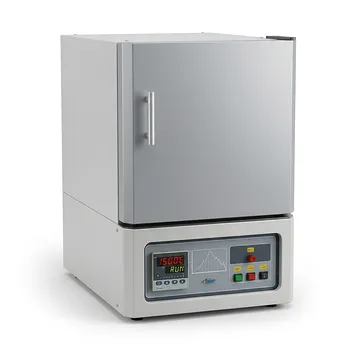
High Temperature 1500C Benchtop Muffle Furnace 3.6L Alumina Fiber Chamber Programmable Controller Sintering Annealing Carbonization Thermal Processing System
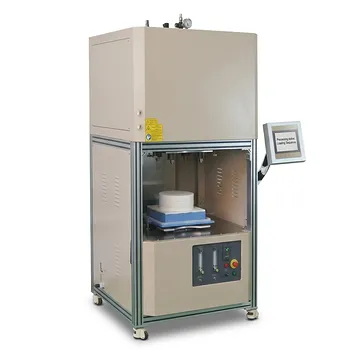
High Temperature Vertical Atmosphere Controlled Furnace with Automatic Bottom Loading and 1700°C Capacity for Advanced Material Research
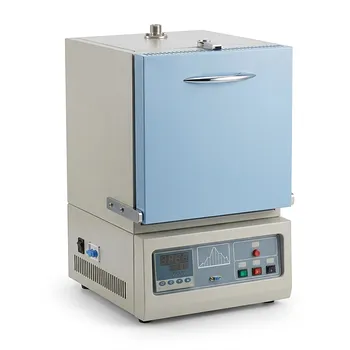
1750C Compact Muffle Furnace 1.7L Ultra High Temperature Laboratory Sintering System for Advanced Ceramics and Material Science Research