What role does a Graphite Crucible play in RAS for Nd-Fe-B magnets? Achieve Uniform Heat & Stable Microstructure
Updated 3 months ago
In the Radiation-Assisted Sintering (RAS) of Nd-Fe-B magnets, the graphite crucible acts as a high-performance thermal radiator that decouples the heating source from the magnetic material. It absorbs Joule heat generated by the Spark Plasma Sintering (SPS) apparatus and transfers that energy to the magnet body via thermal radiation, preventing the phase decomposition and localized overheating common in direct-current sintering.
The graphite crucible serves as an essential thermal intermediary, converting electrical energy into uniform radiant heat to protect the delicate microstructure of Nd-Fe-B magnets. By eliminating direct current flow through the sample, it ensures phase stability while maintaining the rapid heating capabilities required for high-performance magnet production.
The Mechanism of Radiant Heat Transfer
The graphite crucible fundamentally changes how energy reaches the magnet "green body" during the sintering process.
Absorbing Joule Heat
In a standard SPS setup, current often flows through the sample; however, in RAS, the graphite crucible captures the Joule heat generated by the apparatus. This makes the crucible the primary heat source rather than the sample itself.
The Role of Thermal Radiation
Once the crucible reaches high temperatures, it transfers energy to the Nd-Fe-B sample through efficient thermal radiation. This allows for rapid heating—sometimes reaching rates of 200 °C/min—without requiring physical contact or electrical conduction through the magnet.
Creating a Controlled Atmosphere
The crucible provides a chemically stable and relatively closed environment. This is particularly critical for maintaining vapor equilibrium during advanced processes like in-situ alloying or when managing volatile elements.
Protecting the Nd-Fe-B Microstructure
Nd-Fe-B magnets are highly sensitive to temperature spikes and electrical current, which can degrade their magnetic properties.
Eliminating Direct Current Flow
By acting as a shield, the crucible prevents direct current from passing through the magnet. This eliminates the risk of localized "hot spots" or premature phase decomposition that occurs when electricity flows through the grain boundaries of the green body.
Pressure-Independent Sintering
Because the heat is delivered via radiation, the process becomes pressure-independent. This allows researchers and engineers to optimize the density and grain size of the magnet without being forced to apply high mechanical pressure to maintain electrical contact.
Maintaining Thermal Uniformity
When paired with insulation like high-activity graphite felt, the crucible system minimizes radiant heat loss. This concentrates the energy within the sintering zone, ensuring the magnet reaches a uniform temperature throughout its entire volume.
Understanding the Trade-offs
While the graphite crucible provides significant advantages, it introduces specific technical challenges that must be managed.
Thermal Lag and Calibration
Because the heating is indirect, there is a natural thermal lag between the crucible temperature and the actual sample temperature. Operators must precisely calibrate their equipment to ensure the sample is not under-sintered despite the crucible reaching the target setpoint.
Carbon Contamination Risks
Graphite is a form of carbon, and at extreme temperatures, there is a risk of carbon diffusion into the Nd-Fe-B sample. While the crucible acts as a physical barrier, direct proximity at high vacuum can lead to surface contamination if the atmosphere is not perfectly controlled.
Crucible Degradation
The rapid heating cycles (up to 200 °C/min) subject the graphite to significant thermal shock. Over time, this can lead to structural fatigue or "pitting" of the crucible walls, which may eventually compromise the uniformity of the radiant heat field.
How to Apply This to Your Process
When implementing a graphite crucible system for Nd-Fe-B production, your configuration should match your specific metallurgical goals.
- If your primary focus is phase stability: Use a thick-walled graphite crucible to ensure maximum shielding from direct current and more stable radiant heat.
- If your primary focus is energy efficiency: Wrap the crucible in high-activity graphite felt and zirconia powder to minimize radiant loss and concentrate heat within the sample zone.
- If your primary focus is chemical purity: Utilize a multi-layer crucible system to create a closed environment that maintains vapor equilibrium and prevents the loss of volatile alloying elements.
By mastering the radiant properties of the graphite crucible, you can achieve the dense, fine-grained microstructures necessary for the next generation of high-performance permanent magnets.
Summary Table:
| Key Function | Mechanism | Benefit for Nd-Fe-B Magnets |
|---|---|---|
| Thermal Radiator | Converts Joule heat into radiant energy | Ensures uniform heating and prevents localized hot spots |
| Electrical Shield | Decouples heating source from sample | Eliminates direct current flow to prevent phase decomposition |
| Atmosphere Buffer | Creates a stable, closed environment | Maintains vapor equilibrium for volatile alloying elements |
| Process Decoupler | Enables pressure-independent sintering | Allows optimization of grain size without mechanical constraints |
Elevate Your Advanced Material Research with THERMUNITS
Precision thermal processing is the backbone of high-performance material science. THERMUNITS is a leading manufacturer specializing in high-temperature laboratory equipment designed for the most demanding industrial R&D environments.
Whether you are refining Radiation-Assisted Sintering (RAS) for permanent magnets or developing next-generation ceramics, our comprehensive range of solutions provides the control and durability you need. Our product lineup includes:
- Furnaces: Muffle, Vacuum, Atmosphere, Tube, Rotary, and Hot Press Furnaces.
- Advanced Systems: CVD/PECVD systems, Vacuum Induction Melting (VIM) furnaces, and Electric Rotary Kilns.
- Specialized Equipment: Dental Furnaces, high-quality Thermal Elements, and custom heat treatment solutions.
Ready to enhance your lab's efficiency and achieve superior material properties? Contact us today to consult with our experts and find the perfect thermal solution for your specific application.
References
- Tomaž Tomše, Kristina Žužek. A Rapid Thermal‐Radiation‐Assisted Sintering Strategy for Nd–Fe–B‐Type Magnets. DOI: 10.1002/adem.202401404
Mentioned Products
- Vertical Crucible Furnace 1000C High Temperature Laboratory Equipment 4.7 Inch Diameter Chamber SS316 Anti Corrosive Enclosure
- High Temperature Vertical Crucible Furnace with 22L Heating Chamber and 1200C Maximum Temperature
- 600°C Vertical Crucible Furnace with SS316 Alloy Reactor and 6 Port Vacuum Flange
- Compact Crucible Melting Furnace 1100C Programmable Temperature Controller Metal Sintering Equipment
- 1100C Crucible Melting Furnace with Stirring Function for Glovebox and Air Sensitive Alloy Research
People Also Ask
- What is the function of a high-temperature laboratory furnace in the synthesis of Crystalline Carbon Nitride (PTI)?
- How Lab Furnaces Simulate Industrial Conditions for CPCM Stability: Optimize Your Thermal Cycling R&D
- Why is a low initial heating rate of 1 °C/min required for Rh–WNO precursors? Ensuring Structural Integrity & Dispersion
- Why is a laboratory furnace with ultra-high heating rate capabilities necessary for simulating coal injection processes?
- What is the objective of performing long-term annealing at 653 K on quenched PbTe-Ag2Te? Drive Ostwald Ripening.

Tech Team · ThermUnits
Last updated on Jun 03, 2026
Related Products
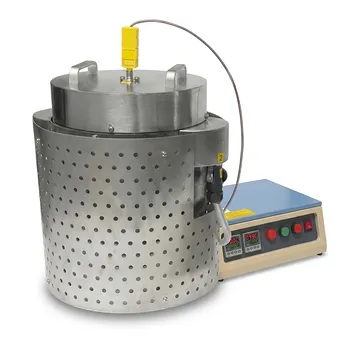
Vertical Crucible Furnace 1000C High Temperature Laboratory Equipment 4.7 Inch Diameter Chamber SS316 Anti Corrosive Enclosure
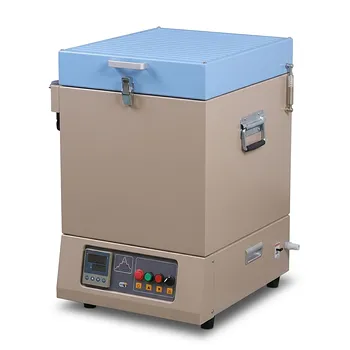
High Temperature Vertical Crucible Furnace with 22L Heating Chamber and 1200C Maximum Temperature
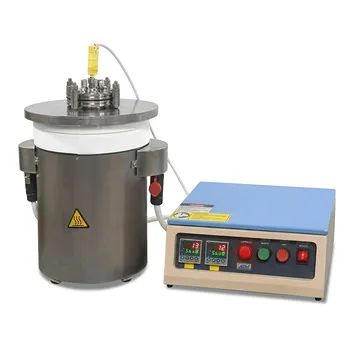
600°C Vertical Crucible Furnace with SS316 Alloy Reactor and 6 Port Vacuum Flange
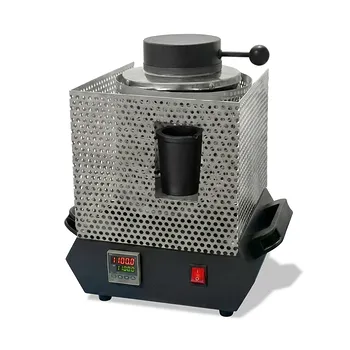
Compact Crucible Melting Furnace 1100C Programmable Temperature Controller Metal Sintering Equipment
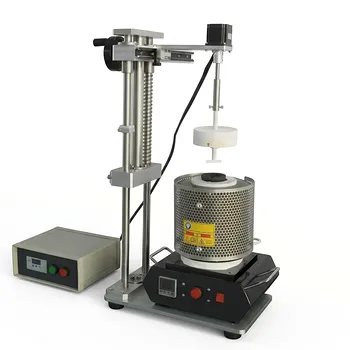
1100C Crucible Melting Furnace with Stirring Function for Glovebox and Air Sensitive Alloy Research
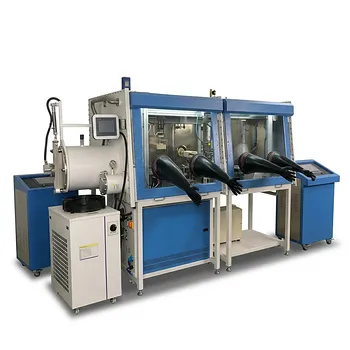
Automatic 10 Crucible Induction Melting and Casting System with Stirring Function and Glovebox Integration 2000C
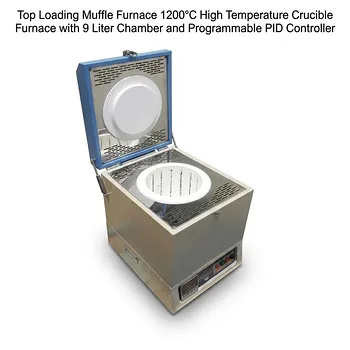
Top Loading Muffle Furnace 1200°C High Temperature Crucible Furnace with 9 Liter Chamber and Programmable PID Controller
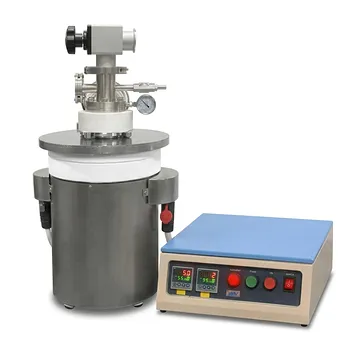
1100C High Temperature Vacuum Crucible Furnace with Quartz Chamber for Thermal Processing and Sintering
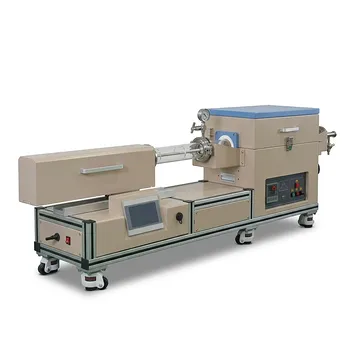
1200C Sliding Internal Crucible Tube Furnace for Controlled Atmosphere Thin Film Deposition and Material Sublimation Research
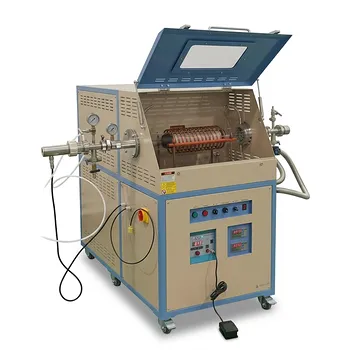
Ultra High Temperature 2300C Induction Heated Graphite Tube Furnace with Infrared Control