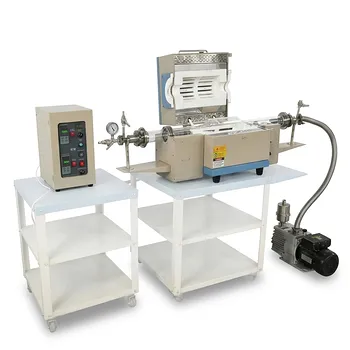
What role does a horizontal tube furnace play in the activation process of Pt-Re catalysts? Expert Guide
Updated 3 months ago
The horizontal tube furnace serves as the critical reactor for catalyst reduction and activation. It provides the precisely controlled thermal and atmospheric environment necessary to transform inactive platinum and rhenium oxides into their catalytically active metallic or sub-valent states. This transformation, powered by regulated hydrogen flow and specific temperature ramping, is essential for the catalyst's performance in processes like the dehydrogenation of perhydro benzyltoluene.
The horizontal tube furnace is the foundation of catalyst efficacy, ensuring that chemical transformation occurs uniformly while protecting the catalyst's delicate microstructure. It bridges the gap between raw chemical precursors and a high-performance, functional catalyst.
The Mechanisms of Catalyst Activation
Transformation of Oxide States
The primary role of the furnace is to facilitate the chemical reduction of platinum and rhenium oxides. By introducing a high-purity hydrogen flow, the furnace strips oxygen from the metal precursors, converting them into active metallic states (Pt0) or specific sub-valent states. These states are the only forms capable of driving the intended chemical reactions.
Precision Temperature Ramping
Activation is not a simple matter of reaching a high temperature; it requires a strictly regulated heating profile. The furnace uses programmable controllers to ramp temperatures slowly, which ensures that ligands are removed and the coordination environment of the metal atoms is stabilized. Sudden shifts in temperature could lead to incomplete reduction or structural failure.
Achieving Uniform Gas Diffusion
The horizontal design is optimized for uniform gas-solid contact. As hydrogen flows through the sealed quartz tube, it interacts evenly with the catalyst bed. This ensures that every particle undergoes the same reduction process, leading to a batch with consistent catalytic activity and chemical properties.
Preserving Catalyst Longevity and Performance
Preventing Sintering and Agglomeration
One of the most vital functions of the tube furnace is the prevention of sintering. By strictly regulating the reduction time and temperature, the furnace prevents individual metal nanoparticles from fusing together. Maintaining small, distinct particles maximizes the surface-to-volume ratio, ensuring a higher number of active sites.
Maintaining Metal Dispersion
The furnace environment is designed to fix the metal species onto the support material (such as activated carbon or alumina) with high uniformity. Precise thermal control during the reduction phase prevents the metal from migrating and clustering. This superior metal dispersion is what allows the catalyst to maintain high activity over long periods of industrial use.
Atmospheric Integrity and Purity
The use of sealed flanges and high-purity quartz tubes creates an isolated environment free from contaminants. This prevents unwanted oxidation or combustion that could occur if oxygen leaked into the system. The ability to switch between inert atmospheres (Nitrogen) and reducing atmospheres (Hydrogen) allows for multi-stage processing, such as calcination followed by reduction, within a single unit.
Understanding the Technical Trade-offs
Batch Processing Limitations
Horizontal tube furnaces are primarily batch-processing tools, which can limit throughput in large-scale industrial settings. While they offer superior control for research and specialty catalyst production, scaling the process requires significant increases in the number or size of the tubes.
Thermal Gradient Challenges
While these furnaces are designed for uniformity, very long tubes can sometimes experience thermal gradients between the center and the ends. Engineers must carefully calibrate the "constant temperature zone" of the furnace to ensure the catalyst is placed exactly where the heat is most stable.
Gas Flow Management
In a horizontal configuration, the gas may "bypass" the catalyst if the bed is not loaded correctly. If the hydrogen flow travels over the top of the catalyst rather than through it, the reduction efficiency will drop, leading to a mixture of active metals and inactive oxides.
How to Apply This to Your Project
When utilizing a horizontal tube furnace for Pt-Re catalyst activation, your strategy should shift based on your specific performance requirements:
- If your primary focus is Maximum Catalytic Activity: Prioritize the precision of the hydrogen flow rate and the purity of the gas to ensure complete reduction to the metallic state.
- If your primary focus is Catalyst Durability: Implement a slower temperature ramping program (e.g., 5-10°C/min) to prevent sintering and preserve the specific surface area of the support.
- If your primary focus is Batch Consistency: Map the furnace's thermal profile using an external thermocouple to identify the precise "sweet spot" where temperature remains most constant.
By mastering the interplay between thermal ramping and atmospheric control, you transform a simple heating element into a precision tool for molecular engineering.
Summary Table:
| Feature | Role in Activation | Primary Benefit |
|---|---|---|
| Atmosphere Control | Regulates H2 & Inert gas flow | Converts oxides to active metallic states |
| Temp Ramping | Precise programmable profiles | Stabilizes coordination & removes ligands |
| Horizontal Design | Optimized gas-solid contact | Ensures uniform reduction across the batch |
| Thermal Stability | Prevents metal sintering | Maximizes surface area and active sites |
Elevate Your Catalyst Research with THERMUNITS
At THERMUNITS, we understand that precision is the backbone of material science. As a leading manufacturer of high-temperature laboratory equipment, we provide the advanced thermal processing solutions needed for critical industrial R&D.
Whether your project requires Tube, Atmosphere, Vacuum, or Muffle furnaces, our equipment is engineered to ensure uniform gas diffusion and stable metal dispersion for high-performance catalyst activation. From CVD/PECVD systems to vacuum induction melting furnaces (VIM), we empower researchers to achieve superior heat treatment results.
Ready to optimize your lab's efficiency? Contact our expert team today to find the perfect thermal solution for your specific application!
References
- Domenic Strauch, Moritz Wolf. Bimetallic platinum rhenium catalyst for efficient low temperature dehydrogenation of perhydro benzyltoluene. DOI: 10.1039/d3cy01336g
Mentioned Products
- Multi Position Tube Furnace 1100C for Laboratory Material Research and Advanced Industrial Thermal Processing
- High Temperature 1700C Vertical Tube Furnace for Powder Spherification and Material Sintering
- Compact Vertical Split Quartz Tube Furnace with Stainless Steel Vacuum Flanges for Rapid Thermal Quenching and Controlled Atmosphere Material Processing
- Double Temperature Revolving Tube Furnace with Precision Rotation and Adjustable Inclination for Advanced Material Research
- 1200C Sliding Tube Furnace for Rapid Thermal Processing and CVD Graphene Growth with 100mm OD Capacity
People Also Ask
- Why use a tube furnace for oxygen annealing LaCrO3/LaMnO3? Optimize Phase Transition & Magnetic Performance.
- What key role does a laboratory high-temperature tube furnace play in the production of carbon nanofibers? Guide
- How is a laboratory high-temperature tube furnace utilized to research the products of aluminothermic reduction? Advanced Metallurgical Solutions
- What is the role of a laboratory tube furnace in the carbonization process of porous carbon foam (PCF)? Master 3D Synthesis
- What role does a laboratory tube furnace play in the pyrolysis and carbonization of biomass? Optimize Thermal Research.

Tech Team · ThermUnits
Last updated on Jun 03, 2026
Related Products
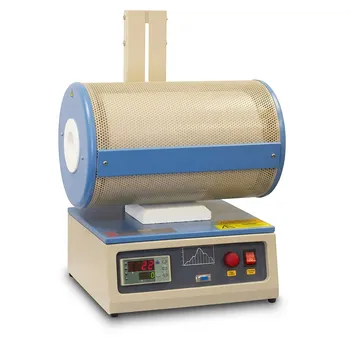
Multi Position Tube Furnace 1100C for Laboratory Material Research and Advanced Industrial Thermal Processing

High Temperature 1700C Vertical Tube Furnace for Powder Spherification and Material Sintering

Compact Vertical Split Quartz Tube Furnace with Stainless Steel Vacuum Flanges for Rapid Thermal Quenching and Controlled Atmosphere Material Processing
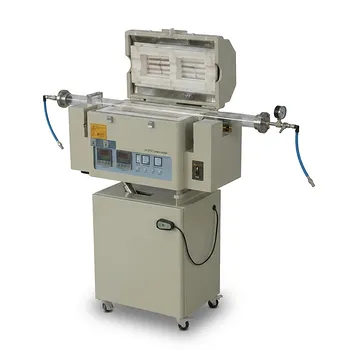
Double Temperature Revolving Tube Furnace with Precision Rotation and Adjustable Inclination for Advanced Material Research
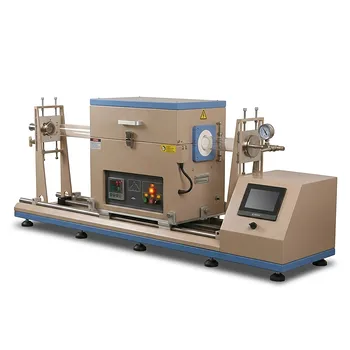
1200C Sliding Tube Furnace for Rapid Thermal Processing and CVD Graphene Growth with 100mm OD Capacity
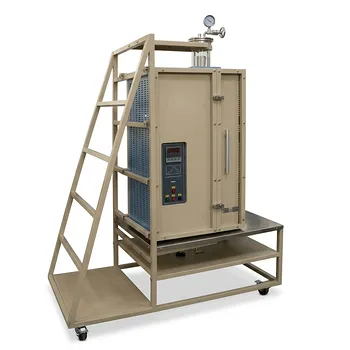
Split Vertical Tube Furnace with 1200C Quartz Tube and Stainless Steel Vacuum Flanges for Rapid Thermal Processing
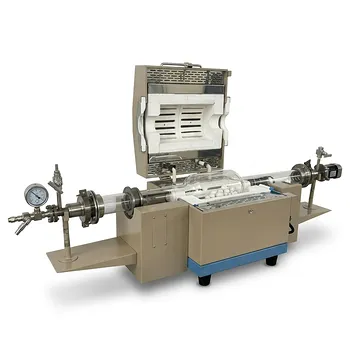
High Temperature Rotary Tube Furnace with Integrated Ball Milling and Gas Flow Function for Powder Nitriding
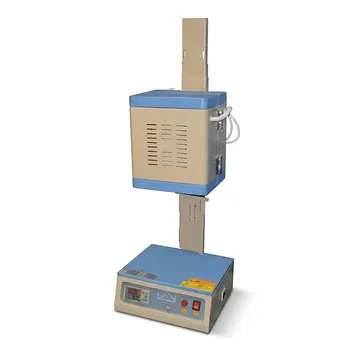
High Temperature Vertical Split Tube Furnace with PID Temperature Controller for 1 and 2 Inch Processing Tubes
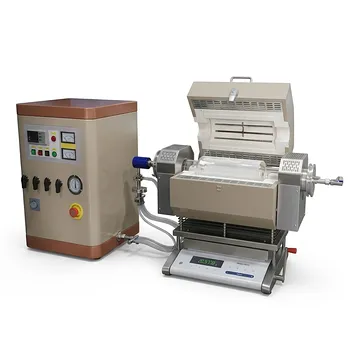
Mini Rotary Tubular Furnaces for Precision Powder Heat Treatment and Thermogravimetric Analysis
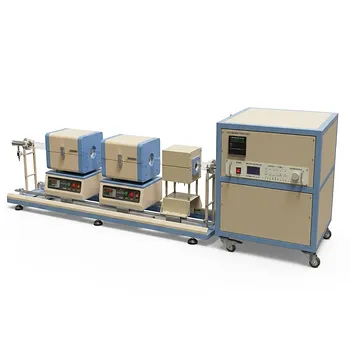
1200C Dual Sliding Tube Furnace with Dual Tubes and Flanges for PECVD Processes
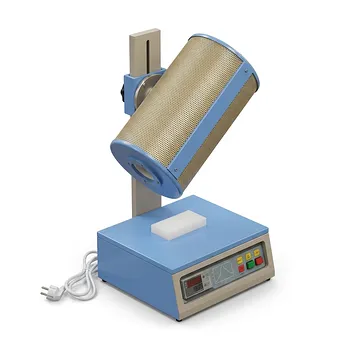
1100°C Vertical Laboratory Furnace for DIY Tubular Reactors with PID Temperature Controller
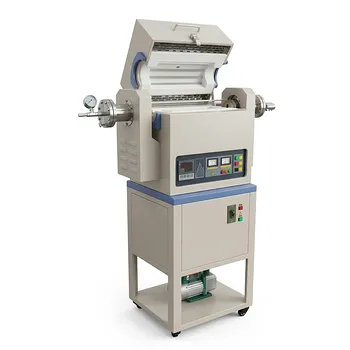
High Temperature Rotary Tilt Tubular Furnaces for Advanced Powder Sintering and Material Processing

Vertical 1700C Vacuum and Atmosphere Tube Furnace with 80mm Alumina Tube
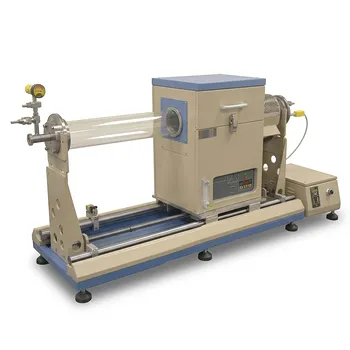
Rapid Thermal Processing Sliding Tube Furnace with 4 Inch OD Quartz Tube and 900C IR Heating
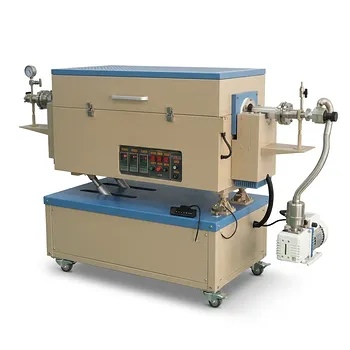
Three Zone Rotary Tube Furnace for High Temperature Powder Processing and Material Research

1200C High Throughput Multi Channel Tube Furnace with 50mm Quartz Tubes for Annealing and Material Phase Diagram Research

1100C Tube Furnace with Vacuum Flange and Programmable Temperature Controller for Material Science and Industrial Heat Treatment

Compact High Temperature 1600C Tube Furnace with 50mm Alumina Tube and Vacuum Flanges for Material Sintering
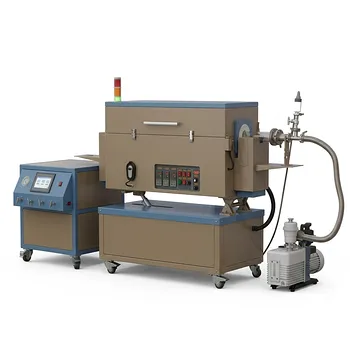
5 Inch Three Zone Rotary Tube Furnace with Integrated Gas Delivery System and 1200C Capability for Advanced Material CVD Processing