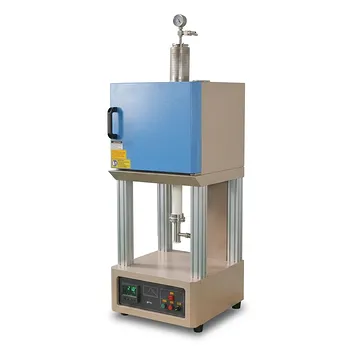
What role does a mixed atmosphere furnace play in carbon specimen treatment? Optimize nanodiamond stabilization.
Updated 3 months ago
The secondary heat treatment of carbon specimens relies on a mixed atmosphere furnace to provide a precise reducing environment, typically utilizing a 5% H2/Ar gas mixture at 1050°C. This specific thermal stage is critical for refining the chemical structure of the initial pyrolysis product, facilitating the evolution and stabilization of internal nanostructures required for high-quality carbon materials.
Core Takeaway: A mixed atmosphere furnace serves as a controlled chemical reactor that uses a hydrogen-based reducing environment to eliminate residual impurities and stabilize the internal matrix, which is essential for the production of final nanodiamond specimens.
The Role of the Reducing Atmosphere
Facilitating Chemical Refinement
The primary function of the furnace is to maintain a reducing environment using a specific 5% H2/Ar mixture.
This mixture prevents oxidation of the carbon specimen while actively reacting with remaining impurities.
At the target temperature of 1050°C, the hydrogen facilitates the removal of residual functional groups that would otherwise degrade the material's purity.
Evolution of Internal Nanostructures
The furnace environment provides the thermal energy and chemical stability necessary for deep molecular reorganization.
By maintaining precise gas ratios, the furnace allows the carbon matrix to evolve into more complex, stable internal structures.
This stabilization is a "decisive step," transforming the raw pyrolyzed carbon into refined nanodiamond specimens.
Structural Stabilization and Modification
Elimination of Residual Functional Groups
Initial pyrolysis often leaves behind oxygen-containing or other reactive functional groups within the carbon framework.
The mixed atmosphere furnace targets these groups, stripping them away to leave a cleaner, more chemically stable carbon skeleton.
Without this stage, the resulting material would lack the structural integrity and chemical properties required for advanced applications.
Precise Control of Thermal Parameters
The furnace must offer precise gas-mixing capabilities and temperature regulation to ensure uniform treatment.
Consistency in the 1050°C environment ensures that the transition from amorphous carbon to nanostructured forms occurs evenly throughout the specimen.
This level of control prevents the collapse of the internal lattice, a risk often associated with high-temperature carbon processing.
Understanding the Trade-offs
Atmosphere Sensitivity
Small fluctuations in the hydrogen-to-argon ratio can significantly impact the final product.
Too little hydrogen may fail to remove functional groups, while an incorrect balance at high temperatures could lead to unintended structural degradation.
Temperature Precision vs. Energy Cost
Operating at 1050°C requires significant energy and high-grade equipment capable of withstanding prolonged heat.
Lowering the temperature might save energy but would likely result in incomplete refinement and poor stabilization of the nanodiamond structure.
Applying This to Your Material Goals
Making the Right Choice for Your Goal
- If your primary focus is producing nanodiamonds: Use a mixed atmosphere furnace at 1050°C with a 5% H2/Ar reducing mixture to ensure proper structural evolution.
- If your primary focus is recovering clean glass fibers: Shift to an oxidative (air) atmosphere at approximately 550°C to burn off surface carbon residues rather than refining them.
- If your primary focus is creating stable single-atom doped structures: Utilize an inert atmosphere (nitrogen or argon) to prevent lattice collapse while strengthening coordination bonds between metal ions and the carbon framework.
- If your primary focus is increasing surface area for adsorption: Prioritize chemical activation (e.g., ZnCl2) in a muffle furnace to promote the "stripping and etching" effects that create micropores.
The precision of the mixed atmosphere furnace is the defining factor in successfully transitioning from crude pyrolyzed carbon to a sophisticated, stabilized nanodiamond structure.
Summary Table:
| Parameter | Value/Setting | Primary Function |
|---|---|---|
| Atmosphere Mixture | 5% H2 / Ar | Creates reducing environment; removes residual impurities |
| Process Temperature | 1050°C | Facilitates deep molecular reorganization and refinement |
| Treatment Stage | Secondary Heat Treatment | Stabilizes internal nanostructures post-pyrolysis |
| Target Material | Nanodiamond Specimens | Ensures chemical stability and structural integrity |
Elevate Your Material Research with THERMUNITS
Precision is the defining factor in successful thermal processing. THERMUNITS is a leading manufacturer of high-temperature laboratory equipment designed for material science and industrial R&D. Whether you are refining carbon specimens in a specialized Atmosphere Furnace or developing advanced materials using CVD/PECVD systems, our equipment ensures uniform heating and precise atmospheric control.
Our comprehensive range includes:
- Muffle, Vacuum, and Tube Furnaces for versatile heat treatment.
- Rotary and Hot Press Furnaces for specialized industrial applications.
- Vacuum Induction Melting (VIM) and Electric Rotary Kilns.
- Dental Furnaces and high-quality Thermal Elements.
Ensure the structural integrity of your next breakthrough. Contact THERMUNITS today to discuss how our thermal solutions can optimize your lab’s efficiency!
References
- Feng Yi, Wuzong Zhou. Formation of Nanodiamonds during Pyrolysis of Butanosolv Lignin. DOI: 10.1021/acsnano.4c02950
Mentioned Products
- 1200C Hydrogen Atmosphere Box Furnace with 5 Heated Sides and 64L Chamber
- 1700C Compact Hybrid Furnace with Dual Layer Box Sintering and Controlled Atmosphere Alumina Tubes
- High Temperature Economic Hydrogen Gas Box Furnace 1600C Atmosphere Controlled Thermal Processing System 65L Capacity
- High Temperature Oxygen and Inert Atmosphere Controlled Furnace 8 Liter 1700C Sintering System for Advanced Materials RD
- Compact Hybrid Muffle and Tube Furnace for 1000C Controlled Atmosphere Laboratory Material Sintering
People Also Ask
- How does a box atmosphere furnace contribute to the pre-oxidation of MS-SOECs? Enhance Durability & Efficiency.
- How does a programmable Box Furnace facilitate the curing of silver inks? Expert Thermal Control for Silicon Substrates
- How does a box furnace facilitate the conversion of precursors in catalyst impregnation processes? Master Calcination
- What is the role of a high-temperature box furnace in the solid-state synthesis of Europium-doped M3MgSi2O8 phosphors?
- How are electric heating elements designed to operate within carburizing atmospheres? Top Design Strategies Revealed

Tech Team · ThermUnits
Last updated on Jun 03, 2026
Related Products
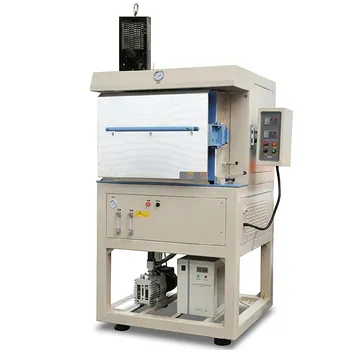
1200C Hydrogen Atmosphere Box Furnace with 5 Heated Sides and 64L Chamber
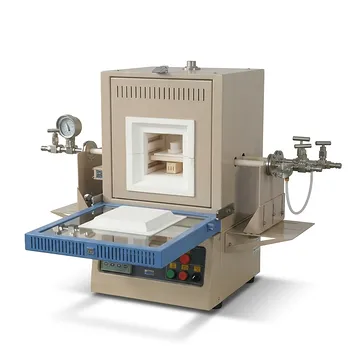
1700C Compact Hybrid Furnace with Dual Layer Box Sintering and Controlled Atmosphere Alumina Tubes
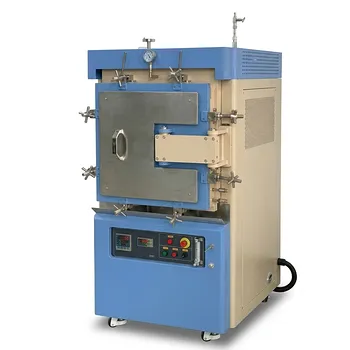
High Temperature Economic Hydrogen Gas Box Furnace 1600C Atmosphere Controlled Thermal Processing System 65L Capacity
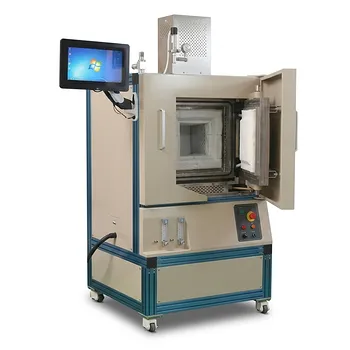
High Temperature Oxygen and Inert Atmosphere Controlled Furnace 8 Liter 1700C Sintering System for Advanced Materials RD
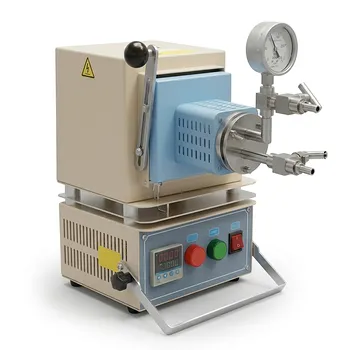
Compact Hybrid Muffle and Tube Furnace for 1000C Controlled Atmosphere Laboratory Material Sintering
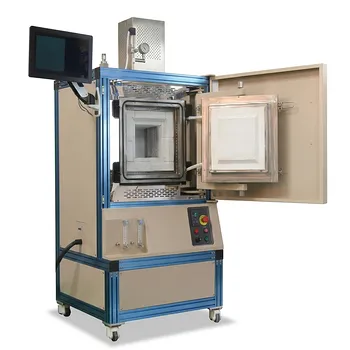
High Temperature Hydrogen Atmosphere Box Furnace 1650C Max Reducing Environment Material Synthesis System 8x8x8 Chamber
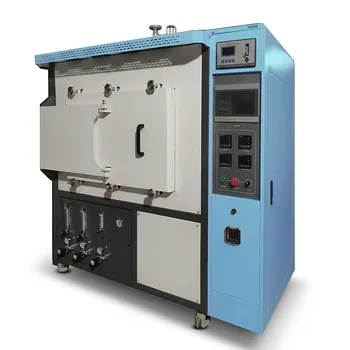
Roller Table Atmosphere Furnace 1500C High Temperature Battery Material Sintering System 112L Capacity
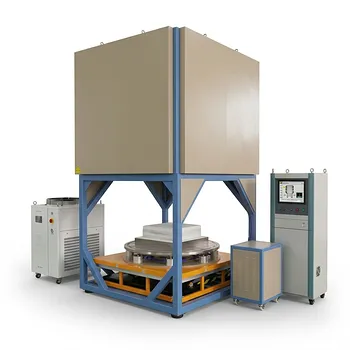
Bottom Loaded Inert Gas Atmosphere Box Furnace 1700C 1300C 216L Large Capacity Industrial Thermal Processing System
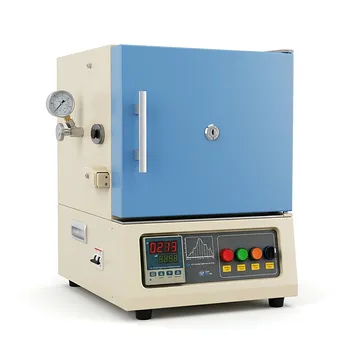
1200C Hybrid Muffle and Tube Furnace for Material Research with Dual Atmosphere Control Quartz Tubes
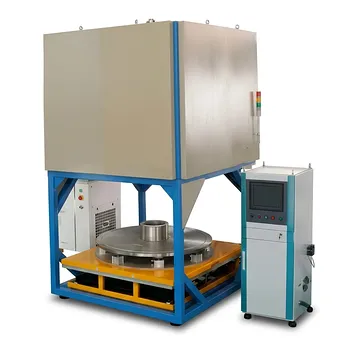
1400C Bottom Loaded Inert Gas Atmosphere Box Furnace with 125L Capacity and Precision Hydraulic Lift
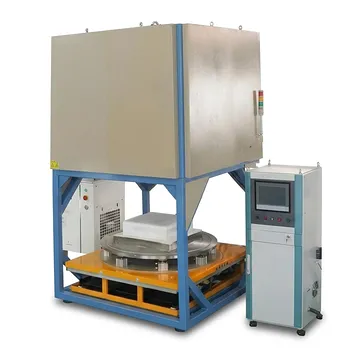
Bottom Loaded Inert Gas Atmosphere Box Furnace 1400C Maximum Temperature 125L High Capacity Laboratory Heat Treatment System
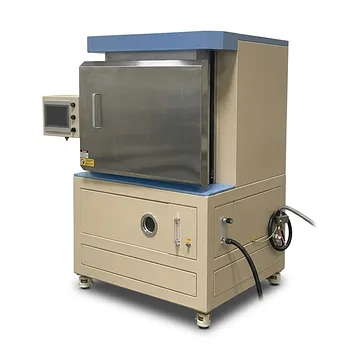
1650C High Temperature Atmosphere Controlled Box Furnace with 65L Chamber for Advanced Material Sintering and Industrial Heat Treatment
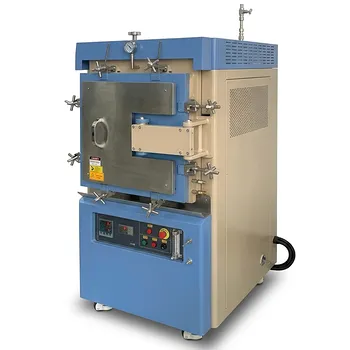
Atmosphere Controlled Muffle Furnace 1700C Maximum Temperature 80L High Capacity Vacuum Inert Gas Box Furnace
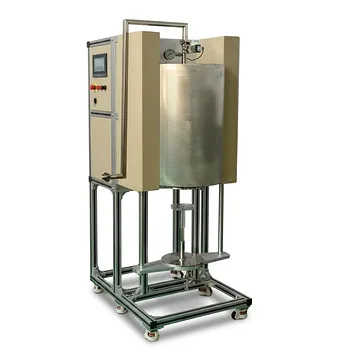
1200°C Atmosphere Controlled Automatic Bottom Loading Furnace with 6 Inch Quartz Tube
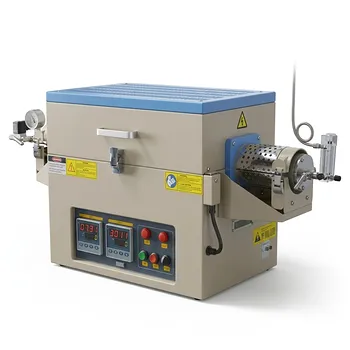
1100C Dual Zone Hydrogen Gas Tube Furnace with Quartz Tube and Integrated H2 Leak Detection System
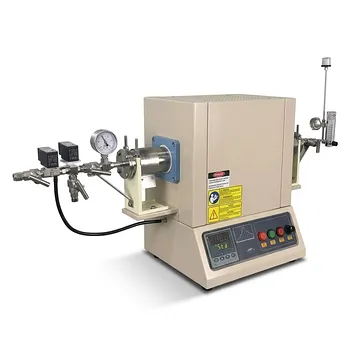
1500C Compact Hydrogen Gas Tube Furnace with 2 Inch Alumina Tube and Hydrogen Detector
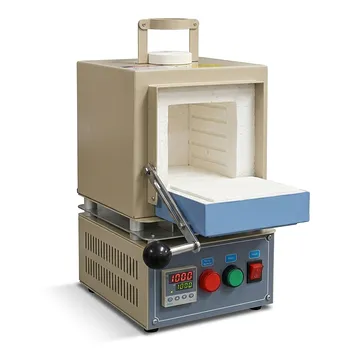
Compact 1000C Muffle Furnace with Programmable Controller and 2 Inch Top Port for Vacuum and Atmosphere Material Research
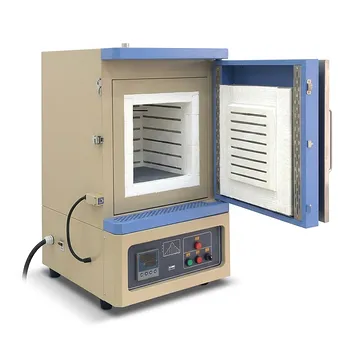
Five Side Heating Muffle Furnace High Purity Alumina Fiber 27L Chamber 1200C High Temperature Thermal Processing System for Sintering Annealing and Materials Research
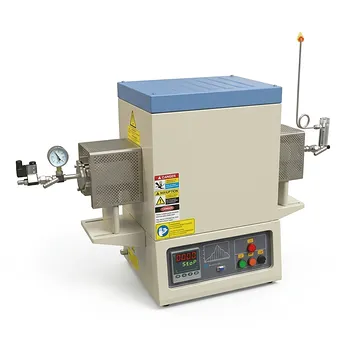
1700C Hydrogen Gas Tube Furnace with 60mm Alumina Process Tube and Integrated Hydrogen Safety Detector