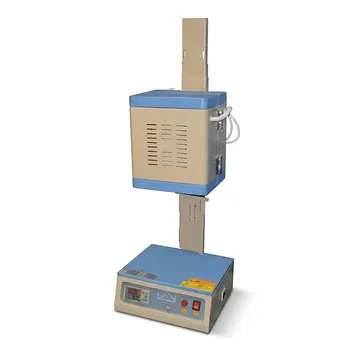
What role does a tube furnace play in the preparation of corn straw biochar? Master Precision Pyrolysis for Quality R&D
Updated 3 months ago
The tube furnace is the essential instrument for controlled pyrolysis. In the preparation of corn straw biochar, it provides a strictly regulated thermal environment that facilitates the thermochemical decomposition of biomass under anaerobic conditions. By precisely managing temperature, heating rates, and atmospheric purity, the furnace ensures the corn straw undergoes dehydration and carbonization rather than simple combustion.
The primary role of a tube furnace is to provide a precise, oxygen-free thermal field that converts corn straw into a stable, carbon-rich substrate. This controlled environment is critical for defining the biochar’s final pore structure, surface chemistry, and yield.
Providing a Controlled Anaerobic Environment
Prevention of Direct Combustion
A tube furnace uses a sealed chamber to exclude oxygen, typically replaced by a continuous flow of inert nitrogen gas. This ensures that the corn straw undergoes pyrolysis—the thermal degradation of organic matter in the absence of oxygen—rather than burning to ash.
Atmospheric Purity and Doping
The furnace allows for a strictly controlled atmosphere that can be manipulated for specific outcomes. Beyond simple carbonization, it enables the effective doping of elements like boron or nitrogen into the carbon framework to enhance the biochar's chemical performance.
Facilitating Degassing and Dehydration
During the initial stages of heating, the furnace environment allows for the systematic removal of moisture and volatile organic compounds. This degassing process is fundamental to shifting the biomass from an organic material to a stable carbon filler.
Precision Thermal Management
Regulating Heating Rates
The furnace allows researchers to set specific heating increments, such as 5 °C per minute. A controlled heating rate is vital because it determines how quickly volatiles are released, which directly influences the development of the mesoporous structure.
Maintaining Peak Carbonization Temperatures
Most corn straw biochar is processed at temperatures between 300 °C and 600 °C, though some applications require up to 800 °C. The tube furnace maintains these high temperatures with minimal fluctuation, ensuring the thorough degradation of hemicellulose, cellulose, and lignin.
Optimizing Residence Time
By holding the biomass at a constant temperature for a specific duration (e.g., 4 hours), the furnace ensures the material reaches a high degree of aromatization. This transforms the corn straw from amorphous carbon into a more crystalline, stable carbon structure.
Structural and Chemical Transformation
Development of Pore Networks
The heat treatment inside the tube furnace creates a rich pore structure within the biochar. This porosity is essential for applications involving filtration, soil amendment, or use as a catalyst support.
Modification of Surface Functional Groups
The specific thermal field of the furnace dictates which functional groups remain on the biochar's surface. These groups are responsible for the biochar's ability to interact with pollutants or nutrients in its final application.
Ensuring Product Consistency
Because the tube furnace provides uniform heating across the sample, the resulting biochar is homogenous. This consistency is crucial for laboratory research where repeatable data is a requirement for validating experimental results.
Understanding the Trade-offs
Scalability vs. Precision
While tube furnaces offer unmatched precision for small-scale batches, they are inherently limited in volume. For researchers, this means high-quality data at the cost of low throughput compared to industrial kiln methods.
Thermal Gradients and Loading
If the furnace tube is over-packed with corn straw, thermal gradients can occur where the core of the sample does not reach the target temperature. This can lead to incomplete carbonization and a product with inconsistent chemical properties.
Gas Flow Dynamics
Incorrect nitrogen flow rates can lead to the "re-condensation" of volatiles onto the biochar surface. This can inadvertently clog pores, reducing the specific surface area and compromising the quality of the biochar substrate.
Applying This to Your Biochar Preparation
Strategic Recommendations
- If your primary focus is maximizing surface area: Utilize a slow heating rate and a higher peak temperature (near 600-700 °C) to ensure the complete clearance of volatiles and the formation of a dense pore network.
- If your primary focus is maximizing biochar yield: Aim for lower pyrolysis temperatures (around 300-400 °C) to minimize the loss of mass to gas and bio-oil while still achieving carbonization.
- If your primary focus is chemical reactivity: Prioritize a moderate temperature and a shorter residence time to preserve specific surface functional groups that might otherwise be lost at extreme heat.
The tube furnace remains the definitive tool for transforming raw agricultural waste into a high-value, engineered carbon material through meticulous environmental control.
Summary Table:
| Function | Mechanism | Key Benefit |
|---|---|---|
| Atmospheric Control | Inert gas (Nitrogen) flow | Prevents combustion; enables element doping |
| Thermal Precision | Controlled heating rates (e.g., 5°C/min) | Optimized pore structure and high carbon yield |
| Structural Change | High-temp carbonization (300-800°C) | Efficient degradation of lignin and cellulose |
| Process Stability | Uniform heat distribution | Consistent, repeatable biochar chemical properties |
Elevate Your Material Research with THERMUNITS
At THERMUNITS, we understand that precision is the foundation of breakthrough material science. As a leading manufacturer of high-temperature laboratory equipment, we provide the thermal accuracy required for advanced industrial R&D and agricultural waste transformation.
Our comprehensive range of solutions includes:
- Precision Furnaces: Tube, Muffle, Vacuum, Atmosphere, and Hot Press furnaces.
- Advanced Systems: CVD/PECVD systems, Dental Furnaces, and Electric Rotary Kilns.
- Specialized Equipment: Vacuum Induction Melting (VIM) furnaces and high-quality Thermal Elements.
Whether you are optimizing biochar pore structures or developing next-generation catalysts, our equipment ensures uniform heating and meticulous atmospheric control.
Ready to enhance your lab's efficiency? Contact our technical experts today to find the perfect heat treatment solution for your specific application!
References
- Huali Yu, Lei Han. Experimental and DFT insights into the adsorption mechanism of methylene blue by alkali-modified corn straw biochar. DOI: 10.1039/d3ra05964b
Mentioned Products
- High Temperature 1700C Vertical Tube Furnace for Powder Spherification and Material Sintering
- Automated 1200 C Tube Furnace for AI Material Research with 6 Inch OD and Sliding Flange
- High Temperature Rotary Tilt Tubular Furnaces for Advanced Powder Sintering and Material Processing
- Three Zone Rotary Tube Furnace for High Temperature Powder Processing and Material Research
- 5 Inch Three Zone Rotary Tube Furnace with Integrated Gas Delivery System and 1200C Capability for Advanced Material CVD Processing
People Also Ask
- What role does a high-temperature vertical tube furnace play in simulating high-carbon ferromanganese slag formation?
- What functions does a vertical high-temperature tube furnace perform? Master Industrial Sintering & R&D Simulation
- What is the primary function of a high-temperature tube furnace in Cu1-N-C synthesis? Precision Thermal Control.
- High-Temp Tube Furnace Role in Converting Microbial Proteins to Iron Single-Atom Sites: Expert Synthesis Guide
- What impact does the heating rate of a tube furnace have on biochar microstructure? Optimize Your Material R&D.

Tech Team · ThermUnits
Last updated on Jun 02, 2026
Related Products

High Temperature 1700C Vertical Tube Furnace for Powder Spherification and Material Sintering
Automated 1200 C Tube Furnace for AI Material Research with 6 Inch OD and Sliding Flange
High Temperature Rotary Tilt Tubular Furnaces for Advanced Powder Sintering and Material Processing
Three Zone Rotary Tube Furnace for High Temperature Powder Processing and Material Research
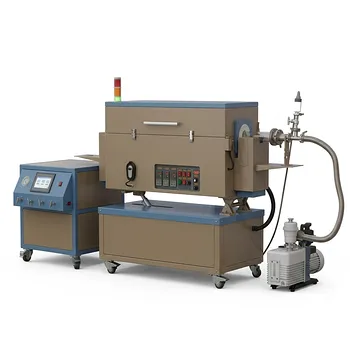
5 Inch Three Zone Rotary Tube Furnace with Integrated Gas Delivery System and 1200C Capability for Advanced Material CVD Processing
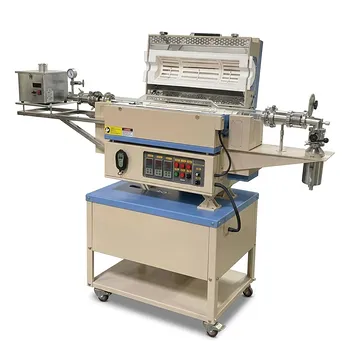
5 Inch Rotary Tube Furnace with Automatic Feeding and Receiving System 1200C Three Zone CVD Powder Processing

Compact High Temperature 1600C Tube Furnace with 50mm Alumina Tube and Vacuum Flanges for Material Sintering

High Temperature Automated 5 Inch Tube Furnace for Autonomous Material Research and Advanced Laboratory R&D
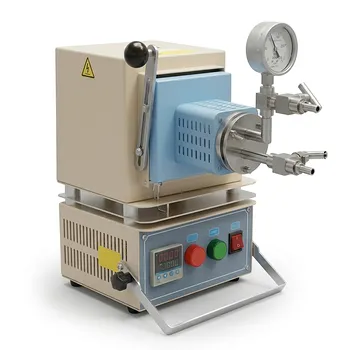
Compact Hybrid Muffle and Tube Furnace for 1000C Controlled Atmosphere Laboratory Material Sintering
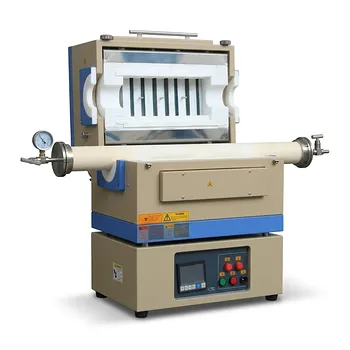
1500C Eight Zone Split Tube Furnace for Thermal Gradient Processing and Advanced Material Research

Compact Vertical Split Quartz Tube Furnace with Stainless Steel Vacuum Flanges for Rapid Thermal Quenching and Controlled Atmosphere Material Processing
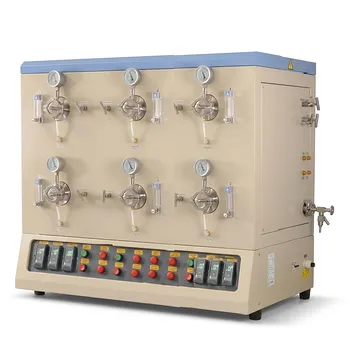
1200C High Throughput Multi Channel Tube Furnace with 50mm Quartz Tubes for Annealing and Material Phase Diagram Research
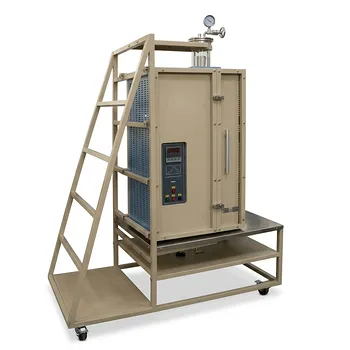
Split Vertical Tube Furnace with 1200C Quartz Tube and Stainless Steel Vacuum Flanges for Rapid Thermal Processing

Vertical 1700C Vacuum and Atmosphere Tube Furnace with 80mm Alumina Tube
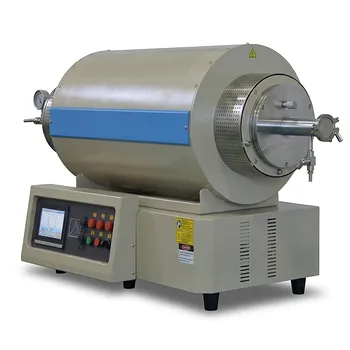
1200C Max Three Zone Tube Furnace 6 Inch OD Max with Tube and Flange
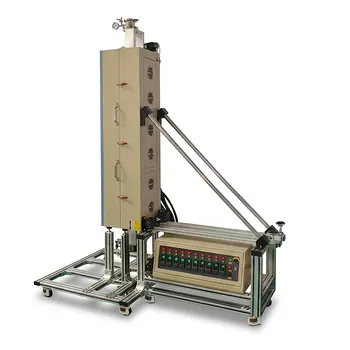
1200°C 10-Zone Split Tube Furnace with Horizontal and Vertical Mounting for Multi-Zone Thermal Gradients and Large Diameter Material Processing
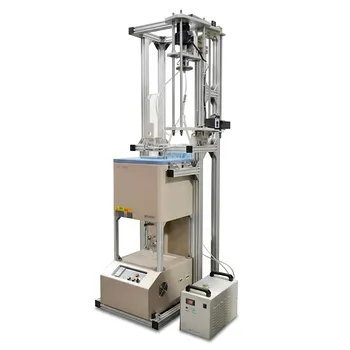
500C Vacuum Vertical Tube Furnace 84mm OD Sample Rotation Lifting System
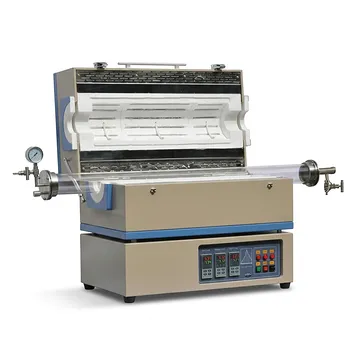
24 Inch Three Zone Split Tube Furnace with Optional Quartz Tube and Vacuum Flange System for High Temperature Material Synthesis
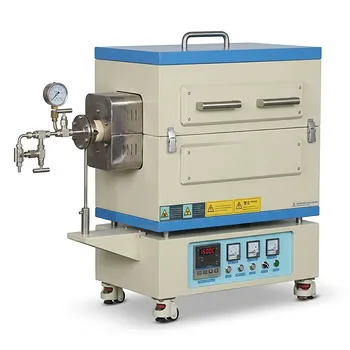
High Temperature Split Tube Furnace 1500C for Material Research Vacuum and Atmosphere Thermal Processing