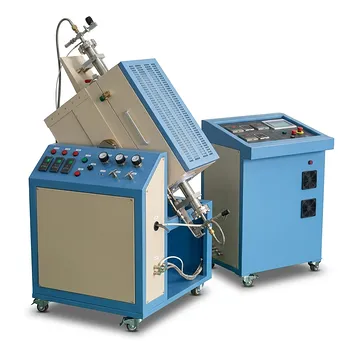
High-Temp Tube Furnace Role in Converting Microbial Proteins to Iron Single-Atom Sites: Expert Synthesis Guide
Updated 3 months ago
The high-temperature tube furnace acts as the primary reactor for the topological transformation of biological precursors into functional catalysts. It provides a precisely controlled thermal environment that triggers the dehydration, deamination, and carbonization of microbial proteins. This process converts iron atoms from their original protein ligands into stable, highly active single-atom sites coordinated with nitrogen or oxygen within a carbon lattice.
Core Takeaway: The tube furnace is the indispensable hardware that facilitates the "bottom-up" synthesis of single-atom catalysts by providing the extreme, inert thermal conditions required to strip away organic matter while locking iron atoms into a conductive carbon framework.
Facilitating the Topological Transformation
Driving Chemical Decomposition
The tube furnace provides the thermal energy necessary to break down the complex molecular structure of microbial proteins. Through precise heating programs, it initiates dehydration and deamination, removing oxygen and nitrogen-containing groups to refine the precursor.
Inducing Carbonization
As temperatures rise, the furnace drives the carbonization of the protein substrate. This transforms the biological material into a stable, conductive carbon matrix that serves as the support for the active iron sites.
Stabilizing Single-Atom Coordination
The furnace facilitates the transition of iron atoms from their natural protein-bound states into stable nitrogen (N) or oxygen (O) coordination structures. This "topological transformation" ensures the iron remains isolated as single atoms rather than aggregating into inactive clusters.
Controlling the Reaction Environment
Maintaining an Inert Atmosphere
The airtight design of the tube furnace is critical for maintaining an inert atmosphere (typically Argon or Nitrogen). This prevents the oxidation of the carbon substrate, which would otherwise combust at high temperatures, destroying the catalyst's structure.
Precise Temperature Gradient Management
Advanced tube furnaces allow for specific dwell times and heating curves, often reaching temperatures between 700°C and 1,000°C. This precision is vital for ensuring that volatiles are removed and the desired crystal phase or coordination environment is achieved without sintering the metal.
Formation of Pore Structures
By regulating the thermal decomposition of organic precursors, the furnace induces the formation of nanopores. This increased porosity is essential for ensuring that the resulting single-atom sites are accessible to reactants during catalysis.
Understanding the Trade-offs and Pitfalls
The Risk of Metal Aggregation
If the furnace temperature is too high or the dwell time is too long, the iron atoms may migrate and undergo sintering. This results in the formation of iron nanoparticles or iron carbide phases rather than the intended single-atom sites, significantly reducing catalytic efficiency.
Impact of Atmospheric Leaks
Even minor leaks in the furnace's seals can introduce trace amounts of oxygen. This leads to the partial gasification of the carbon support or the formation of magnetic iron oxides, which can contaminate the final product and alter its electrochemical properties.
Thermal Uniformity Challenges
Inconsistent heating within the tube can lead to a heterogeneous product. Areas of the precursor that do not reach the target temperature may suffer from incomplete carbonization, resulting in poor electrical conductivity and low active site density.
How to Optimize Your Synthesis Process
Recommendations for Research and Production
- If your primary focus is maximizing active site density: Ensure the furnace provides a highly uniform thermal field and use precise heating curves to prevent iron migration during the carbonization phase.
- If your primary focus is enhancing electrical conductivity: Utilize higher temperatures (approaching 1,000°C) under a strictly maintained inert flow to ensure the complete graphitization of the protein-derived carbon.
- If your primary focus is creating high specific surface area: Calibrate the furnace to remove volatiles at a controlled rate (e.g., around 700°C) to maximize the development of the pore structure without collapsing the carbon framework.
By masterfully controlling the thermal and atmospheric variables within a tube furnace, you can successfully engineer the transition from raw microbial proteins to sophisticated, iron-based single-atom catalysts.
Summary Table:
| Function | Key Thermal Process | Impact on Catalyst |
|---|---|---|
| Energy Delivery | Dehydration & Deamination | Refines precursors by removing organic volatiles |
| Structural Matrix | High-Temp Carbonization | Transforms proteins into a stable, conductive carbon support |
| Atomic Isolation | Topological Transformation | Prevents Fe aggregation by locking atoms into N/O coordination |
| Atmosphere Control | Inert Gas Purging (Ar/N2) | Prevents carbon oxidation and maintains electrochemical properties |
| Porosity Design | Controlled Dwell Times | Creates essential nanopores for reactant accessibility |
Maximize Your Research Precision with THERMUNITS
As a leading manufacturer of high-temperature laboratory equipment for material science and industrial R&D, THERMUNITS provides the advanced thermal solutions necessary for the complex synthesis of single-atom catalysts. Our equipment ensures the strict atmosphere control and thermal uniformity required to prevent metal aggregation and optimize carbonization.
Our comprehensive range of thermal processing solutions includes:
- Tube Furnaces & Rotary Kilns for precise powder and precursor treatment.
- CVD/PECVD Systems for sophisticated thin-film and nanoparticle engineering.
- Vacuum, Atmosphere, and Muffle Furnaces for diverse heat treatment needs.
- Specialized Equipment: Hot Press, Dental, and Vacuum Induction Melting (VIM) furnaces, plus high-quality Thermal Elements.
Ready to elevate your lab's efficiency and catalyst performance? Contact us today to find your custom thermal solution!
References
- Xiaofeng Xiao, Feng Zhao. Topological transformation of microbial proteins into iron single-atom sites for selective hydrogen peroxide electrosynthesis. DOI: 10.1038/s41467-024-55041-z
Mentioned Products
- High Temperature Tube Furnace 1500C with Sliding Flanges and 50mm OD for Rapid Thermal Processing Fast Heating and Cooling
- High Temperature 1700C Tube Furnace with High Vacuum Turbomolecular Pump System and Multi Channel Mass Flow Controller Gas Mixer
- 1750°C High Temperature Benchtop Vacuum Atmosphere Tube Furnace with Kanthal Super 1800 Heating Elements and 60mm Alumina Processing Tube
- High Temperature 1700C Benchtop Tube Furnace with 5 Inch Heating Zone High Purity Alumina Tube and Vacuum Sealing Flanges
- High Temperature Split Tube Furnace 1500C for Material Research Vacuum and Atmosphere Thermal Processing
People Also Ask
- How are high-temperature tube furnaces utilized to repair etching damage? Precision Lattice Restoration Solutions
- What core conditions does a high-temperature tube furnace provide for rGO aerogels? Mastering Precision Synthesis.
- What role does a high-temperature tube furnace play in CVD synthesis of silicon nanowires? Master VLS Growth Precision.
- How does precision tube furnace control influence CoFe nanoparticle formation? Master Your Bimetallic Synthesis.
- What role does a high-temperature tube furnace play in the sulfidation heat treatment of CoS@C/MXene nanocomposites? Guide

Tech Team · ThermUnits
Last updated on Jun 02, 2026
Related Products
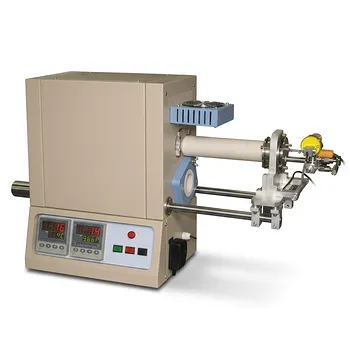
High Temperature Tube Furnace 1500C with Sliding Flanges and 50mm OD for Rapid Thermal Processing Fast Heating and Cooling

High Temperature 1700C Tube Furnace with High Vacuum Turbomolecular Pump System and Multi Channel Mass Flow Controller Gas Mixer
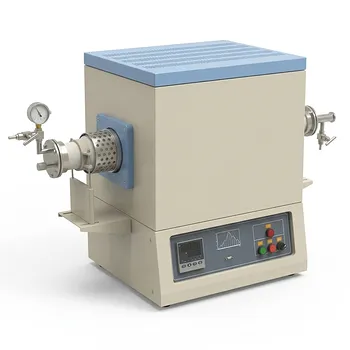
1750°C High Temperature Benchtop Vacuum Atmosphere Tube Furnace with Kanthal Super 1800 Heating Elements and 60mm Alumina Processing Tube

High Temperature 1700C Benchtop Tube Furnace with 5 Inch Heating Zone High Purity Alumina Tube and Vacuum Sealing Flanges
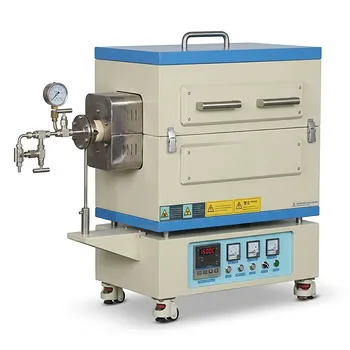
High Temperature Split Tube Furnace 1500C for Material Research Vacuum and Atmosphere Thermal Processing
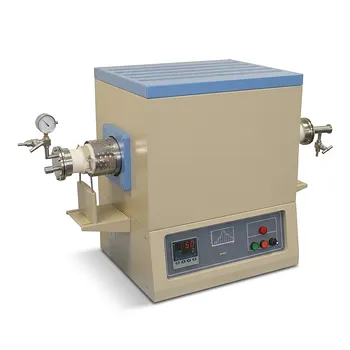
1700C High Temperature Alumina Tube Furnace with 18 Inch Heated Zone and Vacuum Sealing Flanges

1800C High Temperature Compact Vacuum Tube Furnace with 60mm OD Alumina Tube and Kanthal MoSi2 Heating Elements

Compact High Temperature 1600C Tube Furnace with 50mm Alumina Tube and Vacuum Flanges for Material Sintering
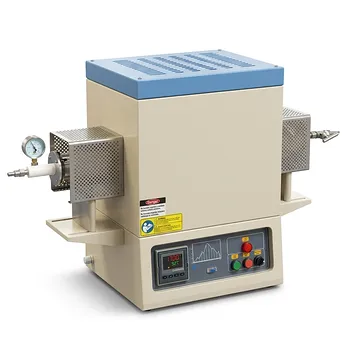
High Temperature Three Zone Tube Furnace 1700C with Alumina Tube and Water Cooled Flanges
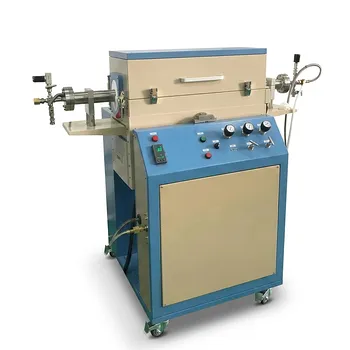
High Temperature Rocking Tube Furnace 1700°C Alumina Processing Tube with Precision Oscillation for Material Synthesis
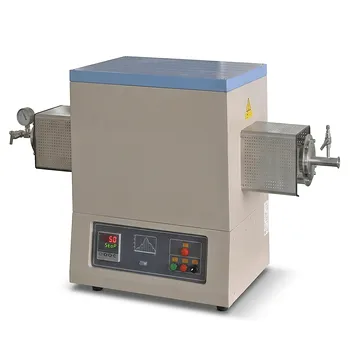
High Temperature 1700C Tube Furnace with 4 Inch OD Alumina Tube and Vacuum Sealing Flanges

High Temperature 1700C Vertical Tube Furnace for Powder Spherification and Material Sintering
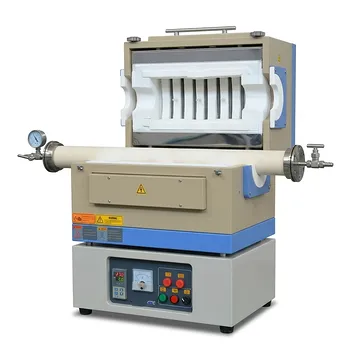
High Temperature 1600C Split Tube Furnace Vacuum Flanges Valves Optional 60mm 80mm Alumina Tube

High Temperature Automated 5 Inch Tube Furnace for Autonomous Material Research and Advanced Laboratory R&D

High Temperature 1700C Six Zone Split Tube Furnace with Alumina Tube and Water Cooled Flanges
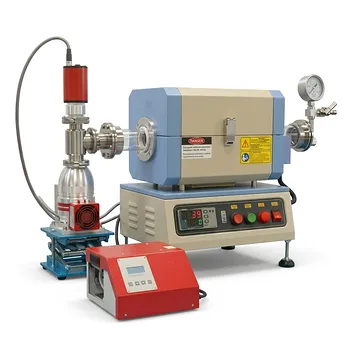
High Vacuum Compact Tube Furnace 1200C with Integrated Turbo Pump System and 8 Inch Heating Zone
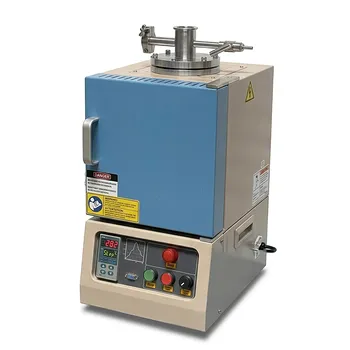
High Temperature Hybrid Muffle and Tube Furnace with Vacuum Capability and PID Control
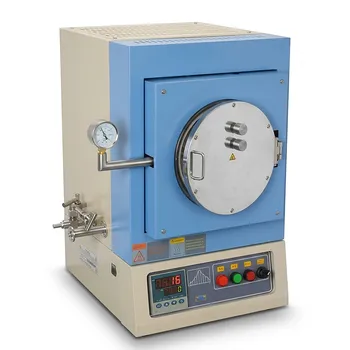
1100°C High Temperature Quartz Chamber Furnace 8 Inch OD with 7.6 Liter Capacity and Vacuum Atmosphere Capability

1100C Tube Furnace with Vacuum Flange and Programmable Temperature Controller for Material Science and Industrial Heat Treatment