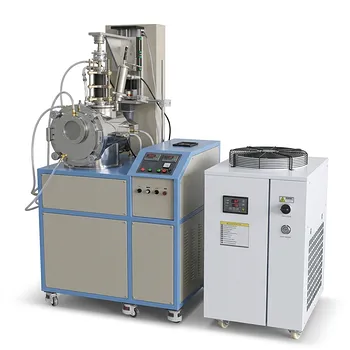
What role does a uniaxial hot press play in the consolidation of thermoelectric materials? Achieve Peak Density.
Updated 3 months ago
A uniaxial hot press is the primary tool used to transform thermoelectric powder compacts into high-density, structurally sound bulk samples. By applying simultaneous directional pressure and thermal energy, this equipment enables the consolidation of materials at lower temperatures than conventional sintering. This specific capability is vital for maintaining the complex microstructures required for high-efficiency thermoelectric performance.
The uniaxial hot press functions as a precision consolidation system that uses mechanical force to drive densification. This allows researchers to achieve near-theoretical density while preserving metastable microstructures that are often critical to the material's thermal and electrical properties.
The Mechanics of Pressure-Assisted Densification
Simultaneous Application of Force and Heat
The core function of the press is the delivery of directional pressure (often around 45 MPa) alongside thermal energy (typically near 923 K). This combination forces the powder particles together, facilitating mass transport and grain boundary formation.
Macro-Shaping and Structural Integrity
Beyond mere densification, the process achieves macro-shaping, forming the powder into a specific geometry defined by the die. The result is a robust bulk sample that can be further machined or integrated into thermoelectric modules.
Atmosphere Control for Material Purity
Consolidation typically occurs under a reducing atmosphere, such as an Argon-Hydrogen mix (Ar-7% H2). This environment prevents oxidation of the metallic powders and can help remove surface oxides, ensuring clean grain boundaries.
Preserving High-Performance Microstructures
Lowering the Sintering Temperature
The application of external pressure acts as an additional driving force for sintering, which lowers the required temperature for densification. Without this pressure, the material would need much higher heat, which could lead to unwanted grain growth.
Retention of Metastable States
Thermoelectric materials often rely on metastable high-temperature microstructures obtained through rapid quenching. Because the hot press operates at lower temperatures, it helps retain these delicate structures, preventing them from reverting to less efficient equilibrium states.
Precise Control of the Sintering Cycle
Modern systems use closed-loop hydraulic or servo-driven rams to maintain constant pressure or follow complex programmed profiles. This level of control ensures that the material is not over-stressed or under-compacted during sensitive phases of the thermal cycle.
Hardware and Monitoring Systems
The Role of Graphite Tooling
The powder is housed within graphite punches and dies, which are capable of withstanding extreme temperatures and pressures. These components are aligned between upper and lower rams that provide the mechanical force necessary for compaction.
High-Precision Sensing
To ensure repeatability, the system utilizes high-precision sensors to monitor displacement, stroke, and force. Tracking the "ram travel" or displacement allows the operator to determine exactly when the material has reached its maximum density during the run.
Vacuum and Pressure Seals
The lower ram is typically fixed to the furnace base using dynamic vacuum seals, while the upper ram provides the active force. This configuration allows the system to maintain a controlled atmosphere or vacuum while the mechanical components are in motion.
Understanding the Trade-offs
Anisotropy and Structural Bias
Because the pressure is uniaxial (applied in one direction), the resulting bulk material may exhibit anisotropic properties. The electrical and thermal conductivity might differ when measured parallel versus perpendicular to the pressing direction.
Tooling Limitations and Contamination
While graphite is the standard for die material, it can occasionally lead to carbon contamination at the surface of the sample. Additionally, the geometric complexity of the samples is limited to the shapes that can be easily ejected from a rigid die.
Cycle Time and Throughput
Hot pressing is generally a batch process with significant heating and cooling requirements. While it produces high-quality samples, the time required for a single cycle can limit the speed of material development or large-scale production.
Applying This Process to Your Material Goals
The effectiveness of uniaxial hot pressing depends heavily on aligning the machine parameters with your specific material requirements.
- If your primary focus is maximizing density: Ensure the pressure profile is maintained until the displacement sensors indicate that compaction has completely ceased.
- If your primary focus is preserving nanostructures: Utilize the highest permissible pressure to keep the sintering temperature as low as possible, preventing grain growth.
- If your primary focus is material purity: Prioritize the use of high-purity reducing gases and ensure the vacuum seals are verified before starting the thermal cycle.
By carefully balancing pressure, temperature, and atmospheric conditions, the uniaxial hot press becomes the definitive tool for creating high-performance thermoelectric bulk materials.
Summary Table:
| Feature | Role in Consolidation | Technical Benefit |
|---|---|---|
| Uniaxial Pressure | Drives densification at lower temperatures | Preserves metastable microstructures |
| Atmosphere Control | Uses reducing gases (e.g., Ar-H2) | Prevents oxidation and ensures purity |
| Graphite Tooling | Houses powder under extreme stress | Withstands high pressure and heat |
| Precision Sensors | Tracks ram travel and displacement | Ensures repeatable, high-density results |
| Macro-Shaping | Forms powder into specific geometries | Produces robust, machinable bulk samples |
Optimize Your Thermoelectric Research with THERMUNITS
THERMUNITS is a leading manufacturer specializing in high-temperature laboratory equipment for material science and industrial R&D. Our high-precision Hot Press furnaces are specifically engineered to provide the simultaneous pressure and thermal control necessary for consolidating advanced thermoelectric materials.
Beyond hot pressing, we offer a comprehensive range of thermal processing solutions, including:
- Muffle, Vacuum, Atmosphere, and Tube Furnaces
- CVD/PECVD Systems and Dental Furnaces
- Vacuum Induction Melting Furnaces (VIM) and Electric Rotary Kilns
- Thermal Elements and various heat treatment accessories
Unlock the full potential of your material development—Contact our experts today!
References
- Yuan Yu, Siyuan Zhang. Ostwald Ripening of Ag<sub>2</sub>Te Precipitates in Thermoelectric PbTe: Effects of Crystallography, Dislocations, and Interatomic Bonding. DOI: 10.1002/aenm.202304442
Mentioned Products
- Industrial Vacuum Hot Press Furnace Machine and High Temperature Heated Vacuum Press for Advanced Material Sintering
- High Temperature Vacuum Lamination Hot Press Furnace Machine for Semiconductor Wafer Bonding and Advanced Composite Thermal Processing
- High Pressure 600T Vacuum Induction Hot Press Furnace for Advanced Material Heat Treatment and Sintering
- 2500C High Vacuum Ultrafast Heating Pellet Press with Automated 8 Sample Loading System
- Ultrafast Thermal Pressing Furnace 2900C Max Temperature 200K per Second Heating Rate Vacuum Atmosphere Rapid Processing System
People Also Ask
- Why is graphite the preferred material for dies and heating elements in Vacuum Hot Press Furnaces? High-Temp Solutions
- What types of heating systems and insulation are used in Vacuum Hot Press Furnaces? Optimize Your Thermal Processing
- What are the structural features of the furnace body and chamber in a Vacuum Hot Press Furnace? Master Material Density
- What is a Vacuum Hot Press Furnace and what are its primary industrial applications? Achieve Maximum Material Density
- What are the key technical parameters for operating a Vacuum Hot Press Furnace? Master Heat, Pressure, and Vacuum.

Tech Team · ThermUnits
Last updated on Jun 02, 2026
Related Products
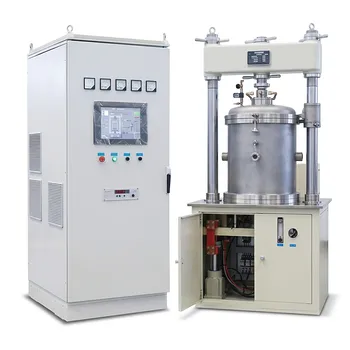
Industrial Vacuum Hot Press Furnace Machine and High Temperature Heated Vacuum Press for Advanced Material Sintering
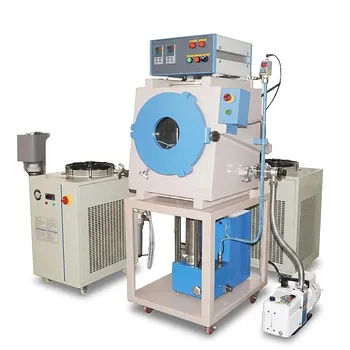
High Temperature Vacuum Lamination Hot Press Furnace Machine for Semiconductor Wafer Bonding and Advanced Composite Thermal Processing
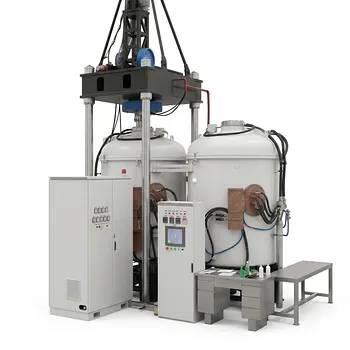
High Pressure 600T Vacuum Induction Hot Press Furnace for Advanced Material Heat Treatment and Sintering
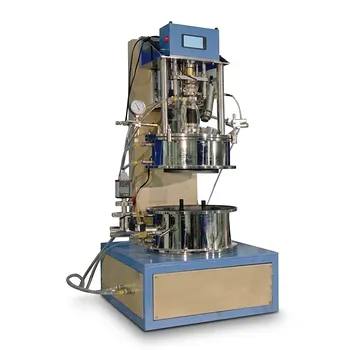
2500C High Vacuum Ultrafast Heating Pellet Press with Automated 8 Sample Loading System
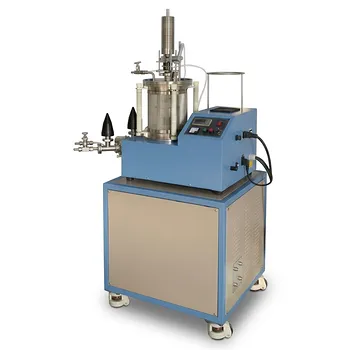
Ultrafast Thermal Pressing Furnace 2900C Max Temperature 200K per Second Heating Rate Vacuum Atmosphere Rapid Processing System
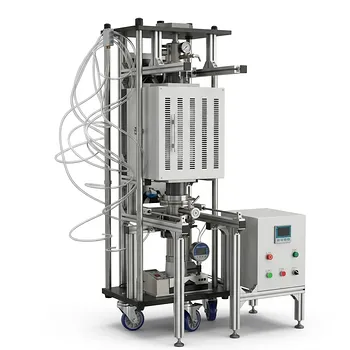
Industrial High Temperature Vacuum Hot Press Furnace and Heated Vacuum Press Machine for Material Science Sintering