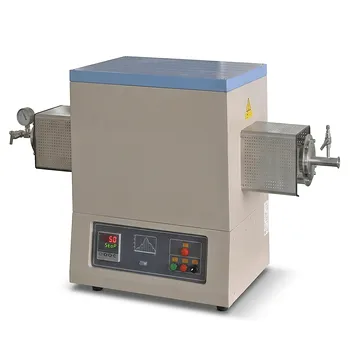
Industrial Tube Furnace Role in MoSe2 Nanoshell Synthesis: Mastering Selenization & Phase Purity
Updated 3 months ago
In the synthesis of molybdenum diselenide (MoSe2) nanoshells, the industrial-grade tube furnace serves as the critical reactor for thermal decomposition and the subsequent selenization of molybdenum precursors. It provides the sealed, high-temperature environment required to convert raw materials into structured nanoshells through precise control of heating curves and atmospheric conditions.
The tube furnace acts as the primary hardware for regulating crystal growth kinetics, allowing for the precise transformation of precursors into the stable 2H phase of MoSe2. Its ability to maintain uniform thermal gradients and gas flow rates is essential for managing layer count, inducing lattice strain, and ensuring phase purity.
Facilitating Complex Chemical Transformations
Thermal Decomposition and Alloy Formation
The process begins with the thermal decomposition of precursors, such as Mo(CO)6, within the furnace's sealed environment. By precisely regulating the temperature ramp-up to 550 °C, the furnace induces the formation of an AuMo alloy, which serves as a foundational step in the nanoshell synthesis.
Driven Selenization Reactions
The tube furnace provides the thermal energy necessary for selenium powder to vaporize and react with the molybdenum source. This selenization reaction is highly dependent on the furnace's ability to maintain a stable temperature zone, ensuring that selenium vapor effectively transforms the precursor into MoSe2.
Precision Control of Material Properties
Regulation of Phase and Layer Count
Controlling the number of MoSe2 layers and ensuring the formation of the stable 2H phase requires meticulous management of the furnace's heating profile. Programmable heating curves allow researchers to influence the lattice strain and the final atomic structure of the nanoshells.
Atmospheric and Pressure Stability
Industrial-grade furnaces utilize nitrogen (N2) flow rates or hydrogen/argon mixtures to create a protective or reductive atmosphere. This controlled environment prevents unwanted oxidation and ensures that the chemical vapor reaction proceeds with high morphological uniformity.
Managing Crystal Growth Kinetics
By utilizing dual-zone heating, the furnace can independently control the sublimation rates of different precursors, such as molybdenum trioxide and selenium. This independence is fundamental for achieving a continuous and uniform precursor concentration, which is required for high-quality crystal growth.
Understanding the Trade-offs
Thermal Gradients and Uniformity
While tube furnaces provide a stable environment, the presence of thermal gradients along the length of the tube can lead to inconsistencies in nanoshell thickness or phase purity. Achieving perfectly uniform results across a large substrate requires highly sophisticated hot-wall designs and precise placement within the constant temperature zone.
Precursor Delivery Challenges
The reliance on gas-phase migration means that flow rates must be balanced perfectly with temperature; if the furnace temperature is too high too quickly, volatile species may deposit unevenly. Conversely, insufficient heating can lead to incomplete selenization, resulting in residual molybdenum oxides or unreacted precursors.
Applying Furnace Technology to Synthesis Goals
How to Optimize Your Process
To achieve the best results in MoSe2 synthesis, the operation of the tube furnace must be tailored to the specific structural requirements of the nanoshells.
- If your primary focus is phase purity and 2H stability: Prioritize a furnace with high-precision programmable controllers to maintain an exact 550 °C to 820 °C range during the selenization step.
- If your primary focus is controlling layer thickness: Focus on regulating the carrier gas flow fields and utilizing a dual-zone furnace to manage the concentration of selenium vapor independently.
- If your primary focus is morphological uniformity: Use a horizontal hot-wall quartz tube to ensure a uniform thermal environment that prevents localized defects during the chemical vapor deposition process.
The industrial-grade tube furnace remains the indispensable core hardware for mastering the delicate thermochemical balance required to produce high-performance MoSe2 nanoshells.
Summary Table:
| Process Step | Furnace Function | Key Control Parameters |
|---|---|---|
| Thermal Decomposition | Decomposes precursors (e.g., Mo(CO)6) | Precise ramp to 550 °C |
| Selenization | Vaporizes Se & drives chemical reaction | Stable thermal zones (550-820 °C) |
| Phase Control | Stabilizes the 2H crystal phase | Programmable heating curves |
| Crystal Growth | Regulates morphology & layer count | Carrier gas flow (N2/Ar/H2) |
| Sublimation | Manages precursor concentration | Dual-zone heating independence |
Elevate Your Material Research with THERMUNITS
As a leading manufacturer of high-temperature laboratory equipment, THERMUNITS provides the precision heating technology essential for advanced material science and industrial R&D. Our high-performance Tube, Vacuum, and CVD/PECVD systems are engineered to deliver the uniform thermal gradients and atmospheric stability required for complex processes like MoSe2 nanoshell synthesis and selenization.
Whether you are focusing on lattice strain control or phase purity, our comprehensive range—including Muffle, Rotary, and Hot Press furnaces—ensures your lab achieves repeatable, high-quality results.
Ready to optimize your thermal processing? Contact our experts today to find the ideal furnace solution for your specific heat treatment needs!
References
- Tao Zhang, Hong Jin Fan. Biaxial strain induced OH engineer for accelerating alkaline hydrogen evolution. DOI: 10.1038/s41467-024-50942-5
Mentioned Products
- 1800C High Temperature Compact Vacuum Tube Furnace with 60mm OD Alumina Tube and Kanthal MoSi2 Heating Elements
- Hybrid High Temperature Tube and Box Furnace 1700C with 2 Inch Alumina Tube for Material Research
- Two Zone Rotary Tube Furnace for Powder CVD Coating and Core Shell Material Synthesis 1100C
- High Temperature Dual Zone Rotating Tube Furnace 1500C Silicon Carbide Heating for Advanced Material Synthesis
- High Temperature Bench Top Muffle Furnace 1700C with Integrated Evaporating Particle Collection and 8x8x8 Alumina Fiber Chamber
People Also Ask
- What core functions does a high-temperature vacuum tube furnace provide? Optimize np-CuSn Sintering & Joint Integrity
- What is the primary function of a high-temperature tube furnace in Cu1-N-C synthesis? Precision Thermal Control.
- What impact does the heating rate of a tube furnace have on biochar microstructure? Optimize Your Material R&D.
- How is a high-temperature tube furnace utilized to convert a nickel/carbon coating into a porous nickel Microporous Layer?
- What is the function of a high-temperature tube furnace in the annealing of Ni-N-C composites? Optimize Catalyst Synthesis

Tech Team · ThermUnits
Last updated on Jun 02, 2026
Related Products

1800C High Temperature Compact Vacuum Tube Furnace with 60mm OD Alumina Tube and Kanthal MoSi2 Heating Elements
Hybrid High Temperature Tube and Box Furnace 1700C with 2 Inch Alumina Tube for Material Research
Two Zone Rotary Tube Furnace for Powder CVD Coating and Core Shell Material Synthesis 1100C
High Temperature Dual Zone Rotating Tube Furnace 1500C Silicon Carbide Heating for Advanced Material Synthesis
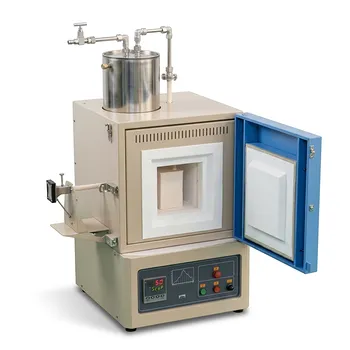
High Temperature Bench Top Muffle Furnace 1700C with Integrated Evaporating Particle Collection and 8x8x8 Alumina Fiber Chamber
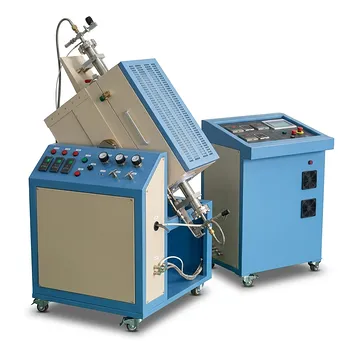
1100C High Pressure Rocking Tube Furnace with 2 Inch Super Alloy Processing Tube for Material Synthesis
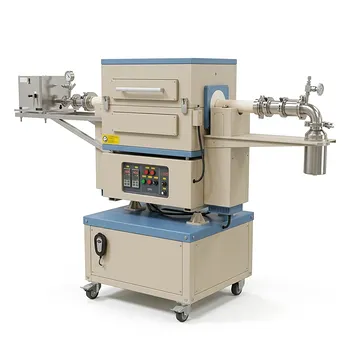
1500C Max Dual Zone Rotary Tube Furnace with 60 mm OD Alumina Tube for High Temperature Material Synthesis
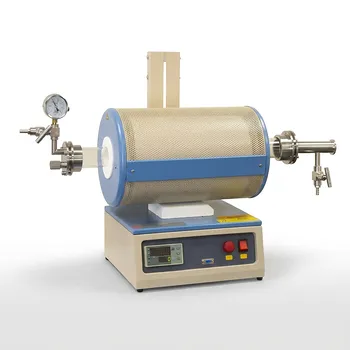
1100C Tube Furnace with Vacuum Flange and Programmable Temperature Controller for Material Science and Industrial Heat Treatment

Compact High Temperature 1600C Tube Furnace with 50mm Alumina Tube and Vacuum Flanges for Material Sintering

High Temperature 1700C Vertical Tube Furnace for Powder Spherification and Material Sintering
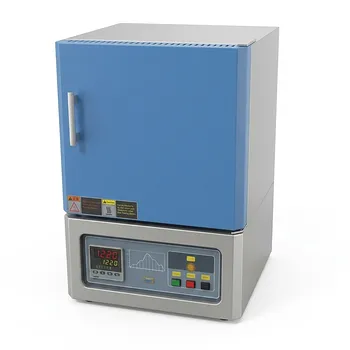
High Temperature Benchtop Muffle Furnace 1700C 10L Chamber Alumina Fiber Insulation MoSi2 Heating Elements
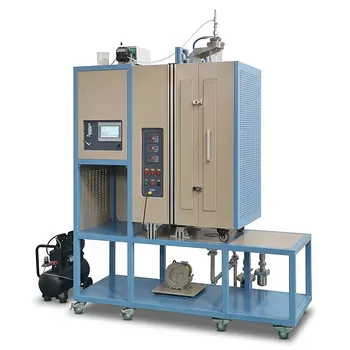
1500C Three Zone Vertical Pyrolysis Furnace for Nanoparticle Synthesis and Advanced Oxide Coating
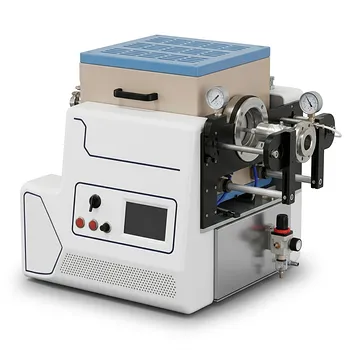
High Temperature Automated 5 Inch Tube Furnace for Autonomous Material Research and Advanced Laboratory R&D
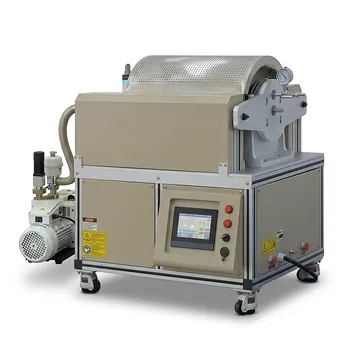
Automated 1200 C Tube Furnace for AI Material Research with 6 Inch OD and Sliding Flange
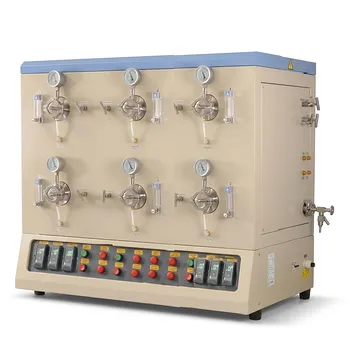
1200C High Throughput Multi Channel Tube Furnace with 50mm Quartz Tubes for Annealing and Material Phase Diagram Research
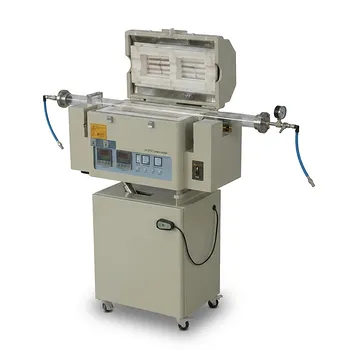
Double Temperature Revolving Tube Furnace with Precision Rotation and Adjustable Inclination for Advanced Material Research
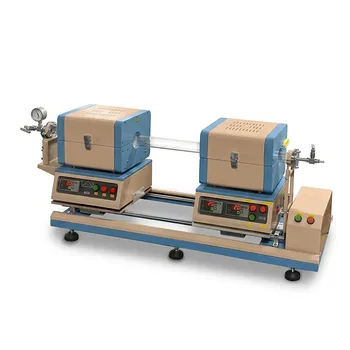
High Temperature 1200C Automatic Sliding Dual Zone Tube Furnace for 2D Transition Metal Dichalcogenides Growth and Material Sublimation Research
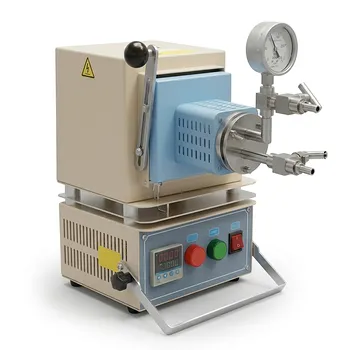
Compact Hybrid Muffle and Tube Furnace for 1000C Controlled Atmosphere Laboratory Material Sintering

Vertical 1700C Vacuum and Atmosphere Tube Furnace with 80mm Alumina Tube