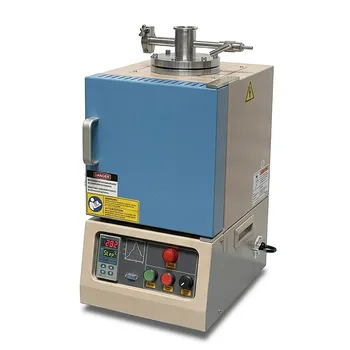
What critical role does the Vacuum High-Temperature Tube Furnace play in Mo2C preparation? Ensure High Phase Purity
Updated 6 months ago
The Vacuum High-Temperature Tube Furnace is the critical reactor for the pyrolytic carbonization of molybdenum precursors. It provides a strictly controlled 725 °C environment while maintaining a vacuum to prevent the oxidation of molybdenum and carbon sources. This precise thermal and atmospheric control is what allows for the synthesis of high-purity $\beta\text{-Mo}_2\text{C}$ phases, which are essential for creating catalysts with electronic structures similar to noble metals.
Core Takeaway: The furnace serves as a dual-purpose environment that enables high-temperature pyrolytic transformation while simultaneously isolating the material from oxygen. Without this specific vacuum-thermal combination, the resulting material would suffer from oxidative degradation and fail to achieve the desired $\beta\text{-Mo}_2\text{C}$ phase purity.
Ensuring Phase Purity and Oxidation Prevention
The Role of Oxygen Isolation
At the target temperature of 725 °C, molybdenum and carbon sources are highly susceptible to oxidation if exposed to even trace amounts of oxygen. The high-vacuum environment of the tube furnace effectively removes atmospheric oxygen, ensuring that the chemical energy is used for carbonization rather than the formation of unwanted molybdenum oxides.
Achieving the Beta-Phase Structure
The synthesis of $\beta\text{-Mo}_2\text{C}$ requires a specific energy threshold that only a stable, high-temperature environment can provide. By maintaining precise heating rates within the vacuum, the furnace facilitates the orderly rearrangement of atoms into the hexagonal $\beta$-phase, which is the most active form for catalytic applications.
Preventing Ultrafine Cluster Degradation
When dealing with nanoparticles or ultrafine clusters, the high surface-area-to-volume ratio makes the material extremely reactive. The furnace’s ability to provide a controlled vacuum or inert nitrogen-protected atmosphere prevents these clusters from sintering or oxidizing during their formation, keeping them effectively anchored and active.
Thermal Control and Carbonization Dynamics
Precise Pyrolytic Carbonization
Pyrolytic carbonization is the process of breaking down complex precursors into stable carbide structures. The tube furnace ensures that this thermochemical reduction occurs uniformly across the sample by providing a stable thermal zone, which is critical for consistent nanoparticle size and morphology.
Enhancing Crystallinity and Bonding
Beyond the initial reaction, the furnace’s heat treatment improves the crystallinity of the molybdenum carbide. This process strengthens the interfacial bonding between the $\text{Mo}_2\text{C}$ nanoparticles and any supporting substrates, such as nitrogen-doped carbon, which reduces interfacial resistance and improves electronic performance.
Removal of Organic Residues
The high temperatures achieved in the furnace serve a secondary purpose of calcining the product to remove excess organic residues or ligands used in the precursor stage. This "cleaning" step optimizes the electrochemical activity and ensures that the gas adsorption sites of the $\text{Mo}_2\text{C}$ are fully accessible.
Understanding the Trade-offs and Pitfalls
Temperature Gradients and Uniformity
One of the primary challenges in a tube furnace is the potential for temperature gradients along the length of the tube. If the precursor material is placed outside the "constant temperature zone," the carbonization may be incomplete, leading to a mixture of phases rather than pure $\beta\text{-Mo}_2\text{C}$.
Vacuum Integrity and Leaks
Maintaining a high vacuum at 725 °C puts significant stress on the furnace seals and the tube itself. Any micro-leak introduced during the heating cycle can lead to the partial oxidation of the molybdenum, resulting in $\text{MoO}_2$ or $\text{MoO}_3$ impurities that drastically reduce the material's catalytic effectiveness.
Precursor Volatility
Under high vacuum and high temperature, some carbon or molybdenum precursors may become volatile and sublime before they can carbonize. This requires a careful balance between the vacuum level and the heating ramp rate to ensure the precursors react as intended rather than depositing on the cooler ends of the furnace tube.
How to Apply This to Your Project
Recommendations for Synthesis Goals
- If your primary focus is maximum catalytic activity: Prioritize a high-vacuum environment over an inert gas atmosphere to ensure the highest possible phase purity and the most "noble-metal-like" electronic structure.
- If your primary focus is nanoparticle size control: Use a furnace with programmable, precise heating rates to manage the nucleation and growth phases during pyrolytic carbonization.
- If your primary focus is structural stability on a substrate: Focus on the post-synthesis calcination stage within the furnace to strengthen interfacial bonding and improve charge transfer efficiency.
- If your primary focus is high-throughput production: Ensure your furnace has a large "constant temperature zone" and use quartz or ceramic boats that allow for uniform gas/vacuum exposure across the precursor bed.
The Vacuum High-Temperature Tube Furnace is not merely a heater, but a sophisticated chemical reactor that dictates the final phase, purity, and performance of $\text{Mo}_2\text{C}$ nanoparticles.
Summary Table:
| Function | Synthesis Impact | Key Outcome |
|---|---|---|
| Vacuum Isolation | Prevents oxidation at 725°C | High purity $\beta$-phase purity |
| Thermal Control | Precise pyrolytic carbonization | Ordered atomic rearrangement |
| Controlled Ramp | Manages cluster formation | Prevents sintering/degradation |
| Calcination | Removes organic residues | Optimized electrochemical activity |
Achieve Superior Material Performance with THERMUNITS
THERMUNITS is a leading manufacturer of high-temperature laboratory equipment for material science and industrial R&D. We provide the precision thermal environments required for synthesizing high-purity catalysts like $\beta\text{-Mo}_2\text{C}$ nanoparticles.
Our comprehensive range of thermal processing solutions includes:
- Vacuum, Atmosphere, and Tube Furnaces for strictly controlled chemical reactions.
- Muffle, Rotary, and Hot Press Furnaces for advanced material sintering.
- CVD/PECVD Systems and Vacuum Induction Melting (VIM) Furnaces.
- Electric Rotary Kilns, Dental Furnaces, and Thermal Elements.
Whether you need to isolate materials from oxygen or maintain stable heating rates for ultrafine clusters, THERMUNITS delivers the reliability and technical excellence your research demands.
Contact our experts today to find your ideal furnace solution!
References
- Congyi Zhang, Yaqiu Tao. Synthesis and Catalytic Performance of Mo2C/MoS2 Composite Heterojunction Catalysts. DOI: 10.3390/ma17102355
Mentioned Products
- 1750°C High Temperature Benchtop Vacuum Atmosphere Tube Furnace with Kanthal Super 1800 Heating Elements and 60mm Alumina Processing Tube
- 1800C High Temperature Compact Vacuum Tube Furnace with 60mm OD Alumina Tube and Kanthal MoSi2 Heating Elements
- High Temperature 1700C Tube Furnace with High Vacuum Turbomolecular Pump System and Multi Channel Mass Flow Controller Gas Mixer
- 1200C High Temperature 5 Inch Split Vacuum Tube Furnace with 12 Inch Heating Zone and Separated PID Controller
- High Temperature 1100C Compact Top Loading Vertical Vacuum Tube Furnace for High Vacuum Noble Metal Melting and Material Research
People Also Ask
- What core functions does a high-temperature vacuum tube furnace provide? Optimize np-CuSn Sintering & Joint Integrity
- What is the role of a high-temperature tube furnace in the calcination process of ZnO/In2O3 nanocomposites?
- What role does a high-temperature tube furnace play in the sulfidation heat treatment of CoS@C/MXene nanocomposites? Guide
- What role does a high-temperature tube furnace play in CVD synthesis of silicon nanowires? Master VLS Growth Precision.
- How does a high-temperature tube furnace contribute to MoS2/CNT photocathode formation? Optimizing Phase & Interface

Tech Team · ThermUnits
Last updated on Apr 14, 2026
Related Products
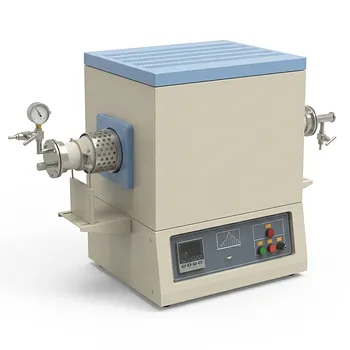
1750°C High Temperature Benchtop Vacuum Atmosphere Tube Furnace with Kanthal Super 1800 Heating Elements and 60mm Alumina Processing Tube
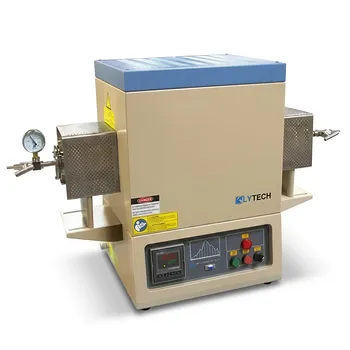
1800C High Temperature Compact Vacuum Tube Furnace with 60mm OD Alumina Tube and Kanthal MoSi2 Heating Elements
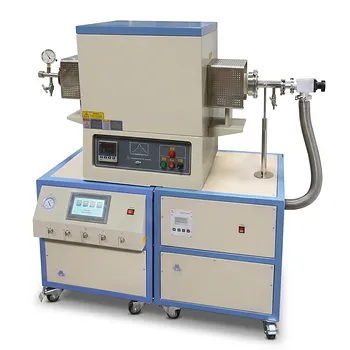
High Temperature 1700C Tube Furnace with High Vacuum Turbomolecular Pump System and Multi Channel Mass Flow Controller Gas Mixer
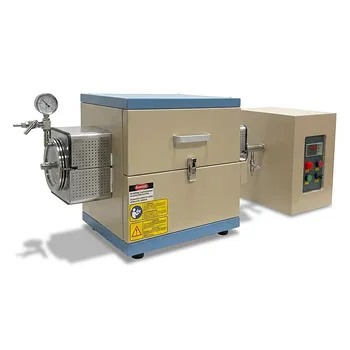
1200C High Temperature 5 Inch Split Vacuum Tube Furnace with 12 Inch Heating Zone and Separated PID Controller
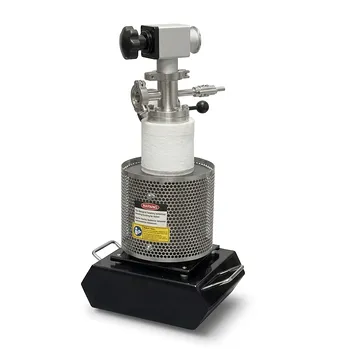
High Temperature 1100C Compact Top Loading Vertical Vacuum Tube Furnace for High Vacuum Noble Metal Melting and Material Research
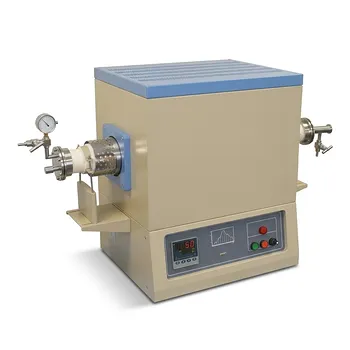
1700C High Temperature Alumina Tube Furnace with 18 Inch Heated Zone and Vacuum Sealing Flanges
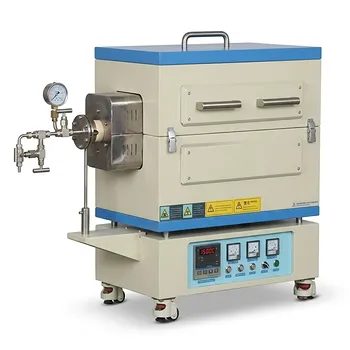
High Temperature Split Tube Furnace 1500C for Material Research Vacuum and Atmosphere Thermal Processing
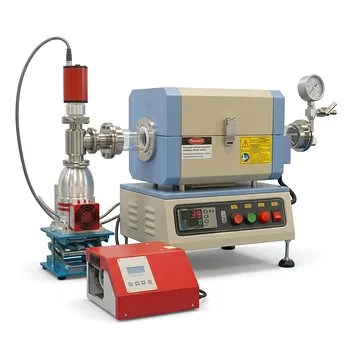
High Vacuum Compact Tube Furnace 1200C with Integrated Turbo Pump System and 8 Inch Heating Zone
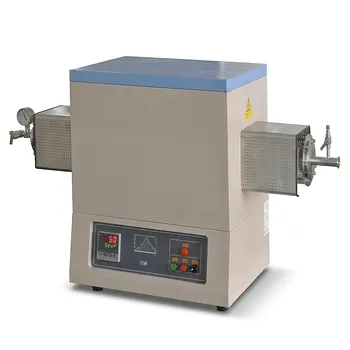
High Temperature 1700C Tube Furnace with 4 Inch OD Alumina Tube and Vacuum Sealing Flanges
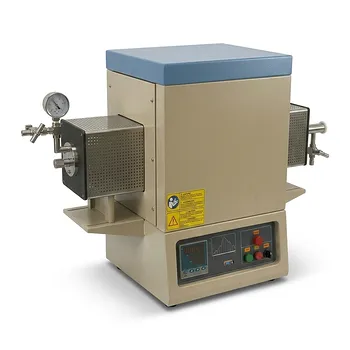
High Temperature 1700C Benchtop Tube Furnace with 5 Inch Heating Zone High Purity Alumina Tube and Vacuum Sealing Flanges
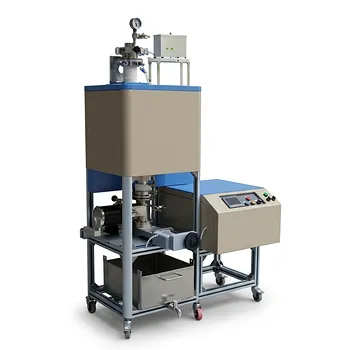
High Temperature 1700C Vertical Tube Furnace for Powder Spherification and Material Sintering
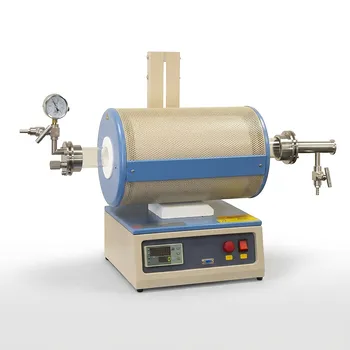
1100C Tube Furnace with Vacuum Flange and Programmable Temperature Controller for Material Science and Industrial Heat Treatment
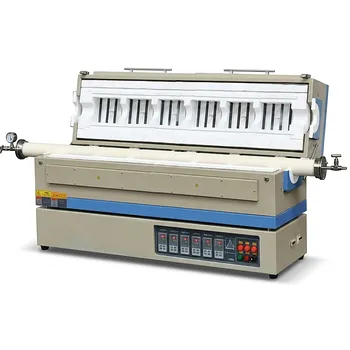
High Temperature 1700C Six Zone Split Tube Furnace with Alumina Tube and Water Cooled Flanges
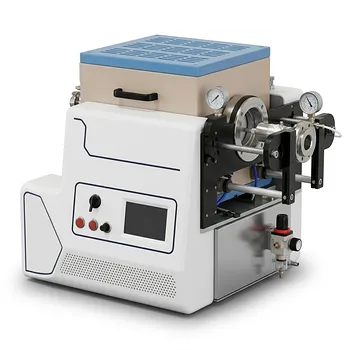
High Temperature Automated 5 Inch Tube Furnace for Autonomous Material Research and Advanced Laboratory R&D
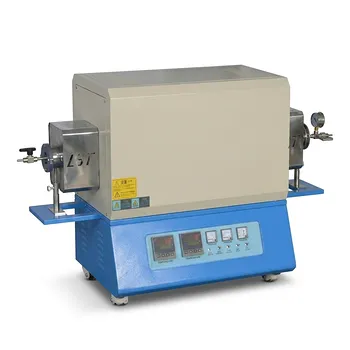
High Temperature Dual Zone Vacuum Tube Furnace for Material Research and CVD Processing
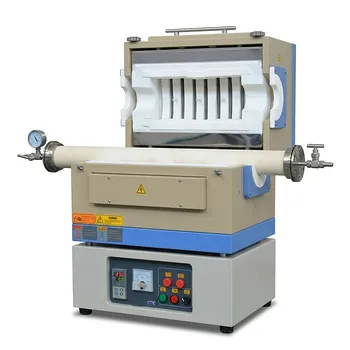
High Temperature 1600C Split Tube Furnace Vacuum Flanges Valves Optional 60mm 80mm Alumina Tube
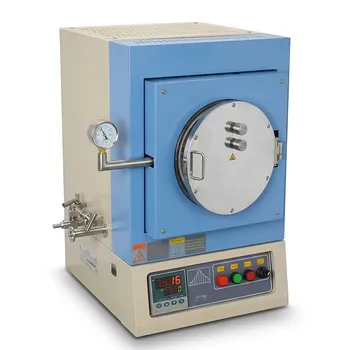
1100°C High Temperature Quartz Chamber Furnace 8 Inch OD with 7.6 Liter Capacity and Vacuum Atmosphere Capability
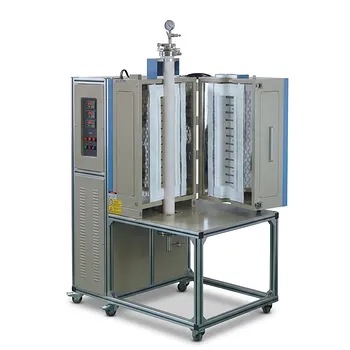
Three Zone Heating Split Vertical Tube Furnace 1700 High Temperature Vacuum Atmosphere Thermal Process System
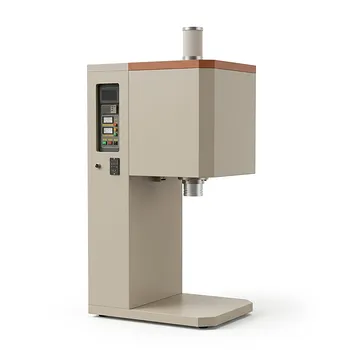
Vertical Openable Tube Furnace 0-1700c High Temperature Laboratory System for CVD and Vacuum Heat Treatment