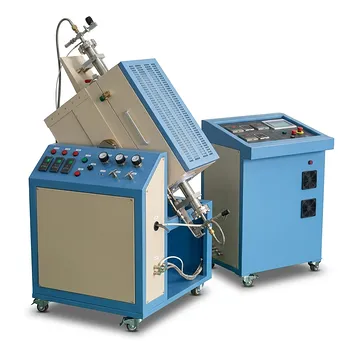
What core processing conditions does a high-temperature tube furnace provide for lignin-derived carbon? Expert Guide.
Updated 3 months ago
A high-temperature tube furnace provides the two essential catalysts for lignin transformation: a precisely programmed thermal profile and a strictly controlled inert atmosphere. These conditions allow for specific heating rates, such as 10 °C/min, and stable isothermal zones where carbonization can occur without interference. By maintaining a sealed environment, the furnace ensures that lignin is converted into a conductive carbon skeleton through pyrolysis rather than being destroyed by combustion.
The core processing capability of a high-temperature tube furnace lies in its ability to decouple heat and oxygen. This allows for the systematic deoxygenation, carbonization, and graphitization of lignin, which directly determines the material's final conductivity, pore structure, and chemical stability.
Precise Thermal Profile Management
Regulated Heating Rates and Isothermal Zones
The furnace provides a stable thermal environment where temperature increases are strictly programmed to prevent structural collapse. Heating rates (e.g., 10 °C/min or 20 °C/min) are crucial because they control the speed of volatile release and prevent the material from melting or foaming. Stable isothermal zones ensure that the entire batch of lignin reaches the preset maximum temperature uniformly, resulting in a consistent end product.
Multi-Stage Temperature Windows
Different temperatures achieve distinct chemical goals within the tube furnace. A pre-carbonization stage at approximately 250 °C is often used to facilitate cross-linking and oxidative stabilization, which prevents lignin—which has a low glass transition temperature—from melting. Higher temperatures, typically between 600 °C and 1000 °C, facilitate the final carbonization and the removal of templates to form porous structures.
Facilitating Catalytic Graphitization
For advanced applications, the furnace can reach temperatures as high as 1000 °C to promote the catalytic graphitization of lignin. In this environment, carbon atoms can dissolve into metal nanoparticles and precipitate as highly ordered metal-core/graphene-shell (M@G) structures. This level of thermal precision is what enables the growth of uniform graphene layers and high-efficiency carbon frameworks.
Controlled Atmospheric Environments
Creation of an Inert Shield
The tube furnace uses a sealed structure to maintain a continuous flow of high-purity inert gases like nitrogen (N2) or argon (Ar). This inert atmosphere is mandatory for the deoxygenation and degassing of biomass, as any presence of oxygen at high temperatures would lead to uncontrolled combustion. By keeping the environment "pure," the furnace allows the lignin to transform into a high-fixed-carbon biochar rather than ash.
Gasification and Chemical Activation
The controlled atmosphere also supports the thermal decomposition and gasification of various templates, such as polystyrene or block copolymers, used to create specific pore shapes. Furthermore, the furnace allows for simultaneous chemical activation (e.g., with K2CO3) in oxygen-free conditions. This enables the fine-tuning of the carbon’s surface chemistry and the development of interconnected macropore-mesopore structures.
Pressure and Purity Maintenance
The furnace’s ability to remain tightly sealed is critical for preventing the oxidation of the carbon source during long soaking times. High-purity environments prevent contaminants from entering the reaction zone, which is vital for maintaining the electrical conductivity and catalytic activity of nitrogen-doped carbon frameworks. This level of control is necessary for creating high-performance materials like Ni-ZIF-8 nanosheets or bio-based hard carbons.
Understanding the Trade-offs
The Risk of Morphology Collapse
If the furnace's temperature is ramped too quickly or if the pre-stabilization stage is skipped, the lignin particles may melt or fuse together. This results in the loss of the desired spherical or porous morphology, turning a potentially high-surface-area material into a dense, non-functional mass.
Atmosphere Purity vs. Cost
While argon provides a superior protective environment for graphitization, it is significantly more expensive than nitrogen. Nitrogen is suitable for most carbonization tasks but may lead to unintended nitriding of certain metal catalysts at very high temperatures, which could alter the intended chemical properties of the material.
Scaling and Temperature Gradients
While tube furnaces offer exceptional control at the laboratory scale, they can develop temperature gradients if the tube is too large or the heating elements are not properly calibrated. These gradients can lead to non-uniform carbonization, where the material at the edges of the crucible is more graphitized than the material in the center.
How to Apply This to Your Project
When utilizing a high-temperature tube furnace for lignin-derived carbon, your processing settings should align precisely with your material goals:
- If your primary focus is high electrical conductivity: Use a maximum temperature of at least 1000 °C and an argon atmosphere to facilitate the formation of a dense, graphitized carbon skeleton.
- If your primary focus is a high-surface-area porous structure: Integrate a chemical activation agent and utilize a temperature range between 600 °C and 900 °C under a nitrogen flow to maximize pore development.
- If your primary focus is maintaining specific particle morphology: Implement a mandatory pre-carbonization isothermal step at 250 °C to stabilize the lignin cross-linking before proceeding to higher temperatures.
Mastering the balance between thermal dwell time and atmospheric purity is the definitive factor in transforming raw biomass into high-value carbon technology.
Summary Table:
| Processing Condition | Key Feature | Purpose in Lignin Transformation |
|---|---|---|
| Thermal Profile | Programmed heating rates (e.g., 10°C/min) | Prevents morphology collapse and ensures uniform carbonization. |
| Inert Atmosphere | Sealed N2 or Ar gas flow | Decouples heat from oxygen to prevent combustion and facilitate deoxygenation. |
| Temp. Windows | Multi-stage (250°C to 1000°C+) | Facilitates stabilization, carbonization, and catalytic graphitization. |
| Environment Control | High-purity gasification & sealing | Enables chemical activation and precise pore-structure development. |
Elevate Your Carbon Research with THERMUNITS
At THERMUNITS, we understand that precision is the foundation of material science innovation. As a leading manufacturer of high-temperature laboratory equipment, we provide the advanced thermal solutions necessary for the systematic development of lignin-derived carbon and other high-performance materials.
Our comprehensive range of equipment is designed for industrial R&D and academic excellence, including:
- Tube, Muffle, and Atmosphere Furnaces for precise carbonization.
- Vacuum and Hot Press Furnaces for advanced material synthesis.
- CVD/PECVD Systems and Vacuum Induction Melting (VIM) for cutting-edge thin films and alloys.
- Rotary Kilns and Dental Furnaces for specialized heat treatments.
Whether you are focusing on electrical conductivity, surface area optimization, or morphology retention, THERMUNITS delivers the stability and control your project demands.
Ready to optimize your laboratory’s heat treatment capabilities?
Contact THERMUNITS Today to find the perfect thermal processing solution for your research.
References
- Seth Kane, Cecily Ryan. Role of sodium sulfate in electrical conductivity and structure of lignin-derived carbons. DOI: 10.1016/j.jaap.2024.106600
Mentioned Products
- High Temperature Tube Furnace 1500C with Sliding Flanges and 50mm OD for Rapid Thermal Processing Fast Heating and Cooling
- High Temperature 1700C Tube Furnace with High Vacuum Turbomolecular Pump System and Multi Channel Mass Flow Controller Gas Mixer
- 1750°C High Temperature Benchtop Vacuum Atmosphere Tube Furnace with Kanthal Super 1800 Heating Elements and 60mm Alumina Processing Tube
- High Temperature 1700C Benchtop Tube Furnace with 5 Inch Heating Zone High Purity Alumina Tube and Vacuum Sealing Flanges
- High Temperature Split Tube Furnace 1500C for Material Research Vacuum and Atmosphere Thermal Processing
People Also Ask
- How are high-temperature tube furnaces utilized to repair etching damage? Precision Lattice Restoration Solutions
- What role does a high-temperature tube furnace play in CVD synthesis of silicon nanowires? Master VLS Growth Precision.
- What core conditions does a high-temperature tube furnace provide for rGO aerogels? Mastering Precision Synthesis.
- What role does a high-temperature tube furnace play in the sulfidation heat treatment of CoS@C/MXene nanocomposites? Guide
- How does precision tube furnace control influence CoFe nanoparticle formation? Master Your Bimetallic Synthesis.

Tech Team · ThermUnits
Last updated on Jun 03, 2026
Related Products
High Temperature Tube Furnace 1500C with Sliding Flanges and 50mm OD for Rapid Thermal Processing Fast Heating and Cooling

High Temperature 1700C Tube Furnace with High Vacuum Turbomolecular Pump System and Multi Channel Mass Flow Controller Gas Mixer
1750°C High Temperature Benchtop Vacuum Atmosphere Tube Furnace with Kanthal Super 1800 Heating Elements and 60mm Alumina Processing Tube

High Temperature 1700C Benchtop Tube Furnace with 5 Inch Heating Zone High Purity Alumina Tube and Vacuum Sealing Flanges
High Temperature Split Tube Furnace 1500C for Material Research Vacuum and Atmosphere Thermal Processing
1700C High Temperature Alumina Tube Furnace with 18 Inch Heated Zone and Vacuum Sealing Flanges

1800C High Temperature Compact Vacuum Tube Furnace with 60mm OD Alumina Tube and Kanthal MoSi2 Heating Elements

Compact High Temperature 1600C Tube Furnace with 50mm Alumina Tube and Vacuum Flanges for Material Sintering
High Temperature Three Zone Tube Furnace 1700C with Alumina Tube and Water Cooled Flanges
High Temperature Rocking Tube Furnace 1700°C Alumina Processing Tube with Precision Oscillation for Material Synthesis
High Temperature 1700C Tube Furnace with 4 Inch OD Alumina Tube and Vacuum Sealing Flanges

High Temperature 1700C Vertical Tube Furnace for Powder Spherification and Material Sintering
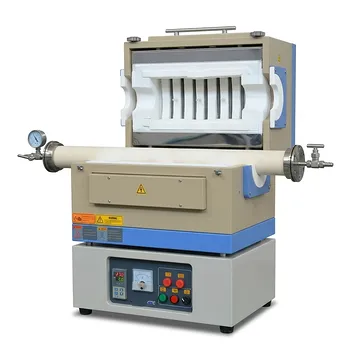
High Temperature 1600C Split Tube Furnace Vacuum Flanges Valves Optional 60mm 80mm Alumina Tube

High Temperature Automated 5 Inch Tube Furnace for Autonomous Material Research and Advanced Laboratory R&D
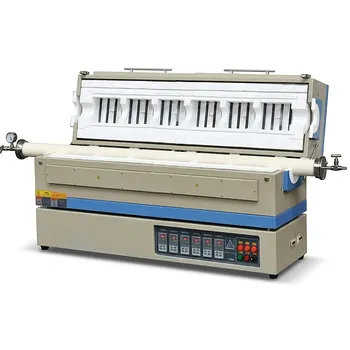
High Temperature 1700C Six Zone Split Tube Furnace with Alumina Tube and Water Cooled Flanges
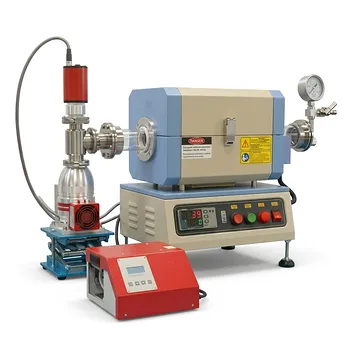
High Vacuum Compact Tube Furnace 1200C with Integrated Turbo Pump System and 8 Inch Heating Zone
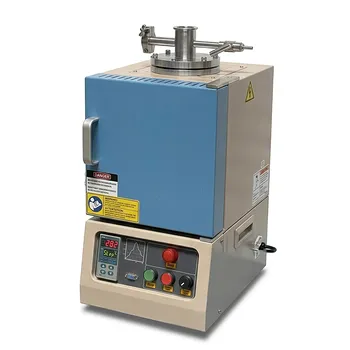
High Temperature Hybrid Muffle and Tube Furnace with Vacuum Capability and PID Control
1100°C High Temperature Quartz Chamber Furnace 8 Inch OD with 7.6 Liter Capacity and Vacuum Atmosphere Capability
1100C Tube Furnace with Vacuum Flange and Programmable Temperature Controller for Material Science and Industrial Heat Treatment