What role does the resonant cavity play in the operation of an MPCVD reactor? Powering Stable & Uniform Plasma Growth
Updated 5 months ago
The resonant cavity serves as the physical and electromagnetic heart of an MPCVD reactor. Its primary function is to confine microwave energy into a highly concentrated area, generating standing-wave electric-field maxima that reach intensities of several kV/cm. These localized "hot spots" provide the necessary energy to ignite and stabilize the plasma used for material deposition.
Core Takeaway: The resonant cavity transforms raw microwave power into a controlled, high-intensity environment by manipulating electromagnetic modes. This spatial control is essential for sustaining stable plasma and ensuring uniform film growth at high pressures.
The Mechanics of Energy Confinement
Creating Standing Waves
The cavity is a precision-engineered enclosure designed to reflect microwaves so they interfere constructively. This interference creates standing waves, where the energy remains stationary in specific regions rather than traveling through the chamber.
Reaching Ionization Thresholds
By focusing energy into these standing-wave peaks, the cavity generates electric field strengths of several kV/cm. This extreme intensity is required to strip electrons from gas molecules, initiating the ionization process known as plasma ignition.
Stabilizing the Discharge
Once ignited, the plasma must remain in a fixed position relative to the substrate. The cavity's geometry ensures the electric-field maxima remain stationary, which prevents the plasma from drifting and damaging the reactor walls.
Optimizing Plasma Stability and Uniformity
The Role of Electromagnetic Modes
Cavities are designed to support specific electromagnetic modes, which determine the shape and distribution of the electric field. Selecting the correct mode is critical for creating a "flat" plasma profile that ensures even deposition across the entire substrate.
Geometry and Flow Management
Common designs include cylindrical, ellipsoidal, and bell-jar structures. Each shape influences how the microwave energy interacts with the process gases and the growing material.
Enabling High-Pressure Operation
Advanced cavity designs allow the reactor to function at higher pressures, which increases the growth rate of materials like synthetic diamond. Proper cavity resonance prevents the plasma from shrinking or becoming unstable as gas density increases.
Understanding the Trade-offs
Geometry vs. Field Uniformity
While a specific cavity shape might offer high energy efficiency, it may produce a "peaked" field that leads to non-uniform growth. Achieving a perfectly uniform plasma often requires complex cavity adjustments or specialized mode-stirring techniques.
Pressure Limitations and Arcing
At very high power levels or pressures, the intense fields within the cavity can lead to parasitic discharges or arcing near the chamber walls. If the cavity is not perfectly tuned, energy can be wasted as heat in the reactor structure rather than being absorbed by the plasma.
Material Contamination
Quartz domes or bell jars are often used to isolate the plasma, but these components can degrade over time due to high thermal loads. This degradation can introduce impurities into the vacuum environment, potentially compromising the purity of the deposited film.
How to Apply This to Your Project
When selecting or designing an MPCVD system, the cavity architecture must align with your specific material requirements.
- If your primary focus is high growth rates: Prioritize ellipsoidal or cylindrical cavities designed for high-pressure stability to maximize deposition speed.
- If your primary focus is large-area uniformity: Look for reactor designs that utilize specific electromagnetic modes (such as TM02 or similar) to spread the plasma over a wider surface area.
- If your primary focus is material purity: Opt for designs that utilize vacuum-sealed quartz structures to isolate the plasma from the metallic cavity walls.
The geometry of the resonant cavity ultimately dictates the scalability and quality of your deposition process.
Summary Table:
| Key Role | Function | Impact on Deposition |
|---|---|---|
| Energy Confinement | Generates standing-wave electric-field maxima | Reaches ionization thresholds for plasma ignition |
| Spatial Stability | Fixes electric-field peaks in a specific location | Prevents plasma drift and protects reactor walls |
| Electromagnetic Modes | Shapes the electric field distribution | Ensures large-area uniformity and flat plasma profiles |
| Pressure Control | Manages energy at high gas densities | Enables high growth rates for materials like diamond |
Elevate Your Material Research with THERMUNITS
Precision in thermal processing is the key to high-quality material synthesis. THERMUNITS is a leading manufacturer of high-temperature laboratory equipment for material science and industrial R&D. We provide the advanced tools necessary for stable and scalable deposition, including:
- CVD/PECVD Systems for sophisticated film growth.
- Muffle, Vacuum, and Atmosphere Furnaces for diverse heat treatments.
- Rotary, Tube, and Hot Press Furnaces for specialized processing.
- Advanced Equipment: Dental Furnaces, VIM systems, and high-performance Thermal Elements.
Whether you are focusing on high-purity synthetic diamonds or advanced semiconductor research, our comprehensive range of thermal solutions is designed to meet your most rigorous requirements.
Ready to optimize your lab's performance? Contact our engineering team today to find the perfect furnace for your project!
Mentioned Products
- Cylindrical Resonator MPCVD Machine System for Microwave Plasma Chemical Vapor Deposition and Lab Diamond Growth
- 915MHz MPCVD Diamond Machine Microwave Plasma Chemical Vapor Deposition System Reactor
- Multi Heating Zones CVD Tube Furnace System for Precision Chemical Vapor Deposition and Advanced Material Synthesis
- Inclined Rotary Plasma Enhanced Chemical Vapor Deposition PECVD System for Thin Film Deposition and Nanomaterial Synthesis
- 1200C Dual Sliding Tube Furnace with Dual Tubes and Flanges for PECVD Processes
People Also Ask
- How does the high concentration of atomic hydrogen in MPCVD benefit diamond growth? The Key to Gem-Grade Quality.
- What are the typical operating pressure ranges and vacuum requirements for MPCVD systems? Optimize Your Material Growth
- What technical parameters are critical for optimizing the growth of single-crystal diamonds in MPCVD systems? Expert Guide
- What are the technical advantages of the electrodeless plasma design in MPCVD systems? Purity & Precision in Synthesis
- How does the versatility of gas compatibility in MPCVD systems compare to filament-based CVD methods? Purity & Doping.

Tech Team · ThermUnits
Last updated on Apr 14, 2026
Related Products
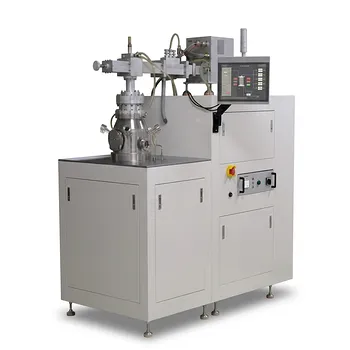
Cylindrical Resonator MPCVD Machine System for Microwave Plasma Chemical Vapor Deposition and Lab Diamond Growth
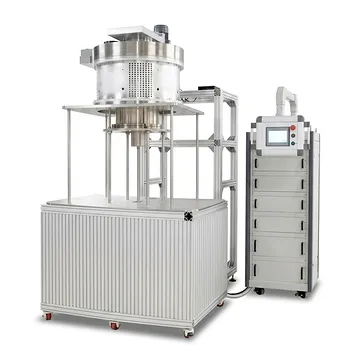
915MHz MPCVD Diamond Machine Microwave Plasma Chemical Vapor Deposition System Reactor
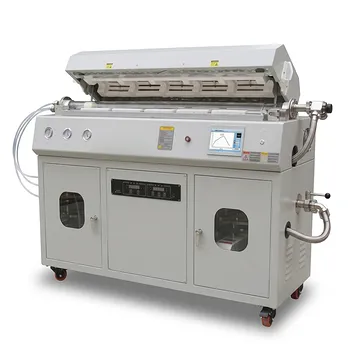
Multi Heating Zones CVD Tube Furnace System for Precision Chemical Vapor Deposition and Advanced Material Synthesis
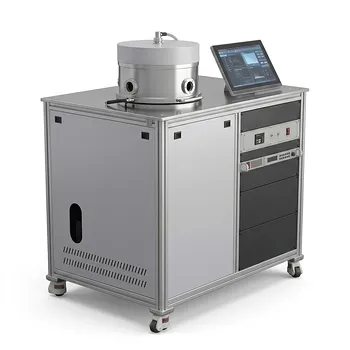
Inclined Rotary Plasma Enhanced Chemical Vapor Deposition PECVD System for Thin Film Deposition and Nanomaterial Synthesis
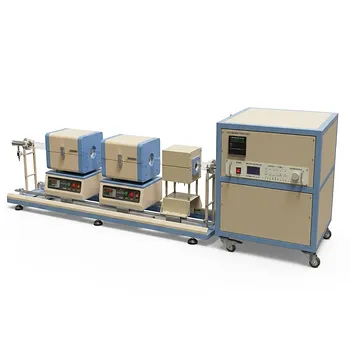
1200C Dual Sliding Tube Furnace with Dual Tubes and Flanges for PECVD Processes