What technical advantages does a molybdenum (Mo) crucible provide for high-temperature slag research? Key Benefits
Updated 3 months ago
Molybdenum (Mo) crucibles provide a high-melting-point, chemically inert environment essential for maintaining sample purity and structural integrity during high-temperature slag experiments. These vessels offer exceptional mechanical strength and resistance to slag erosion in non-oxidizing atmospheres. By preventing wall degradation, they eliminate the risk of sample contamination, ensuring that critical measurements—such as emissivity and thermodynamic activity—remain accurate at temperatures often exceeding 1773 K.
The primary advantage of a molybdenum crucible lies in its unique combination of thermal stability and chemical compatibility. It serves as a non-reactive containment system that preserves the precise stoichiometry of the slag while withstanding the extreme thermal stresses required for high-precision metallurgical research.
Chemical Compatibility and Sample Integrity
Prevention of Wall Erosion
Molten slag is inherently aggressive and can quickly degrade standard ceramic or metallic containers. Molybdenum's resistance to erosion ensures that the crucible walls do not leach material into the melt, which is critical for maintaining the experimental slag's original composition.
Preservation of Chemical Stoichiometry
In slag research involving sensitive oxides (such as CaO-Al2O3-MgO-TiO2), preventing the introduction of impurities is paramount. By remaining chemically inert in reducing or inert atmospheres, molybdenum ensures the correct stoichiometry of the sample, allowing for the accurate calculation of activity coefficients and metal content.
High-Purity Environments for Kinetic Studies
Molybdenum's stability is particularly beneficial during long-duration experiments, such as evaluating desulfurization kinetics. Because the crucible does not react with the steel-slag interface, researchers can reliably attribute chemical changes solely to the reaction kinetics being studied over extended periods, sometimes exceeding 120 minutes.
Thermal and Mechanical Performance
Exceptional High-Temperature Strength
Molybdenum maintains its mechanical integrity and structural shape at temperatures where other metals would soften or fail. This stability is vital for sintering environments up to 1873 K, ensuring the crucible does not deform under the weight of the slag or during rapid thermal cycling.
Reliability in Vacuum and Reducing Atmospheres
Molybdenum exhibits extreme stability in vacuum and Ar/H2 atmospheres, which are often required to prevent the oxidation of slag components. Under these specific conditions, the metal provides a long service life, protecting the microstructural integrity of the processed samples without risk of container failure.
Facilitation of Accurate Physical Measurements
Because the crucible does not contribute impurities or change its surface characteristics significantly, it enables reliable emissivity measurements. This thermal precision is a physical prerequisite for determining thermodynamic parameters that are sensitive to temperature fluctuations and surface radiation.
Understanding the Trade-offs
Sensitivity to Oxidizing Atmospheres
The most significant limitation of molybdenum is its poor oxidation resistance at elevated temperatures. If exposed to oxygen, molybdenum forms volatile oxides that lead to rapid material loss and sample contamination.
Requirement for Controlled Environments
To utilize the technical advantages of Mo crucibles, researchers must operate within inert, vacuum, or reducing environments. This necessitates specialized furnace setups, often requiring Molybdenum Disilicide (MoSi2) heating elements to maintain the required thermal precision and atmospheric control.
How to Apply Molybdenum Crucibles to Your Research
If you are designing a high-temperature slag experiment, consider your primary objective to determine if molybdenum is the correct choice:
- If your primary focus is high-purity thermodynamic modeling: Use molybdenum crucibles to ensure that no wall erosion alters the chemical activity or stoichiometry of your slag system.
- If your primary focus is measuring physical properties like emissivity: Select molybdenum for its consistent surface properties and ability to withstand the 1773 K+ range without degrading.
- If your primary focus is long-term kinetic reactions: Leverage the mechanical strength of molybdenum to maintain container integrity over extended soaking times in reducing atmospheres.
- If your primary focus is research in oxidizing air: Avoid pure molybdenum and instead consider materials with better oxidation resistance, or ensure your Mo crucible is protected by a strictly controlled inert gas flow.
By leveraging the chemical inertness and thermal resilience of molybdenum, researchers can achieve the high-precision data necessary to advance modern metallurgical and slag science.
Summary Table:
| Key Advantage | Technical Benefit | Ideal Operating Environment |
|---|---|---|
| Chemical Inertness | Prevents wall erosion and maintains slag stoichiometry | Vacuum, Inert (Ar), or Reducing (H2) |
| Thermal Stability | Maintains mechanical integrity at temperatures >1873 K | High-temperature R&D furnaces |
| High Purity | Eliminates sample contamination for kinetic studies | Non-oxidizing atmospheres |
| Surface Consistency | Enables accurate emissivity and thermodynamic measurements | Controlled thermal processing |
Elevate Your Material Research with THERMUNITS
As a leading manufacturer of high-temperature laboratory equipment, THERMUNITS provides the precision tools required for advanced material science and industrial R&D. Whether you are conducting high-purity slag research or complex kinetic studies, our comprehensive range of thermal solutions—including Vacuum, Atmosphere, Tube, Muffle, and Rotary furnaces, as well as CVD/PECVD systems and Hot Press furnaces—ensures optimal performance for your Molybdenum crucible applications.
Ready to optimize your lab's thermal processing? Contact our experts today to find the perfect furnace solution!
References
- B. V. Rangavittal, Björn Glaser. Experimental Determination of Slag Emissivities for Enhanced Slag Control by Infrared‐Based Systems. DOI: 10.1002/srin.202400277
Mentioned Products
- Molybdenum Disilicide MoSi2 Thermal Elements Electric Furnace Heating Element High Temperature Resistance
- 1750C Bench Top Muffle Furnace 3.6L High Grade Molybdenum Disilicide Heating Elements Laboratory Heat Treatment Equipment
- 600°C Vertical Crucible Furnace with SS316 Alloy Reactor and 6 Port Vacuum Flange
- Vertical Crucible Furnace 1000C High Temperature Laboratory Equipment 4.7 Inch Diameter Chamber SS316 Anti Corrosive Enclosure
- 1600°C Cold Wall High Vacuum Chamber Furnace with Molybdenum Heating and 400mm Cube Work Zone
People Also Ask
- What role do MoSi2 heating elements play in high-temperature smelting? Precision for Ferronickel & Slag Research
- Why is the selection of high-performance thermal elements critical for high-temperature testing? Ensure Data Integrity.
- How do electric thermal elements compare to combustion-based heating systems? Maximize Your Lab's Energy Efficiency
- What role do thermocouples play in furnace closed-loop systems? Essential Feedback for Precision
- How do actuators and heaters in an electric resistance furnace respond to control commands? Optimizing Heat Accuracy

Tech Team · ThermUnits
Last updated on Jun 03, 2026
Related Products
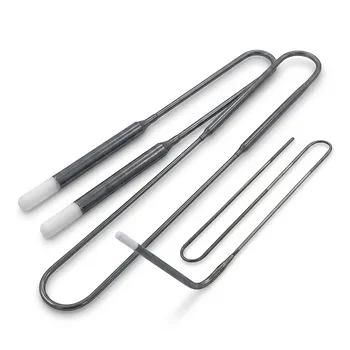
Molybdenum Disilicide MoSi2 Thermal Elements Electric Furnace Heating Element High Temperature Resistance
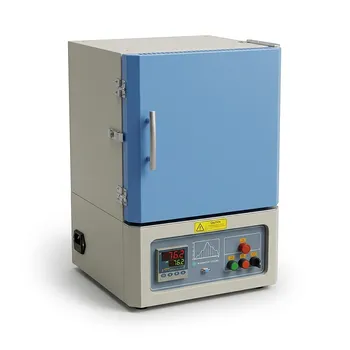
1750C Bench Top Muffle Furnace 3.6L High Grade Molybdenum Disilicide Heating Elements Laboratory Heat Treatment Equipment
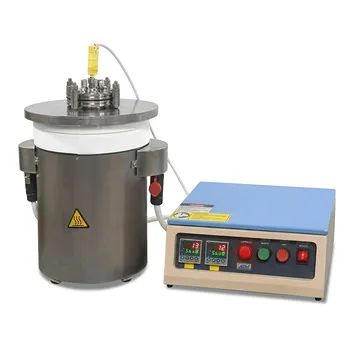
600°C Vertical Crucible Furnace with SS316 Alloy Reactor and 6 Port Vacuum Flange
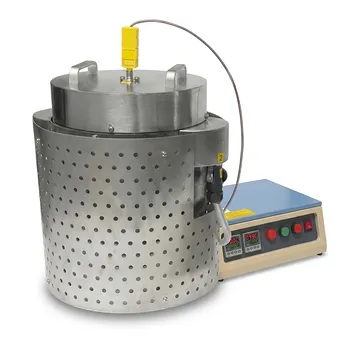
Vertical Crucible Furnace 1000C High Temperature Laboratory Equipment 4.7 Inch Diameter Chamber SS316 Anti Corrosive Enclosure
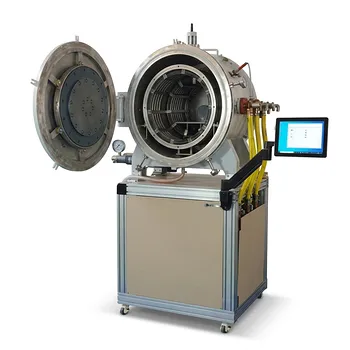
1600°C Cold Wall High Vacuum Chamber Furnace with Molybdenum Heating and 400mm Cube Work Zone
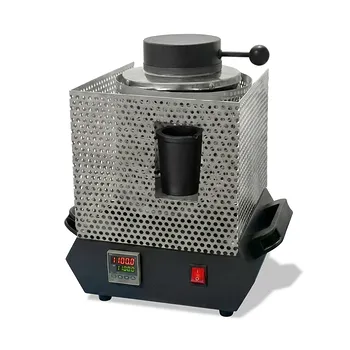
Compact Crucible Melting Furnace 1100C Programmable Temperature Controller Metal Sintering Equipment
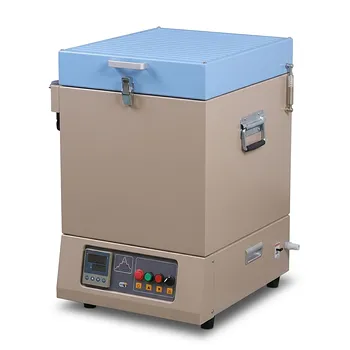
High Temperature Vertical Crucible Furnace with 22L Heating Chamber and 1200C Maximum Temperature
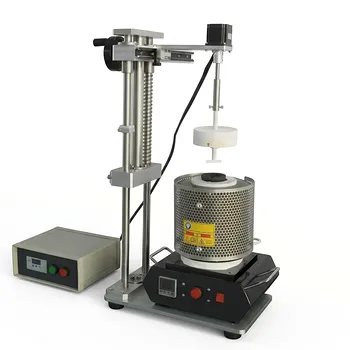
1100C Crucible Melting Furnace with Stirring Function for Glovebox and Air Sensitive Alloy Research
Automatic 10 Crucible Induction Melting and Casting System with Stirring Function and Glovebox Integration 2000C
1100C High Temperature Vacuum Crucible Furnace with Quartz Chamber for Thermal Processing and Sintering