Why are ceramic crucibles selected for high-temperature treatment of activated carbon? Insights for Lab Precision
Updated 3 months ago
Ceramic crucibles are the industry standard for activated carbon analysis because they provide a chemically "silent" and physically stable environment at extreme temperatures. They possess exceptional high-temperature resistance and chemical inertness, ensuring no reaction occurs with the carbon or its residues in oxidative environments up to 1000°C. Crucially, their mass stability ensures the container weight remains constant, which is a fundamental requirement for the accurate calculation of ash weight ratios.
Ceramic crucibles offer the unique combination of high-temperature refractoriness, chemical inertness to aggressive activation agents, and constant mass. This makes them indispensable for ensuring both the purity of the sample and the precision of quantitative experimental data.
Thermal Integrity and Resistance
Maintaining Structural Stability
Ceramic crucibles are selected for their extreme refractoriness, allowing them to withstand temperatures typically ranging from 700°C to 1000°C without deformation. This stability is critical during carbonization and thermal activation processes where structural integrity is non-negotiable.
Resilience to Thermal Shock
High-quality ceramics are designed to handle thermal shock stability, meaning they can endure rapid temperature fluctuations during cyclic heat treatments. This durability prevents the container from cracking or failing when moved between a high-temperature furnace and room temperature.
Uniform Heat Transfer
As sample carriers, ceramic containers provide uniform heat transfer to the carbonaceous material. This ensures that the reaction—whether it is pyrolysis or activation—is consistent throughout the entire sample volume.
Chemical Inertness and Sample Purity
Resistance to Corrosive Activators
Many activation processes involve aggressive agents like potassium hydroxide (KOH) or molten salts such as KCl/LiCl. Ceramic crucibles, particularly high-purity alumina, are highly resistant to chemical erosion from these strong alkaline and acidic substances.
Preventing Cross-Contamination
Because ceramics are chemically inert, they do not react with the carbon raw materials or the corrosive gases produced during heating. This prevents the introduction of impurities, ensuring the final activated carbon or biochar remains pure for sensitive applications like metal ion adsorption.
Protection Against Alkali Metals
Biomass ash often contains highly active alkali metal components that can react with lesser materials. Ceramic crucibles prevent these chemical interactions, preserving the integrity of the ash for accurate elemental composition and mineral phase analysis.
The Necessity of Mass Stability
Precision in Ash Determination
For quantitative analysis, such as calculating the ash weight ratio, the mass of the container must remain identical before and after the experiment. Ceramic crucibles do not gain or lose weight during high-temperature oxidation, which is vital for calculating the precise mass of the residue.
Reliability of Experimental Data
The use of mass-stable ceramics eliminates a major variable in the lab. By ensuring the crucible's weight is a constant, researchers can be confident that any measured weight change is strictly due to the combustion or reaction of the sample itself.
Understanding the Trade-offs
Material Brittleness and Handling
Despite their thermal strength, ceramic crucibles are inherently brittle and susceptible to mechanical impact. They require careful handling and storage, as even microscopic cracks can lead to catastrophic failure during a high-temperature run.
Specific Chemical Limitations
While generally inert, certain ceramics may still react with specific fluxes at extremely high temperatures. For instance, while alumina is highly resistant to KOH, it may still experience minor surface etching over prolonged exposure at maximum temperatures, requiring periodic replacement to maintain analytical precision.
How to Apply This to Your Project
Selecting the Right Container
- If your primary focus is precise ash determination: Utilize high-purity porcelain or alumina crucibles that have been "fired" to a constant weight to ensure the highest measurement accuracy.
- If your primary focus is chemical activation with KOH: Select high-purity alumina crucibles, as they offer superior resistance to alkaline erosion compared to standard porcelain.
- If your primary focus is rapid thermal cycling: Look for ceramic materials specifically rated for high thermal shock resistance to extend the lifespan of your labware.
Selecting the appropriate ceramic crucible transforms the container from a potential source of error into a reliable, invisible constant in your thermal processing workflow.
Summary Table:
| Key Feature | Benefit for Activated Carbon Analysis |
|---|---|
| High Refractoriness | Maintains structural integrity at temperatures up to 1000°C. |
| Chemical Inertness | Resists corrosion from aggressive activators like KOH and biomass ash. |
| Mass Stability | Ensures a constant container weight for accurate ash ratio calculations. |
| Thermal Shock Resistance | Withstands rapid temperature changes during cyclic heat treatments. |
| Uniform Heat Transfer | Provides consistent heating for uniform carbonization and activation. |
Elevate Your Material Research with THERMUNITS
Precision in activated carbon analysis starts with the right equipment. THERMUNITS is a leading manufacturer of high-temperature laboratory solutions designed for the rigorous demands of material science and industrial R&D.
We offer a comprehensive selection of thermal processing systems, including:
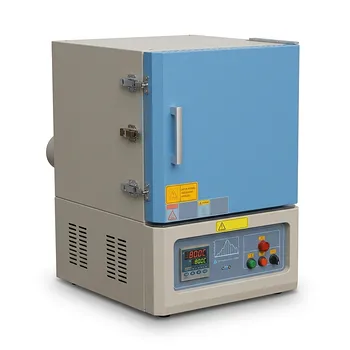
- Muffle & Atmosphere Furnaces for precise ash determination.
- Vacuum, Tube, & Rotary Furnaces for advanced carbonization.
- CVD/PECVD Systems for specialized material synthesis.
- High-Tech Solutions: Dental Furnaces, Vacuum Induction Melting (VIM), and premium Thermal Elements.
Whether you are refining biochar or developing high-performance activated carbon, our equipment ensures the thermal stability and accuracy your project requires. Contact our expert team today to discuss your specific heat treatment needs and discover how we can enhance your laboratory's efficiency.
References
- Sarunpron Khruengsai, Siwatt Pongpiachan. Chemical characterization of activated carbon derived from Napier grass, rubber wood, bamboo, and hemp. DOI: 10.61435/ijred.2024.60502
Mentioned Products
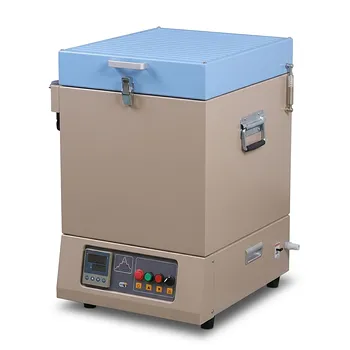
- High Temperature Vertical Crucible Furnace with 22L Heating Chamber and 1200C Maximum Temperature
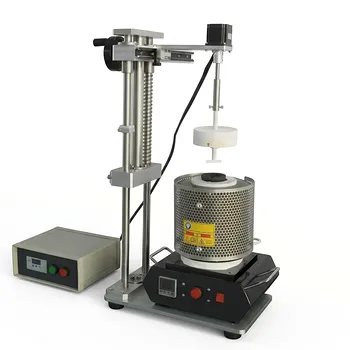
- 1100C Crucible Melting Furnace with Stirring Function for Glovebox and Air Sensitive Alloy Research
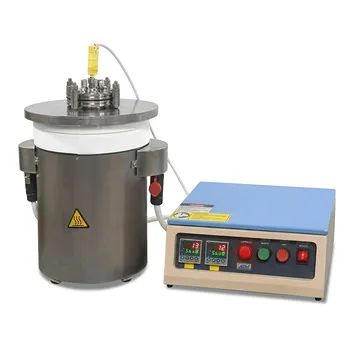
- 600°C Vertical Crucible Furnace with SS316 Alloy Reactor and 6 Port Vacuum Flange
- Vertical Crucible Furnace 1000C High Temperature Laboratory Equipment 4.7 Inch Diameter Chamber SS316 Anti Corrosive Enclosure
- Compact Crucible Melting Furnace 1100C Programmable Temperature Controller Metal Sintering Equipment
People Also Ask
- What role does a high-temperature vertical tube furnace play in simulating high-carbon ferromanganese slag formation?
- How should the choice between a Quartz crucible and an Alumina crucible be made for La2O2S? Optimize Material Purity
- Why use ceramic crucibles for coal nano-hybrid heat treatment? Ensure Purity and Thermal Stability.
- How does a high-temperature solution furnace affect the evolution of strengthening phases in Fe-Co-Mo alloys? Expert Guide
- What critical conditions does a high-temperature electric heating furnace provide for rice husk ash melting research?

Tech Team · ThermUnits
Last updated on Jun 03, 2026
Related Products
High Temperature Vertical Crucible Furnace with 22L Heating Chamber and 1200C Maximum Temperature
1100C Crucible Melting Furnace with Stirring Function for Glovebox and Air Sensitive Alloy Research
600°C Vertical Crucible Furnace with SS316 Alloy Reactor and 6 Port Vacuum Flange
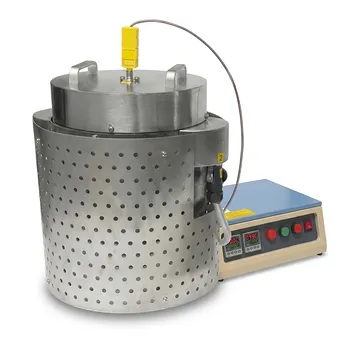
Vertical Crucible Furnace 1000C High Temperature Laboratory Equipment 4.7 Inch Diameter Chamber SS316 Anti Corrosive Enclosure
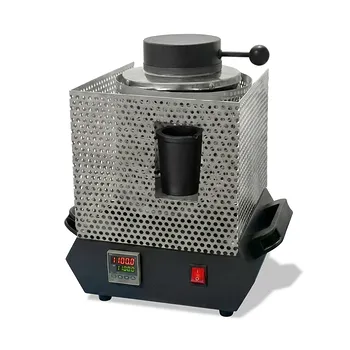
Compact Crucible Melting Furnace 1100C Programmable Temperature Controller Metal Sintering Equipment
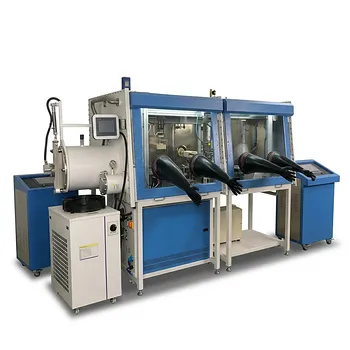
Automatic 10 Crucible Induction Melting and Casting System with Stirring Function and Glovebox Integration 2000C
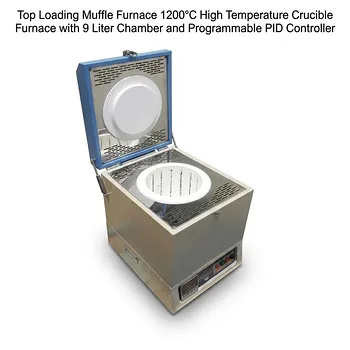
Top Loading Muffle Furnace 1200°C High Temperature Crucible Furnace with 9 Liter Chamber and Programmable PID Controller
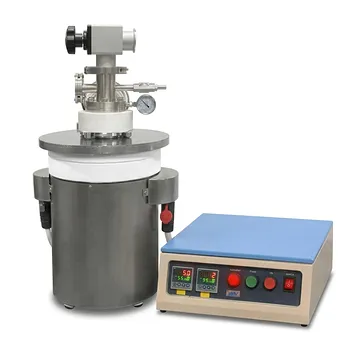
1100C High Temperature Vacuum Crucible Furnace with Quartz Chamber for Thermal Processing and Sintering