Why is high-purity argon (Ar) required for Ni-SACs heat treatment? Ensure Atomic Dispersion & High Catalytic Performance
Updated 3 months ago
High-purity argon (Ar) is indispensable for synthesizing Nickel Single Atom Catalysts (Ni-SACs) because it provides a strictly inert environment that prevents the degradation of the catalyst's structural components. Without this protective gas, the carbon substrate would incinerate and the nickel atoms would aggregate into bulk particles or oxide films, destroying the intended single-atom dispersion. By excluding oxygen and nitrogen, argon ensures that the precursor transforms into a specific nitrogen-coordinated, low-valence nickel structure required for high catalytic activity.
Core Takeaway: High-purity argon acts as a chemical shield during high-temperature pyrolysis, preventing the oxidation of the carbon support and the metal sites. This isolation allows for the precise anchoring of individual nickel atoms within a nitrogen-coordinated framework, ensuring the catalyst maintains its atomic-level architecture and chemical integrity.
Preventing Oxidative Degradation of the Carbon Support
Protecting the Carbon Architecture
Nickel Single Atom Catalysts are typically supported on carbon-rich substrates, such as Metal-Organic Frameworks (MOFs) or carbon nanoboxes. At the high temperatures required for pyrolysis, any presence of oxygen would cause the carbon substrate to burn or erode, collapsing the structural scaffold.
Facilitating Carbonization
The use of argon allows the MOF precursor to undergo carbonization safely. This process transforms the organic ligands into a stable, conductive carbon matrix without the interference of atmospheric oxygen which would otherwise lead to gasification.
Ensuring Precise Atomic Coordination and Dispersion
Preventing Metal Aggregation
In a reactive atmosphere, nickel atoms tend to migrate and cluster together to form nanoparticles or bulk oxides. An inert argon environment allows the metal atoms to follow their internal cohesive energy pathways, facilitating the selective anchoring of single atoms rather than unwanted agglomeration.
Maintaining Low-Valence States
High-purity argon is critical for producing low-valence nickel sites. By excluding oxygen interference, the nickel atoms can form specific coordination bonds with nitrogen atoms in the carbon lattice, which is the key "active site" for many catalytic reactions.
Avoiding Uncontrolled Nitridation
While nitrogen coordination is often desired in Ni-SACs, it must be controlled via the precursor's chemistry. Introducing atmospheric nitrogen at high temperatures can lead to the formation of brittle nitride inclusions or unintended phase changes that alter the catalyst's electronic properties.
Process Stability and Chemical Equilibrium
Isolating the Reaction Environment
Argon serves as a continuous flushing agent that excludes oxygen and moisture from the reaction chamber. This isolation ensures that the chemical reactions occurring—such as metal atom anchoring—are driven solely by the precursor composition and the temperature profile.
Maintaining Furnace Pressure and Repeatability
A stable flow of argon (e.g., 0.5 NLPM) helps maintain consistent internal furnace pressure. This stability is critical for process repeatability, ensuring that each batch of catalyst has the same dispersion density and coordination environment.
Accurate Assessment of Reaction Mechanisms
By removing environmental variables like oxygen, researchers can accurately reflect the chemical equilibrium of the reduction and carbonization processes. This allows for a precise understanding of how different heat treatment durations affect the final metal recovery and dispersion.
Understanding the Trade-offs and Pitfalls
The Necessity of "High-Purity"
Standard-grade argon may contain trace amounts of moisture or oxygen. Even parts-per-million levels of impurities can lead to the formation of oxide films on the nickel sites, which can poison the catalyst or block active sites before the material is even used.
Cost vs. Protective Efficacy
While argon is more expensive than nitrogen, it is significantly more inert at extremely high temperatures (above 1000°C). In many nickel-based systems, nitrogen can become reactive, making argon the only viable choice for maintaining phase stability and chemical integrity.
Flow Rate Sensitivity
If the argon flow rate is too low, "pockets" of evolved gases from the precursor may linger, leading to secondary reactions. Conversely, excessively high flow rates may strip away volatile species necessary for the formation of the specific nitrogen coordination structures.
How to Optimize the Use of Argon for Ni-SAC Synthesis
Recommendations for Experimental Design
- If your primary focus is atomic dispersion: Ensure your argon is 99.999% (5N) purity to prevent trace oxygen from triggering nickel atom aggregation into nanoparticles.
- If your primary focus is carbon substrate integrity: Use a pre-purging cycle of at least 30 minutes before increasing the temperature to ensure all residual atmospheric oxygen is displaced from the furnace.
- If your primary focus is process repeatability: Utilize a mass flow controller to maintain a constant argon flow rate, ensuring that the pressure and gas-phase environment remain identical across different synthesis runs.
By meticulously controlling the inert environment with high-purity argon, you transition from unpredictable bulk materials to the precise, atomic-level engineering required for high-performance Nickel Single Atom Catalysts.
Summary Table:
| Key Requirement | Function in Ni-SACs Synthesis | Benefit to Catalyst Integrity |
|---|---|---|
| Oxidation Prevention | Protects carbon support from incineration | Maintains the structural scaffold/MOF |
| Atomic Dispersion | Prevents metal atom aggregation/clustering | Ensures precise single-atom active sites |
| Inert Environment | Excludes atmospheric O2 and N2 | Maintains low-valence nickel states |
| Argon Purity (5N) | Eliminates trace moisture and O2 | Prevents catalyst poisoning by oxide films |
| Flow Stability | Constant pressure and gas flushing | Guarantees process repeatability |
Elevate Your Ni-SACs Research with THERMUNITS Precision
Synthesizing high-performance Nickel Single Atom Catalysts requires absolute control over your thermal environment. THERMUNITS is a leading manufacturer of high-temperature laboratory equipment specifically designed for material science and industrial R&D.
Our comprehensive range of thermal processing solutions—including Atmosphere Furnaces, Vacuum Furnaces, Tube Furnaces, and CVD/PECVD systems—is engineered to provide the high-purity inert environments necessary for atomic-level engineering. From Muffle and Rotary Furnaces to Vacuum Induction Melting (VIM) systems and high-precision Thermal Elements, we offer the tools to ensure your materials achieve maximum catalytic activity and structural integrity.
Ready to optimize your synthesis process? Contact THERMUNITS today to explore how our specialized heat treatment equipment can support your research and production goals.
References
- Jin Wook Lim, Jong‐Lam Lee. A MOF-derived pyrrolic N-stabilized Ni single atom catalyst for selective electrochemical reduction of CO<sub>2</sub> to CO at high current density. DOI: 10.1039/d3ta06399b
Mentioned Products
- Vertical Hybrid High Temperature Furnace 1500C Alumina Tube SOFC Fuel Cell Testing Laboratory Heat Treatment Research Equipment
- 1750C Bench Top Muffle Furnace 3.6L High Grade Molybdenum Disilicide Heating Elements Laboratory Heat Treatment Equipment
- High Temperature Vertical Crucible Furnace with 22L Heating Chamber and 1200C Maximum Temperature
- High Temperature Tube Furnace 1500C with Sliding Flanges and 50mm OD for Rapid Thermal Processing Fast Heating and Cooling
- High Temperature Vertical Hybrid Furnace with Alumina Tube and SiC Heating for SOFC Coin Cell Testing and Atmosphere Processing
People Also Ask
- What role does a laboratory furnace play in polyester-based porous carbon activation? Optimize Pore Engineering & R&D
- How does a high-temperature solution furnace affect the evolution of strengthening phases in Fe-Co-Mo alloys? Expert Guide
- Which materials are used for thermal elements in furnaces exceeding 1,500°C? Expert Guide to Extreme Heat Solutions
- How does final coking temperature influence carbon structure? Optimize Thermal Precision for High-Performance Materials
- Why is a high-purity nitrogen atmosphere required during carbonization of OMC? Protect Your Material Integrity

Tech Team · ThermUnits
Last updated on Jun 02, 2026
Related Products
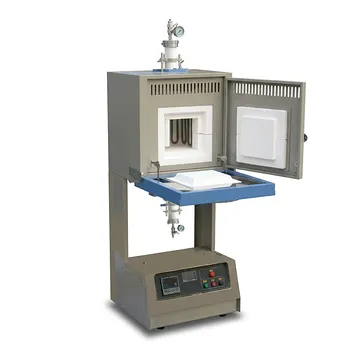
Vertical Hybrid High Temperature Furnace 1500C Alumina Tube SOFC Fuel Cell Testing Laboratory Heat Treatment Research Equipment
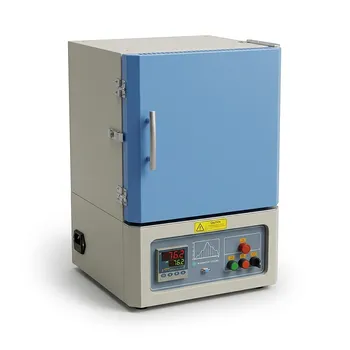
1750C Bench Top Muffle Furnace 3.6L High Grade Molybdenum Disilicide Heating Elements Laboratory Heat Treatment Equipment
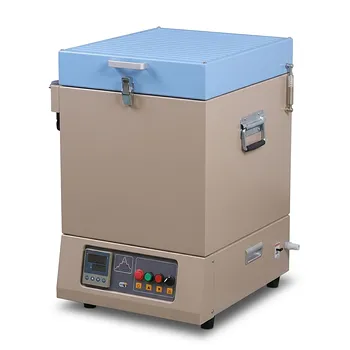
High Temperature Vertical Crucible Furnace with 22L Heating Chamber and 1200C Maximum Temperature

High Temperature Tube Furnace 1500C with Sliding Flanges and 50mm OD for Rapid Thermal Processing Fast Heating and Cooling
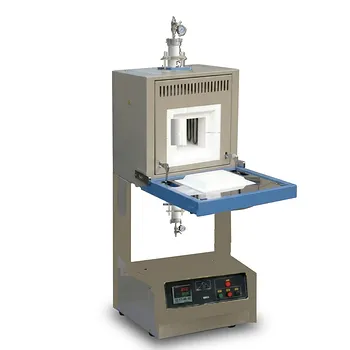
High Temperature Vertical Hybrid Furnace with Alumina Tube and SiC Heating for SOFC Coin Cell Testing and Atmosphere Processing
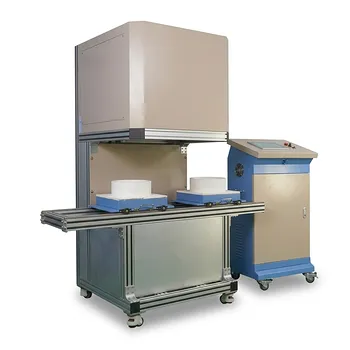
High Temperature Bottom Loading Vertical Furnace 1700C Dual Stage Sample Processing System 18L Large Capacity Thermal Treatment Equipment
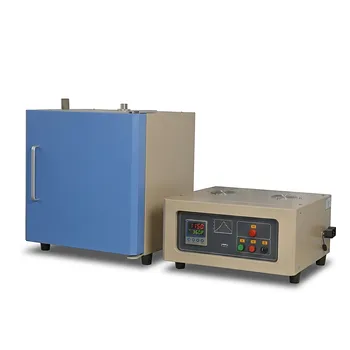
High Temperature Muffle Furnace with Alloy Chamber for Debinding and Sintering Applications
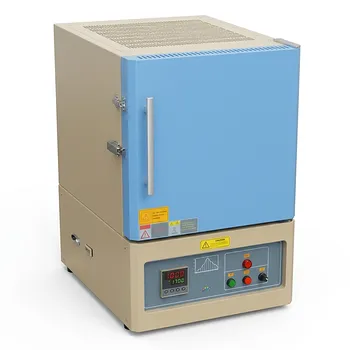
Large Bench Top 1700C High Temperature Muffle Furnace with 19L Chamber for Advanced Material Sintering and Annealing
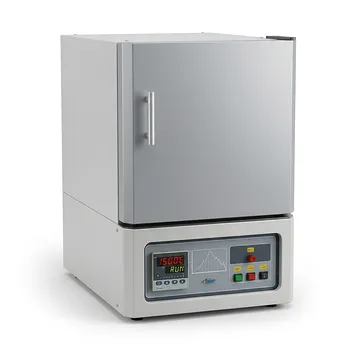
High Temperature 1500C Benchtop Muffle Furnace 3.6L Alumina Fiber Chamber Programmable Controller Sintering Annealing Carbonization Thermal Processing System
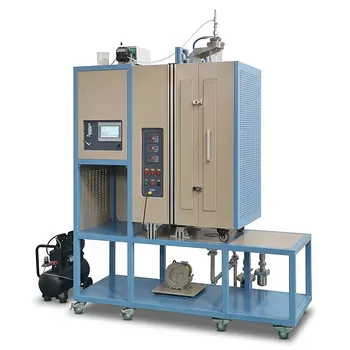
1500C Three Zone Vertical Pyrolysis Furnace for Nanoparticle Synthesis and Advanced Oxide Coating
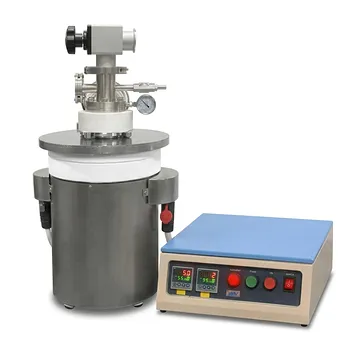
1100C High Temperature Vacuum Crucible Furnace with Quartz Chamber for Thermal Processing and Sintering

High Temperature 1700C Benchtop Tube Furnace with 5 Inch Heating Zone High Purity Alumina Tube and Vacuum Sealing Flanges

1750°C High Temperature Benchtop Vacuum Atmosphere Tube Furnace with Kanthal Super 1800 Heating Elements and 60mm Alumina Processing Tube

1800C High Temperature Compact Vacuum Tube Furnace with 60mm OD Alumina Tube and Kanthal MoSi2 Heating Elements
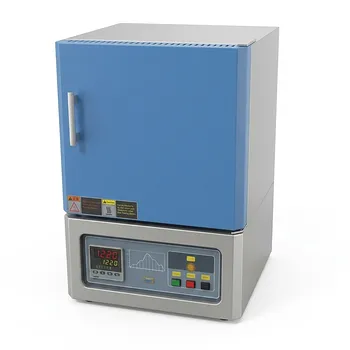
High Temperature Benchtop Muffle Furnace 1700C 10L Chamber Alumina Fiber Insulation MoSi2 Heating Elements
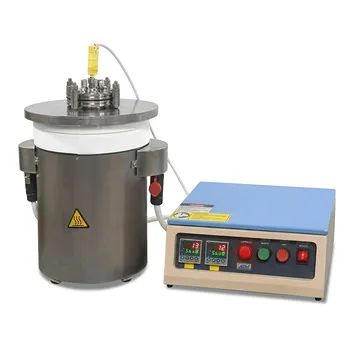
600°C Vertical Crucible Furnace with SS316 Alloy Reactor and 6 Port Vacuum Flange
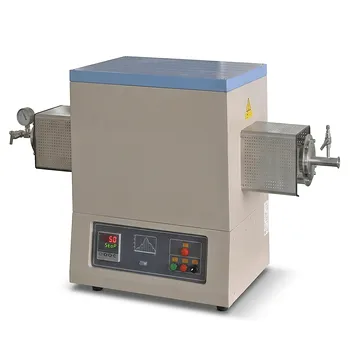
High Temperature 1700C Tube Furnace with 4 Inch OD Alumina Tube and Vacuum Sealing Flanges

High Temperature 1700C Tube Furnace with High Vacuum Turbomolecular Pump System and Multi Channel Mass Flow Controller Gas Mixer
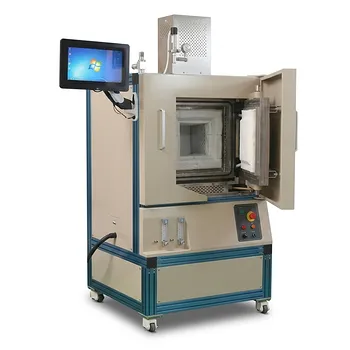
High Temperature Oxygen and Inert Atmosphere Controlled Furnace 8 Liter 1700C Sintering System for Advanced Materials RD