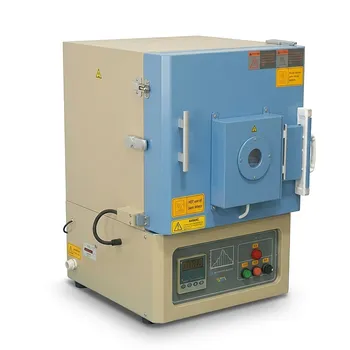
Why is a porcelain boat typically used for S-C3N4 synthesis? Key to uniform heating and high chemical purity.
Updated 3 months ago
Porcelain boats are the industry standard for $S-C_3N_4$ synthesis because they offer a unique combination of high-temperature chemical inertness and superior thermal conductivity. Specifically, during the thermal polymerization process at 600 °C, these containers ensure that the precursors do not react with the vessel, while their flat geometry facilitates the uniform heat distribution required for consistent sulfur doping.
Core Takeaway: A porcelain boat acts as a chemically neutral, thermally stable stage that prevents structural defects and ensures high-purity sulfur integration into the carbon nitride lattice by eliminating localized hot spots.
Maintaining Chemical Integrity at High Temperatures
Inertness During Thermal Polymerization
At the 600 °C threshold required for $S-C_3N_4$ synthesis, many materials become reactive or prone to degradation. Porcelain remains chemically stable, ensuring that no unwanted impurities from the boat are leached into the final graphitic carbon nitride product.
Prevention of Precursor Contamination
The precursors used for sulfur doping are often sensitive to the surrounding environment during the heating phase. Because porcelain does not react with these precursors, researchers can guarantee that the sulfur-to-carbon ratio remains controlled and predictable.
Resistance to Corrosive Vapors
Thermal polymerization often involves the release of volatile gases and vapors. Porcelain's surface resists the corrosive nature of these byproducts, protecting the integrity of the boat and the purity of the experimental results over multiple uses.
Optimizing Thermal Distribution and Doping
The Role of Flat Geometry
The shallow, flat shape of a porcelain boat is a deliberate design choice for material synthesis. This geometry allows the raw materials to be spread in a thin, even layer, which maximizes the surface area exposed to the furnace atmosphere.
Uniform Sulfur Doping
Localized overheating is a common cause of structural defects in carbon nitride. The high thermal conductivity of porcelain ensures that heat is transferred rapidly and evenly from the furnace to the sample, facilitating a uniform sulfur distribution throughout the $C_3N_4$ lattice.
Controlling Vapor Transmission
The placement of the boat within the tube furnace allows researchers to leverage internal temperature gradients. This strategic positioning, combined with porcelain's thermal properties, allows for precise control over how sulfur vapors deposit onto the solid samples.
Understanding the Trade-offs
Fragility and Thermal Shock
While porcelain is excellent for steady-state high temperatures, it is inherently brittle and sensitive to rapid temperature changes. Heating or cooling the furnace too quickly can cause the boat to crack, potentially ruining the synthesis run.
Limitations in Reactive Atmospheres
In environments exceeding 1000 °C or involving highly specific reduction gases, other materials like high-purity graphite or specialized ceramics might be required. However, for the specific 600 °C polymerization of $S-C_3N_4$, porcelain remains the most cost-effective and reliable balance of properties.
How to Apply This to Your Project
When selecting a loading container for your synthesis, your choice should align with your specific thermal and chemical requirements.
- If your primary focus is high-purity $S-C_3N_4$ synthesis: Utilize a porcelain boat to ensure zero chemical interference and uniform thermal distribution at 600 °C.
- If your primary focus is extreme temperature stability above 850 °C: Consider high-purity ceramic or graphite boats, which maintain stability during high-temperature activation or metal oxide reactions.
- If your primary focus is precise vapor deposition: Use a porcelain boat within a tube furnace to take advantage of controlled temperature gradients and carrier gas flow.
By prioritizing chemical inertness and thermal uniformity, you ensure the structural integrity and performance of your synthesized sulfur-doped graphitic carbon nitride.
Summary Table:
| Feature | Benefit | Impact on S-C3N4 Synthesis |
|---|---|---|
| Chemical Inertness | Prevents impurity leaching | Ensures high-purity carbon nitride product |
| Thermal Conductivity | Rapid, even heat transfer | Eliminates hot spots for uniform sulfur doping |
| Flat Geometry | Maximizes surface area | Optimizes precursor exposure and vapor flow |
| Corrosion Resistance | Resists volatile byproducts | Protects sample integrity during polymerization |
Elevate Your R&D Precision with THERMUNITS
Achieving consistent results in $S-C_3N_4$ synthesis requires more than just the right container—it requires precise thermal control. THERMUNITS is a leading manufacturer of high-temperature laboratory equipment specifically designed for advanced material science and industrial R&D.
Whether you need Tube Furnaces for vapor deposition, Muffle Furnaces for polymerization, or specialized Vacuum and Atmosphere systems, our equipment provides the stability and uniformity your research demands. Our comprehensive range also includes:
- Rotary and Hot Press Furnaces
- CVD/PECVD Systems
- Vacuum Induction Melting (VIM) Furnaces
- High-Quality Thermal Elements
Ready to optimize your heat treatment process? Contact us today to consult with our experts and find the perfect solution for your laboratory.
References
- Yuhong Lin, Dongchu Chen. Preparation of S-C3N4/AgCdS Z-Scheme Heterojunction Photocatalyst and Its Effectively Improved Photocatalytic Performance. DOI: 10.3390/molecules29091931
Mentioned Products
- Vacuum Dental Porcelain Sintering Furnace for High Precision Ceramic Restorations
- 1100C High Pressure Rocking Tube Furnace with 2 Inch Super Alloy Processing Tube for Material Synthesis
- 1800C Bench Top Muffle Furnace 18 Liters with Kanthal Super 1900 Heating Elements for High Purity Ceramic Sintering and Material Research
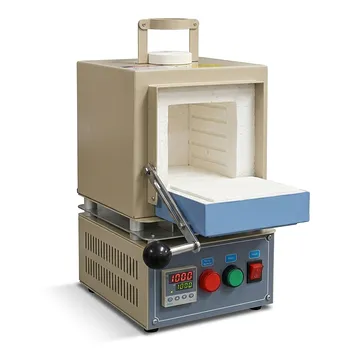
- Compact 1000C Muffle Furnace with Programmable Controller and 2 Inch Top Port for Vacuum and Atmosphere Material Research
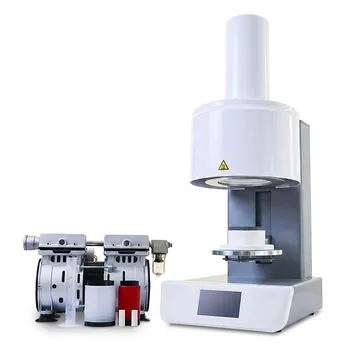
- Dental Porcelain Zirconia Sintering Ceramic Vacuum Press Furnace
People Also Ask
- What Role Does a Vacuum Sintering Furnace Play in Ni-Mn-Ga Alloy Fabrication? Optimizing Porous Structures
- How does a vacuum or atmosphere sintering furnace contribute to the congener-welding process of carbon nitride membranes?
- What technical features ensure temperature precision and material integrity in dental furnaces? Quality Sintering Guide
- What is the primary function and application of a dental furnace in laboratory settings? Optimize Your Restorations
- How does a dental furnace prevent material cracking during rapid thermal cycles? Master Precision Thermal Control

Tech Team · ThermUnits
Last updated on Jun 02, 2026
Related Products
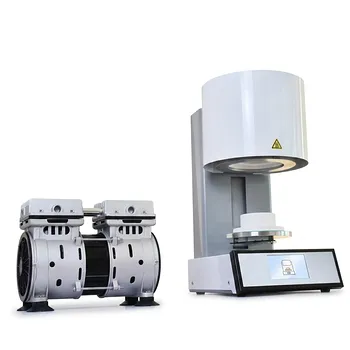
Vacuum Dental Porcelain Sintering Furnace for High Precision Ceramic Restorations
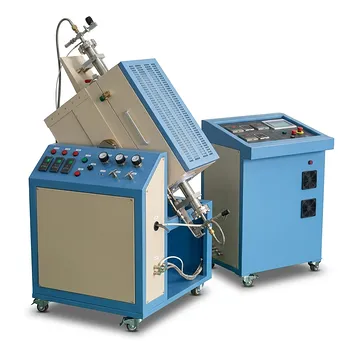
1100C High Pressure Rocking Tube Furnace with 2 Inch Super Alloy Processing Tube for Material Synthesis
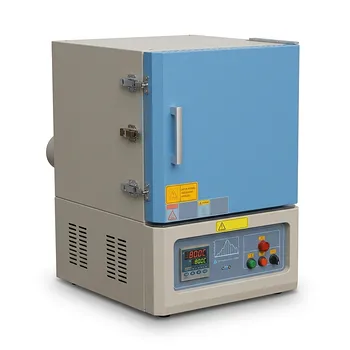
1800C Bench Top Muffle Furnace 18 Liters with Kanthal Super 1900 Heating Elements for High Purity Ceramic Sintering and Material Research
Compact 1000C Muffle Furnace with Programmable Controller and 2 Inch Top Port for Vacuum and Atmosphere Material Research
Dental Porcelain Zirconia Sintering Ceramic Vacuum Press Furnace
High Temperature Rocking Tube Furnace with Quartz Tube and Vacuum Flange for Materials Synthesis
1200C Max Compact Auto-Sliding PECVD Furnace with 2 Inch Tube and Vacuum Pump
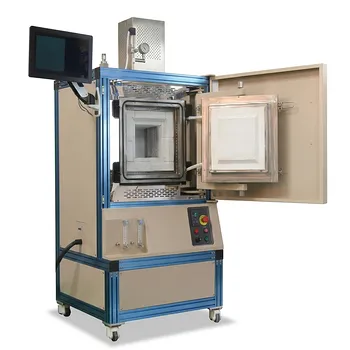
High Temperature Hydrogen Atmosphere Box Furnace 1650C Max Reducing Environment Material Synthesis System 8x8x8 Chamber
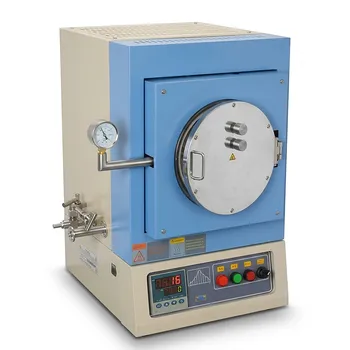
1100°C High Temperature Quartz Chamber Furnace 8 Inch OD with 7.6 Liter Capacity and Vacuum Atmosphere Capability
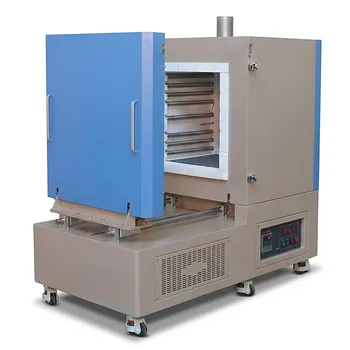
1200C Five Side Heating Muffle Furnace with Sliding Door 125L Volume High Temperature Heat Treatment System for Large Scale Sintering and Annealing
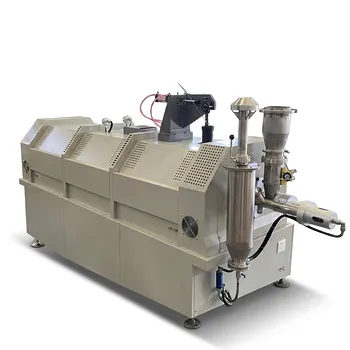
Electric Rotary Kiln Continuous Working Small Rotary Furnace Heating Pyrolysis Plant
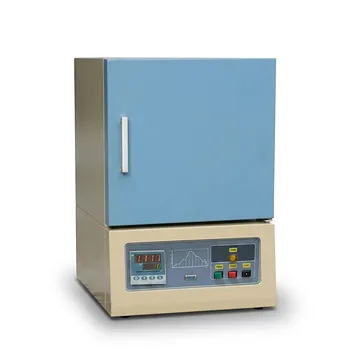
Ultra High Temperature Bench Top Muffle Furnace 1750C Sintering System with Kanthal Super Heating Elements and Precision Digital Control
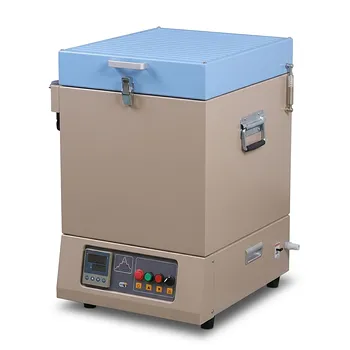
High Temperature Vertical Crucible Furnace with 22L Heating Chamber and 1200C Maximum Temperature
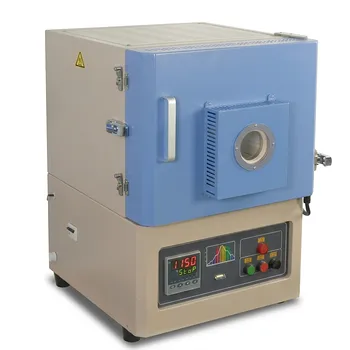
High Temperature Benchtop Muffle Furnace with Quartz Observation Window for Thermal Imaging and Material Analysis
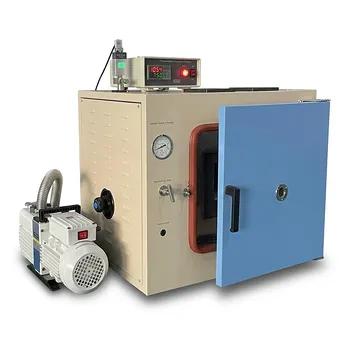
Compact High Vacuum Box Furnace 1050C Max 6.2L Ceramic Chamber Stainless Steel Shell Programmable Temperature Controller for Material Science Research
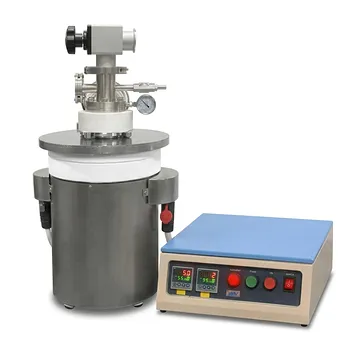
1100C High Temperature Vacuum Crucible Furnace with Quartz Chamber for Thermal Processing and Sintering
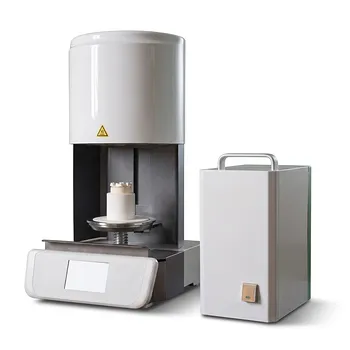
Dental Porcelain Zirconia Sintering Ceramic Furnace Chairside with Transformer
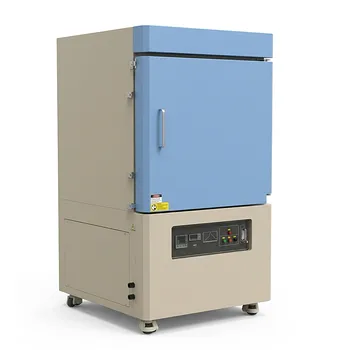
Industrial Large Box Furnace 1700C 216L High Temp Muffle Sintering System
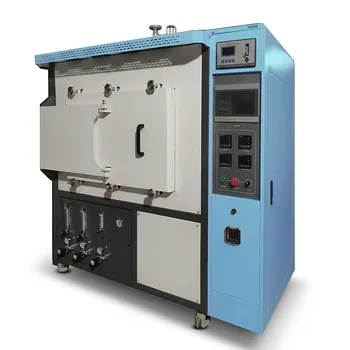
Roller Table Atmosphere Furnace 1500C High Temperature Battery Material Sintering System 112L Capacity