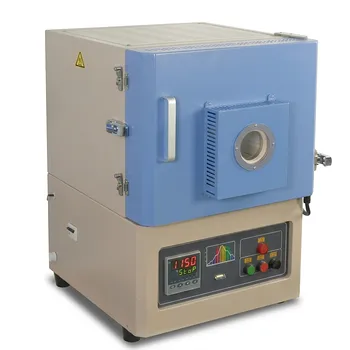
Why use a high-temp furnace for loading CuO/V2O5 on activated carbon? Ensure Phase Stability & Catalytic Activity
Updated 3 months ago
The necessity of an industrial high-temperature calcination furnace lies in its ability to provide the precise thermal environment required to transform raw metal precursors into stable, catalytically active oxide phases. This process ensures that transition metals like CuO and V₂O₅ are not just physically present, but chemically bonded and uniformly distributed across the activated carbon’s vast internal surface area. Without this controlled heat treatment, the resulting material would lack the structural integrity and specific chemical valency needed for effective industrial catalysis.
Core Takeaway: High-temperature calcination is the critical transition step that decomposes precursor salts into stable metal oxides while anchoring them to the carbon carrier. It creates the specific crystalline structures and electronic states—such as the V⁴⁺/V⁵⁺ balance—required for high-performance catalytic reactions.
Facilitating Chemical Transformation and Phase Stability
Decomposition of Metal Precursors
Most transition metals are loaded onto activated carbon as precursor salts or ligands. The calcination furnace provides the energy to eliminate crystalline water, release gaseous molecules, and remove organic ligands that would otherwise block active sites.
Achievement of Stable Crystalline Phases
Precision heating allows materials to transition from an amorphous state to specific, stable crystalline phases like monoclinic CuO. This structural stabilization ensures the catalyst remains effective under the harsh conditions of industrial flue gas or chemical processing.
Establishing Catalytic Valency
For vanadium-based systems, the furnace is essential for establishing a specific V⁴⁺/V⁵⁺ balance. This precise electronic ratio is the primary factor in providing the material with high sulfur resistance during operation.
Optimizing the Distribution on the Carbon Carrier
Preventing Active Site Sintering
High-precision furnaces allow for extremely slow heating rates, often as low as 2 °C/min. This gradual increase prevents "sintering," where metal particles clump together, ensuring the active components remain as dispersed nanoparticles with a high specific surface area.
Enhancing Substrate Bonding
The heat treatment strengthens the chemical bonding between the metal oxide loading layer and the activated carbon substrate. This prevents the active phase from leaching or peeling off during high-velocity gas flow or liquid-phase applications.
Managing Porosity and Impurities
Calcination at temperatures like 500°C–600°C removes residual surfactants and organic impurities left over from the synthesis process. This clears the mesoporous structure of the activated carbon, ensuring that reactants can easily reach the newly formed catalytic sites.
Understanding the Trade-offs and Risks
Thermal Damage to the Carbon Carrier
Activated carbon is sensitive to high temperatures, especially in oxygen-rich environments. If the calcination temperature is too high or the atmosphere is not strictly controlled, the carbon skeleton can oxidize, leading to a loss of structural integrity and porosity.
The Complexity of Precision Control
Achieving the "sweet spot" of catalytic activity requires a furnace with programmable logic. Rapid or uneven heating can lead to non-uniform oxide phases, which results in a catalyst that performs inconsistently across different batches.
How to Apply This to Your Project
Making the Right Choice for Your Goal
A furnace is not merely a heat source; it is a chemical reactor that defines the final properties of your adsorbent or catalyst.
- If your primary focus is simultaneous NO and mercury removal: Use the furnace to optimize the stacking of CuO components to maximize active sites for low-temperature (150–250°C) environments.
- If your primary focus is high sulfur resistance: Focus on the furnace's ability to maintain a steady environment to achieve the specific V⁴⁺/V⁵⁺ oxidation states in vanadium oxides.
- If your primary focus is structural longevity: Prioritize a furnace with high-precision ramp rates to prevent sintering and ensure a tight heterojunction interface between the metal and the carbon.
By mastering the controlled thermal environment of a calcination furnace, you transform a simple mixture of carbon and salt into a sophisticated, high-performance industrial tool.
Summary Table:
| Key Function | Impact on Catalyst Performance | Critical Control Parameter |
|---|---|---|
| Precursor Decomposition | Removes ligands & water to form pure, active oxide phases. | Precise Temperature Control |
| Phase Stabilization | Creates stable crystalline structures (e.g., monoclinic CuO). | Soak Time & Temperature |
| Valency Balancing | Establishes critical V⁴⁺/V⁵⁺ ratios for sulfur resistance. | Controlled Atmosphere |
| Sintering Prevention | Maintains high surface area by preventing particle clumping. | Low Ramp Rate (e.g., 2°C/min) |
| Substrate Bonding | Strengthens chemical bonds to prevent leaching or peeling. | Thermal Uniformity |
Maximize Your Catalytic Efficiency with THERMUNITS
Precise thermal processing is the difference between a simple mixture and a high-performance industrial catalyst. THERMUNITS is a leading manufacturer of high-temperature laboratory equipment for material science and industrial R&D. We offer a comprehensive range of thermal solutions—including Muffle, Vacuum, Atmosphere, Tube, Rotary, and Hot Press furnaces, CVD/PECVD systems, Dental Furnaces, electric rotary kilns, vacuum induction melting furnaces (VIM), and Thermal Elements—specifically engineered to provide the stable environments and programmable ramp rates required for transition metal loading.
Whether you are optimizing CuO for mercury removal or fine-tuning V₂O₅ valency for sulfur resistance, our equipment ensures uniform heat distribution and strict atmospheric control to protect your carbon substrates and enhance bonding.
Ready to elevate your heat treatment precision?
Contact our technical experts today to find the ideal furnace solution for your specific R&D or industrial application!
References
- Guoliang Li, Chuanchuan Liu. Research Progress on the Synergistic Treatment of Multi Pollutants at Low Temperatures Using Carbon-Based Materials. DOI: 10.3390/su162410965
Mentioned Products
- 900°C Max Rotary Tube Furnace with 8 Inch 310S Alloy Tube and Optional Multi Zone Heating for Industrial Material Calcination
- Industrial Large Box Furnace 1700C 216L High Temp Muffle Sintering System
- Compact High Temperature 1600C Tube Furnace with 50mm Alumina Tube and Vacuum Flanges for Material Sintering
- High Temperature 1700C Tube Furnace with High Vacuum Turbomolecular Pump System and Multi Channel Mass Flow Controller Gas Mixer
- High Temperature 1500C Benchtop Muffle Furnace 3.6L Alumina Fiber Chamber Programmable Controller Sintering Annealing Carbonization Thermal Processing System
People Also Ask
- How does a rotary tube furnace improve the processing of granular materials? Enhance Uniformity and Reaction Kinetics
- Why use a rotary tube furnace for FACS carbonization? Ensure uniform morphology and prevent sphere agglomeration.
- Why is the precise optimization of residence time essential in the catalyst calcination process? Maximize Your Yields.
- In what ways do rotary tube furnaces enhance chemical and specialty mineral processing? Drive Precision and Uniformity.
- What parameters must operators control to maintain product quality in a rotary furnace? Master Your Heat Treatment.

Tech Team · ThermUnits
Last updated on Jun 02, 2026
Related Products
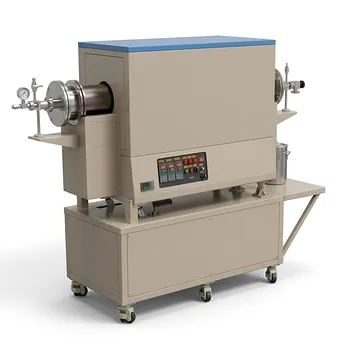
900°C Max Rotary Tube Furnace with 8 Inch 310S Alloy Tube and Optional Multi Zone Heating for Industrial Material Calcination
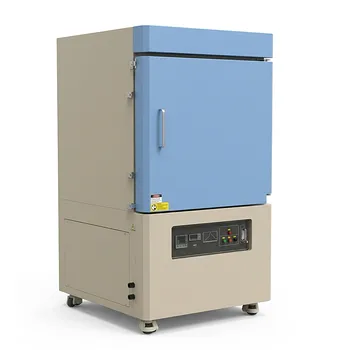
Industrial Large Box Furnace 1700C 216L High Temp Muffle Sintering System

Compact High Temperature 1600C Tube Furnace with 50mm Alumina Tube and Vacuum Flanges for Material Sintering

High Temperature 1700C Tube Furnace with High Vacuum Turbomolecular Pump System and Multi Channel Mass Flow Controller Gas Mixer
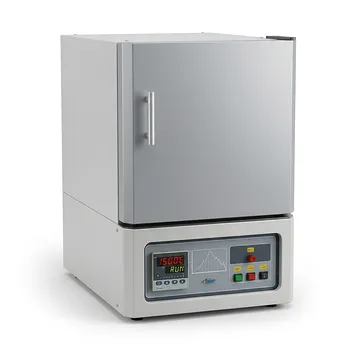
High Temperature 1500C Benchtop Muffle Furnace 3.6L Alumina Fiber Chamber Programmable Controller Sintering Annealing Carbonization Thermal Processing System

High Temperature 1700C Benchtop Tube Furnace with 5 Inch Heating Zone High Purity Alumina Tube and Vacuum Sealing Flanges
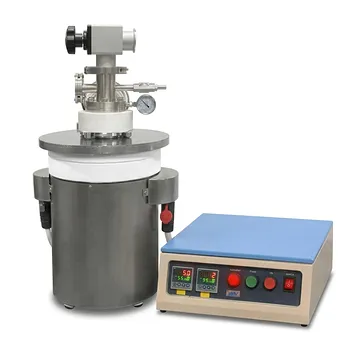
1100C High Temperature Vacuum Crucible Furnace with Quartz Chamber for Thermal Processing and Sintering
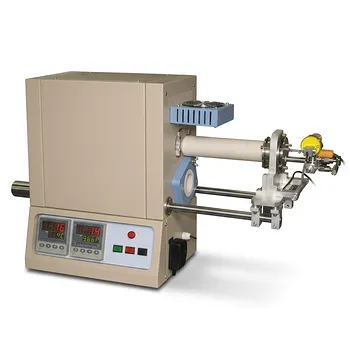
High Temperature Tube Furnace 1500C with Sliding Flanges and 50mm OD for Rapid Thermal Processing Fast Heating and Cooling
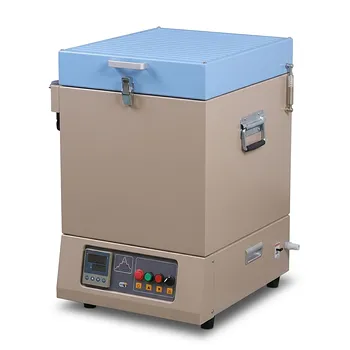
High Temperature Vertical Crucible Furnace with 22L Heating Chamber and 1200C Maximum Temperature
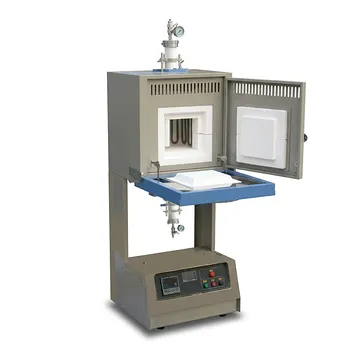
Vertical Hybrid High Temperature Furnace 1500C Alumina Tube SOFC Fuel Cell Testing Laboratory Heat Treatment Research Equipment
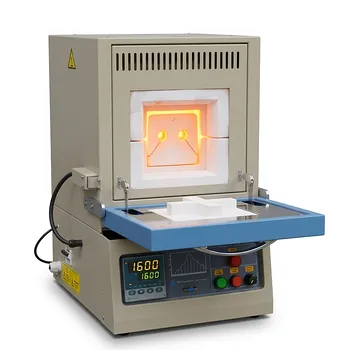
High Temperature Compact Muffle Furnace 1700 C with 30 Segment Programmable Controller and 1.7L Cubic Chamber
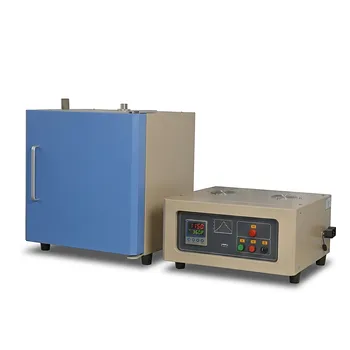
High Temperature Muffle Furnace with Alloy Chamber for Debinding and Sintering Applications
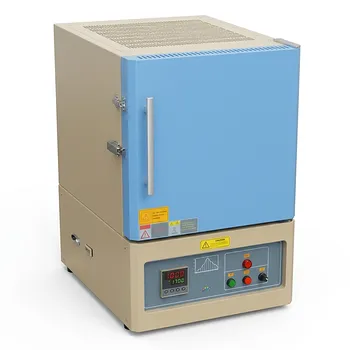
Large Bench Top 1700C High Temperature Muffle Furnace with 19L Chamber for Advanced Material Sintering and Annealing
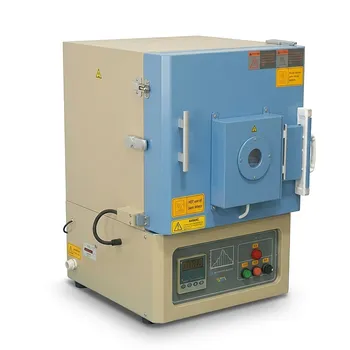
High Temperature Benchtop Muffle Furnace 1500C with 3.6L Chamber and Quartz Observation Window

1750°C High Temperature Benchtop Vacuum Atmosphere Tube Furnace with Kanthal Super 1800 Heating Elements and 60mm Alumina Processing Tube
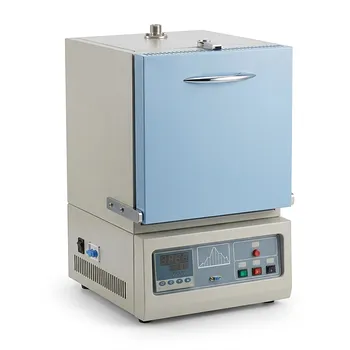
1750C Compact Muffle Furnace 1.7L Ultra High Temperature Laboratory Sintering System for Advanced Ceramics and Material Science Research
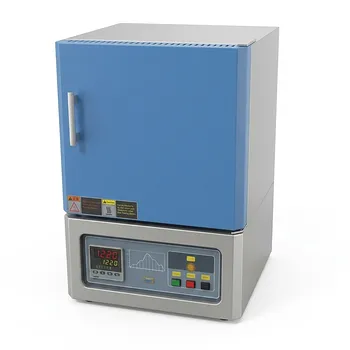
High Temperature Benchtop Muffle Furnace 1700C 10L Chamber Alumina Fiber Insulation MoSi2 Heating Elements
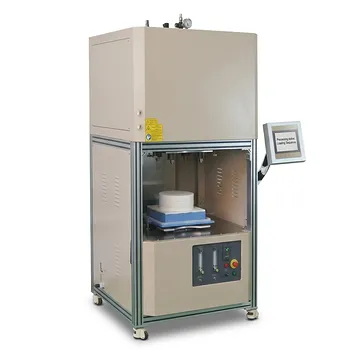
High Temperature Vertical Atmosphere Controlled Furnace with Automatic Bottom Loading and 1700°C Capacity for Advanced Material Research
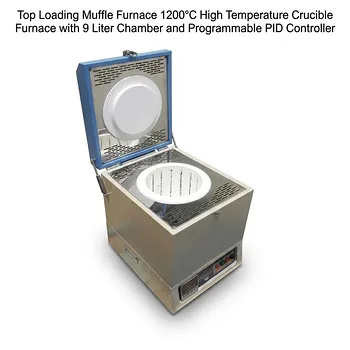
Top Loading Muffle Furnace 1200°C High Temperature Crucible Furnace with 9 Liter Chamber and Programmable PID Controller