Why are ceramic crucibles with lids used for thermal polycondensation? Key to High-Quality Nanomaterial Synthesis
Updated 3 months ago
Ceramic crucibles with lids are the industry standard for thermal polycondensation because they serve as more than just containers; they act as controlled micro-reactors. By combining chemical inertness with a semi-closed environment, they prevent the loss of volatile precursors through sublimation and maintain a specific vapor pressure. This setup is essential for ensuring the high yield, phase purity, and structural integrity of nanomaterials like graphitic carbon nitride (g-C3N4).
Core Takeaway: Ceramic crucibles with lids are used to create a stable, chemically inert micro-environment that captures volatile intermediates and maintains micro-positive pressure, which is vital for the complete molecular growth and high yield of the final nanomaterial.
Maintaining Chemical Purity and Stability
Exceptional High-Temperature Resistance
During synthesis processes like thermal polycondensation, materials are often subjected to temperatures reaching 550°C or higher. Ceramic materials, such as high-purity alumina, possess the thermal stability required to withstand these conditions without degrading or melting.
Preventing Metal Ion Contamination
Unlike metal containers, ceramic crucibles are chemically inert and do not react with nitrogen-containing organic precursors like melamine or urea. This prevents the leaching of metal ions into the sample, which is critical because even trace impurities can significantly degrade the photocatalytic or electrocatalytic performance of the final product.
Creating a Controlled Reaction Micro-Environment
Restricting Volatilization and Sublimation
Precursors such as urea and melamine are highly susceptible to sublimation (turning directly from solid to gas) when heated. The addition of a lid creates a semi-closed environment that traps these vapors, preventing significant mass loss and ensuring that the raw materials remain available for the reaction.
Facilitating Gas-Phase Intermediate Reactions
The lid allows for the buildup of a micro-positive pressure and a specific local vapor pressure within the crucible. This environment promotes further condensation between gas-phase intermediate products, which is a necessary step for the monomers to transform into a complex, layered carbon nitride structure.
Ensuring Structural Integrity and Quality
Promoting Complete Molecular Growth
A vapor-assisted environment, facilitated by the tight-fitting lid, helps the carbon nitride molecular skeleton grow more completely. This controlled atmosphere reduces lattice defects and ensures the formation of the desired crystalline phases, such as the melon-type structure.
Optimizing Macroscopic Morphology
The stability provided by the crucible's micro-environment directly impacts the macroscopic morphology of the resulting powder. By maintaining consistent concentration and pressure conditions, the process yields a more uniform and high-quality nanomaterial compared to reactions conducted in an open system.
Understanding the Trade-offs
The Risk of Pressure Buildup
While a semi-closed environment is beneficial, a lid that is too tightly sealed can lead to excessive pressure if decomposition gases are generated too rapidly. It is a delicate balance; the system must be "semi-closed" to allow for a safe micro-positive pressure without creating an explosion hazard or cracking the ceramic.
Heat Transfer Limitations
Ceramics have different thermal conductivity profiles than metals, which can lead to slight temperature gradients within the crucible. This means the precursor at the edges may react slightly differently than the material in the center, potentially affecting the homogeneity of the batch if the heating rate is not carefully controlled.
Applying This Setup to Your Synthesis
Making the Right Choice for Your Goal
To achieve the best results in your thermal polycondensation process, consider the specific requirements of your precursor and desired output.
- If your primary focus is high yield and material recovery: Ensure the lid fits securely to minimize the escape of sublimated precursors like melamine or urea.
- If your primary focus is maximum photocatalytic activity: Use high-purity alumina crucibles to eliminate the possibility of metal ion contamination that could poison active sites.
- If your primary focus is structural crystallinity: Focus on maintaining a stable heating ramp in a muffle furnace to allow the vapor-assisted environment to properly heal lattice defects.
The strategic use of a covered ceramic crucible transforms a standard heating process into a sophisticated chemical synthesis, ensuring your nanomaterials reach their full theoretical potential.
Summary Table:
| Feature | Function | Primary Benefit |
|---|---|---|
| High-Purity Alumina | Thermal stability & chemical inertness | Prevents metal ion contamination at 550°C+ |
| Semi-Closed Lid | Traps volatile gases (urea/melamine) | Maximizes yield and prevents precursor loss |
| Micro-Reactor Effect | Maintains micro-positive vapor pressure | Ensures complete molecular growth & crystallinity |
Optimize Your Material Research with THERMUNITS Precision Heating
Achieving phase purity and structural integrity in nanomaterial synthesis requires more than just a crucible—it requires a reliable thermal environment. THERMUNITS is a leading manufacturer of high-temperature laboratory equipment specifically designed for material science and industrial R&D.
From high-precision Muffle and Atmosphere furnaces for thermal polycondensation to advanced CVD/PECVD systems and Vacuum Induction Melting (VIM) units, we provide the tools necessary to turn your precursors into high-performance materials. Our range also includes Tube, Rotary, and Hot Press furnaces, as well as high-quality Thermal Elements.
Enhance your lab’s efficiency and synthesis results today.
Contact our expert team now to find the perfect thermal processing solution for your specific research needs.
References
- Qiuyu Chen, Rongzhi Chen. Facilitated Unidirectional Electron Transmission by Ru Nano Particulars Distribution on MXene Mo2C@g-C3N4 Heterostructures for Enhanced Photocatalytic H2 Evolution. DOI: 10.3390/molecules29071684
Mentioned Products
- High Temperature Vertical Crucible Furnace with 22L Heating Chamber and 1200C Maximum Temperature
- 1200C Sliding Internal Crucible Tube Furnace for Controlled Atmosphere Thin Film Deposition and Material Sublimation Research
- 600°C Vertical Crucible Furnace with SS316 Alloy Reactor and 6 Port Vacuum Flange
- 1100C Crucible Melting Furnace with Stirring Function for Glovebox and Air Sensitive Alloy Research
- Top Loading Muffle Furnace 1200°C High Temperature Crucible Furnace with 9 Liter Chamber and Programmable PID Controller
People Also Ask
- What role does a high-temperature vertical tube furnace play in simulating high-carbon ferromanganese slag formation?
- How should the choice between a Quartz crucible and an Alumina crucible be made for La2O2S? Optimize Material Purity
- Why use ceramic crucibles for coal nano-hybrid heat treatment? Ensure Purity and Thermal Stability.
- How does a high-temperature solution furnace affect the evolution of strengthening phases in Fe-Co-Mo alloys? Expert Guide
- What critical conditions does a high-temperature electric heating furnace provide for rice husk ash melting research?

Tech Team · ThermUnits
Last updated on Jun 03, 2026
Related Products
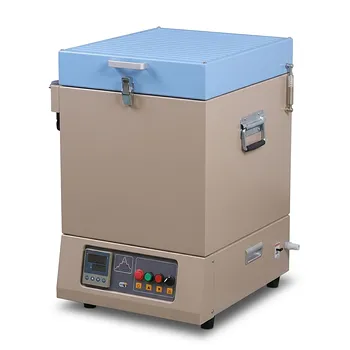
High Temperature Vertical Crucible Furnace with 22L Heating Chamber and 1200C Maximum Temperature
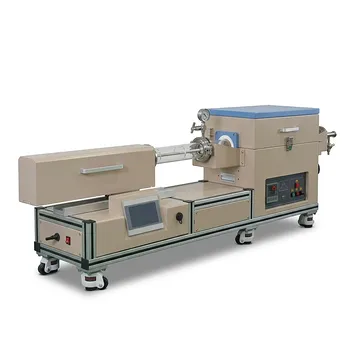
1200C Sliding Internal Crucible Tube Furnace for Controlled Atmosphere Thin Film Deposition and Material Sublimation Research
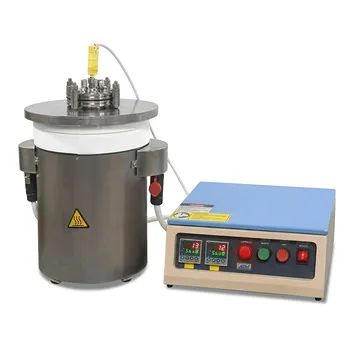
600°C Vertical Crucible Furnace with SS316 Alloy Reactor and 6 Port Vacuum Flange
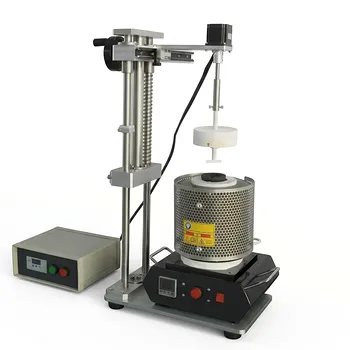
1100C Crucible Melting Furnace with Stirring Function for Glovebox and Air Sensitive Alloy Research
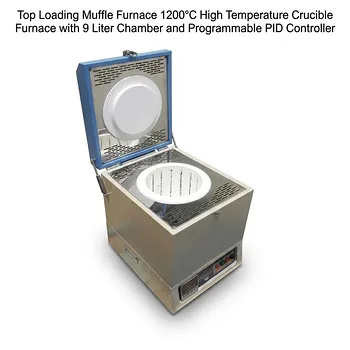
Top Loading Muffle Furnace 1200°C High Temperature Crucible Furnace with 9 Liter Chamber and Programmable PID Controller
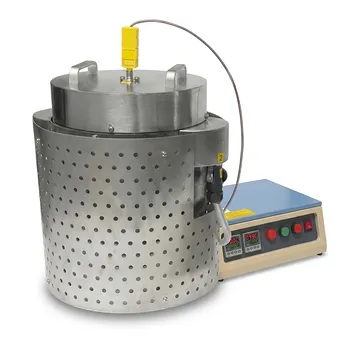
Vertical Crucible Furnace 1000C High Temperature Laboratory Equipment 4.7 Inch Diameter Chamber SS316 Anti Corrosive Enclosure
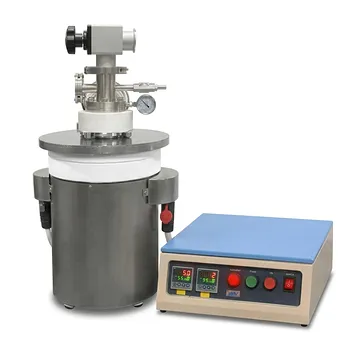
1100C High Temperature Vacuum Crucible Furnace with Quartz Chamber for Thermal Processing and Sintering
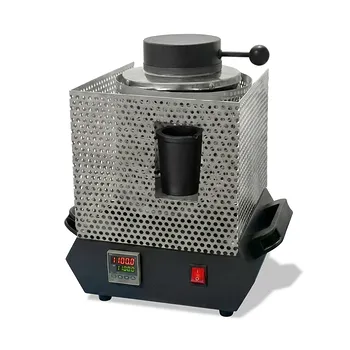
Compact Crucible Melting Furnace 1100C Programmable Temperature Controller Metal Sintering Equipment