Why high-precision flow meters are essential for Si/C silane deposition: Achieve Uniform Coating & Battery Stability
Updated 3 months ago
Precision flow control is the linchpin of high-performance Si/C anode production. By maintaining exact gas concentrations and flow velocities, high-precision flow meters ensure that silane gas is distributed uniformly throughout the entire deposition zone. This prevents localized gas depletion and ensures that every particle, regardless of its position in the furnace, receives a consistent coating, which is vital for the material's electrochemical stability.
High-precision flow meters are essential because they eliminate concentration gradients and ensure uniform silicon loading across large-scale batches. This level of control is the only way to achieve the thin, consistent coatings required to manage silicon’s volume expansion and maximize battery life.
Managing Gas Dynamics for Process Uniformity
The Role of Advection and Flow Velocity
High-precision meters allow operators to maintain specific flow velocities that increase the advection speed of silane gas. This higher velocity ensures that the precursor gas reaches downstream positions in the furnace before it is entirely consumed at the inlet.
Eliminating Concentration Gradients
In large-scale processing, gas is often consumed rapidly as it enters the reaction zone, creating a concentration gradient. Precision meters mitigate this by balancing the mixture, ensuring that carbon powder at the far end of the furnace receives the same silicon loading as the powder at the front.
Ensuring Batch Consistency
Without exact control, the resulting Si/C material would vary significantly in composition from one end of the furnace to the other. High-precision flow control transforms a volatile chemical reaction into a predictable manufacturing process capable of producing uniform materials at scale.
Optimizing Electrochemical Performance
Controlling Layer Thickness
The precision of these meters extends to the growth of auxiliary layers, such as the carbon coating on SiCx particles. Controlling the flow of gases like ethylene allows for the creation of uniform, continuous layers as thin as 9 nm.
Mitigating Volume Expansion
Silicon expands drastically during battery cycling, which can lead to material degradation. A precisely controlled, uniform coating acts as a mechanical buffer, mitigating volume expansion and maintaining the structural integrity of the anode.
Enhancing Conductivity and Efficiency
Consistency in the deposition process is a primary driver of first-cycle coulombic efficiency. By ensuring a uniform coating, high-precision meters help maximize the electrical conductivity of the micron-sized particles, leading to better long-term cycling stability.
Understanding the Trade-offs and Risks
Cost vs. Process Stability
High-precision flow meters represent a significant upfront capital investment and require sophisticated integration. However, attempting to use lower-grade meters often results in high scrap rates due to inconsistent silicon loading and failed quality checks.
Sensitivity to Environmental Factors
These devices are highly sensitive to changes in ambient temperature and pressure, which can affect gas density. If the system is not properly calibrated for the specific gas species (like silane or ethylene), the "precision" becomes illusory, leading to drift in the final material specs.
Maintenance and Calibration Requirements
Precision components require rigorous maintenance schedules to prevent sensor fouling from reactive precursor gases. Neglecting calibration can lead to a slow degradation in material performance that may not be detected until the final battery cells are tested.
Making the Right Choice for Your Goal
To achieve the best results in Si/C material production, your hardware strategy must align with your specific performance targets.
- If your primary focus is Scalability: Prioritize meters that can maintain high flow velocities to ensure advection carries the precursor gas through the entire length of large-volume furnace tubes.
- If your primary focus is Battery Cycle Life: Focus on the precision and timing of the flow to ensure a continuous, 9nm-thick coating that can effectively buffer silicon expansion.
- If your primary focus is First-Cycle Efficiency: Use high-precision meters to maintain a strict gas mixture ratio, which minimizes impurities and ensures a uniform, conductive surface layer.
The ability to master gas flow is ultimately what separates experimental silicon materials from commercially viable, high-energy-density battery anodes.
Summary Table:
| Key Factor | Role in Si/C Deposition | Impact on Battery Performance |
|---|---|---|
| Flow Velocity | Increases advection speed | Ensures precursors reach the entire furnace length |
| Concentration | Eliminates gas gradients | Uniform silicon loading across large-scale batches |
| Layer Control | Defines coating thickness | Buffers volume expansion and ensures structural integrity |
| Gas Mixing | Maintains strict ratios | Enhances electrical conductivity and coulombic efficiency |
Master Your Si/C Material Production with THERMUNITS
Precise gas control is the defining factor between lab-scale experimentation and commercial-grade battery anode production. THERMUNITS is a leading manufacturer of high-temperature laboratory equipment, providing the advanced thermal processing solutions required for cutting-edge material science.
Our comprehensive range includes CVD/PECVD systems, Tube, Rotary, Vacuum, and Atmosphere furnaces—all engineered to provide the stable, precise environments necessary for high-performance silane deposition. Whether you are developing silicon-carbon composites or exploring new industrial R&D frontiers, we offer the thermal elements and specialized heat treatment equipment (including Hot Press and VIM furnaces) to ensure your materials meet the highest quality standards.
Ready to scale your production and achieve superior consistency? Contact our experts today to discover how THERMUNITS can provide the precision hardware your project demands.
References
- Zhinan Han, Yuan Yang. Modeling Silane Deposition in Nanoporous Carbon for High-Capacity Si/C Composite Anodes. DOI: 10.34133/energymatadv.0111
Mentioned Products
- HFCVD Machine System for Nano Diamond Coating on Drawing Dies and Industrial Tools
- Multi Heating Zones CVD Tube Furnace System for Precision Chemical Vapor Deposition and Advanced Material Synthesis
- Versatile Chemical Vapor Deposition Tube Furnace System for Advanced Material Research and Industrial Coating Processes
- Inclined Rotary Plasma Enhanced Chemical Vapor Deposition PECVD System for Thin Film Deposition and Nanomaterial Synthesis
- 915MHz MPCVD Diamond Machine Microwave Plasma Chemical Vapor Deposition System Reactor
People Also Ask
- What is the fundamental working principle of a Chemical Vapor Deposition (CVD) machine? Master Precision Film Growth
- What are the essential components and subsystems of a CVD machine? Master Core Technology for High-Purity Coatings
- How do Chemical Vapor Deposition (CVD) coatings enhance industrial tools? Boost Tool Life and Wear Resistance
- What technical advantages do CVD machines provide for the synthesis of nanomaterials? Precision Growth & Superior Quality
- What role do by-product desorption and evacuation play in CVD film quality? Key Factors for High-Purity Films

Tech Team · ThermUnits
Last updated on Jun 03, 2026
Related Products
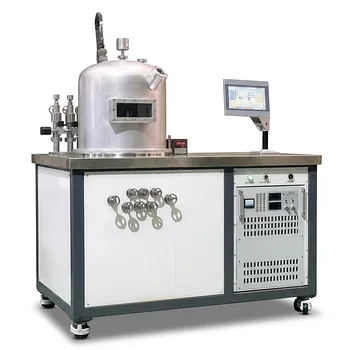
HFCVD Machine System for Nano Diamond Coating on Drawing Dies and Industrial Tools
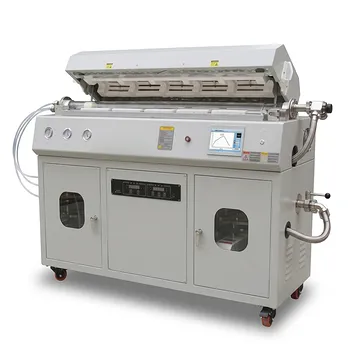
Multi Heating Zones CVD Tube Furnace System for Precision Chemical Vapor Deposition and Advanced Material Synthesis
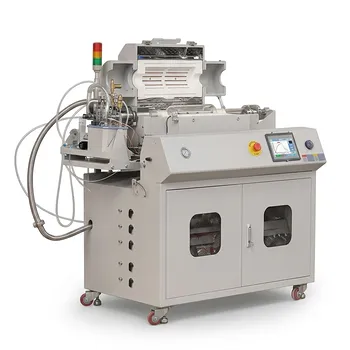
Versatile Chemical Vapor Deposition Tube Furnace System for Advanced Material Research and Industrial Coating Processes
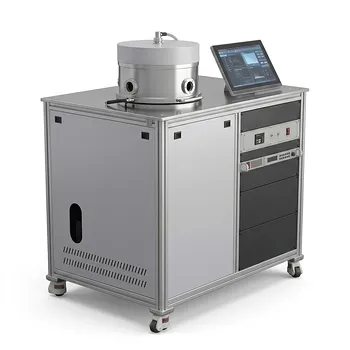
Inclined Rotary Plasma Enhanced Chemical Vapor Deposition PECVD System for Thin Film Deposition and Nanomaterial Synthesis
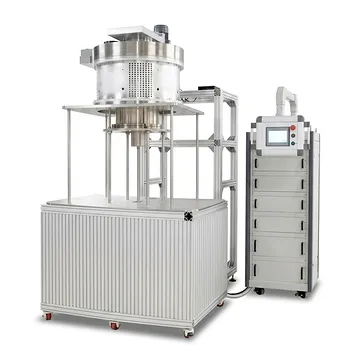
915MHz MPCVD Diamond Machine Microwave Plasma Chemical Vapor Deposition System Reactor
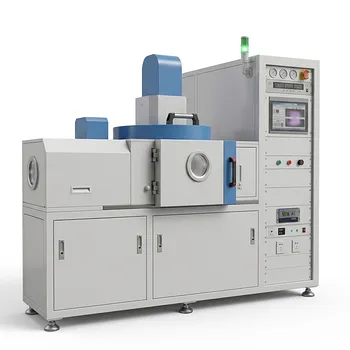
Radio Frequency Plasma Enhanced Chemical Vapor Deposition RF PECVD System for Laboratory and Industrial Thin Film Growth