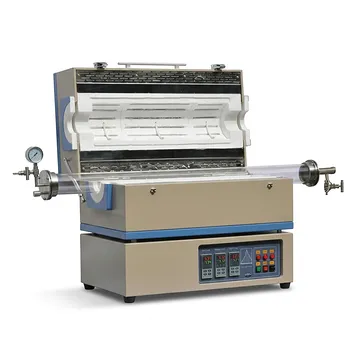
Why are high-vacuum systems and customized quartz tubes essential in Ni-Te/C synthesis? Ensure Purity and Precision
Updated 3 months ago
The Vapor-Solid (VS) synthesis of nickel-telluride (Ni-Te/C) compounds relies on high-vacuum systems and customized quartz tubes to create a controlled, ultra-pure environment. These components are essential because they facilitate the efficient generation and directional migration of tellurium (Te) vapor while preventing the oxidation of nickel and carbon components. By maintaining pressures at or below 2 x 10⁻² mbar, the system ensures that tellurium vapor can react uniformly with solid nickel particles without interference from residual atmospheric gases.
Core Takeaway: High-vacuum systems and customized quartz tubes function as a unified reactor environment that ensures stoichiometric precision and material purity. They achieve this by eliminating impurity-driven side reactions and providing the thermal and chemical stability necessary for high-temperature vapor transport.
The Role of the High-Vacuum System
Optimizing Vapor Dynamics
The primary function of the high-vacuum system is to reduce the internal pressure to 2 x 10⁻² mbar or lower. This low-pressure environment is critical for lowering the effective boiling point of tellurium, ensuring the effective generation and directional migration of Te vapor toward the nickel substrate.
Eliminating Impurity Interference
At the high temperatures required for synthesis, nickel and tellurium are highly susceptible to oxidation. A high-vacuum system removes residual oxygen and moisture, preventing the formation of unwanted oxides that would compromise the electrochemical properties of the Ni-Te/C compound.
Driving Kinetic Equilibrium
The vacuum environment allows for the precise supersaturation of the gas-phase precursors. This control is vital for ensuring that the tellurium vapor precipitates correctly onto the solid nickel particles, leading to a uniform and structurally stable final product.
The Function of Customized Quartz Tubes
Chemical Inertness and Thermal Resistance
Customized quartz tubes are chosen for their exceptional chemical stability and ability to withstand temperatures exceeding 800°C. They remain non-reactive even when exposed to corrosive tellurium vapor, ensuring that no silica or other impurities leach into the reaction.
Hermetic Sealing for Pure Reactions
The ability to vacuum-seal these tubes creates a hermetically sealed space that isolates the reactants from the external environment. This containment is essential for maintaining a constant internal atmosphere over long reaction periods, which is necessary for complex solid-state chemical reactions.
Structural Integrity Under Pressure
During synthesis, volatile elements like tellurium can generate significant internal gas pressure. Customized quartz tubes provide the mechanical strength required to withstand these pressures at high temperatures without rupturing or leaking.
Ensuring Stoichiometric Integrity
Preventing Volatilization Loss
Many chalcogenides, including tellurium and sulfur, are highly volatile and tend to escape the reaction zone if not properly contained. The sealed quartz environment inhibits the volatilization of components, ensuring that the final material maintains the exact stoichiometric ratio intended by the researcher.
Maintaining Environment Stability
By providing an oxygen-free, constant-pressure environment, the quartz tube ensures that the reaction proceeds to completion. This stability is what allows the nickel and tellurium to form a structurally stable compound rather than a mixture of inconsistent phases.
Understanding the Trade-offs
The Risk of Thermal Shock
While quartz is highly heat-resistant, it is susceptible to thermal shock if cooled too rapidly. Sudden temperature shifts can cause the tube to shatter, potentially exposing toxic tellurium vapors or ruining the synthesized material.
Complexity of Sealing and Maintenance
Achieving a vacuum of 2 x 10⁻³ Torr or lower requires specialized mechanical and molecular pump sets. Any minor flaw in the customized tube's seal or a microscopic crack can lead to uncontrolled oxidation, rendering the entire batch of Ni-Te/C unusable.
How to Apply This to Your Project
Making the Right Choice for Your Goal
To achieve the best results in VS synthesis, align your equipment choices with your specific material requirements:
- If your primary focus is Phase Purity: Ensure your vacuum system reaches at least 10⁻² mbar to eliminate all traces of residual oxygen before heating begins.
- If your primary focus is Stoichiometric Precision: Use a high-purity, thick-walled quartz tube to prevent the loss of volatile tellurium and maintain constant internal pressure.
- If your primary focus is Scalability and Safety: Implement a controlled cooling profile to protect the structural integrity of the quartz vessel and prevent accidental exposure to volatile intermediates.
Mastering the vacuum environment and vessel integrity is the only way to ensure the reproducible synthesis of high-performance nickel-telluride compounds.
Summary Table:
| Component | Key Function | Benefit to Ni-Te/C Synthesis |
|---|---|---|
| High-Vacuum System | Pressure reduction (< 2 x 10⁻² mbar) | Drives Te vapor migration and prevents nickel/carbon oxidation. |
| Customized Quartz Tube | Hermetic sealing & chemical inertness | Maintains stoichiometric ratios and resists corrosion at >800°C. |
| Thermal Control | Regulated heating/cooling profiles | Prevents thermal shock and ensures structural stability of compounds. |
Elevate Your Material Synthesis with THERMUNITS
Precision in Vapor-Solid synthesis requires reliable, high-performance thermal environments. THERMUNITS is a leading manufacturer of high-temperature laboratory equipment specifically designed for material science and industrial R&D. We provide the advanced technology necessary to achieve the ultra-pure conditions described above.
Our comprehensive range of thermal processing solutions includes:
- Vacuum & Atmosphere Furnaces for oxygen-free synthesis.
- Tube & CVD/PECVD Systems for precise vapor deposition and transport.
- Muffle, Rotary, and Hot Press Furnaces for diverse heat treatment needs.
- Dental Furnaces, VIM Systems, and Thermal Elements.
Don't let equipment limitations compromise your stoichiometric integrity. Contact our expert team today to discuss your specific research requirements and discover how our customized thermal solutions can drive your next breakthrough.
References
- Daniel Garstenauer, Klaus W. Richter. Active site engineering of intermetallic nanoparticles by the vapour–solid synthesis: carbon black supported nickel tellurides for hydrogen evolution. DOI: 10.1039/d4nr03397c
Mentioned Products
- Inclined Rotary Plasma Enhanced Chemical Vapor Deposition PECVD System for Thin Film Deposition and Nanomaterial Synthesis
- Chemical Vapor Deposition CVD System Slide PECVD Tube Furnace with Liquid Gasifier PECVD Machine
- Versatile Chemical Vapor Deposition Tube Furnace System for Advanced Material Research and Industrial Coating Processes
- Radio Frequency Plasma Enhanced Chemical Vapor Deposition RF PECVD System for Laboratory and Industrial Thin Film Growth
- 915MHz MPCVD Diamond Machine Microwave Plasma Chemical Vapor Deposition System Reactor
People Also Ask
- What types of materials can be deposited using PECVD systems? Explore Versatile Thin-Film Coating Solutions
- How does the non-equilibrium nature of plasma facilitate low-temperature deposition in PECVD systems? Pro Tips for R&D
- How is Plasma-Enhanced Chemical Vapor Deposition (PECVD) utilized in the production of photovoltaic solar cells? Study
- How do RF frequency and power settings influence the characteristics of a PECVD process? Master Quality & Efficiency
- What are the advantages of PECVD systems for nano flame retardant films? Protect Heat-Sensitive Polymers with Precision

Tech Team · ThermUnits
Last updated on Jun 02, 2026
Related Products
Inclined Rotary Plasma Enhanced Chemical Vapor Deposition PECVD System for Thin Film Deposition and Nanomaterial Synthesis
Chemical Vapor Deposition CVD System Slide PECVD Tube Furnace with Liquid Gasifier PECVD Machine
Versatile Chemical Vapor Deposition Tube Furnace System for Advanced Material Research and Industrial Coating Processes
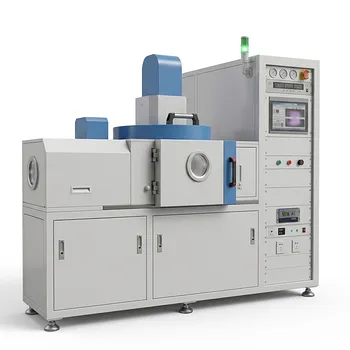
Radio Frequency Plasma Enhanced Chemical Vapor Deposition RF PECVD System for Laboratory and Industrial Thin Film Growth
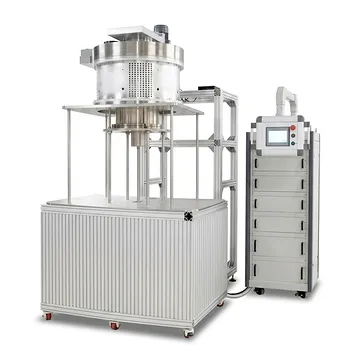
915MHz MPCVD Diamond Machine Microwave Plasma Chemical Vapor Deposition System Reactor
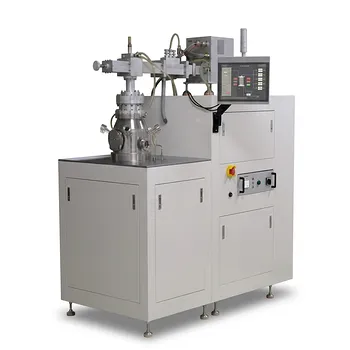
Cylindrical Resonator MPCVD Machine System for Microwave Plasma Chemical Vapor Deposition and Lab Diamond Growth
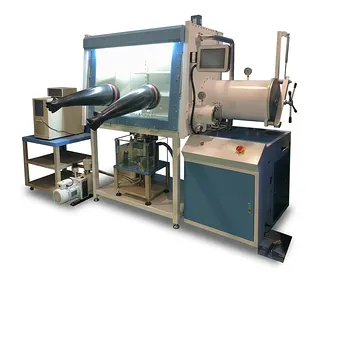
High Temperature Induction Melting System with Integrated Ultra High Purity Glove Box for Metallic Alloy Processing
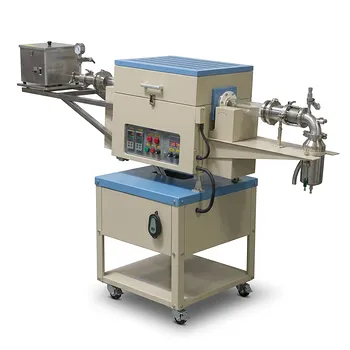
Two Zone Rotary CVD Furnace with Automatic Feeding and Receiving System for Powder Processing