Why are platinum crucibles required for melting aluminoborosilicate glass? Ensure High Purity & Corrosion Resistance
Updated 5 months ago
Platinum crucibles are the industry standard for aluminoborosilicate glass melting because they are one of the few materials capable of withstanding the extreme corrosivity of molten glass at temperatures exceeding 1200°C. Unlike ceramic or lower-grade metal containers, platinum maintains absolute chemical inertness, ensuring that no impurities from the crucible wall leach into the melt and compromise the glass's final properties.
The necessity of platinum stems from its dual-threat capability: an exceptionally high melting point combined with total resistance to chemical oxidation. This ensures that high-purity glass samples maintain their intended chemical composition without contamination from the container material.
The Challenge of Molten Glass Corrosivity
High-Temperature Chemical Aggression
At temperatures between 1000°C and 1500°C, aluminoborosilicate melts become highly aggressive solvents. They are capable of eroding most refractory materials, which leads to the gradual dissolution of the container into the glass batch.
Preventing Material Erosion and Peeling
Standard ceramic crucibles can "peel" or shed micro-particles when exposed to the thermal stress and chemical flux of a glass melt. Platinum prevents this mechanical degradation, ensuring the structural purity of the glass matrix remains intact for sensitive optical or bioactive research.
Oxidation Resistance at Extreme Heat
Platinum and its alloys exhibit exceptional oxidation resistance, meaning they do not form scale or react with atmospheric oxygen at high temperatures. This stability is critical for maintaining a clean interface between the melt and the crucible wall over long heating cycles.
Maintaining Absolute Compositional Integrity
Eliminating Impurity Migration
In technical glass production, even parts-per-million of foreign ions (like iron or alumina) can drastically alter optical clarity and ionic conductivity. Using high-purity platinum ensures that the chemical composition of the final product perfectly matches the intended theoretical ratio.
Preserving Research-Grade Standards
For specialized applications like TiO2-doped glass or electrolytes, any contamination from the crucible can interfere with optical standards and bioactivity. Platinum acts as a neutral vessel, allowing researchers to isolate the effects of their specific glass dopants without external interference.
Facilitating Clean Material Recovery
Platinum-Gold (Pt-Au) alloys offer non-wetting characteristics, which prevent the molten glass from sticking to the crucible surface. This allows for a clean pour and ensures that the maximum amount of high-purity material is recovered for analysis.
Understanding the Trade-offs and Technical Limitations
High Initial Capital Expenditure
The most obvious drawback is the extreme cost of the precious metal. While platinum is durable, the initial investment required for a single crucible can be a significant portion of a laboratory's equipment budget.
Susceptibility to Metallic Contamination
Platinum should never be used to melt materials containing low-melting-point metals like lead, tin, or bismuth in reducing atmospheres. These metals can alloy with the platinum, causing the crucible to become brittle or even develop holes (a process known as "poisoning").
Physical Softness at Peak Temperatures
Pure platinum becomes relatively soft at temperatures nearing its melting point. To combat this, researchers often use Platinum-Rhodium (Pt-Rh) alloys, which offer superior mechanical strength and creep resistance at temperatures reaching up to 1675°C.
Making the Right Choice for Your Process
How to Apply This to Your Project
- If your primary focus is absolute optical purity: Use a high-purity platinum crucible to ensure no transition metal ions migrate from the container into your glass sample.
- If your primary focus is extreme temperature stability (above 1400°C): Opt for a Platinum-Rhodium (Pt-Rh) alloy to prevent mechanical deformation of the crucible under high thermal loads.
- If your primary focus is easy sample removal and reuse: Select a Platinum-Gold (Pt-Au) alloy for its non-wetting properties, which facilitates clean pouring and minimizes post-melt cleaning.
By leveraging the unique chemical and thermal properties of platinum, you ensure that your glass synthesis remains a controlled, precise, and contamination-free process.
Summary Table:
| Key Feature | Platinum/Alloy Benefit | Impact on Glass Quality |
|---|---|---|
| Chemical Inertness | Zero leaching of impurities | Maintains absolute compositional integrity |
| Oxidation Resistance | No scale formation at 1200°C+ | Prevents contamination from the crucible wall |
| Non-Wetting (Pt-Au) | Molten glass does not stick | Facilitates clean material recovery and pouring |
| Thermal Stability | High melting point & creep resistance | Prevents crucible deformation during long cycles |
Elevate Your Material Research with THERMUNITS
Are you looking to achieve absolute purity in your high-temperature glass synthesis? THERMUNITS is a leading manufacturer of high-temperature laboratory equipment specifically designed for material science and industrial R&D.
We offer a comprehensive range of advanced thermal processing solutions, including Muffle, Vacuum, Atmosphere, Tube, and Rotary furnaces, as well as CVD/PECVD systems, VIM furnaces, and high-quality thermal elements. Whether you are melting sensitive aluminoborosilicate glass or developing new alloys, our equipment ensures precise temperature control and reliability.
Ready to optimize your lab's efficiency? Contact us today to discuss your project requirements!
References
- Stamatis Flemetakis, Stephan Klemme. The effect of oxygen fugacity on the evaporation of boron from aluminoborosilicate melt. DOI: 10.5194/ejm-36-173-2024
Mentioned Products
- Top Loading Muffle Furnace 1200°C High Temperature Crucible Furnace with 9 Liter Chamber and Programmable PID Controller
- 1100C Crucible Melting Furnace with Stirring Function for Glovebox and Air Sensitive Alloy Research
- High Temperature Vertical Crucible Furnace with 22L Heating Chamber and 1200C Maximum Temperature
- 600°C Vertical Crucible Furnace with SS316 Alloy Reactor and 6 Port Vacuum Flange
- Compact Crucible Melting Furnace 1100C Programmable Temperature Controller Metal Sintering Equipment
People Also Ask
- What is the function of a muffle furnace in aluminoborosilicate glass prep? Stabilize Raw Materials for Superior Purity
- What is the function of a high-temperature muffle furnace in phosphorus-modified zeolite catalyst preparation?
- What is the function of a high-temp muffle furnace in Ni-V oxide synthesis? Optimize your material's performance.
- What role does a high-temperature muffle furnace play in evaluating the mineral composition of rock samples? LOI & XRF Guide
- Why is annealing in a high-temperature muffle furnace necessary for SiO2/Si substrate pretreatment before monolayer WS2 synthesis?

Tech Team · ThermUnits
Last updated on Apr 14, 2026
Related Products

Top Loading Muffle Furnace 1200°C High Temperature Crucible Furnace with 9 Liter Chamber and Programmable PID Controller
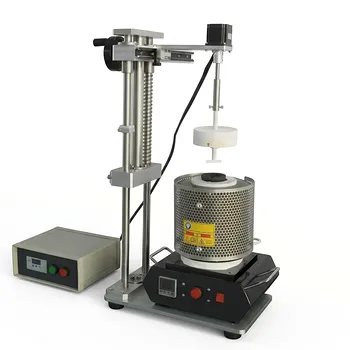
1100C Crucible Melting Furnace with Stirring Function for Glovebox and Air Sensitive Alloy Research
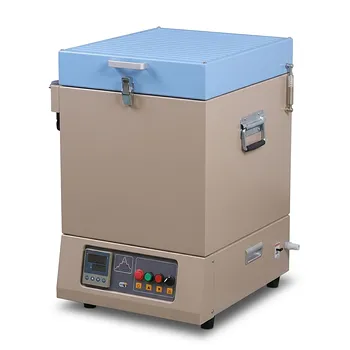
High Temperature Vertical Crucible Furnace with 22L Heating Chamber and 1200C Maximum Temperature
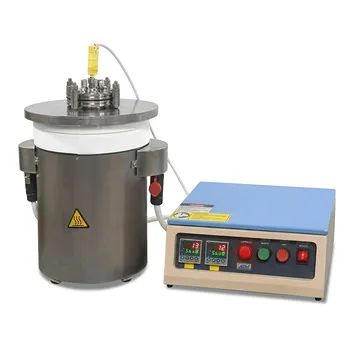
600°C Vertical Crucible Furnace with SS316 Alloy Reactor and 6 Port Vacuum Flange
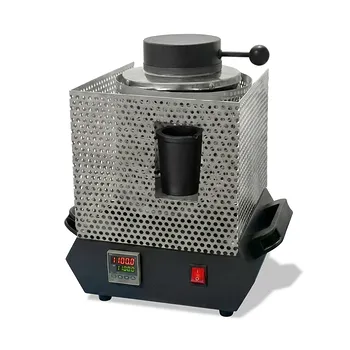
Compact Crucible Melting Furnace 1100C Programmable Temperature Controller Metal Sintering Equipment
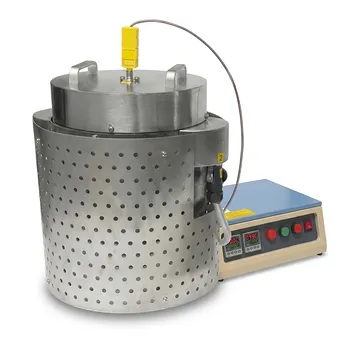
Vertical Crucible Furnace 1000C High Temperature Laboratory Equipment 4.7 Inch Diameter Chamber SS316 Anti Corrosive Enclosure
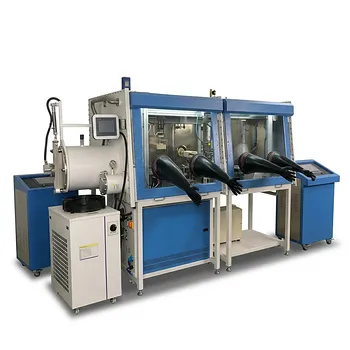
Automatic 10 Crucible Induction Melting and Casting System with Stirring Function and Glovebox Integration 2000C
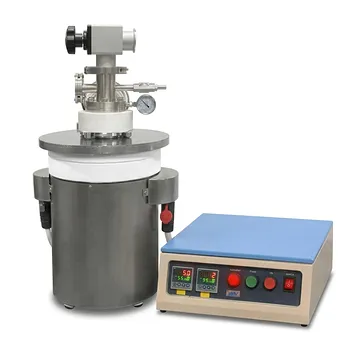
1100C High Temperature Vacuum Crucible Furnace with Quartz Chamber for Thermal Processing and Sintering