Why is a closed alumina crucible used with lead-rich packing powder during sintering? Prevent Lead Volatilization.
Updated 5 months ago
The primary reason for using a closed alumina crucible with lead-rich packing powder is to prevent the volatilization of Lead Oxide (PbO) during high-temperature sintering. Because lead is highly volatile, it escapes from the ceramic body at high temperatures, which shifts the material's chemical composition. By creating a sealed, lead-saturated micro-environment, you ensure the ceramic maintains its precise stoichiometry and its critical piezoelectric properties.
This method, known as sealed powder-bed sintering, utilizes a physical barrier and a sacrificial lead source to suppress elemental loss. It is the definitive technique for ensuring that the final ceramic product matches its intended chemical and functional design.
Managing Elemental Volatility and Stoichiometry
The Challenge of Lead Evaporation
Lead Oxide (PbO) in ceramics becomes significantly volatile as temperatures rise during the sintering process. If left in an open environment, lead atoms escape from the crystal lattice into the surrounding atmosphere as vapor.
Creating a Saturated Atmosphere
The lead-rich packing powder acts as a sacrificial source of Lead Oxide. By filling the crucible with this powder, the air inside becomes saturated with lead vapor, reaching a state of chemical equilibrium where the sample no longer loses lead to its surroundings.
Preserving Piezoelectric Performance
Maintaining a precise stoichiometric ratio—the exact balance of elements—is vital for lead-based ceramics like PZT (Lead Zirconate Titanate). Even a minor loss of lead can cause compositional deviations that degrade the material’s ability to convert mechanical stress into electrical energy.
The Technical Necessity of Alumina
High-Temperature Chemical Inertness
High-purity alumina (Al2O3) is chosen because it is exceptionally stable and does not react with lead or other ceramic components at high temperatures. This ensures that no impurities from the container leach into the sample, which could otherwise interfere with the material's phase integrity.
Structural Integrity and Refractoriness
Alumina crucibles maintain their mechanical strength and shape at extreme temperatures, often exceeding 1600°C. This high refractoriness provides a stable physical support system for the sample and the packing powder throughout long-duration thermal treatments.
Protecting Furnace Infrastructure
Beyond protecting the sample, the closed crucible serves as a critical shield for the laboratory equipment. It prevents corrosive lead vapors from escaping into the furnace chamber, where they would otherwise attack and shorten the lifespan of the heating elements.
Understanding the Trade-offs
The Risk of Improper Sealing
If the crucible lid does not provide an adequate seal, the "saturated atmosphere" cannot be maintained. This results in inconsistent lead loss across different samples or even within different areas of the same sample, leading to non-uniform material properties.
Crucible Quality and Contamination
While high-purity alumina is inert, lower-grade alumina may contain impurities like silica. At high temperatures, these impurities can react with the lead-based sample, causing "sticking" or chemical cross-contamination that ruins the experimental results.
Thermal Gradient Considerations
Using a closed crucible and packing powder adds thermal mass to the system. This can create slight delays in heating or cooling rates, requiring careful calibration of the furnace's temperature profile to ensure the sample reaches the desired sintering temperature.
How to Apply This to Your Project
When preparing for the sintering of lead-based or other volatile ceramics, consider your primary technical objective:
- If your primary focus is stoichiometric precision: Always use a lead-rich packing powder with a PbO concentration slightly higher than that of your sample to ensure a fully saturated atmosphere.
- If your primary focus is material purity: Invest in high-purity (99% or higher) alumina crucibles to prevent the leaching of metallic or non-metallic impurities into your ceramic.
- If your primary focus is furnace longevity: Ensure the crucible lid is well-fitted or use a high-temperature sealant to prevent corrosive vapors from reaching the furnace's heating elements.
By strictly controlling the micro-environment within the crucible, you guarantee the chemical integrity and functional performance of high-performance lead-based ceramics.
Summary Table:
| Component | Primary Function | Key Benefit |
|---|---|---|
| Closed Alumina Crucible | Physical barrier & chemical inertness | Prevents vapor escape & ensures material purity |
| Lead-Rich Packing Powder | Sacrificial source of PbO | Creates saturated atmosphere to stop lead loss |
| Saturated Micro-environment | Chemical equilibrium | Maintains precise stoichiometry & piezoelectricity |
Elevate Your Material Research with THERMUNITS
As a leading manufacturer of high-temperature laboratory equipment for material science and industrial R&D, THERMUNITS provides the precision tools you need for advanced ceramic sintering. Our comprehensive range of thermal processing solutions—including Muffle, Vacuum, Atmosphere, Tube, Rotary, and Hot Press furnaces, CVD/PECVD systems, and Vacuum Induction Melting (VIM) furnaces—is engineered to maintain the strict environmental controls your research demands.
Don't let elemental volatilization or compositional shifts compromise your results. Contact our experts today to discover how our heat treatment equipment can enhance your laboratory's efficiency and ensure the chemical integrity of your high-performance materials.
References
- Matija Arzenšek, Tadej Rojac. Origins of the large piezoelectric response of samarium-doped lead magnesium niobate–lead titanate ceramics. DOI: 10.1126/sciadv.adp0895
Mentioned Products
- Compact High Temperature 1600C Tube Furnace with 50mm Alumina Tube and Vacuum Flanges for Material Sintering
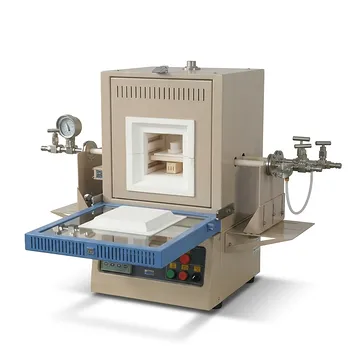
- 1700C Compact Hybrid Furnace with Dual Layer Box Sintering and Controlled Atmosphere Alumina Tubes
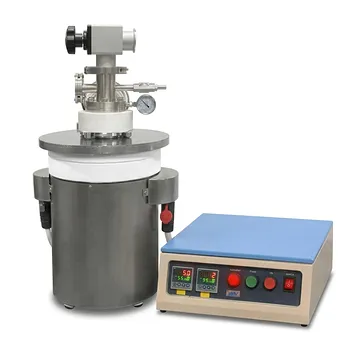
- 1100C High Temperature Vacuum Crucible Furnace with Quartz Chamber for Thermal Processing and Sintering
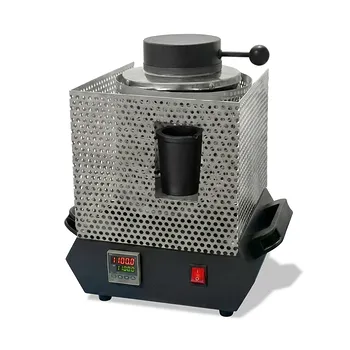
- Compact Crucible Melting Furnace 1100C Programmable Temperature Controller Metal Sintering Equipment
- High Temperature 1800C Compact Muffle Furnace with Kanthal Super 1900 Heating Elements and 1.7L Alumina Chamber
People Also Ask
- What is the role of a high-temperature tube furnace in the calcination process of ZnO/In2O3 nanocomposites?
- Why is a high-temperature tube furnace required for CuAlO2 heat treatment? Master Phase Transformation Today
- Function of tube furnaces in cellulose aerogel carbonization? Achieve High-Performance Materials
- What role does a high-temperature tube furnace play in the carbonization? Mastering Precision Carbon Synthesis
- What role does a high-temperature tube furnace play in executing nitrogen absorption kinetic experiments? Expert Insights

Tech Team · ThermUnits
Last updated on Apr 14, 2026
Related Products

Compact High Temperature 1600C Tube Furnace with 50mm Alumina Tube and Vacuum Flanges for Material Sintering
1700C Compact Hybrid Furnace with Dual Layer Box Sintering and Controlled Atmosphere Alumina Tubes
1100C High Temperature Vacuum Crucible Furnace with Quartz Chamber for Thermal Processing and Sintering
Compact Crucible Melting Furnace 1100C Programmable Temperature Controller Metal Sintering Equipment
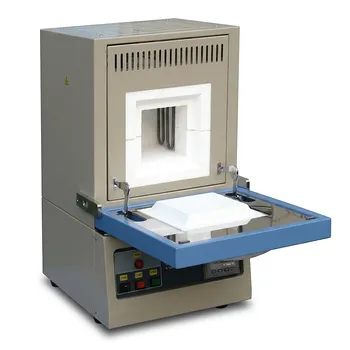
High Temperature 1800C Compact Muffle Furnace with Kanthal Super 1900 Heating Elements and 1.7L Alumina Chamber
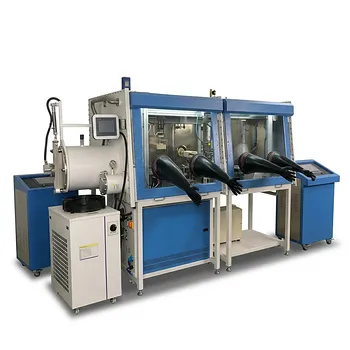
Automatic 10 Crucible Induction Melting and Casting System with Stirring Function and Glovebox Integration 2000C
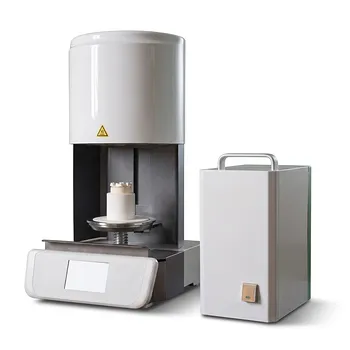
Dental Porcelain Zirconia Sintering Ceramic Furnace Chairside with Transformer
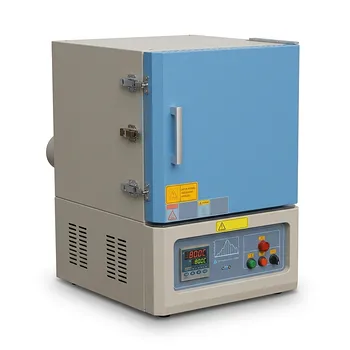
1800C Bench Top Muffle Furnace 18 Liters with Kanthal Super 1900 Heating Elements for High Purity Ceramic Sintering and Material Research
Dental Porcelain Zirconia Sintering Ceramic Vacuum Press Furnace