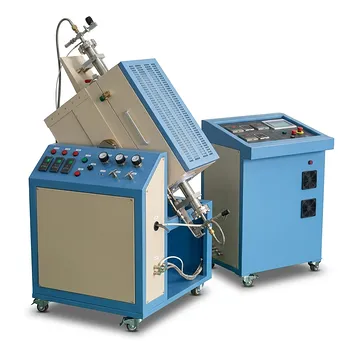
Why is a high-temperature tube furnace required for CuAlO2 heat treatment? Master Phase Transformation Today
Updated 3 months ago
The requirement for a high-temperature tube furnace is driven by the necessity for structural phase transformation. This equipment provides the precise thermal energy—typically around 700°C—required to induce the thermal decomposition of precursors within the deposited film. This process is the only way to achieve a pure rhombohedral phase structure, which is fundamentally required for the material to exhibit functional p-type semiconducting properties.
Core Takeaway: A high-temperature tube furnace acts as a controlled reactor that converts amorphous or precursor-heavy deposited layers into a highly crystalline delafossite structure. Without this specific thermal environment, the material remains electronically inactive and structurally undefined.
Facilitating Phase Transformation and Crystallinity
Inducing the Rhombohedral Phase
The primary role of the furnace is to provide the energy needed to reorganize the atomic structure of the $CuAlO_2$ film. At temperatures such as 700°C, the chemical precursors undergo thermal decomposition, allowing the atoms to settle into a pure rhombohedral phase. This specific lattice arrangement is what enables the material's unique hole-conduction capabilities.
Converting Amorphous Layers to Crystalline
Materials deposited at room temperature are often amorphous, meaning they lack a defined, repeating crystal structure. The high-temperature environment of the tube furnace drives solid-state reactions and recrystallization. This transition from a disordered state to a nanocrystalline delafossite structure is essential for optimizing optoelectronic performance, including transparency and conductivity.
Driving Atomic Rearrangement
High heat facilitates the atomic rearrangement necessary for long-range order within the thin film. By providing sufficient thermal energy, the furnace allows atoms to migrate to their most stable lattice positions. This reduction in structural defects significantly improves hole mobility, which is critical for the efficiency of p-type transparent conducting oxides.
Precision Control of the Thermal Environment
Maintaining Temperature Stability
Unlike standard heating elements, a tube furnace offers a highly stable and uniform thermal zone. This stability ensures that the entire surface of the $CuAlO_2$ layer reaches the target temperature simultaneously. Precise regulation of the soaking time (the duration the material stays at peak temperature) is vital for controlling the depth of crystallization and the concentration of active carriers.
Managing Atmospheric Composition
The tube furnace design allows for the introduction of specific gases, such as nitrogen, to create a controlled atmosphere. This prevents unwanted oxidation or contamination of the $CuAlO_2$ layer during the heating process. By excluding oxygen or other reactive species, the furnace ensures the formation of a single-phase structure rather than a mixture of unwanted oxides.
Optimizing Carrier Concentration
The furnace environment enables the activation of charge carriers within the crystal lattice. Through precise temperature control, it is possible to facilitate lattice substitution or the activation of dopants. This process optimizes the carrier concentration, directly impacting the thermoelectric and electronic properties of the thin film.
Understanding the Trade-offs and Pitfalls
The Risk of Excessive Grain Growth
While high temperatures are necessary for crystallinity, excessive heat or prolonged soaking times can lead to uncontrolled grain growth. If the grains become too large, the film may develop cracks or increased surface roughness. This can negatively impact the interface quality when the film is integrated into multi-layer electronic devices.
Substrate Compatibility and Internal Stress
High-temperature treatment can generate internal stresses due to the difference in thermal expansion coefficients between the $CuAlO_2$ film and the underlying substrate. If the cooling rate is not strictly controlled within the furnace, these stresses can lead to delamination or film cracking. Additionally, the choice of substrate is limited to materials that can withstand 700°C or higher without degrading.
How to Apply This to Your Project
Recommendations for Material Optimization
- If your primary focus is Maximum Conductivity: Prioritize the precision of the furnace’s atmospheric control (e.g., high-purity nitrogen) to ensure a pure delafossite phase and high hole mobility.
- If your primary focus is Structural Integrity: Implement a strictly controlled cooling ramp within the tube furnace to minimize internal stresses and prevent film cracking.
- If your primary focus is Transparency: Aim for the lowest effective annealing temperature (near 700°C) to maintain small grain sizes, which reduces light scattering and improves optical clarity.
Achieving the desired p-type performance in $CuAlO_2$ is impossible without the precise phase control provided by a high-temperature tube furnace.
Summary Table:
| Key Requirement | Process Function | Material Outcome |
|---|---|---|
| Phase Transformation | Induces rhombohedral lattice structure | Enables functional p-type properties |
| Recrystallization | Converts amorphous layers to nanocrystalline | Enhances transparency & conductivity |
| Atmospheric Control | Provides inert nitrogen environment | Prevents oxidation & ensures purity |
| Thermal Stability | Maintains uniform 700°C soaking zone | Consistent carrier concentration |
Elevate Your Material Research with THERMUNITS
Achieving the perfect crystalline structure for CuAlO2 and other advanced materials requires uncompromising thermal precision. THERMUNITS is a leading manufacturer of high-temperature laboratory equipment for material science and industrial R&D.
We provide a comprehensive range of thermal processing solutions tailored for your success, including:
- High-Precision Tube & Rotary Furnaces
- Vacuum & Atmosphere Furnaces
- CVD/PECVD Systems
- Hot Press & Muffle Furnaces
- Vacuum Induction Melting (VIM) Furnaces
Don't let structural defects limit your innovation. Our team helps target customers in academia and industry optimize their heat treatment workflows for superior hole mobility and electronic efficiency.
Contact THERMUNITS Today to Discuss Your Project
References
- Zehraa Najim Abdul-Ameer. SYNTHESIS AND CHARACTERIZATION OF CdS/CuAlO2/ITO NANO HETEREOSTRUCTURE NOVEL LED FOR OPTOELECTRONIC APPLICATIONS. DOI: 10.15446/mo.n68.110999
Mentioned Products
- High Temperature Tube Furnace 1500C with Sliding Flanges and 50mm OD for Rapid Thermal Processing Fast Heating and Cooling
- High Temperature 1700C Tube Furnace with High Vacuum Turbomolecular Pump System and Multi Channel Mass Flow Controller Gas Mixer
- 1750°C High Temperature Benchtop Vacuum Atmosphere Tube Furnace with Kanthal Super 1800 Heating Elements and 60mm Alumina Processing Tube
- High Temperature 1700C Benchtop Tube Furnace with 5 Inch Heating Zone High Purity Alumina Tube and Vacuum Sealing Flanges
- 1700C High Temperature Alumina Tube Furnace with 18 Inch Heated Zone and Vacuum Sealing Flanges
People Also Ask
- How are high-temperature tube furnaces utilized to repair etching damage? Precision Lattice Restoration Solutions
- What core conditions does a high-temperature tube furnace provide for rGO aerogels? Mastering Precision Synthesis.
- What role does a high-temperature tube furnace play in CVD synthesis of silicon nanowires? Master VLS Growth Precision.
- How does precision tube furnace control influence CoFe nanoparticle formation? Master Your Bimetallic Synthesis.
- What role does a high-temperature tube furnace play in the sulfidation heat treatment of CoS@C/MXene nanocomposites? Guide

Tech Team · ThermUnits
Last updated on Jun 03, 2026
Related Products

High Temperature Tube Furnace 1500C with Sliding Flanges and 50mm OD for Rapid Thermal Processing Fast Heating and Cooling

High Temperature 1700C Tube Furnace with High Vacuum Turbomolecular Pump System and Multi Channel Mass Flow Controller Gas Mixer

1750°C High Temperature Benchtop Vacuum Atmosphere Tube Furnace with Kanthal Super 1800 Heating Elements and 60mm Alumina Processing Tube

High Temperature 1700C Benchtop Tube Furnace with 5 Inch Heating Zone High Purity Alumina Tube and Vacuum Sealing Flanges

1700C High Temperature Alumina Tube Furnace with 18 Inch Heated Zone and Vacuum Sealing Flanges
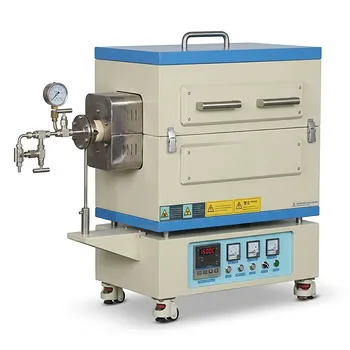
High Temperature Split Tube Furnace 1500C for Material Research Vacuum and Atmosphere Thermal Processing

Compact High Temperature 1600C Tube Furnace with 50mm Alumina Tube and Vacuum Flanges for Material Sintering

1800C High Temperature Compact Vacuum Tube Furnace with 60mm OD Alumina Tube and Kanthal MoSi2 Heating Elements
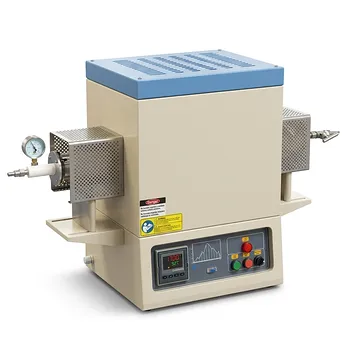
High Temperature Three Zone Tube Furnace 1700C with Alumina Tube and Water Cooled Flanges
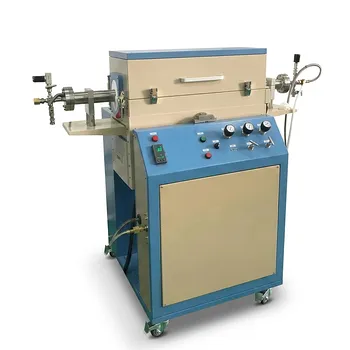
High Temperature Rocking Tube Furnace 1700°C Alumina Processing Tube with Precision Oscillation for Material Synthesis
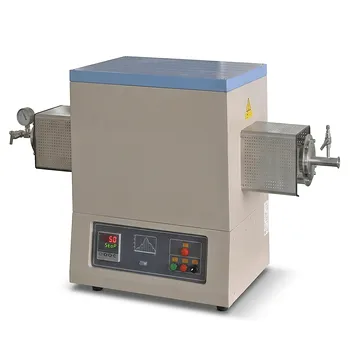
High Temperature 1700C Tube Furnace with 4 Inch OD Alumina Tube and Vacuum Sealing Flanges

High Temperature 1700C Vertical Tube Furnace for Powder Spherification and Material Sintering
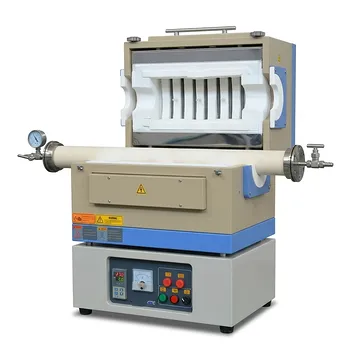
High Temperature 1600C Split Tube Furnace Vacuum Flanges Valves Optional 60mm 80mm Alumina Tube

High Temperature Automated 5 Inch Tube Furnace for Autonomous Material Research and Advanced Laboratory R&D

High Temperature 1700C Six Zone Split Tube Furnace with Alumina Tube and Water Cooled Flanges
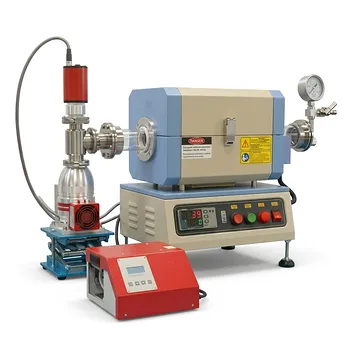
High Vacuum Compact Tube Furnace 1200C with Integrated Turbo Pump System and 8 Inch Heating Zone
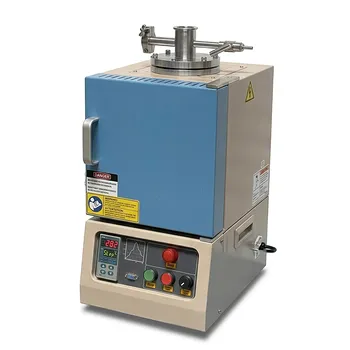
High Temperature Hybrid Muffle and Tube Furnace with Vacuum Capability and PID Control
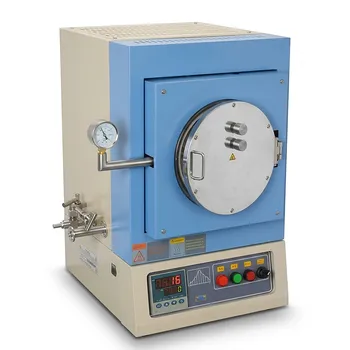
1100°C High Temperature Quartz Chamber Furnace 8 Inch OD with 7.6 Liter Capacity and Vacuum Atmosphere Capability

1100C Tube Furnace with Vacuum Flange and Programmable Temperature Controller for Material Science and Industrial Heat Treatment