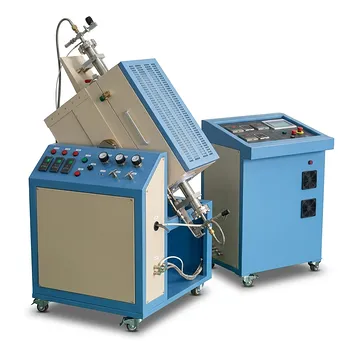
What role does a high-temperature tube furnace play in CVD synthesis of silicon nanowires? Master VLS Growth Precision.
Updated 3 months ago
The high-temperature tube furnace is the central thermal reactor required to drive the chemical and physical transitions of silicon from a gaseous precursor to a solid one-dimensional structure. It provides the strictly controlled energy environment, typically between 300°C and 1000°C, necessary to decompose silane gases and facilitate the precipitation of silicon atoms into nanowires.
Core Takeaway: The tube furnace acts as the primary catalyst for the Vapor-Liquid-Solid (VLS) mechanism, maintaining the precise thermal equilibrium needed for silicon atoms to reach supersaturation in metal droplets and grow into highly ordered, one-dimensional arrays.
The Thermal Engine of Chemical Decomposition
Triggering Precursor Breakdown
The primary role of the furnace is to provide the activation energy required for the thermal decomposition of gaseous silicon sources, such as silane (SiH4). Without this precisely maintained heat, the silicon atoms remain locked in their gaseous molecular state and cannot participate in the deposition process.
Establishing a Stable Reaction Zone
A high-precision tube furnace creates a uniform temperature field that prevents premature reaction or uneven deposition. This stability ensures that the chemical reaction occurs consistently across the entire substrate, which is vital for the mass production of uniform nanowires.
Precision Atmosphere Regulation
Beyond mere heating, the furnace tube serves as a sealed environment for controlling internal pressure and gas ratios. By working with vacuum systems and carrier gases like argon or hydrogen, the furnace ensures that the silicon atoms are transported at a constant rate to the growth site.
Facilitating the Vapor-Liquid-Solid (VLS) Mechanism
Achieving Metal-Silicon Supersaturation
In SiNW synthesis, the furnace heats metal catalyst droplets until they form a liquid alloy with the incoming silicon atoms. The furnace must maintain a temperature that keeps these droplets in a liquid state while allowing silicon to reach a state of supersaturation.
Driving Anisotropic Precipitation
Once supersaturation is reached, the furnace’s thermal environment dictates the anisotropic precipitation of silicon. This means the silicon atoms exit the liquid droplet at a specific interface, pushing the droplet upward and growing a solid, one-dimensional wire structure beneath it.
Promoting Crystal Quality and Orientation
The consistency of the furnace’s thermal gradient directly influences the crystalline quality of the nanowires. Precise temperature control prevents the formation of structural defects and ensures that the wires grow with the high electron transport efficiency required for applications like battery current collectors.
Understanding the Trade-offs and Challenges
Thermal Overshoot and Branching
If the furnace temperature fluctuates or exceeds the target range, the growth process can become isotropic. This leads to undesirable "branching" or the formation of bulk silicon films rather than the intended one-dimensional nanowires.
Precursor Deposition Efficiency
Higher temperatures generally increase the decomposition rate but can lead to gas-phase nucleation. This creates silicon dust within the tube rather than nanowires on the substrate, wasting precursor material and contaminating the reactor.
Limitations of Thermal Lag
Standard tube furnaces can suffer from thermal lag, where the internal temperature does not immediately match the controller's readout. This discrepancy can lead to inconsistent growth cycles if not properly calibrated against the specific gas flow and pressure settings used in the CVD process.
How to Optimize Your SiNW Synthesis
To achieve the best results in silicon nanowire synthesis, your approach to furnace management should vary based on your specific material requirements:
- If your primary focus is high crystalline quality: Prioritize a furnace with a long "constant temperature zone" to ensure the thermal gradient remains perfectly stable throughout the growth duration.
- If your primary focus is high-density growth: Utilize a system with integrated mass flow controllers to balance the silane concentration with temperatures at the lower end of the 300°C–1000°C range to prevent gas-phase waste.
- If your primary focus is Si/C composite anodes: Focus on a furnace design that allows for the regulation of airflow paths to ensure silicon is deposited deeply and uniformly into the nanoporous carbon framework.
By mastering the thermal environment within the tube furnace, researchers can transition from erratic silicon deposition to the precise engineering of high-performance one-dimensional nanostructures.
Summary Table:
| Key Feature | Role in CVD Synthesis | Impact on Silicon Nanowires (SiNWs) |
|---|---|---|
| Temperature Range | 300°C – 1000°C | Triggers silane (SiH4) decomposition and VLS mechanism. |
| Thermal Stability | Uniform reaction zone | Prevents branching and ensures high-density, uniform growth. |
| Atmosphere Control | Sealed vacuum/gas flow | Regulates internal pressure and high-purity gas transport. |
| Gradient Precision | Anisotropic precipitation | Controls crystal quality, orientation, and electron efficiency. |
| Reaction Engine | Catalytic activation | Facilitates metal-silicon supersaturation for wire growth. |
Elevate Your Material Research with THERMUNITS Thermal Solutions
Precise thermal control is the difference between erratic deposition and high-performance nanostructures. THERMUNITS is a leading manufacturer of high-temperature laboratory equipment tailored for material science and industrial R&D. We empower your synthesis process with reliable, high-precision systems including:
- CVD/PECVD Systems & Tube Furnaces for advanced nanowire growth.
- Muffle, Vacuum, and Atmosphere Furnaces for versatile heat treatment.
- Rotary Kilns, Hot Press Furnaces, and Vacuum Induction Melting (VIM) units.
- Dental Furnaces and high-quality Thermal Elements.
Whether you are developing Si/C composite anodes or exploring next-generation semiconductors, our comprehensive range of thermal processing solutions ensures uniform results every time.
Contact us today to find the perfect furnace for your lab!
References
- Xinyu Chen, Lin Zeng. Advancing high‐performance one‐dimensional Si/carbon anodes: Current status and challenges. DOI: 10.1002/cnl2.118
Mentioned Products
- High Temperature Tube Furnace 1500C with Sliding Flanges and 50mm OD for Rapid Thermal Processing Fast Heating and Cooling
- High Temperature 1700C Tube Furnace with High Vacuum Turbomolecular Pump System and Multi Channel Mass Flow Controller Gas Mixer
- 1750°C High Temperature Benchtop Vacuum Atmosphere Tube Furnace with Kanthal Super 1800 Heating Elements and 60mm Alumina Processing Tube
- High Temperature 1700C Benchtop Tube Furnace with 5 Inch Heating Zone High Purity Alumina Tube and Vacuum Sealing Flanges
- High Temperature Split Tube Furnace 1500C for Material Research Vacuum and Atmosphere Thermal Processing
People Also Ask
- How are high-temperature tube furnaces utilized to repair etching damage? Precision Lattice Restoration Solutions
- What core conditions does a high-temperature tube furnace provide for rGO aerogels? Mastering Precision Synthesis.
- How does precision tube furnace control influence CoFe nanoparticle formation? Master Your Bimetallic Synthesis.
- What role does a high-temperature tube furnace play in the sulfidation heat treatment of CoS@C/MXene nanocomposites? Guide
- What is the function of a high-temperature tube furnace in zirconia catalyst prep? Optimize phase and performance.

Tech Team · ThermUnits
Last updated on Jun 02, 2026
Related Products
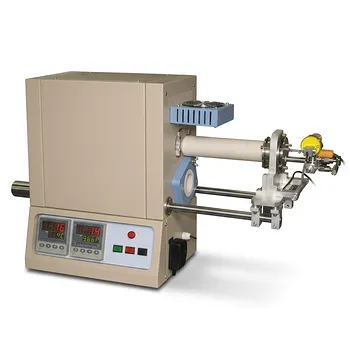
High Temperature Tube Furnace 1500C with Sliding Flanges and 50mm OD for Rapid Thermal Processing Fast Heating and Cooling

High Temperature 1700C Tube Furnace with High Vacuum Turbomolecular Pump System and Multi Channel Mass Flow Controller Gas Mixer
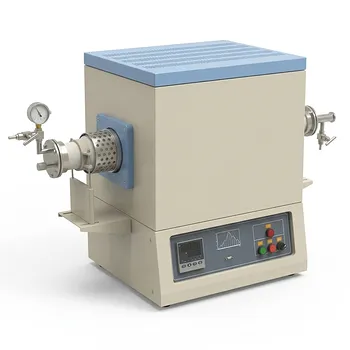
1750°C High Temperature Benchtop Vacuum Atmosphere Tube Furnace with Kanthal Super 1800 Heating Elements and 60mm Alumina Processing Tube

High Temperature 1700C Benchtop Tube Furnace with 5 Inch Heating Zone High Purity Alumina Tube and Vacuum Sealing Flanges
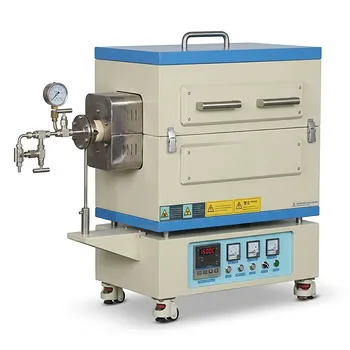
High Temperature Split Tube Furnace 1500C for Material Research Vacuum and Atmosphere Thermal Processing
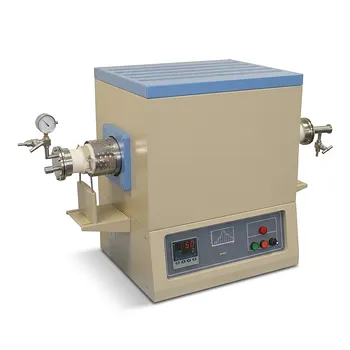
1700C High Temperature Alumina Tube Furnace with 18 Inch Heated Zone and Vacuum Sealing Flanges

Compact High Temperature 1600C Tube Furnace with 50mm Alumina Tube and Vacuum Flanges for Material Sintering

1800C High Temperature Compact Vacuum Tube Furnace with 60mm OD Alumina Tube and Kanthal MoSi2 Heating Elements
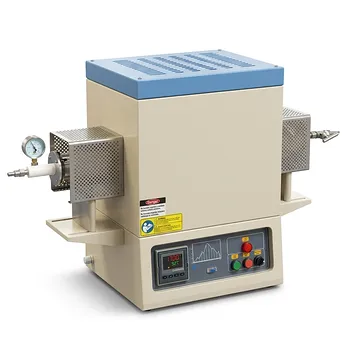
High Temperature Three Zone Tube Furnace 1700C with Alumina Tube and Water Cooled Flanges
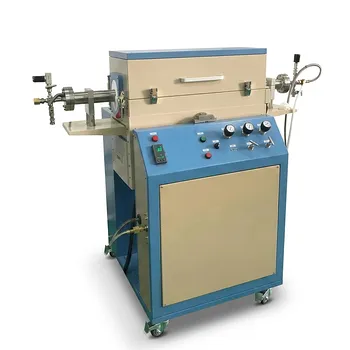
High Temperature Rocking Tube Furnace 1700°C Alumina Processing Tube with Precision Oscillation for Material Synthesis
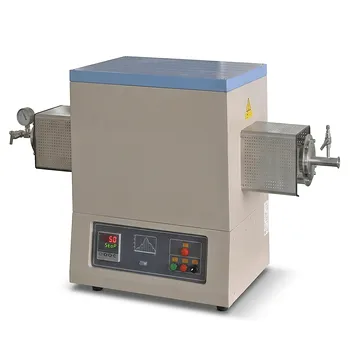
High Temperature 1700C Tube Furnace with 4 Inch OD Alumina Tube and Vacuum Sealing Flanges

High Temperature 1700C Vertical Tube Furnace for Powder Spherification and Material Sintering
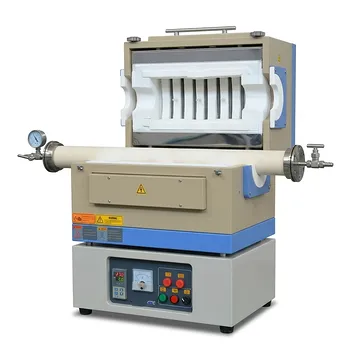
High Temperature 1600C Split Tube Furnace Vacuum Flanges Valves Optional 60mm 80mm Alumina Tube

High Temperature Automated 5 Inch Tube Furnace for Autonomous Material Research and Advanced Laboratory R&D

High Temperature 1700C Six Zone Split Tube Furnace with Alumina Tube and Water Cooled Flanges

High Vacuum Compact Tube Furnace 1200C with Integrated Turbo Pump System and 8 Inch Heating Zone
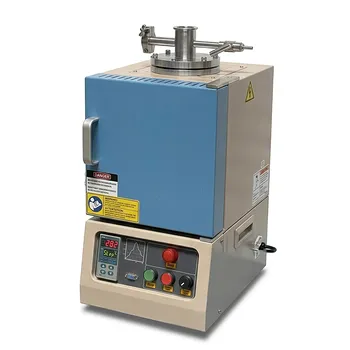
High Temperature Hybrid Muffle and Tube Furnace with Vacuum Capability and PID Control
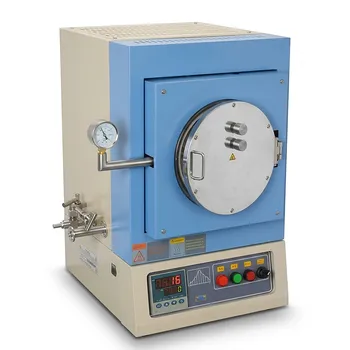
1100°C High Temperature Quartz Chamber Furnace 8 Inch OD with 7.6 Liter Capacity and Vacuum Atmosphere Capability

1100C Tube Furnace with Vacuum Flange and Programmable Temperature Controller for Material Science and Industrial Heat Treatment