Function of tube furnaces in cellulose aerogel carbonization? Achieve High-Performance Materials
Updated 3 months ago
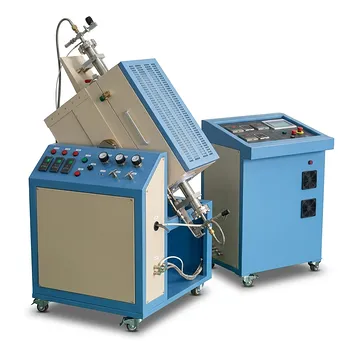
The primary function of a programmable high-temperature tube furnace is to facilitate the controlled pyrolysis of cellulose aerogels within a strictly inert atmosphere. It provides the precise thermal environment required to convert organic precursors into inorganic carbon by managing heating rates and isothermal holding times. This equipment is fundamental for defining the resulting material's degree of carbonization, lattice order, and hierarchical pore development.
The furnace serves as a precision reactor that transforms cellulose aerogels into conductive carbon frameworks through programmed thermal decomposition. By maintaining an oxygen-free environment and specific temperature ramps, it dictates the structural evolution and functional performance of the final carbon material.
The Mechanics of Thermal Transformation
The carbonization process is not a simple heating step; it is a series of complex chemical transitions. The tube furnace manages these transitions through specific phases.
Precision Pyrolysis and Carbonization
The furnace enables pyrolysis, the thermal decomposition of organic substances in the absence of oxygen. It typically follows a multi-stage program, such as a pre-treatment at 200 °C for dehydration followed by high-temperature carbonization reaching 800 °C to 1,000 °C. This controlled rise in temperature ensures the steady removal of volatile components while establishing a stable initial carbon framework.
Atmospheric Control and Inert Protection
A critical role of the tube furnace is providing a strictly anaerobic environment, usually through a continuous flow of nitrogen (N2). This inert atmosphere prevents the oxidative loss (combustion) of the carbon fibers at high temperatures. Without this protection, the cellulose precursor would simply turn to ash rather than forming a high-strength, chemically stable carbon structure.
Influence on Microstructure and Porosity
The furnace’s ability to maintain constant temperature control directly influences the development of the material's internal architecture. Specific heating rates (e.g., 3 °C/min to 5 °C/min) allow for the directional alignment of carbon layers and the formation of disordered graphene or amorphous hard carbon. This precision is vital for tailoring the interlayer spacing (d002) and creating the micropores necessary for applications like ion intercalation or catalyst support.
Understanding the Trade-offs
Achieving the "perfect" carbon aerogel requires balancing several conflicting factors within the furnace settings.
Heating Rate vs. Structural Integrity
Using a rapid heating rate can increase throughput but may cause internal stresses that collapse the delicate aerogel framework. Conversely, a very slow heating rate promotes a more uniform pore structure but significantly increases energy consumption and processing time.
Peak Temperature vs. Surface Chemistry
Higher carbonization temperatures (above 1,000 °C) generally improve electrical conductivity and lattice order. However, these extreme temperatures can also reduce the presence of functional groups and nitrogen-doped sites, which are often necessary for chemical reactivity or specific sensing applications.
Optimizing Carbonization for Your Goal
To achieve the best results, the furnace parameters must be aligned with the intended application of the final carbon aerogel.
- If your primary focus is electrical conductivity: Set the furnace to higher peak temperatures (900 °C - 1,000 °C) to promote graphitization and better lattice ordering.
- If your primary focus is high surface area and porosity: Utilize slower heating ramps and specific isothermal holding steps at lower temperatures (500 °C - 700 °C) to prevent pore collapse during degassing.
- If your primary focus is composite stability: Use precise ramped control to ensure the synchronized conversion of additives, such as turning titanium sources into TiO2 while the cellulose carbonizes.
By mastering the programmable thermal profile of the tube furnace, researchers can directionally synthesize carbon aerogels with the exact structural and electronic properties required for advanced material science.
Summary Table:
| Furnace Parameter | Function in Process | Impact on Aerogel Quality |
|---|---|---|
| Inert Atmosphere | Prevents oxidative loss | Maintains high-strength carbon structure |
| Heating Rate | Manages volatile removal | Prevents pore collapse and structural stress |
| Peak Temperature | Facilitates graphitization | Increases electrical conductivity and lattice order |
| Programmable Steps | Multi-stage treatment | Tailors surface chemistry and functional groups |
Precision Thermal Solutions for Material Science
THERMUNITS is a leading manufacturer of high-temperature laboratory equipment designed specifically for material science and industrial R&D. We offer a comprehensive range of thermal processing solutions, including Tube, Muffle, Vacuum, Atmosphere, Rotary, and Hot Press furnaces, alongside CVD/PECVD systems, Dental Furnaces, and Vacuum Induction Melting (VIM) equipment. Our systems provide the exacting atmospheric control and thermal precision required to master the carbonization of cellulose aerogels and other advanced materials.
Ready to elevate your lab's research capabilities? Contact our technical experts today to find the perfect heat treatment solution for your projects!
References
- Kai Yang, Peng Fu. Hierarchical porous carbon aerogels as a versatile electrode material for high-stability supercapacitors. DOI: 10.1039/d3ra07014j
Mentioned Products
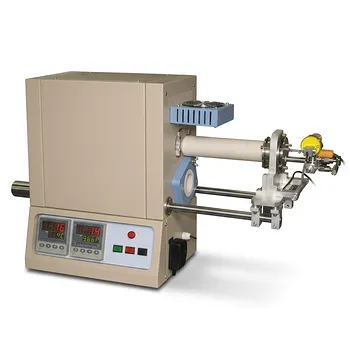
- High Temperature Tube Furnace 1500C with Sliding Flanges and 50mm OD for Rapid Thermal Processing Fast Heating and Cooling
- High Temperature 1700C Tube Furnace with High Vacuum Turbomolecular Pump System and Multi Channel Mass Flow Controller Gas Mixer
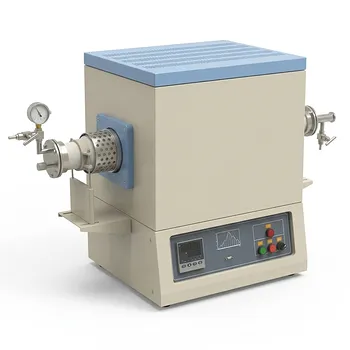
- 1750°C High Temperature Benchtop Vacuum Atmosphere Tube Furnace with Kanthal Super 1800 Heating Elements and 60mm Alumina Processing Tube
- High Temperature 1700C Benchtop Tube Furnace with 5 Inch Heating Zone High Purity Alumina Tube and Vacuum Sealing Flanges
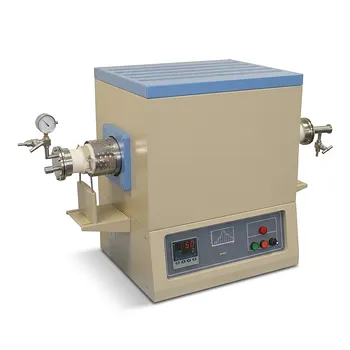
- 1700C High Temperature Alumina Tube Furnace with 18 Inch Heated Zone and Vacuum Sealing Flanges
People Also Ask
- How are high-temperature tube furnaces utilized to repair etching damage? Precision Lattice Restoration Solutions
- What core conditions does a high-temperature tube furnace provide for rGO aerogels? Mastering Precision Synthesis.
- What role does a high-temperature tube furnace play in CVD synthesis of silicon nanowires? Master VLS Growth Precision.
- How does precision tube furnace control influence CoFe nanoparticle formation? Master Your Bimetallic Synthesis.
- What role does a high-temperature tube furnace play in the sulfidation heat treatment of CoS@C/MXene nanocomposites? Guide

Tech Team · ThermUnits
Last updated on Jun 02, 2026
Related Products
High Temperature Tube Furnace 1500C with Sliding Flanges and 50mm OD for Rapid Thermal Processing Fast Heating and Cooling

High Temperature 1700C Tube Furnace with High Vacuum Turbomolecular Pump System and Multi Channel Mass Flow Controller Gas Mixer
1750°C High Temperature Benchtop Vacuum Atmosphere Tube Furnace with Kanthal Super 1800 Heating Elements and 60mm Alumina Processing Tube

High Temperature 1700C Benchtop Tube Furnace with 5 Inch Heating Zone High Purity Alumina Tube and Vacuum Sealing Flanges
1700C High Temperature Alumina Tube Furnace with 18 Inch Heated Zone and Vacuum Sealing Flanges
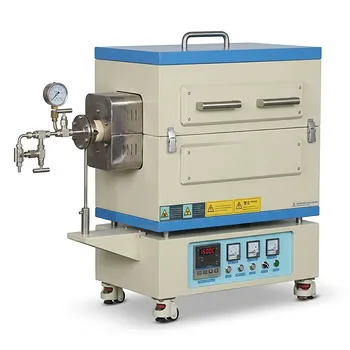
High Temperature Split Tube Furnace 1500C for Material Research Vacuum and Atmosphere Thermal Processing

Compact High Temperature 1600C Tube Furnace with 50mm Alumina Tube and Vacuum Flanges for Material Sintering

1800C High Temperature Compact Vacuum Tube Furnace with 60mm OD Alumina Tube and Kanthal MoSi2 Heating Elements
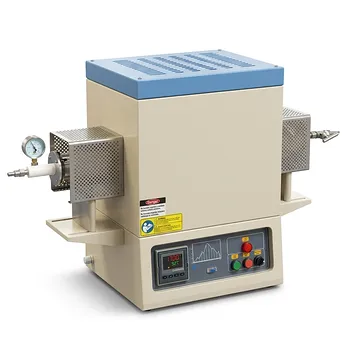
High Temperature Three Zone Tube Furnace 1700C with Alumina Tube and Water Cooled Flanges
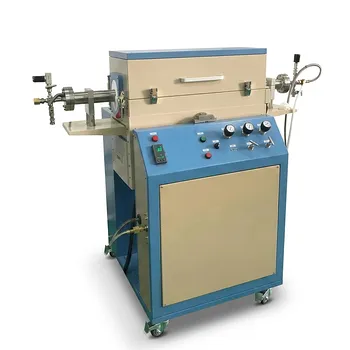
High Temperature Rocking Tube Furnace 1700°C Alumina Processing Tube with Precision Oscillation for Material Synthesis
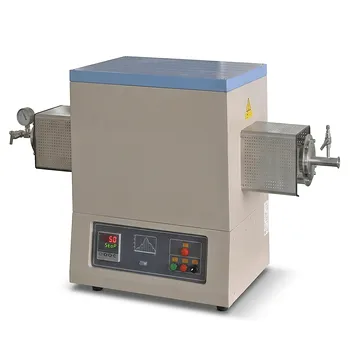
High Temperature 1700C Tube Furnace with 4 Inch OD Alumina Tube and Vacuum Sealing Flanges

High Temperature 1700C Vertical Tube Furnace for Powder Spherification and Material Sintering
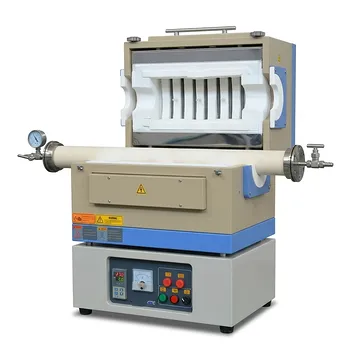
High Temperature 1600C Split Tube Furnace Vacuum Flanges Valves Optional 60mm 80mm Alumina Tube

High Temperature Automated 5 Inch Tube Furnace for Autonomous Material Research and Advanced Laboratory R&D

High Temperature 1700C Six Zone Split Tube Furnace with Alumina Tube and Water Cooled Flanges

High Vacuum Compact Tube Furnace 1200C with Integrated Turbo Pump System and 8 Inch Heating Zone
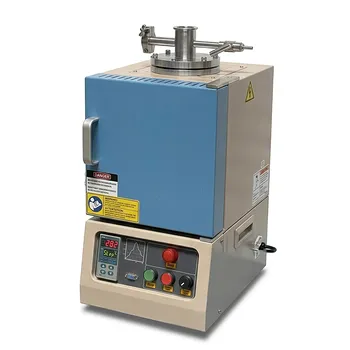
High Temperature Hybrid Muffle and Tube Furnace with Vacuum Capability and PID Control
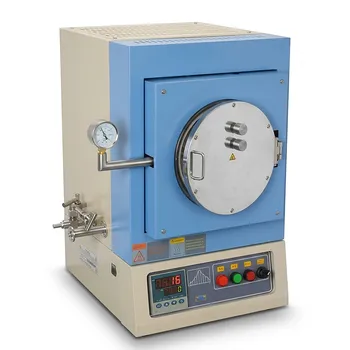
1100°C High Temperature Quartz Chamber Furnace 8 Inch OD with 7.6 Liter Capacity and Vacuum Atmosphere Capability

1100C Tube Furnace with Vacuum Flange and Programmable Temperature Controller for Material Science and Industrial Heat Treatment