What role does a high-temperature tube furnace play in executing nitrogen absorption kinetic experiments? Expert Insights
Updated 3 months ago
The high-temperature tube furnace serves as the central thermal reactor required to isolate and measure chemical reaction variables. It provides a hermetically sealed, long, and uniform heating zone that maintains isothermal conditions between 1400 °C and 1600 °C. This precise environment allows researchers to accurately determine reaction rate constants by facilitating rapid transitions between inert argon and reactive nitrogen atmospheres.
Core Takeaway: A high-temperature tube furnace provides the extreme thermal stability and atmospheric purity necessary to ensure that nitrogen absorption data reflects true material kinetics rather than environmental fluctuations.
Establishing the Thermal Foundation for Kinetics
Maintaining Isothermal Precision
In kinetic experiments, the reaction rate is highly sensitive to temperature fluctuations. The tube furnace provides a long and uniform heating zone, ensuring that the entire sample experiences the same thermal energy simultaneously.
Achieving High-Temperature Requirements
Many nitrogen absorption processes require extreme heat, often ranging from 1400 °C to 1600 °C, to overcome activation energy barriers. The furnace’s ability to reach and stabilize these temperatures is critical for studying the behavior of materials under industrially relevant conditions.
Defining Reaction Rate Constants
By providing a stable environment, the furnace allows for the measurement of reaction rates across different temperature gradients. This data is essential for calculating the activation energy and the specific rate constants that define the absorption process.
Atmospheric Control and Environmental Integrity
The Hermetic Seal for Anaerobic Conditions
The furnace tube is designed to be hermetically sealed, which is vital for maintaining a strict anaerobic (oxygen-free) environment. This prevents the oxidative combustion of samples and ensures that the observed weight changes or chemical shifts are solely due to nitrogen absorption.
Rapid Gas Switching Mechanisms
Accurate kinetic modeling requires a definitive "start" time for the reaction. The furnace facilitates rapid switching between inert gases (argon) and reactive gases (nitrogen), allowing the reaction to be triggered instantly once the desired isothermal temperature is reached.
Preventing Precursor Oxidation
For materials like carbon frameworks or metal-organic frameworks (MOFs), the furnace provides a protective atmosphere. This stability ensures that nitrogen atoms are effectively embedded or absorbed into the matrix without the interference of oxygen or other contaminants.
Understanding the Trade-offs and Limitations
Thermal Lag and Stabilization Time
While tube furnaces provide stable heat, they often suffer from thermal lag during the initial ramp-up phase. Researchers must wait for the internal chamber to reach true equilibrium before introducing reactive gases to avoid skewed kinetic data.
Material Compatibility Constraints
At temperatures above 1400 °C, the choice of the furnace tube material (e.g., alumina vs. quartz) becomes a limiting factor. Ceramic tubes are necessary for high-temperature nitrogen studies but can be susceptible to thermal shock if cooled too rapidly.
Gas Flow Dynamics
The flow rate of nitrogen through the tube can influence the boundary layer around the sample. If the flow is too low, the experiment may measure mass transfer limitations rather than the actual chemical kinetics of nitrogen absorption.
How to Apply This to Your Research
Depending on your specific experimental goals, the configuration of your tube furnace will vary significantly:
- If your primary focus is determining activation energy: Prioritize a furnace with a long isothermal zone to ensure the sample is heated uniformly at multiple temperature setpoints between 1400 °C and 1600 °C.
- If your primary focus is Nitrogen-doped carbon synthesis: Use the furnace to maintain a stable 900 °C to 1100 °C environment under a constant flow of nitrogen or argon to facilitate deep pyrolysis and pore development.
- If your primary focus is preventing sample contamination: Ensure the furnace utilizes high-purity alumina tubes and vacuum-tight flanges to maintain a strictly anaerobic atmosphere during high-heat cycles.
The high-temperature tube furnace is the only tool capable of providing the simultaneous thermal stability and gas-phase control required for high-fidelity kinetic analysis.
Summary Table:
| Feature | Role in Kinetic Experiments | Key Specifications |
|---|---|---|
| Thermal Stability | Maintains isothermal conditions for accurate rate constants | 1400 °C to 1600 °C Range |
| Atmospheric Purity | Hermetic sealing prevents sample oxidation/contamination | Vacuum-tight ceramic tubes |
| Gas Management | Enables rapid switching between inert and reactive gases | Argon to Nitrogen transitions |
| Uniform Heating | Ensures simultaneous energy distribution across samples | Long isothermal heating zone |
| Material Integrity | High-purity alumina tubes withstand extreme temperatures | Chemical & thermal resistance |
Elevate Your Material Research with THERMUNITS Precision
Is your R&D demanding absolute thermal precision? THERMUNITS is a leading manufacturer of high-performance laboratory equipment designed for the most rigorous material science applications. From determining reaction kinetics to advanced synthesis, our thermal solutions provide the stability and control your experiments require.
Our comprehensive range includes:
- Furnaces: Tube, Muffle, Vacuum, Atmosphere, Rotary, and Hot Press.
- Advanced Systems: CVD/PECVD systems, Vacuum Induction Melting (VIM), and Dental Furnaces.
- Components: Electric rotary kilns, Thermal Elements, and specialized heat treatment tools.
Whether you are focusing on nitrogen-doped carbon synthesis or high-temperature kinetic modeling, THERMUNITS delivers the engineering excellence to ensure high-fidelity data.
Contact THERMUNITS Today to consult with our experts and find the perfect thermal processing solution for your laboratory.
References
- Zhongyuan Liu, Jiatai Zhao. Experimental and Kinetic Study of Biochar in N-Absorption Reaction of Chemical Looping Ammonia Generation. DOI: 10.3390/pr12122870
Mentioned Products
- High Temperature Tube Furnace 1500C with Sliding Flanges and 50mm OD for Rapid Thermal Processing Fast Heating and Cooling
- High Temperature 1700C Tube Furnace with High Vacuum Turbomolecular Pump System and Multi Channel Mass Flow Controller Gas Mixer
- 1750°C High Temperature Benchtop Vacuum Atmosphere Tube Furnace with Kanthal Super 1800 Heating Elements and 60mm Alumina Processing Tube
- High Temperature 1700C Benchtop Tube Furnace with 5 Inch Heating Zone High Purity Alumina Tube and Vacuum Sealing Flanges
- 1700C High Temperature Alumina Tube Furnace with 18 Inch Heated Zone and Vacuum Sealing Flanges
People Also Ask
- How are high-temperature tube furnaces utilized to repair etching damage? Precision Lattice Restoration Solutions
- What core conditions does a high-temperature tube furnace provide for rGO aerogels? Mastering Precision Synthesis.
- What role does a high-temperature tube furnace play in CVD synthesis of silicon nanowires? Master VLS Growth Precision.
- How does precision tube furnace control influence CoFe nanoparticle formation? Master Your Bimetallic Synthesis.
- What role does a high-temperature tube furnace play in the sulfidation heat treatment of CoS@C/MXene nanocomposites? Guide

Tech Team · ThermUnits
Last updated on Jun 02, 2026
Related Products

High Temperature Tube Furnace 1500C with Sliding Flanges and 50mm OD for Rapid Thermal Processing Fast Heating and Cooling

High Temperature 1700C Tube Furnace with High Vacuum Turbomolecular Pump System and Multi Channel Mass Flow Controller Gas Mixer

1750°C High Temperature Benchtop Vacuum Atmosphere Tube Furnace with Kanthal Super 1800 Heating Elements and 60mm Alumina Processing Tube

High Temperature 1700C Benchtop Tube Furnace with 5 Inch Heating Zone High Purity Alumina Tube and Vacuum Sealing Flanges
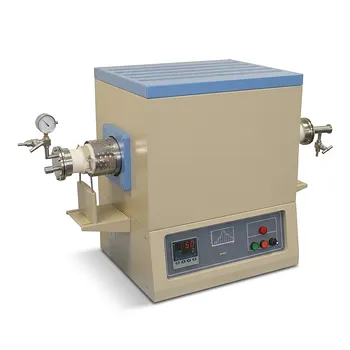
1700C High Temperature Alumina Tube Furnace with 18 Inch Heated Zone and Vacuum Sealing Flanges
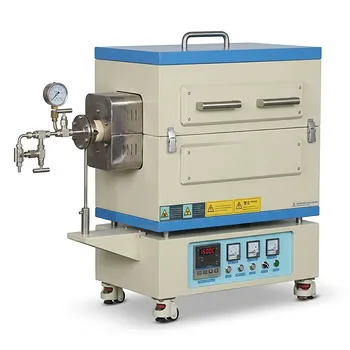
High Temperature Split Tube Furnace 1500C for Material Research Vacuum and Atmosphere Thermal Processing

Compact High Temperature 1600C Tube Furnace with 50mm Alumina Tube and Vacuum Flanges for Material Sintering

1800C High Temperature Compact Vacuum Tube Furnace with 60mm OD Alumina Tube and Kanthal MoSi2 Heating Elements
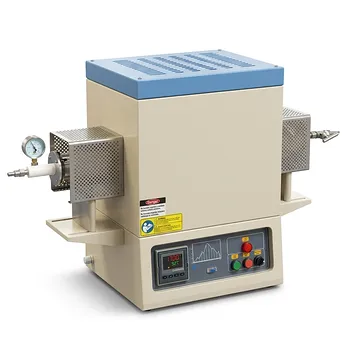
High Temperature Three Zone Tube Furnace 1700C with Alumina Tube and Water Cooled Flanges
High Temperature Rocking Tube Furnace 1700°C Alumina Processing Tube with Precision Oscillation for Material Synthesis
High Temperature 1700C Tube Furnace with 4 Inch OD Alumina Tube and Vacuum Sealing Flanges

High Temperature 1700C Vertical Tube Furnace for Powder Spherification and Material Sintering
High Temperature 1600C Split Tube Furnace Vacuum Flanges Valves Optional 60mm 80mm Alumina Tube

High Temperature Automated 5 Inch Tube Furnace for Autonomous Material Research and Advanced Laboratory R&D

High Temperature 1700C Six Zone Split Tube Furnace with Alumina Tube and Water Cooled Flanges
High Vacuum Compact Tube Furnace 1200C with Integrated Turbo Pump System and 8 Inch Heating Zone
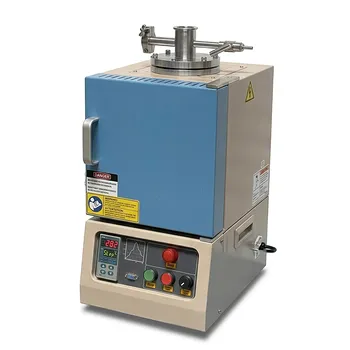
High Temperature Hybrid Muffle and Tube Furnace with Vacuum Capability and PID Control
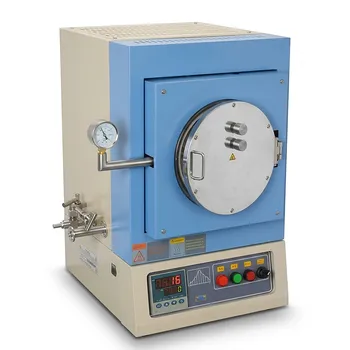
1100°C High Temperature Quartz Chamber Furnace 8 Inch OD with 7.6 Liter Capacity and Vacuum Atmosphere Capability

1100C Tube Furnace with Vacuum Flange and Programmable Temperature Controller for Material Science and Industrial Heat Treatment