Why is a high-precision tube furnace required for polyimide thermal imidization? Master Precise Heat Treatment
Updated 3 months ago
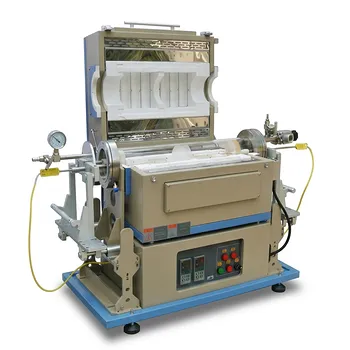
High-precision programmable tube furnaces are essential for thermal imidization because they execute the complex, multi-stage temperature gradients required to transform polyamic acid (PAA) into polyimide (PI). These furnaces provide the critical combination of precise heating ramps, thermal uniformity, and strict atmosphere control necessary to ensure complete chemical conversion while preventing material degradation or structural defects.
The thermal imidization process relies on a programmable tube furnace to manage the delicate dehydration and ring-closure of polymer chains. By strictly controlling temperature curves and maintaining an inert environment, the furnace ensures the resulting polyimide achieves its full thermal, chemical, and mechanical potential.
The Role of Precise Temperature Gradients
Achieving Complete Ring-Closure
The transition from polyamic acid (PAA) to polyimide (PI) is a dehydration cyclization reaction that requires specific energy inputs at different stages. A programmable furnace allows for gradient heating—often starting as low as 70°C and rising to 350°C—to ensure that molecular chains complete the ring-closure process systematically.
Preventing Material Stress and Cracking
Rapid or uneven heating can lead to internal stresses and surface cracks in the PI membrane or fiber. High-precision furnaces provide a uniform thermal field, ensuring that the entire sample experiences the same temperature profile, which is vital for maintaining structural integrity during the solid-state conversion.
Controlling the Rate of Reaction
Precise heating curves, such as a steady 5°C/min ramp, prevent the reaction from proceeding too violently. This controlled approach allows for the gradual release of water molecules, which is necessary to form a stable, high-performance chemical structure without compromising the material's density.
Managing the Chemical Environment
Oxidation Prevention via Atmosphere Control
At the high temperatures required for imidization, polyimide is susceptible to oxidative degradation. The superior sealing performance of a tube furnace allows for a pure nitrogen or vacuum environment, protecting the polymer backbone from oxygen during the heating cycle.
Efficient Solvent Removal
Residual high-boiling point solvents, such as NMP or DMF, must be completely removed to avoid defects. A vacuum-capable tube furnace assists in the devolatilization of these solvents, preventing the formation of bubbles or "pinholes" that would otherwise weaken the membrane’s electrochemical stability.
Removal of Reaction By-products
During specialized processes like thermal rearrangement (TR), the furnace must efficiently remove by-products like carbon dioxide. A stable nitrogen flow within the tube furnace carries these gases away, ensuring the formation of high-free-volume structures required for applications like gas separation.
Ensuring Structural and Performance Stability
Optimization of Chemical Resistance
The precision of the thermal profile directly correlates to the material's final thermal and chemical resistance. Accurate temperature control ensures that the PI achieves the necessary degree of cross-linking to withstand harsh environments in industrial or electronic applications.
Formation of Specialized Crystalline Structures
For advanced materials like Polyheptazine Imide (PHI), the furnace maintains stable thermal fields (up to 550°C) to promote polycondensation. This level of control is necessary to develop the pi-conjugated systems and specific bandgap structures required for photocatalysis and organic semiconductors.
Understanding the Trade-offs
Precision vs. Throughput
While high-precision tube furnaces offer unparalleled control, they are often limited by batch size. The focus on thermal uniformity and atmosphere sealing typically means processing smaller volumes compared to continuous industrial ovens, which may increase production time for large-scale projects.
Complexity of Programming
The requirement for multi-stage programming introduces a margin for human error in process design. If the heating ramp is too aggressive, the rapid evaporation of solvents can cause structural foaming; if it is too slow, the process becomes energy-inefficient without necessarily improving material quality.
Maintenance of Seal Integrity
The benefits of an inert atmosphere are entirely dependent on the integrity of the furnace seals. Over time, high-temperature cycling can degrade O-rings and fittings, leading to oxygen trace leaks that can subtly compromise the polyimide’s mechanical properties.
How to Apply This to Your Project
Recommendations for Implementation
- If your primary focus is gas separation membranes: Utilize a vacuum-capable tube furnace to ensure the complete removal of solvents and to facilitate the high-free-volume rearrangement required for superior permeability.
- If your primary focus is electronic insulation: Prioritize a furnace with high thermal uniformity (low temperature delta across the zone) to prevent localized weak points or stress cracks in the film.
- If your primary focus is photocatalysis or semiconductors: Select a furnace with high-temperature stability (up to 600°C) and robust nitrogen flow control to maintain the integrity of the carbon-nitrogen framework.
The high-precision programmable tube furnace is not merely a heater, but a controlled chemical reactor that defines the ultimate molecular architecture and performance of polyimide materials.
Summary Table:
| Feature | Function in Imidization | Benefit to Polyimide (PI) |
|---|---|---|
| Multi-stage Programming | Executes complex heating ramps (70°C–350°C+) | Ensures complete chemical ring-closure |
| Atmosphere Control | Provides inert (N2) or vacuum environment | Prevents oxidative degradation of polymer |
| Thermal Uniformity | Maintains a consistent temperature field | Prevents material stress and surface cracking |
| Solvent Removal | Controlled heating and vacuum assistance | Eliminates bubbles/pinholes from NMP/DMF |
Optimize Your Polyimide Processing with THERMUNITS
Achieve flawless chemical conversion and superior material performance with THERMUNITS high-precision thermal solutions. As a leading manufacturer of high-temperature laboratory equipment for material science, we specialize in helping researchers and industrial R&D teams master complex heat treatments.
Whether you are working on gas separation membranes, electronic insulation, or organic semiconductors, our comprehensive range of equipment—including Tube, Vacuum, Atmosphere, Muffle, and Rotary furnaces, as well as CVD/PECVD systems—is engineered for absolute precision.
Ready to enhance your lab's efficiency and material quality?
Contact Our Technical Experts Today to find the ideal furnace configuration for your specific research needs.
References
- Feifei Zhang, Changyu Shen. Asymmetric hybrid carbonaceous membranes with exceptional electromagnetic interference shielding and superior electro-photo-thermal performance. DOI: 10.1007/s42114-024-01097-w
Mentioned Products
- High Temperature Hybrid Muffle and Tube Furnace 1700C Programmable PID Controlled Box System with Vacuum Flange and Alumina Processing Tube
- 1500C Hybrid Muffle Tube Furnace 1.7L Box with 2 Inch Mullite Tube and Programmable PID Controller
- Automated 1200 C Tube Furnace for AI Material Research with 6 Inch OD and Sliding Flange
- 1250C Compact Split Tube Furnace with 8 Inch Heating Zone and Programmable Controller
- 1100C Tube Furnace with Vacuum Flange and Programmable Temperature Controller for Material Science and Industrial Heat Treatment
People Also Ask
- Primary Use of a Muffle Furnace in Pyrolysis Analysis? Optimize Proximate Analysis for Better Yields
- Why 1700°C Furnace is Vital for VSCG vs. CVD? Achieve SiC Covalent Bonding & High Thermal Conduction
- How does a program-controlled tube furnace enable precise structural regulation? Optimize your MIL-100(Fe) pyrolysis.
- How does a program-controlled tube furnace contribute to the production of biochar from emergent aquatic plants? Guide
- How does a programmable horizontal tube furnace contribute to the annealing of Cr-Al-C MAX phases? Enhance Phase Purity

Tech Team · ThermUnits
Last updated on Jun 03, 2026
Related Products
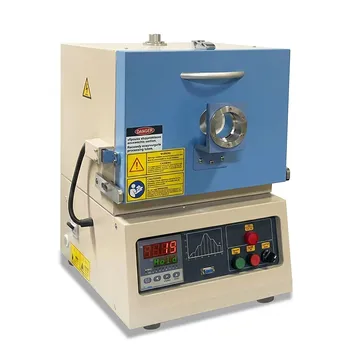
High Temperature Hybrid Muffle and Tube Furnace 1700C Programmable PID Controlled Box System with Vacuum Flange and Alumina Processing Tube
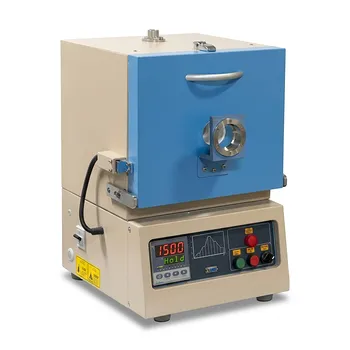
1500C Hybrid Muffle Tube Furnace 1.7L Box with 2 Inch Mullite Tube and Programmable PID Controller
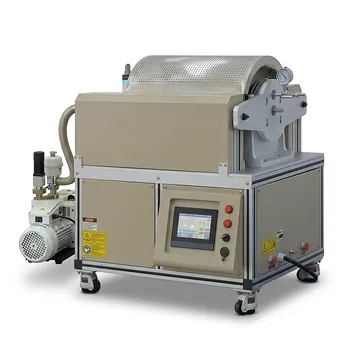
Automated 1200 C Tube Furnace for AI Material Research with 6 Inch OD and Sliding Flange
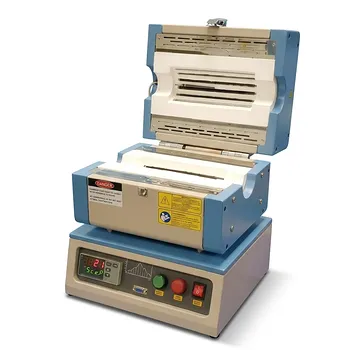
1250C Compact Split Tube Furnace with 8 Inch Heating Zone and Programmable Controller

1100C Tube Furnace with Vacuum Flange and Programmable Temperature Controller for Material Science and Industrial Heat Treatment
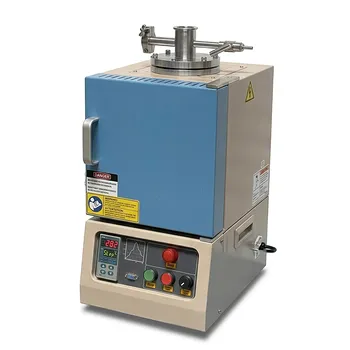
High Temperature Hybrid Muffle and Tube Furnace with Vacuum Capability and PID Control

High Temperature 1700C Vertical Tube Furnace for Powder Spherification and Material Sintering
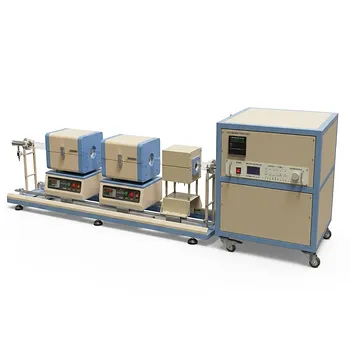
1200C Dual Sliding Tube Furnace with Dual Tubes and Flanges for PECVD Processes
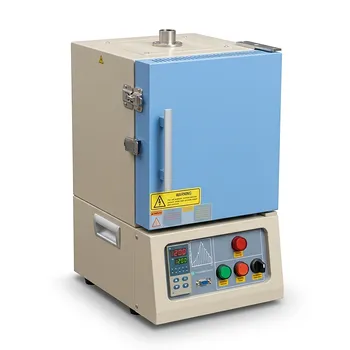
1200°C Small Box Furnace 4.2 Liter Programmable Muffle Furnace with High Purity Alumina Insulation and PID Control
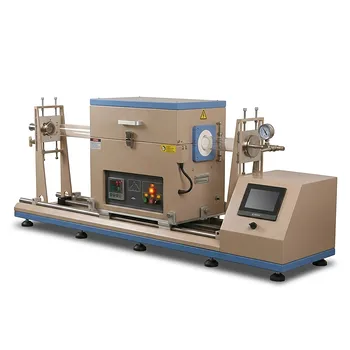
1200C Sliding Tube Furnace for Rapid Thermal Processing and CVD Graphene Growth with 100mm OD Capacity
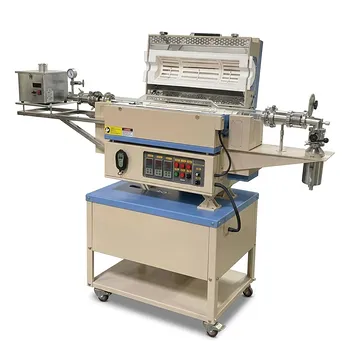
5 Inch Rotary Tube Furnace with Automatic Feeding and Receiving System 1200C Three Zone CVD Powder Processing
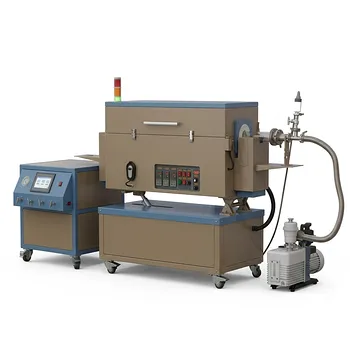
5 Inch Three Zone Rotary Tube Furnace with Integrated Gas Delivery System and 1200C Capability for Advanced Material CVD Processing

High Temperature Automated 5 Inch Tube Furnace for Autonomous Material Research and Advanced Laboratory R&D
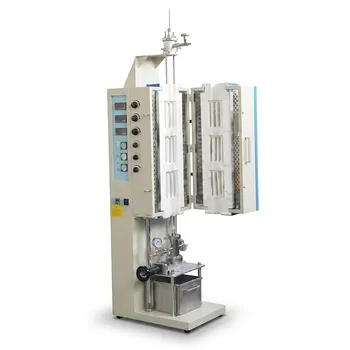
High Temperature Dual Zone Tube Furnace for Material Science Research and Professional Thermal Processing
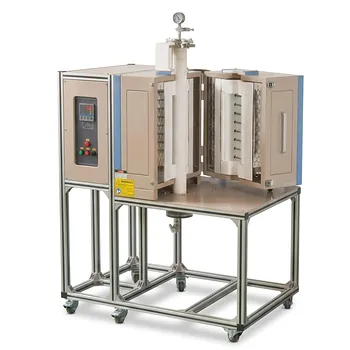
High Temperature 1700C Vertical Split Tube Furnace for Material Quenching and Single Crystal Growth
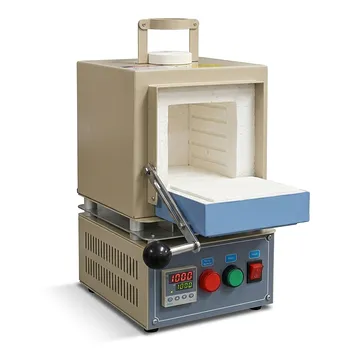
Compact 1000C Muffle Furnace with Programmable Controller and 2 Inch Top Port for Vacuum and Atmosphere Material Research
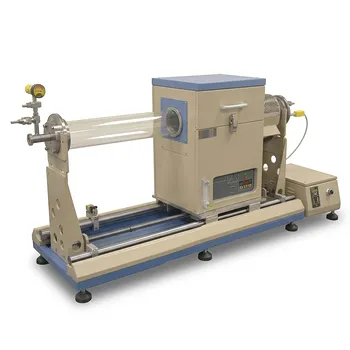
Rapid Thermal Processing Sliding Tube Furnace with 4 Inch OD Quartz Tube and 900C IR Heating
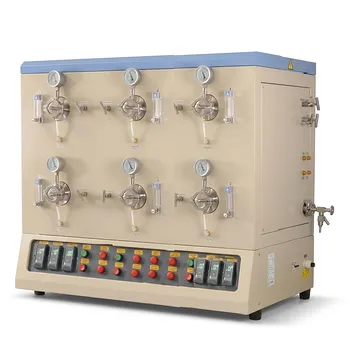
1200C High Throughput Multi Channel Tube Furnace with 50mm Quartz Tubes for Annealing and Material Phase Diagram Research
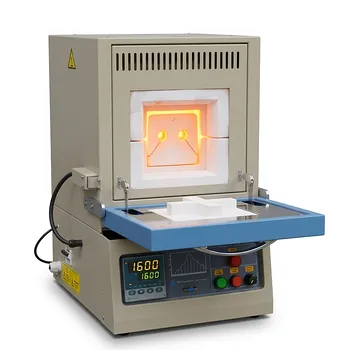
High Temperature Compact Muffle Furnace 1700 C with 30 Segment Programmable Controller and 1.7L Cubic Chamber