What role does a high-temperature vacuum tube furnace play in Mg-Ni-Ti-Mn alloy treatment? Optimize Purity & Structure
Updated 3 months ago
A high-temperature vacuum tube furnace acts as the critical engine for solid-state diffusion and chemical preservation in the synthesis of Mg-Ni-Ti-Mn alloys. By providing a precise thermal environment (typically 600 °C for 4 hours), the furnace drives the migration of metal atoms across interfaces to form essential intermetallic phases like Mg2Ni and Mg3MnNi2. Crucially, it replaces reactive air with a vacuum or inert gas to prevent the oxidation of highly active magnesium and titanium.
Core Takeaway: The vacuum tube furnace is the fundamental tool for transforming raw metallic mixtures into functional hydrogen storage materials by enabling controlled atomic diffusion while maintaining a strictly oxygen-free environment to preserve alloy purity.
Facilitating Complex Solid-State Diffusion
Driving Phase Formation through Thermal Energy
At the standard processing temperature of 600 °C, the furnace provides the steady kinetic energy required for different metal atoms to move across material boundaries. This large-scale diffusion is what allows the individual elements to reorganize into the Mg2Ni main phase and auxiliary phases like Ni3Ti.
Ensuring Microstructural Uniformity
The temperature control precision and the uniformity of the heat field within the tube directly dictate how these phases are distributed. Without a perfectly stable thermal environment, the alloy would suffer from compositional segregation, leading to inconsistent hydrogen storage performance across the batch.
Atmospheric Control and Oxidation Prevention
Creating a High-Vacuum Barrier
Magnesium, titanium, and manganese are highly reactive and bond easily with oxygen and moisture at elevated temperatures. By achieving a high vacuum—down to 10⁻⁵ Pa—the furnace eliminates these contaminants, ensuring the final Mg1.6Ni1-xTi0.4Mnx composition remains accurate.
Utilizing Argon Gas Protection
In addition to a vacuum, these furnaces often utilize argon gas protection to create an inert "blanket" around the sample. This secondary layer of protection is vital during long-term sintering to prevent the formation of brittle oxide layers that would otherwise degrade the alloy's integrity.
Engineering the Final Phase Structure
Promoting Stable Intermetallic Compounds
The furnace environment is specifically tuned to promote the formation of the Mg3MnNi2 intermetallic compound, which is critical for the alloy's hydrogen storage properties. The duration of the heat treatment—usually 4 hours—allows these complex structures to stabilize completely.
Refining the Layered Microstructure
Through precise cooling and heating cycles, the vacuum furnace allows researchers to manipulate the final layered structure of the alloy. This level of control is essential for optimizing the material's ability to absorb and release hydrogen efficiently.
Understanding the Trade-offs
While the vacuum tube furnace is indispensable, it presents specific challenges that must be managed. High energy consumption is a factor during long-term sintering processes, and the volatile nature of magnesium means that if the vacuum is too high or the temperature is poorly regulated, the magnesium may evaporate, altering the intended stoichiometric ratio. Furthermore, the slow heating and cooling rates inherent to tube furnaces can lead to unintended grain growth if the process isn't meticulously timed, potentially reducing the surface area available for hydrogen reactions.
How to Apply This to Your Project
Making the Right Choice for Your Goal
To achieve the best results with Mg-Ni-Ti-Mn hydrogen storage alloys, your furnace parameters should align with your specific material objectives.
- If your primary focus is Phase Purity: Maintain a vacuum level of at least 10⁻⁵ Pa and use high-purity Argon to ensure no secondary oxides interfere with the Mg2Ni formation.
- If your primary focus is Kinetic Performance: Prioritize the uniformity of the heat field to ensure a consistent layered microstructure, which facilitates faster hydrogen absorption.
- If your primary focus is Compositional Accuracy: Monitor the temperature closely at 600 °C to prevent the over-evaporation of magnesium while still allowing for complete manganese diffusion.
Mastering the thermal and atmospheric variables of your vacuum furnace is the most direct path to engineering high-performance hydrogen storage materials.
Summary Table:
| Function | Key Parameters | Outcome for Alloys |
|---|---|---|
| Solid-State Diffusion | 600 °C for 4 Hours | Facilitates Mg2Ni & Mg3MnNi2 phase formation |
| Atmosphere Control | 10⁻⁵ Pa Vacuum / Argon | Prevents oxidation of reactive Mg, Ti, and Mn |
| Thermal Uniformity | Stable Heat Field | Eliminates compositional segregation and defects |
| Microstructure Control | Controlled Cooling | Optimizes layered structures for H2 absorption |
Elevate Your Material Research with THERMUNITS
Are you developing next-generation hydrogen storage alloys? At THERMUNITS, we are a leading manufacturer specializing in high-performance thermal processing solutions for material science and industrial R&D. Our precision-engineered Vacuum Tube Furnaces, CVD/PECVD systems, and Vacuum Induction Melting (VIM) furnaces are designed to provide the ultra-clean environments and uniform heating required for sensitive Mg-Ni-Ti-Mn compositions.
From Atmosphere and Muffle furnaces to advanced Rotary Kilns and Hot Press systems, we empower researchers to achieve superior phase purity and microstructural control.
Ready to optimize your heat treatment process? Contact THERMUNITS today to find the perfect thermal solution for your lab!
References
- Jiangang Wang, Jing Ma. Study on Microstructure and Electrochemical Properties of Mg1.6Ni1-xTi0.4Mnx (x = 0~0.3) Alloy. DOI: 10.3390/coatings14121558
Mentioned Products
- High Temperature 1700C Tube Furnace with High Vacuum Turbomolecular Pump System and Multi Channel Mass Flow Controller Gas Mixer
- High Temperature 1000C Hydrogen Vertical Quenching Furnace with 4 Inch Stainless Steel Tube
- Three Zone Hydrogen Gas Tube Furnace with 82mm Superalloy Tube and Dual Hydrogen Detectors 1200C High Temperature Material Processing System
- 1750°C High Temperature Benchtop Vacuum Atmosphere Tube Furnace with Kanthal Super 1800 Heating Elements and 60mm Alumina Processing Tube
- High Temperature 1700C Vertical Tube Furnace for Powder Spherification and Material Sintering
People Also Ask
- What is the role of a high-temperature tube furnace in the calcination process of ZnO/In2O3 nanocomposites?
- What impact does the heating rate of a tube furnace have on biochar microstructure? Optimize Your Material R&D.
- What is the function of a high-temperature tube furnace in the synthesis of g-C3N4? Optimize Thermal Polycondensation
- What is the critical function of a high-temperature tube furnace in Si/Al2O3/RGO synthesis? Key to Battery Innovation
- What are the primary functions of a high-temperature tube furnace for Inconel 718? Master Debinding & Pre-sintering.

Tech Team · ThermUnits
Last updated on Jun 02, 2026
Related Products

High Temperature 1700C Tube Furnace with High Vacuum Turbomolecular Pump System and Multi Channel Mass Flow Controller Gas Mixer
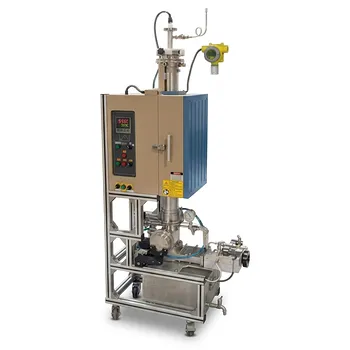
High Temperature 1000C Hydrogen Vertical Quenching Furnace with 4 Inch Stainless Steel Tube
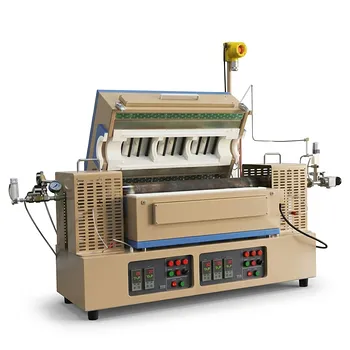
Three Zone Hydrogen Gas Tube Furnace with 82mm Superalloy Tube and Dual Hydrogen Detectors 1200C High Temperature Material Processing System
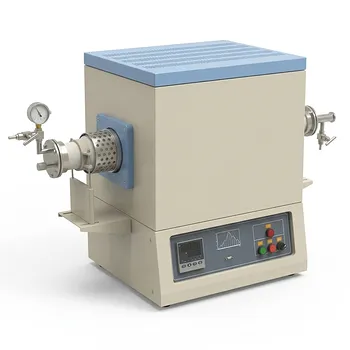
1750°C High Temperature Benchtop Vacuum Atmosphere Tube Furnace with Kanthal Super 1800 Heating Elements and 60mm Alumina Processing Tube

High Temperature 1700C Vertical Tube Furnace for Powder Spherification and Material Sintering

1800C High Temperature Compact Vacuum Tube Furnace with 60mm OD Alumina Tube and Kanthal MoSi2 Heating Elements
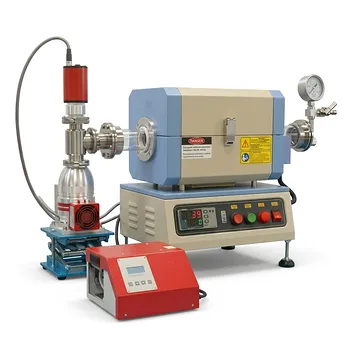
High Vacuum Compact Tube Furnace 1200C with Integrated Turbo Pump System and 8 Inch Heating Zone
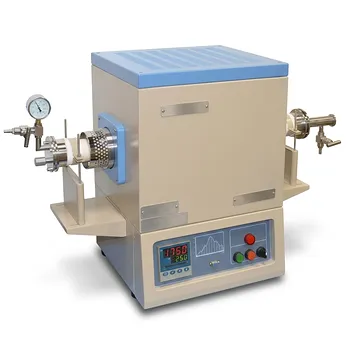
High Temperature Compact Vacuum Tube Furnace 1750C Max 60mm OD Alumina Tube
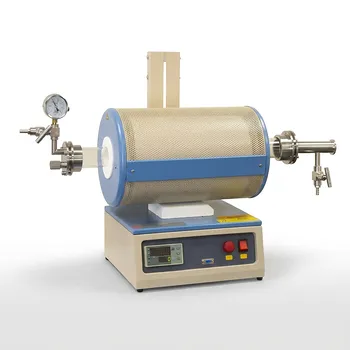
1100C Tube Furnace with Vacuum Flange and Programmable Temperature Controller for Material Science and Industrial Heat Treatment

Compact High Temperature 1600C Tube Furnace with 50mm Alumina Tube and Vacuum Flanges for Material Sintering
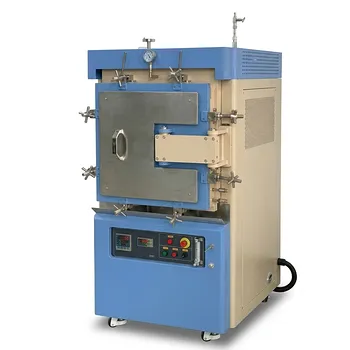
High Temperature Economic Hydrogen Gas Box Furnace 1600C Atmosphere Controlled Thermal Processing System 65L Capacity

High Temperature 1700C Six Zone Split Tube Furnace with Alumina Tube and Water Cooled Flanges
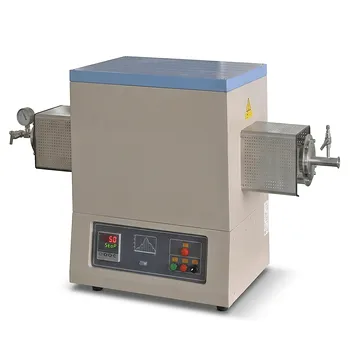
High Temperature 1700C Tube Furnace with 4 Inch OD Alumina Tube and Vacuum Sealing Flanges
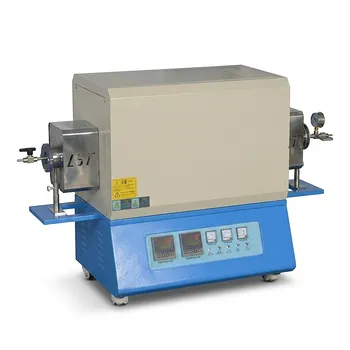
High Temperature Dual Zone Vacuum Tube Furnace for Material Research and CVD Processing
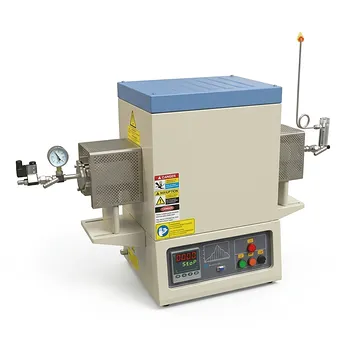
1700C Hydrogen Gas Tube Furnace with 60mm Alumina Process Tube and Integrated Hydrogen Safety Detector
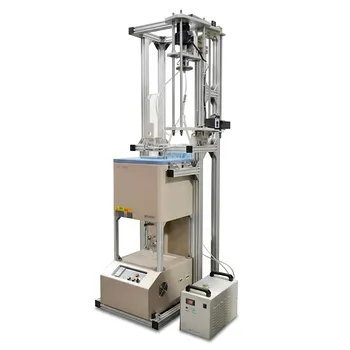
500C Vacuum Vertical Tube Furnace 84mm OD Sample Rotation Lifting System
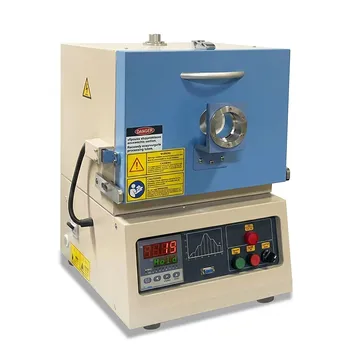
High Temperature Hybrid Muffle and Tube Furnace 1700C Programmable PID Controlled Box System with Vacuum Flange and Alumina Processing Tube

High Temperature 1700C Benchtop Tube Furnace with 5 Inch Heating Zone High Purity Alumina Tube and Vacuum Sealing Flanges
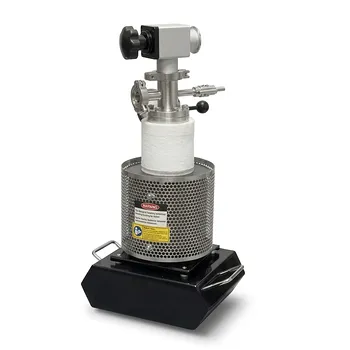
High Temperature 1100C Compact Top Loading Vertical Vacuum Tube Furnace for High Vacuum Noble Metal Melting and Material Research
