Why is a high-purity glassy carbon crucible selected for the induction melting process of CaSi2 alloys? Ensure Purity.
Updated 3 months ago
The selection of high-purity glassy carbon is driven by the extreme chemical reactivity of molten calcium. High-purity glassy carbon crucibles provide a unique combination of chemical inertness and high-temperature resistance that prevents the active metallic calcium from reacting with the vessel walls. This isolation is critical for ensuring the synthesized CaSi₂ alloy maintains its exact stoichiometric ratio and remains free from secondary phases or impurities.
High-purity glassy carbon acts as a non-reactive barrier against aggressive molten elements, ensuring the final alloy's chemical purity and structural integrity. It is the preferred material when standard ceramics or graphite cannot withstand the specific corrosive nature of alkaline earth metals like calcium.
The Critical Role of Chemical Inertness
Inhibiting Reaction with Molten Calcium
Calcium is a highly active metal that becomes significantly more aggressive in a molten state during induction melting. Glassy carbon is chosen because it does not form compounds or alloys with the calcium melt, unlike many metal or lower-grade ceramic containers.
Preserving the Stoichiometric Ratio
In alloy production, maintaining the precise 1:2 ratio of Calcium to Silicon is vital for the material’s final properties. If the crucible reacts with the calcium, the "loss" of active metal to the container walls shifts the stoichiometry, resulting in a failed or degraded batch.
Eliminating Secondary Phases
When a crucible material reacts with a melt, it often introduces unwanted secondary phases into the crystal structure of the alloy. Glassy carbon’s high purity ensures that no foreign atoms migrate into the CaSi₂, preserving the material's phase purity.
Superior Thermal Performance in Induction Melting
Resistance to Extreme Temperatures
The induction melting process for CaSi₂ requires sustained high temperatures to achieve a uniform melt. Glassy carbon maintains its structural integrity and mechanical strength at these extremes, where other materials might soften or decompose.
Withstanding Thermal Shock
Induction heating often involves rapid temperature cycles that can cause standard ceramics to crack or spall. Glassy carbon possesses excellent thermal shock resistance, allowing it to endure the intense electromagnetic fields and rapid heating rates of the induction coil.
Preventing Environmental Contamination
Because glassy carbon is manufactured to a high level of purity, it does not outgas or release trace elements into the vacuum or inert atmosphere. This ensures that the external environment does not introduce contaminants that could compromise the high-conductivity or semi-conductive properties of the alloy.
Understanding the Trade-offs
Mechanical Fragility and Brittleness
Despite its thermal strengths, glassy carbon is exceptionally brittle and sensitive to mechanical impact. It must be handled with extreme care compared to standard graphite or metallic crucibles to avoid fracturing.
Cost and Manufacturing Complexity
High-purity glassy carbon is significantly more expensive than standard synthetic graphite or corundum. Its use is typically reserved for high-value applications where the purity of the alloy is the primary performance metric.
Surface Smoothness and Cleaning
While its "glassy" surface prevents the melt from sticking, this same smoothness makes it difficult for some coatings to adhere if secondary protection is required. However, this usually simplifies the recovery of the ingot after the melting process is complete.
Making the Right Choice for Your Goal
How to Apply This to Your Project
Selecting the correct crucible depends on the specific reactivity of your alloying elements and the required purity levels.
- If your primary focus is stoichiometric precision: Utilize high-purity glassy carbon to ensure no reactive loss of volatile or active metallic elements to the crucible walls.
- If your primary focus is cost-effective bulk melting: Consider high-purity graphite if the alloy elements (like Nickel or Titanium) are compatible with a carbon-rich, reducing environment.
- If your primary focus is high-conductivity copper alloys: Use corundum or ceramic crucibles to prevent carbon contamination which can significantly degrade electrical performance.
The integrity of your final alloy is fundamentally limited by the chemical compatibility of the vessel in which it is created.
Summary Table:
| Key Advantage | Description | Impact on Alloy |
|---|---|---|
| Chemical Inertness | Prevents reaction with aggressive molten calcium | Ensures precise 1:2 stoichiometric ratio |
| Phase Purity | High-purity material with no outgassing | Eliminates unwanted secondary phases |
| Thermal Stability | Maintains strength at extreme temperatures | Ensures vessel structural integrity |
| Shock Resistance | Withstands rapid induction heating cycles | Prevents crucible cracking or spalling |
Optimize Your Alloy Synthesis with THERMUNITS
As a leading manufacturer of high-temperature laboratory equipment for material science and industrial R&D, THERMUNITS provides the precision tools necessary for advanced thermal processing. Whether you require a Vacuum Induction Melting Furnace (VIM) for reactive alloy production or specialized Muffle, Vacuum, Atmosphere, and Tube furnaces, our solutions ensure maximum purity and performance.
Enhance your laboratory's capabilities and achieve superior material integrity—contact our experts today for a tailored thermal solution!
References
- Xian‐Juan Feng, Michael Baitinger. Deciphering the Polymorphism of CaSi<sub>2</sub>: The Influence of Heat and Composition. DOI: 10.1021/acs.inorgchem.4c00902
Mentioned Products
- High Temperature Induction Melting System with Multi Cavity Crucible and 15KW Precision Digital Temperature Control
- Automatic 10 Crucible Induction Melting and Casting System with Stirring Function and Glovebox Integration 2000C
- High Temperature Induction Melting System with Integrated Ultra High Purity Glove Box for Metallic Alloy Processing
- 1100C Crucible Melting Furnace with Stirring Function for Glovebox and Air Sensitive Alloy Research
- High Throughput Induction Melting and Casting Furnace for Superalloy Research 1700C Atmosphere Controlled Multi Sample System
People Also Ask
- What is the role of the high-frequency induction melting furnace in Mg-Zn-Y alloy production? Ensure Superior Purity
- What are the primary functions of a High-Frequency Induction Melting Furnace in LMD? Achieve Precision Microstructures
- How does the skin effect influence VIM frequency selection? Optimize Heat Penetration & Stirring Efficiency
- What technical advantages does Vacuum Induction Melting offer regarding alloy homogeneity and purity? Enhance Performance
- What are the key structural components that make up a Vacuum Induction Melting (VIM) furnace system? Full Guide

Tech Team · ThermUnits
Last updated on Jun 03, 2026
Related Products
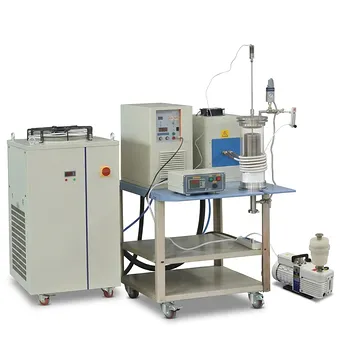
High Temperature Induction Melting System with Multi Cavity Crucible and 15KW Precision Digital Temperature Control
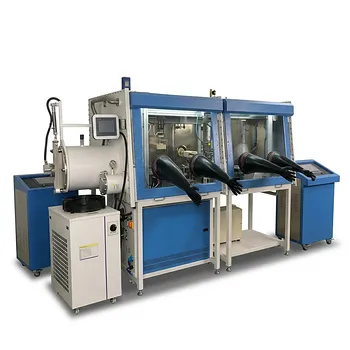
Automatic 10 Crucible Induction Melting and Casting System with Stirring Function and Glovebox Integration 2000C
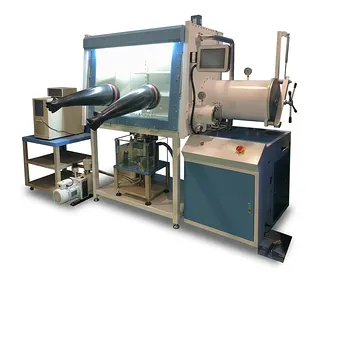
High Temperature Induction Melting System with Integrated Ultra High Purity Glove Box for Metallic Alloy Processing
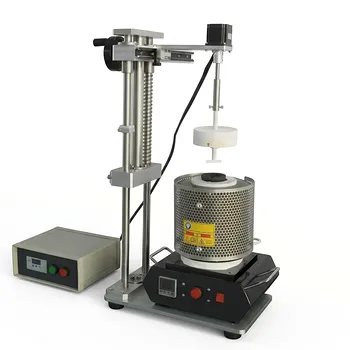
1100C Crucible Melting Furnace with Stirring Function for Glovebox and Air Sensitive Alloy Research
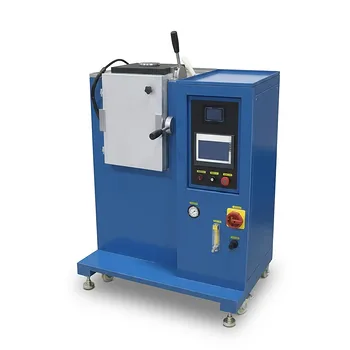
High Throughput Induction Melting and Casting Furnace for Superalloy Research 1700C Atmosphere Controlled Multi Sample System
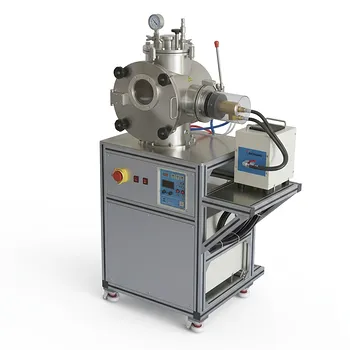
Induction Melting Casting Furnace 1750C Vacuum High Frequency Metal Processing Unit
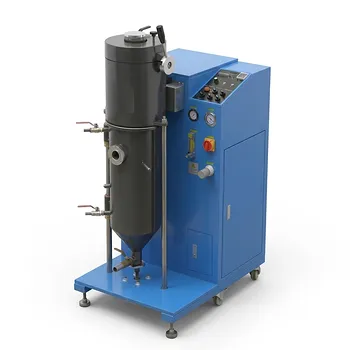
Atmosphere Controlled Induction Melting Granulating Casting Furnace 1500C 5kg Capacity
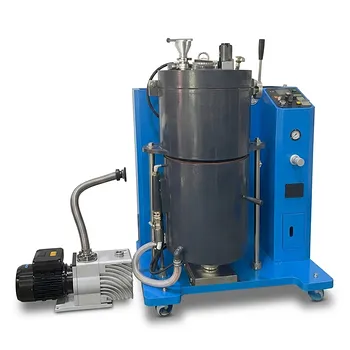
Atmosphere Controlled Induction Melting Casting System 1600C 10L Capacity
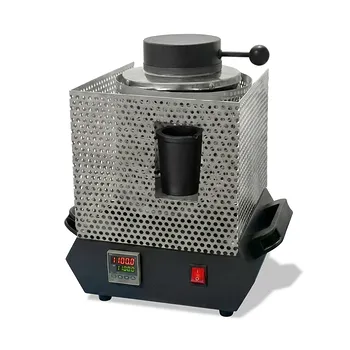
Compact Crucible Melting Furnace 1100C Programmable Temperature Controller Metal Sintering Equipment
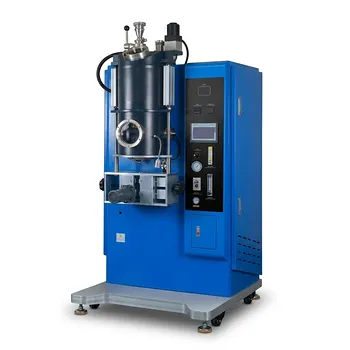
Atmosphere Controlled Continuous Casting Furnace with Secondary Charge Function for Induction Melting and Metal Alloy Wire Production
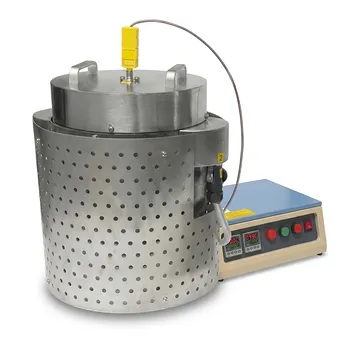
Vertical Crucible Furnace 1000C High Temperature Laboratory Equipment 4.7 Inch Diameter Chamber SS316 Anti Corrosive Enclosure
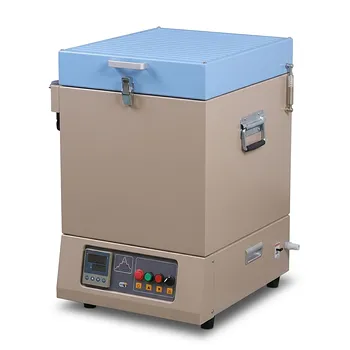
High Temperature Vertical Crucible Furnace with 22L Heating Chamber and 1200C Maximum Temperature