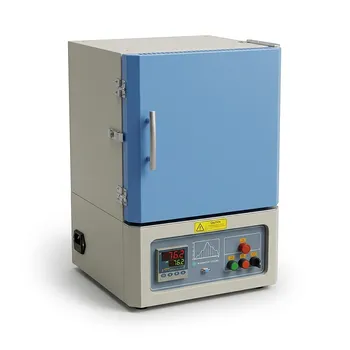
Why use an 800°C muffle furnace for K2CO3 biochar? Achieve superior pore structure & adsorption performance.
Updated 3 months ago
A high-temperature muffle furnace is the indispensable engine for chemical activation. It provides the precise, stable 800 °C thermal environment required for potassium carbonate ($K_2CO_3$) to catalyze the gasification of cellulose and react with the carbon matrix. This specific temperature range is critical for etching the carbon structure and clearing residual tars, resulting in the high surface area and porous architecture needed for effective pollutant adsorption.
Core Takeaway: The muffle furnace facilitates a high-energy chemical reaction where $K_2CO_3$ transforms raw biochar into a highly porous adsorbent by driving gasification and pore expansion at 800 °C. Without this sustained, controlled heat, the chemical agent cannot effectively etch the carbon skeleton or clear the internal pores necessary for capturing large molecular pollutants.
The Mechanism of $K_2CO_3$ Chemical Activation
Catalyzing Cellulose Gasification
At 800 °C, the muffle furnace provides the thermal energy necessary for potassium carbonate to act as a catalyst. This temperature triggers the gasification of cellulose, where the chemical agent facilitates the breakdown of biomass components into gaseous products.
Etching the Carbon Matrix
The activation process involves a direct chemical reaction between the $K_2CO_3$ and the carbon skeleton of the biochar. This reaction effectively "etches" the carbon structure, creating a complex network of internal pathways and cavities.
Refining Pore Morphology
The 800 °C environment ensures that the activation process penetrates the interior of the material rather than remaining on the surface. This deep penetration is essential for refining the morphological characteristics of the activated carbon, leading to a more efficient adsorbent.
Structural Optimization of the Biochar
Clearing Residual Tars and Intermediates
Lower-temperature carbonization often leaves behind residual tars and intermediate decomposition products that clog newly formed pores. The high energy of an 800 °C treatment is required to volatilize these substances, effectively "unplugging" the pore network to maximize accessibility.
Developing Microporous and Mesoporous Structures
The 800 °C heat treatment is the decisive step for expanding micropores and developing mesopores. These specific pore sizes are vital for the adsorption of large molecular pollutants, such as the antibiotic ciprofloxacin, which cannot fit into smaller, underdeveloped pores.
Increasing Specific Surface Area
By facilitating the complete thermal decomposition of lignin, cellulose, and hemicellulose, the furnace significantly increases the fixed carbon content. This structural refinement results in a massive jump in specific surface area compared to raw or low-temperature biochar.
The Necessity of a Controlled Furnace Environment
Oxygen-Limited Conditions
A muffle furnace allows for heat treatment under oxygen-limited or oxygen-free conditions. This is critical at 800 °C; otherwise, the carbon material would simply combust into ash rather than forming a porous carbon skeleton.
Precise Temperature Stability
The effectiveness of $K_2CO_3$ activation is highly temperature-dependent. The muffle furnace provides the thermal stability required to maintain 800 °C consistently, ensuring uniform pore development across the entire batch of material.
Understanding the Trade-offs
Energy Consumption vs. Adsorption Performance
Heating a furnace to 800 °C requires significant energy compared to lower-temperature processes (e.g., 300-500 °C). While 800 °C yields superior porosity, the operational costs must be weighed against the required adsorption performance for a specific application.
Risk of Over-Activation
Excessive time at 800 °C can lead to "over-activation," where the walls between pores begin to burn away. This causes pore coalescence, potentially collapsing the microporous structure and reducing the overall surface area.
Loss of Surface Functional Groups
Higher temperatures favor carbonization and pore growth but often result in the loss of oxygen-containing functional groups. If your goal is heavy metal adsorption via chemical bonding rather than physical trapping, a lower temperature might be more effective.
How to Apply This to Your Project
Making the Right Choice for Your Goal
- If your primary focus is adsorbing large organic molecules (like ciprofloxacin): Use the 800 °C muffle furnace treatment to maximize mesopore development and surface area.
- If your primary focus is preserving surface functional groups for heavy metal binding: Consider a lower temperature (300-500 °C) to prevent the complete deoxygenation of the biochar surface.
- If your primary focus is maximizing fixed carbon yield: Ensure the furnace environment is strictly oxygen-limited to prevent material loss through combustion at the 800 °C threshold.
The 800 °C muffle furnace treatment is the essential threshold for transforming inert char into a high-performance, $K_2CO_3$-activated adsorbent.
Summary Table:
| Activation Feature | Mechanism at 800 °C | Benefit to Biochar |
|---|---|---|
| Cellulose Gasification | Catalytic breakdown of biomass | Creates the initial porous skeleton |
| Carbon Etching | $K_2CO_3$ reacts with carbon matrix | Develops complex internal pathways |
| Pore Refinement | Deep penetration of activation agent | Expands micropores and mesopores |
| Tar Removal | Volatilization of residual substances | Unplugs pores for maximum accessibility |
| Atmosphere Control | Oxygen-limited environment | Prevents combustion and ensures high yield |
Elevate Your Material Research with THERMUNITS
Are you looking to achieve the precise 800 °C threshold required for high-performance biochar activation? THERMUNITS is a leading manufacturer of high-temperature laboratory equipment specifically designed for material science and industrial R&D.
We provide the thermal stability and atmospheric control necessary to transform raw materials into advanced adsorbents. Our comprehensive range of solutions includes:
- High-Precision Muffle & Atmosphere Furnaces
- Vacuum, Tube, and Rotary Furnaces
- CVD/PECVD Systems & Hot Press Furnaces
- Vacuum Induction Melting (VIM) & Dental Furnaces
- Electric Rotary Kilns & High-Quality Thermal Elements
Whether you are refining pore morphology or scaling up industrial heat treatments, our equipment ensures uniform results every time.
Contact THERMUNITS today to find the perfect furnace for your lab!
References
- V. Meseguer, Emmanuel Fuentes. Ciprofloxacin Uptake from an Aqueous Solution via Adsorption with K2CO3-Activated Biochar Derived from Brewing Industry Bagasse. DOI: 10.3390/pr12010199
Mentioned Products
- High Temperature 1500C Benchtop Muffle Furnace 3.6L Alumina Fiber Chamber Programmable Controller Sintering Annealing Carbonization Thermal Processing System
- 1800C Bench Top Muffle Furnace with Kanthal Super 1900 Heating Elements and 3.6L Alumina Fiber Chamber
- High Temperature 1800C Compact Muffle Furnace with Kanthal Super 1900 Heating Elements and 1.7L Alumina Chamber
- High Temperature Muffle Furnace with Dual Controllers and 36L Large Chamber 1700C Max
- 1800C Bench Top Muffle Furnace 18 Liters with Kanthal Super 1900 Heating Elements for High Purity Ceramic Sintering and Material Research
People Also Ask
- Why is annealing in a high-temperature muffle furnace necessary for SiO2/Si substrate pretreatment before monolayer WS2 synthesis?
- What is the purpose of using muffle or tube furnaces in glass synthesis? Achieve Precise Melt-Quenching & Homogeneity
- What is the role of a high-temperature muffle furnace in the synthesis of graphitic carbon nitride (g-C3N4)? - Guide
- What is the necessity of 950 °C muffle furnace for aluminate spinel supports? Achieve Phase Purity & Lattice Integration
- What is the function of a high-temp muffle furnace in Ni-V oxide synthesis? Optimize your material's performance.

Tech Team · ThermUnits
Last updated on Jun 03, 2026
Related Products
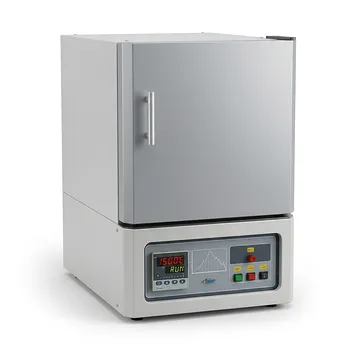
High Temperature 1500C Benchtop Muffle Furnace 3.6L Alumina Fiber Chamber Programmable Controller Sintering Annealing Carbonization Thermal Processing System
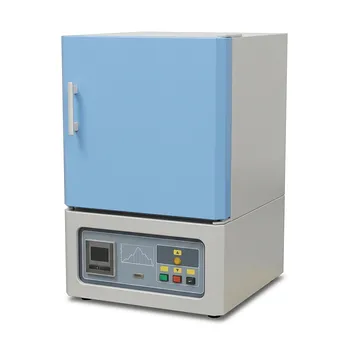
1800C Bench Top Muffle Furnace with Kanthal Super 1900 Heating Elements and 3.6L Alumina Fiber Chamber
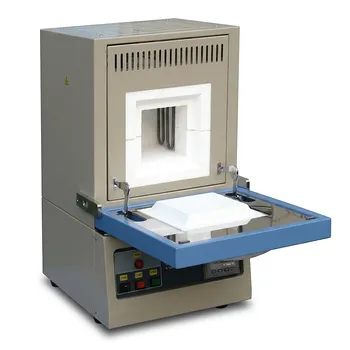
High Temperature 1800C Compact Muffle Furnace with Kanthal Super 1900 Heating Elements and 1.7L Alumina Chamber
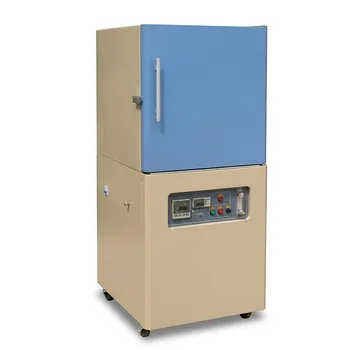
High Temperature Muffle Furnace with Dual Controllers and 36L Large Chamber 1700C Max
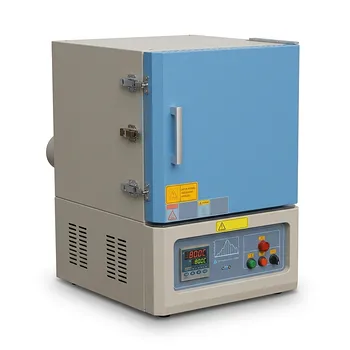
1800C Bench Top Muffle Furnace 18 Liters with Kanthal Super 1900 Heating Elements for High Purity Ceramic Sintering and Material Research
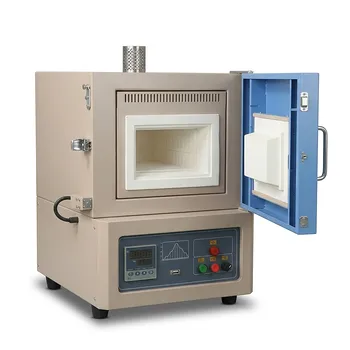
Anti Corrosive Muffle Furnace with Sintered Corundum Chamber and 1050C Operating Range for Corrosive Material Calcination
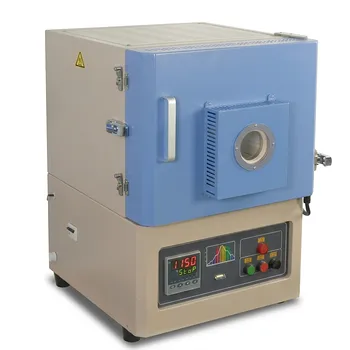
High Temperature Benchtop Muffle Furnace with Quartz Observation Window for Thermal Imaging and Material Analysis
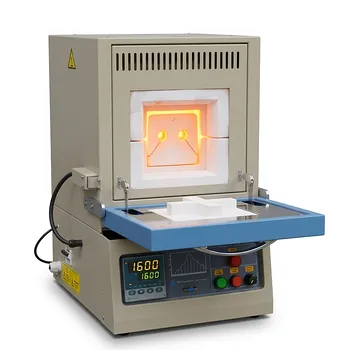
High Temperature Compact Muffle Furnace 1700 C with 30 Segment Programmable Controller and 1.7L Cubic Chamber
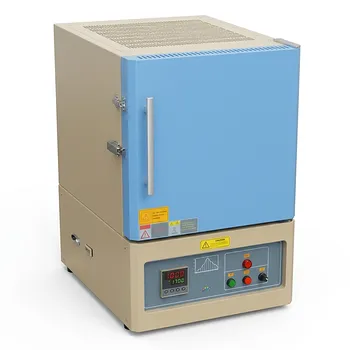
Large Bench Top 1700C High Temperature Muffle Furnace with 19L Chamber for Advanced Material Sintering and Annealing
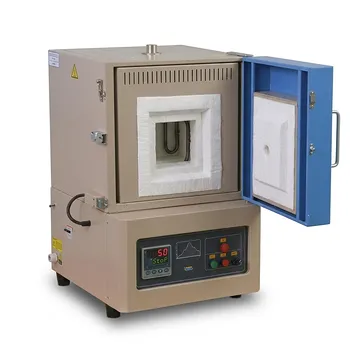
1800°C Bench Top Ultra High Temperature Muffle Furnace with Sapphire Observation Window and Top Feeding Port for Materials Research and Thermal Processing
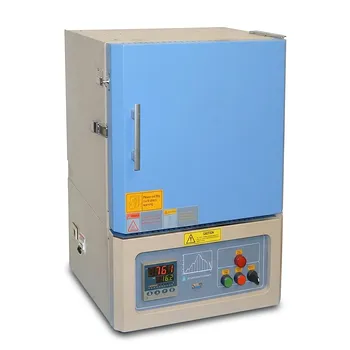
High Temperature 1700C Bench Top Muffle Furnace with Alumina Fiber Insulation and 3.6L Chamber Capacity for Precision Sintering and Heat Treatment
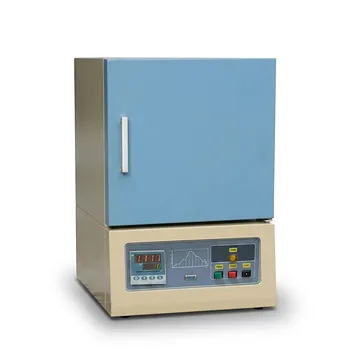
Ultra High Temperature Bench Top Muffle Furnace 1750C Sintering System with Kanthal Super Heating Elements and Precision Digital Control
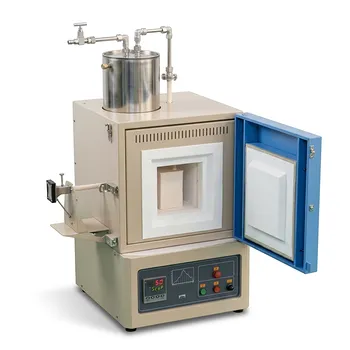
High Temperature Bench Top Muffle Furnace 1700C with Integrated Evaporating Particle Collection and 8x8x8 Alumina Fiber Chamber
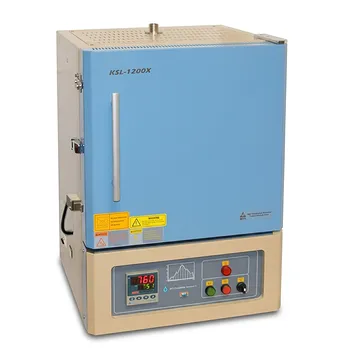
High Temperature 1200C Muffle Furnace 27L Volume 12x12x12 Chamber with Programmable PID Controller for Laboratory Material Science
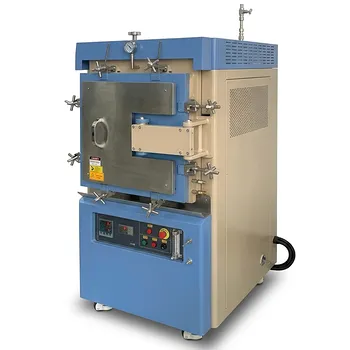
Atmosphere Controlled Muffle Furnace 1700C Maximum Temperature 80L High Capacity Vacuum Inert Gas Box Furnace
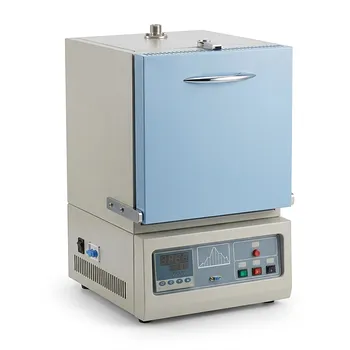
1750C Compact Muffle Furnace 1.7L Ultra High Temperature Laboratory Sintering System for Advanced Ceramics and Material Science Research
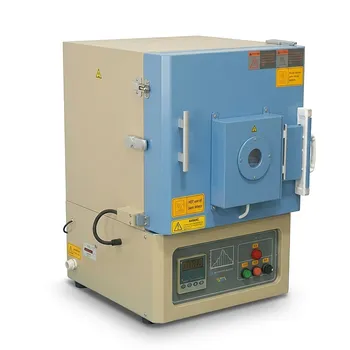
High Temperature Benchtop Muffle Furnace 1500C with 3.6L Chamber and Quartz Observation Window
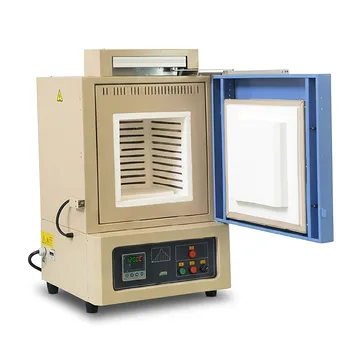
1200C High Temperature Muffle Furnace with Motorized Door and Automated PC Control for Industrial Sintering and Material Processing 27 Liter
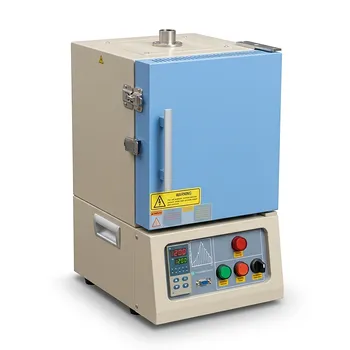
1200°C Small Box Furnace 4.2 Liter Programmable Muffle Furnace with High Purity Alumina Insulation and PID Control