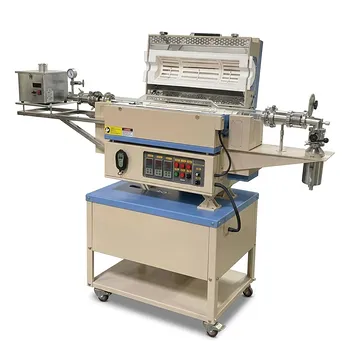
Why is a hydrogen-reducing atmosphere tube furnace required for Eu2+ silicate? Essential for Precise Valence Control.
Updated 3 months ago
The necessity of a hydrogen-reducing atmosphere tube furnace stems from the chemical instability of divalent Europium ($Eu^{2+}$) in oxygen-rich environments. While Europium naturally exists as trivalent ($Eu^{3+}$) in air, the photochromic properties of silicate materials depend entirely on $Eu^{2+}$ acting as the active center for electron trapping. A specialized tube furnace provides the high temperatures and precisely controlled hydrogen-nitrogen gas mixtures required to chemically reduce these ions and stabilize them within the material's crystal lattice.
Core Takeaway: To achieve photochromism in silicates, Europium must be forced from its stable $Eu^{3+}$ state into an active $Eu^{2+}$ state. This transformation requires a strictly controlled, high-temperature reducing environment that only an atmosphere-integrated tube furnace can provide.
The Chemical Necessity of the Reducing Atmosphere
Forcing the Valence State Transition
In a standard air environment, Europium ions are almost exclusively trivalent ($Eu^{3+}$). However, the specific optical properties and electron-trapping capabilities required for photochromic effects are exclusive to the divalent ($Eu^{2+}$) state.
The hydrogen gas ($H_2$) introduced into the tube furnace acts as a reducing agent. At high temperatures, it facilitates the chemical reaction that converts $Eu^{3+}$ to $Eu^{2+}$, which is the critical "active center" for the material’s functionality.
Preventing Re-oxidation
$Eu^{2+}$ is highly sensitive to oxygen and will naturally revert to $Eu^{3+}$ if exposed to air at high temperatures. The sealed environment of a tube furnace allows for the total displacement of oxygen using inert gases like Nitrogen or Argon mixed with a specific volume of Hydrogen (typically a 5% $H_2$ / 95% $N_2$ or Ar ratio).
Precision Control of the Thermal Environment
Temperature and Lattice Formation
The reduction process often requires extreme temperatures, sometimes reaching 1300°C or higher, to ensure the silicate matrix forms the correct crystal structure. Precise temperature curve control ensures the matrix (such as a tetragonal structure) develops correctly, which is essential for housing the reduced Europium ions.
This thermal energy does more than just heat the sample; it promotes the generation of afterglow trap energy levels. These "traps" are what allow the material to capture and release electrons, the fundamental mechanism behind photochromic and luminescent performance.
Gas Partial Pressure and Flow Regulation
A tube furnace allows for the regulation of the partial pressure of the reducing gas. By controlling the flow rate, researchers can ensure that the reduction happens uniformly throughout the sample without "over-sintering" or damaging the delicate silicate structure.
Understanding the Trade-offs and Pitfalls
The Risk of Over-Reduction or Sintering
While a strong reducing atmosphere is necessary, excessive hydrogen or poorly regulated temperatures can lead to over-sintering. This can reduce the surface area of the material or cause the metal ions to aggregate, which degrades the optical clarity and responsiveness of the photochromic silicate.
Equipment Sensitivity and Safety
Using hydrogen at high temperatures introduces significant safety risks, including the potential for combustion if the furnace is not perfectly sealed. Furthermore, precise atmosphere control requires high-quality sensors; any oxygen leakage into the tube during the cooling phase can immediately re-oxidize the $Eu^{2+}$ back to $Eu^{3+}$, rendering the batch useless.
Making the Right Choice for Your Goal
To successfully prepare $Eu^{2+}$-doped silicate materials, your processing strategy must align with your specific performance requirements:
- If your primary focus is maximum photochromic sensitivity: Use a higher concentration of hydrogen and a longer soaking time at peak temperature to ensure the highest possible conversion rate of $Eu^{3+}$ to $Eu^{2+}$.
- If your primary focus is material durability and transparency: Prioritize a precise temperature ramp-down and a strictly inert atmosphere during cooling to prevent the formation of structural defects or surface oxidation.
- If your primary focus is large-scale consistency: Ensure your tube furnace has high-precision mass flow controllers to maintain a constant $H_2/N_2$ ratio throughout the entire sintering cycle.
The successful synthesis of $Eu^{2+}$ silicate photochromics is ultimately a balance between aggressive chemical reduction and the delicate preservation of the host crystal lattice.
Summary Table:
| Key Feature | Functional Role | Critical Benefit |
|---|---|---|
| Reducing Atmosphere | Facilitates $Eu^{3+} \to Eu^{2+}$ reduction | Creates photochromic active centers |
| Oxygen Exclusion | Uses $H_2/N_2$ mixtures to seal environment | Prevents $Eu^{2+}$ from re-oxidizing |
| High-Temp Control | Reaches and stabilizes 1300°C+ | Ensures correct crystal lattice formation |
| Gas Flow Regulation | Controls partial pressure of $H_2$ | Ensures uniform reduction without over-sintering |
Elevate Your Advanced Material Research with THERMUNITS
As a leading manufacturer of high-temperature laboratory equipment, THERMUNITS provides the precision tools required for complex material synthesis. Whether you are developing $Eu^{2+}$-doped photochromic silicates or advanced industrial alloys, our Atmosphere and Tube Furnaces deliver the rigorous atmosphere control and thermal stability your R&D demands.
Our comprehensive range of thermal processing solutions includes:
- Atmosphere, Tube, and Vacuum Furnaces for precise valence control.
- Muffle, Rotary, and Hot Press Furnaces for diverse heat treatments.
- CVD/PECVD Systems and Vacuum Induction Melting (VIM) furnaces.
- Specialized Dental Furnaces and high-quality Thermal Elements.
Ensure consistent, high-performance results for your material science projects. Contact THERMUNITS experts today to discuss your specific furnace requirements and optimize your laboratory's capabilities.
References
- Guna Krieķe, Aleksej Žarkov. Matrix-dependent high-contrast photochromism in Eu-doped M <sub>3</sub> MgSi <sub>2</sub> O <sub>8</sub> (M = Ca, Sr, Ba). DOI: 10.1039/d4tc03091e
Mentioned Products
- High Temperature Hydrogen Atmosphere Box Furnace 1650C Max Reducing Environment Material Synthesis System 8x8x8 Chamber
- 1100C Hydrogen Gas Atmosphere Tube Furnace with 5 Inch Fused Quartz Tube and Integrated Safety Monitoring System
- High Temperature 1000C Hydrogen Vertical Quenching Furnace with 4 Inch Stainless Steel Tube
- 1200C Hydrogen Atmosphere Box Furnace with 5 Heated Sides and 64L Chamber
- 1100C Dual Zone Hydrogen Gas Tube Furnace with Quartz Tube and Integrated H2 Leak Detection System
People Also Ask
- What is the role of a high-temperature box furnace in the solid-state synthesis of Europium-doped M3MgSi2O8 phosphors?
- What is the role of a high-temperature box furnace in Na3MnZr(PO4)3 synthesis? Engineering High-Performance NASICON.
- What role does an industrial-grade high-temperature furnace play in C2F sintering? Achieve Pure Phase and High Strength
- Why is a high-temperature box furnace required for 1250°C ferrite calcination? Ensure Precise Phase Transformation.
- How does a high-temp box furnace aid rare-earth oxysulfide phosphor synthesis? Enhance Purity & Luminescence

Tech Team · ThermUnits
Last updated on Jun 03, 2026
Related Products
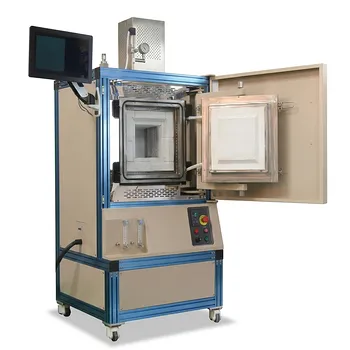
High Temperature Hydrogen Atmosphere Box Furnace 1650C Max Reducing Environment Material Synthesis System 8x8x8 Chamber
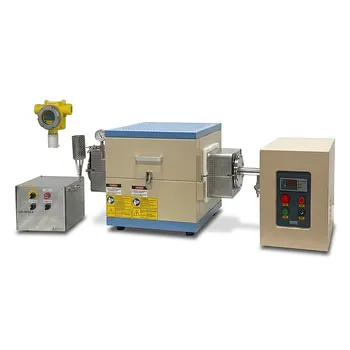
1100C Hydrogen Gas Atmosphere Tube Furnace with 5 Inch Fused Quartz Tube and Integrated Safety Monitoring System
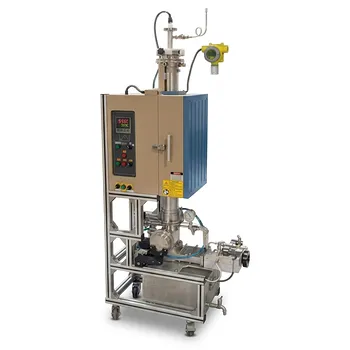
High Temperature 1000C Hydrogen Vertical Quenching Furnace with 4 Inch Stainless Steel Tube
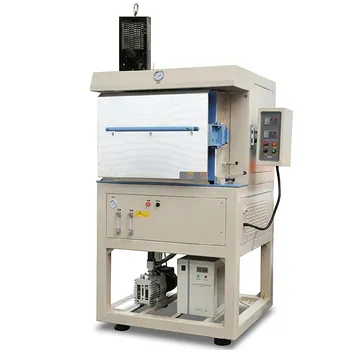
1200C Hydrogen Atmosphere Box Furnace with 5 Heated Sides and 64L Chamber
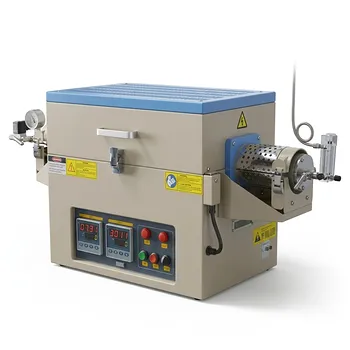
1100C Dual Zone Hydrogen Gas Tube Furnace with Quartz Tube and Integrated H2 Leak Detection System
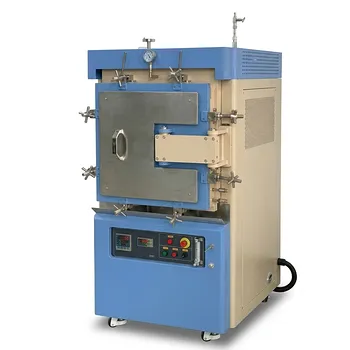
High Temperature Economic Hydrogen Gas Box Furnace 1600C Atmosphere Controlled Thermal Processing System 65L Capacity
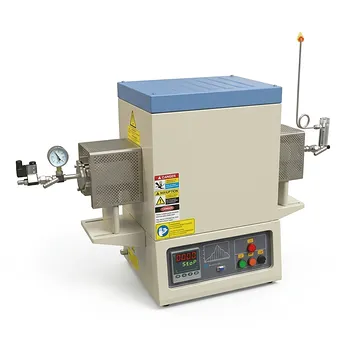
1700C Hydrogen Gas Tube Furnace with 60mm Alumina Process Tube and Integrated Hydrogen Safety Detector
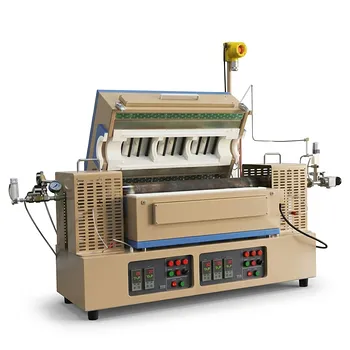
Three Zone Hydrogen Gas Tube Furnace with 82mm Superalloy Tube and Dual Hydrogen Detectors 1200C High Temperature Material Processing System
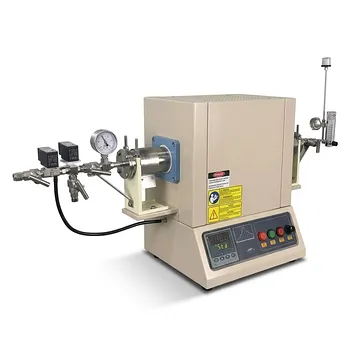
1500C Compact Hydrogen Gas Tube Furnace with 2 Inch Alumina Tube and Hydrogen Detector

Compact Vertical Split Quartz Tube Furnace with Stainless Steel Vacuum Flanges for Rapid Thermal Quenching and Controlled Atmosphere Material Processing

Vertical 1700C Vacuum and Atmosphere Tube Furnace with 80mm Alumina Tube
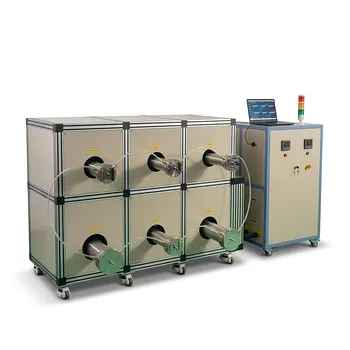
1200C Max 6 Channel High Cleanliness Hydrogen Furnace for High Throughput Annealing
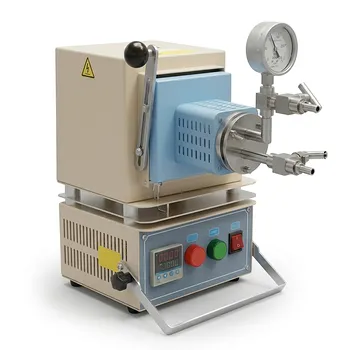
Compact Hybrid Muffle and Tube Furnace for 1000C Controlled Atmosphere Laboratory Material Sintering
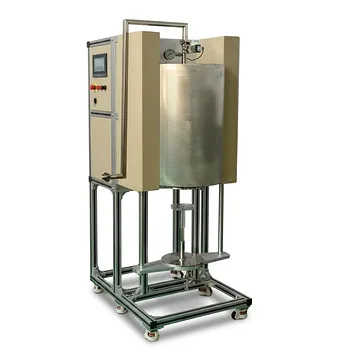
1200°C Atmosphere Controlled Automatic Bottom Loading Furnace with 6 Inch Quartz Tube
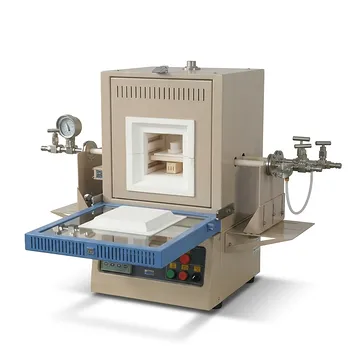
1700C Compact Hybrid Furnace with Dual Layer Box Sintering and Controlled Atmosphere Alumina Tubes
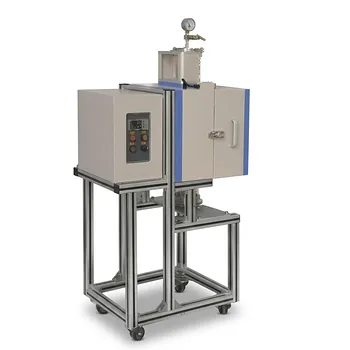
1200°C 5 Inch Vertical Quartz Tube Furnace with Stainless Steel Vacuum Flanges

High Temperature 1700C Vertical Tube Furnace for Powder Spherification and Material Sintering

Compact High Temperature 1600C Tube Furnace with 50mm Alumina Tube and Vacuum Flanges for Material Sintering
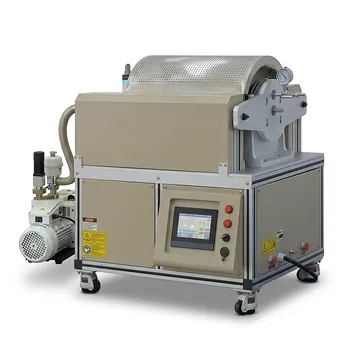
Automated 1200 C Tube Furnace for AI Material Research with 6 Inch OD and Sliding Flange