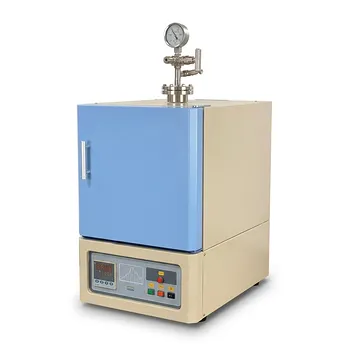
What role does an industrial-grade high-temperature furnace play in C2F sintering? Achieve Pure Phase and High Strength
Updated 5 months ago
Industrial-grade high-temperature furnaces serve as the primary reaction environment for dicalcium ferrite (C2F) synthesis, providing the precise thermal energy required for solid-phase diffusion. By maintaining a stable temperature of 1000 °C for up to 6 hours, these furnaces ensure that iron oxide and calcium oxide completely restructure into a pure-phase crystal. This process is the fundamental step in producing oxygen carriers with the mechanical strength and cyclic stability required for industrial applications.
Core Takeaway: The furnace acts as a precision reactor that drives the solid-state transformation of raw oxides into a stable, pure-phase dicalcium ferrite structure. Its ability to balance temperature, time, and atmosphere is what determines the material’s final mechanical integrity and chemical reactivity.
Driving Solid-Phase Transformation and Crystallization
Facilitating Complete Chemical Reaction
The primary role of the furnace is to provide a stable high-temperature field (typically 1000 °C) that allows iron oxide and calcium oxide to react. This thermal energy enables atomic diffusion, allowing the raw materials to overcome energy barriers and restructure into the dicalcium ferrite ($Ca_2Fe_2O_5$) phase.
Ensuring Phase Purity
By maintaining a consistent temperature for extended durations (up to 6 hours), the furnace prevents the formation of intermediate or incomplete phases. This precision is critical for obtaining a pure-phase crystal structure, which is the "core step" in ensuring the material performs predictably during chemical looping or oxygen transport.
Pre-Sintering Preparation
In many workflows, the furnace also handles the calcination and decarbonization of raw materials like calcium carbonate. By providing a stable environment (often around 900 °C), the furnace converts carbonates into high-activity free calcium oxide, which is essential for the subsequent sintering of high-quality dicalcium ferrite.
Atmosphere Management and Phase Integrity
Preventing Unintended Redox Reactions
In an atmosphere furnace, the equipment manages the chemical environment to prevent unintended oxidation or reduction of the iron components. This controlled setting is the physical foundation for maintaining crystalline phase purity and inhibiting the generation of unwanted impurities that could degrade the oxygen carrier's performance.
Regulating Microstructural Evolution
The furnace environment regulates the oxygen partial pressure, which influences how grains grow and how pores are eliminated. This level of control is necessary to achieve a high-density, fine-grained structure, which directly impacts the material's ability to withstand repeated thermal cycles without fracturing.
Engineering Mechanical Strength and Stability
Promoting Densification via Diffusion
High-temperature sintering drives the densification of the ceramic through grain boundary migration and the formation of "sintering necks" between particles. This process eliminates internal pores and creates a robust framework, resulting in a synthetic carrier with high mechanical strength.
Balancing Surface Area and Strength
The furnace allows for the precise regulation of the heating rate and holding time, which is vital for balancing structural integrity with reactivity. An expert operator uses the furnace to ensure adequate framework strength while preventing premature grain coarsening that would reduce the material’s specific surface area.
Understanding the Trade-offs
Temperature vs. Grain Growth
While higher temperatures promote faster densification, excessive heat can lead to abnormal grain growth. If grains become too large (coarsening), the material may lose its high specific surface area, making it less effective as an oxygen carrier despite being physically strong.
Sintering Time vs. Energy Efficiency
Longer dwell times ensure phase purity and complete reaction, but they also increase energy consumption and production costs. Finding the "sweet spot"—such as the 6-hour window mentioned in the primary reference—is essential to prevent pore closure that might trap gases inside the material.
Atmosphere Sensitivity
Operating in a standard box furnace (air atmosphere) is simpler but risks phase instability for certain substituted ferrites. Using a dedicated atmosphere furnace provides better control but introduces complexity in gas management and higher equipment capital costs.
How to Apply This to Your Project
When selecting or operating a furnace for dicalcium ferrite production, your parameters should align with your specific performance requirements.
- If your primary focus is Phase Purity: Prioritize a furnace with high thermal uniformity and a long dwell time (6+ hours) at 1000 °C to ensure the complete restructuring of oxides.
- If your primary focus is Mechanical Durability: Focus on the cooling and heating rates (e.g., controlled 8°C/min) to promote densification and prevent thermal shock or micro-cracking.
- If your primary focus is High Reactivity: Target a lower sintering temperature or shorter duration to prevent grain coarsening, maintaining a high specific surface area for better gas-solid interaction.
The high-temperature furnace is not merely a heat source, but a precision tool that dictates the crystalline and structural DNA of the dicalcium ferrite carrier.
Summary Table:
| Key Furnace Function | Technical Process | Final Material Benefit |
|---|---|---|
| Thermal Stability | Drives solid-phase diffusion at 1000°C | Ensures pure-phase crystal structure |
| Atmosphere Control | Prevents unintended redox reactions | Maintains chemical integrity and purity |
| Precision Dwell Time | Regulates grain boundary migration | Balances mechanical strength and reactivity |
| Controlled Cooling | Manages microstructural evolution | Prevents thermal shock and micro-cracking |
Optimize Your Material Synthesis with THERMUNITS
Achieving the perfect dicalcium ferrite structure requires the thermal precision that only industry-leading equipment can provide. THERMUNITS is a premier manufacturer of high-temperature laboratory equipment specifically designed for material science and industrial R&D. We empower researchers and engineers to master complex heat treatments with unmatched control.
Our extensive product portfolio includes:
- Muffle, Vacuum, and Atmosphere Furnaces for precise sintering.
- Tube and Rotary Furnaces for continuous processing.
- Hot Press and CVD/PECVD Systems for advanced material engineering.
- Vacuum Induction Melting (VIM) and Dental Furnaces for specialized applications.
Why Partner with THERMUNITS? Whether you are focusing on phase purity, mechanical durability, or high reactivity, our thermal solutions provide the uniformity and stability necessary for repeatable, high-quality results.
Ready to elevate your lab's capabilities? Contact THERMUNITS Today to discuss your specific heat treatment requirements!
References
- Made Santihayu Sukma, Stuart A. Scott. Dicalcium ferrite: A chemical heat pump in integrated carbon capture and chemical looping combustion for the steel industry. DOI: 10.1016/j.cej.2024.150658
Mentioned Products
- High Temperature 1700℃ Eight Chamber Box Furnace with Automatic Doors for Autonomous Material Research and High Throughput Heat Treatment
- 1650C High Temperature Atmosphere Controlled Box Furnace with 65L Chamber for Advanced Material Sintering and Industrial Heat Treatment
- Automated 1700C High Temperature Bottom Loading Box Furnace with PC Software Control and Robotic Integration Capability
- 1700C Box Furnace with Sliding Platform for Rapid Heating and Cooling High Temperature Thermal Processing System
- High Temperature Four Chamber Box Furnace for High Throughput Materials Research and Space Saving Thermal Processing
People Also Ask
- What is the role of a high-temperature box furnace in the solid-state synthesis of Europium-doped M3MgSi2O8 phosphors?
- What is the role of a high-temperature box furnace in Na3MnZr(PO4)3 synthesis? Engineering High-Performance NASICON.
- Why is a high-temperature box furnace required for 1250°C ferrite calcination? Ensure Precise Phase Transformation.
- How does a high-temp box furnace aid rare-earth oxysulfide phosphor synthesis? Enhance Purity & Luminescence
- Why is an industrial high-temperature box furnace used for the pre-sintering of calcium silicate carriers? Key Benefits

Tech Team · ThermUnits
Last updated on Apr 14, 2026
Related Products
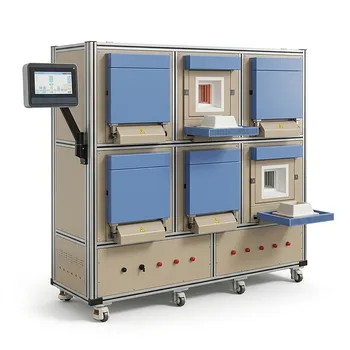
High Temperature 1700℃ Eight Chamber Box Furnace with Automatic Doors for Autonomous Material Research and High Throughput Heat Treatment
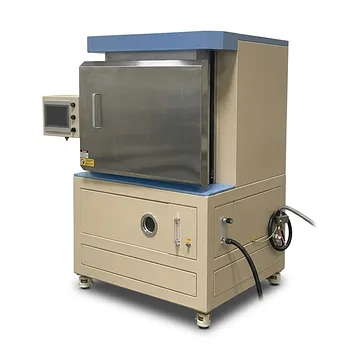
1650C High Temperature Atmosphere Controlled Box Furnace with 65L Chamber for Advanced Material Sintering and Industrial Heat Treatment
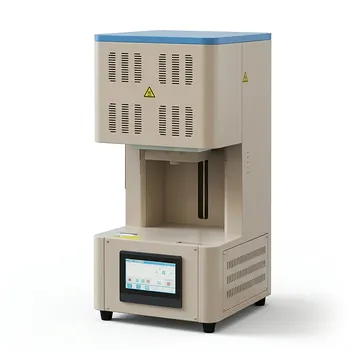
Automated 1700C High Temperature Bottom Loading Box Furnace with PC Software Control and Robotic Integration Capability
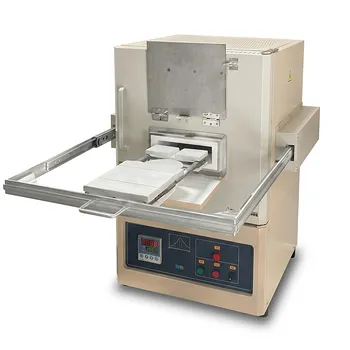
1700C Box Furnace with Sliding Platform for Rapid Heating and Cooling High Temperature Thermal Processing System
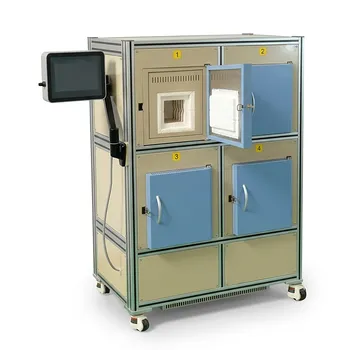
High Temperature Four Chamber Box Furnace for High Throughput Materials Research and Space Saving Thermal Processing
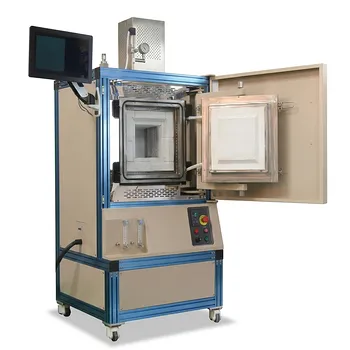
High Temperature Hydrogen Atmosphere Box Furnace 1650C Max Reducing Environment Material Synthesis System 8x8x8 Chamber
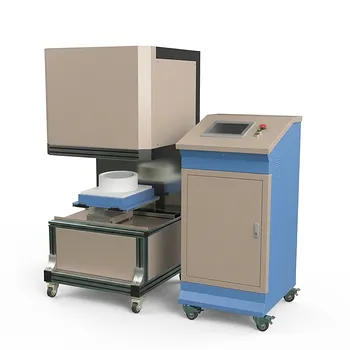
High Temperature Bottom Loading Box Furnace for Rapid Thermal Processing 1700C 40L Capacity
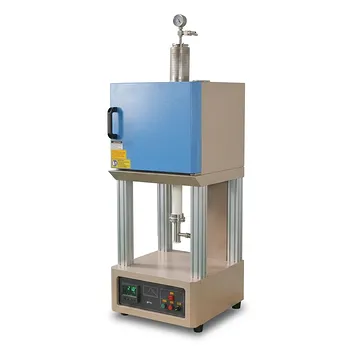
Hybrid High Temperature Tube and Box Furnace 1700C with 2 Inch Alumina Tube for Material Research
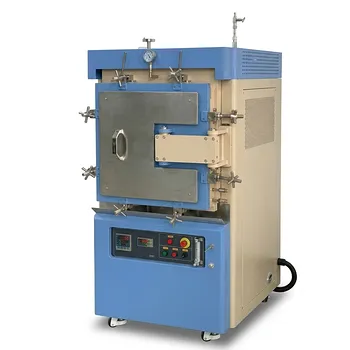
High Temperature Economic Hydrogen Gas Box Furnace 1600C Atmosphere Controlled Thermal Processing System 65L Capacity
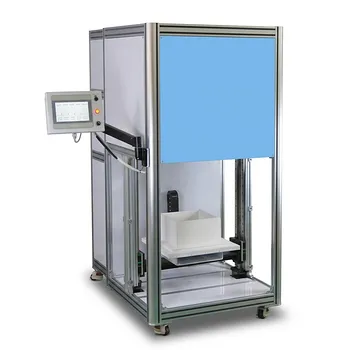
High Temperature 1600°C Three Zone Heated Bottom Loading Box Furnace with Rapid Thermal Processing Chamber 72L Volume
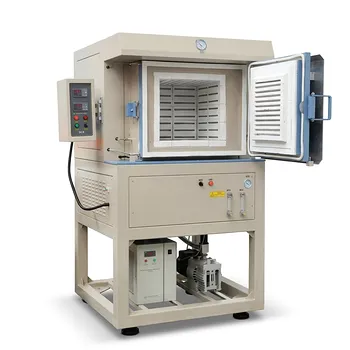
1200°C Five Side Heating Atmosphere Controlled Muffle Furnace 64 Liter High Uniformity Box Furnace for Material Synthesis
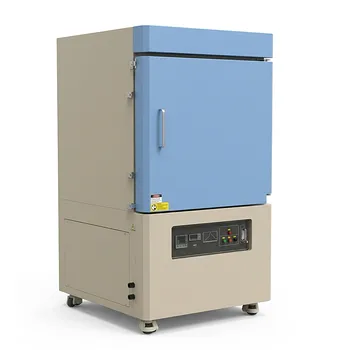
Industrial Large Box Furnace 1700C 216L High Temp Muffle Sintering System
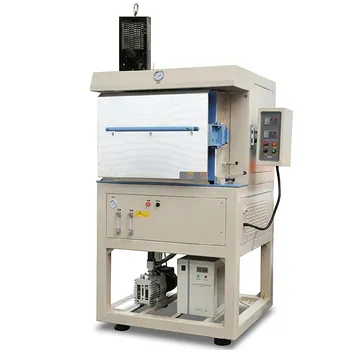
1200C Hydrogen Atmosphere Box Furnace with 5 Heated Sides and 64L Chamber
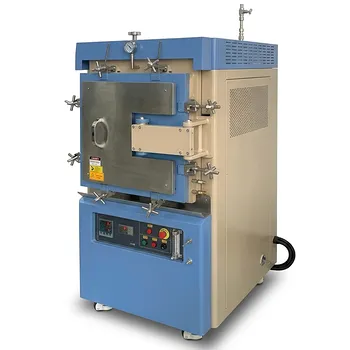
Atmosphere Controlled Muffle Furnace 1700C Maximum Temperature 80L High Capacity Vacuum Inert Gas Box Furnace

High Temperature 1700C Tube Furnace with High Vacuum Turbomolecular Pump System and Multi Channel Mass Flow Controller Gas Mixer
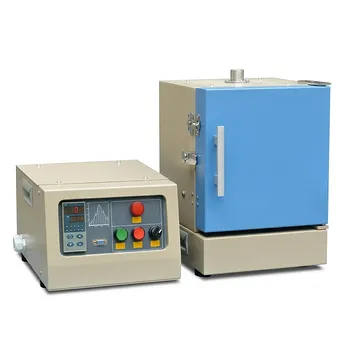
1200C Small Box Muffle Furnace with Separated Programmable Controller and 4.2L Alumina Fiber Chamber

High Temperature Tube Furnace 1500C with Sliding Flanges and 50mm OD for Rapid Thermal Processing Fast Heating and Cooling
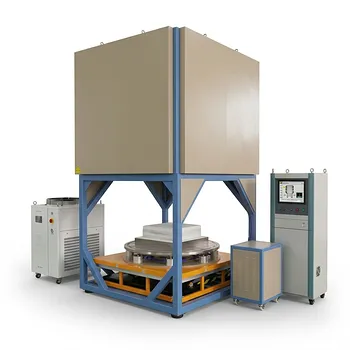
Bottom Loaded Inert Gas Atmosphere Box Furnace 1700C 1300C 216L Large Capacity Industrial Thermal Processing System
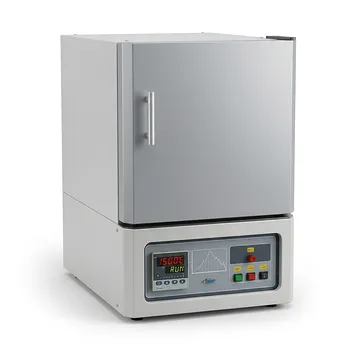
High Temperature 1500C Benchtop Muffle Furnace 3.6L Alumina Fiber Chamber Programmable Controller Sintering Annealing Carbonization Thermal Processing System