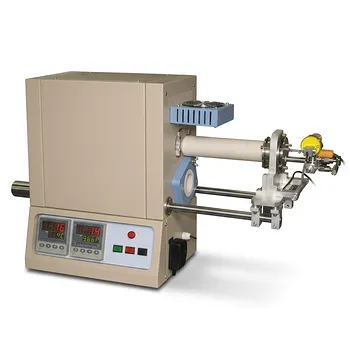
What role does a laboratory tube furnace play in Mossbauer source preparation? Optimizing Thermal Diffusion & Integration
Updated 3 months ago
For Mössbauer source preparation, a laboratory tube furnace acts as the primary thermal engine for ion diffusion. It provides the high-temperature environment (typically between 1100 and 1150 °C) required for post-deposition heat treatment. This process allows radioactive 57Co ions to migrate from the surface into the crystal lattice of the metal matrix, creating an irreversible bond that forms a stable radioactive source.
The tube furnace is the critical hardware required to transform a surface-level deposition into a structurally integrated radioactive source by providing the precise thermal energy needed for solid-state diffusion.
The Mechanism of Thermal Diffusion in Source Preparation
Achieving Lattice Integration
The primary role of the furnace is to facilitate the movement of 57Co ions into the host metal lattice. Without this thermal energy, the radionuclides would remain as a superficial layer, susceptible to physical loss or inconsistent emission.
Reaching Critical Temperatures
Diffusion in these specific metallic substrates requires extreme heat, usually ranging from 1100 to 1150 °C. The tube furnace maintains these temperatures steadily to ensure that the diffusion depth is sufficient for a long-lasting, stable source.
Forming Irreversible Bonds
The high-temperature annealing process ensures that the radioactive ions become an intrinsic part of the solid substrate. This results in a stable radioactive source where the radionuclides are no longer just "on" the material but "in" the material.
The Importance of Controlled Environments
Atmosphere Regulation and Inert Protection
A high-quality tube furnace allows for the introduction of inert gases, such as argon, into the sealed furnace tube. This is vital to prevent the oxidation of the metal matrix, which would otherwise compromise the integrity of the source.
Temperature Field Uniformity
For successful diffusion, the temperature must be consistent across the entire sample. Tube furnaces provide a linear heating space with high field uniformity, ensuring that the 57Co ions diffuse evenly across the matrix.
Eliminating Internal Processing Stresses
Beyond diffusion, the thermal treatment helps in researching phase transition kinetics and eliminating internal stresses within the substrate. This produces a more physically robust and predictable radioactive source.
Understanding the Trade-offs and Pitfalls
The Risk of Thermal Gradients
If a furnace lacks high-precision control, thermal gradients can lead to uneven diffusion. This results in a "patchy" radioactive source, which produces inconsistent data during Mössbauer spectroscopy experiments.
Oxidation and Seal Integrity
The reliance on high temperatures means that even a minor failure in the furnace seals can introduce oxygen. Oxidation at 1100 °C can destroy the sample or trap radioactive ions in an oxide layer rather than the metal lattice.
Cooling Rate Management
The process doesn't end when the heating stops; the cooling phase is equally critical. Rapid, uncontrolled cooling can introduce new lattice stresses, potentially leading to the fracturing of the source or the matrix.
How to Apply This to Your Project
When selecting or operating a tube furnace for radioactive source preparation, your technical approach should align with your specific material requirements:
- If your primary focus is Maximum Source Stability: Ensure the furnace can maintain a steady temperature of at least 1150 °C for extended soaking periods to maximize diffusion depth.
- If your primary focus is Preventing Sample Contamination: Prioritize a furnace with a highly sealed quartz or ceramic tube and a high-precision gas flow system for argon protection.
- If your primary focus is Precise Spectral Resolution: Focus on the uniformity of the temperature field to ensure the radioactive ions are distributed evenly throughout the lattice.
By mastering the thermal and atmospheric variables within the tube furnace, you ensure the creation of a stable, high-quality radioactive source for precise scientific analysis.
Summary Table:
| Feature | Role in Source Preparation | Key Benefit |
|---|---|---|
| High-Temp Range | Provides 1100–1150°C for solid-state diffusion | Forms irreversible, stable radioactive bonds |
| Atmosphere Control | Enables argon/inert gas protection | Prevents matrix oxidation and sample degradation |
| Thermal Uniformity | Ensures even linear heating across the sample | Results in consistent radionuclide distribution |
| Stress Relief | Eliminates internal processing stresses | Improves physical robustness and spectral clarity |
Optimize Your Material Research with THERMUNITS Precision
At THERMUNITS, we understand that critical processes like Mössbauer source preparation require absolute thermal accuracy. As a leading manufacturer for material science and industrial R&D, we offer a comprehensive range of thermal solutions, including Tube, Vacuum, Atmosphere, and Muffle furnaces, as well as CVD/PECVD systems and VIM furnaces.
Whether you are focusing on lattice integration or preventing sample contamination, our high-performance equipment ensures the stability and precision your analysis demands.
Ready to elevate your heat treatment capabilities? Contact THERMUNITS today for a customized thermal solution!
References
- René Vondrášek, Vít Procházka. Preparation of specific-purpose 57Co radiation sources for specialised Mössbauer techniques. DOI: 10.1007/s10967-024-09923-7
Mentioned Products
- Multi Position Tube Furnace 1100C for Laboratory Material Research and Advanced Industrial Thermal Processing
- Ten Zone Multi Orientation Laboratory Tube Furnace for 1200C High Temperature Gradient Thermal Processing
- High Temperature 1200C Split Tube Furnace with Hinged Vacuum Flanges and 4 Inch Quartz Tube for Laboratory Research
- 1100°C Vertical Laboratory Furnace for DIY Tubular Reactors with PID Temperature Controller
- High Temperature Automated 5 Inch Tube Furnace for Autonomous Material Research and Advanced Laboratory R&D
People Also Ask
- Why use a tube furnace for oxygen annealing LaCrO3/LaMnO3? Optimize Phase Transition & Magnetic Performance.
- What key role does a laboratory high-temperature tube furnace play in the production of carbon nanofibers? Guide
- How is a laboratory high-temperature tube furnace utilized to research the products of aluminothermic reduction? Advanced Metallurgical Solutions
- What is the role of a laboratory tube furnace in the carbonization process of porous carbon foam (PCF)? Master 3D Synthesis
- What role does a laboratory tube furnace play in the pyrolysis and carbonization of biomass? Optimize Thermal Research.

Tech Team · ThermUnits
Last updated on Jun 03, 2026
Related Products
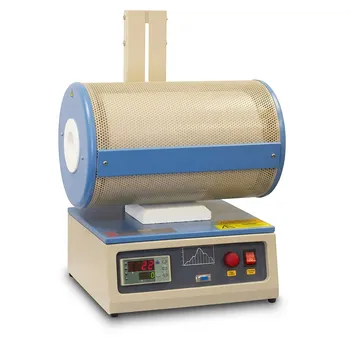
Multi Position Tube Furnace 1100C for Laboratory Material Research and Advanced Industrial Thermal Processing
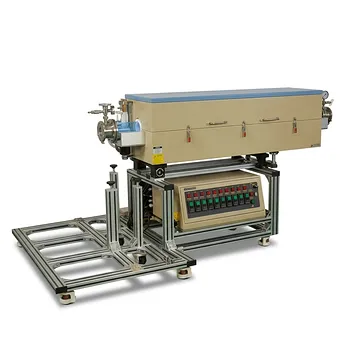
Ten Zone Multi Orientation Laboratory Tube Furnace for 1200C High Temperature Gradient Thermal Processing
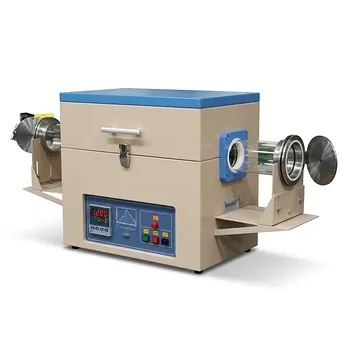
High Temperature 1200C Split Tube Furnace with Hinged Vacuum Flanges and 4 Inch Quartz Tube for Laboratory Research
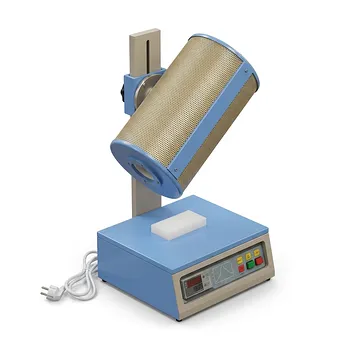
1100°C Vertical Laboratory Furnace for DIY Tubular Reactors with PID Temperature Controller

High Temperature Automated 5 Inch Tube Furnace for Autonomous Material Research and Advanced Laboratory R&D
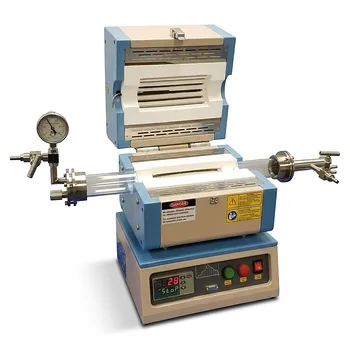
Compact Split Tube Furnace with Integrated Vacuum System and Precision Temperature Calibrator

1800C High Temperature Compact Vacuum Tube Furnace with 60mm OD Alumina Tube and Kanthal MoSi2 Heating Elements
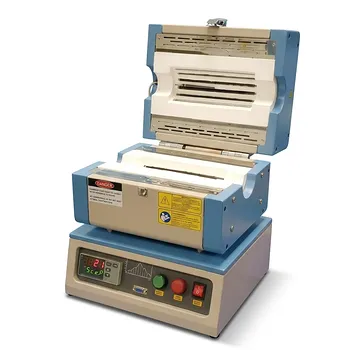
1250C Compact Split Tube Furnace with 8 Inch Heating Zone and Programmable Controller
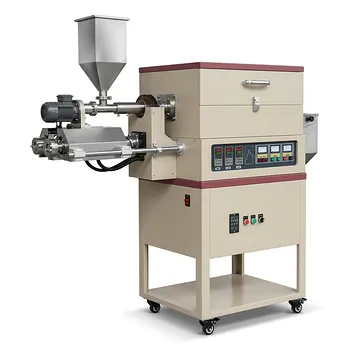
Laboratory Tilting Rotary Tubular Furnaces for Material Science and Industrial Heat Treatment
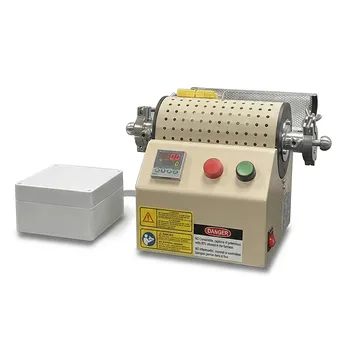
1000C Mini Tube Furnace with 20mm Quartz Tube and Vacuum Flanges for Material Science Research and Controlled Atmosphere Small Sample Processing
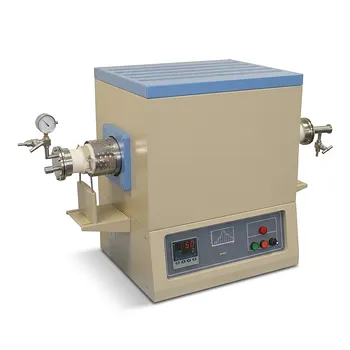
1700C High Temperature Alumina Tube Furnace with 18 Inch Heated Zone and Vacuum Sealing Flanges
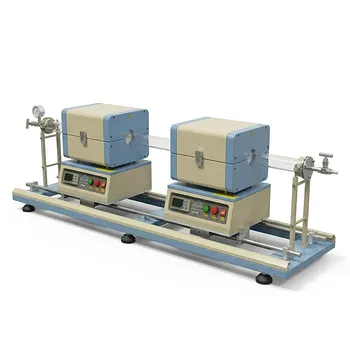
1200C Max Dual Sliding Tube Furnace with 50 mm Tube Flanges for CVD
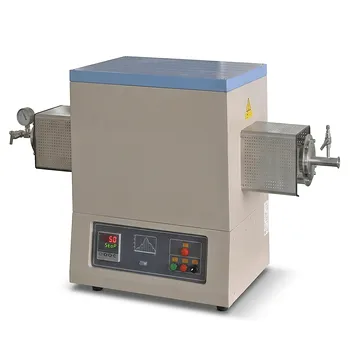
High Temperature 1700C Tube Furnace with 4 Inch OD Alumina Tube and Vacuum Sealing Flanges
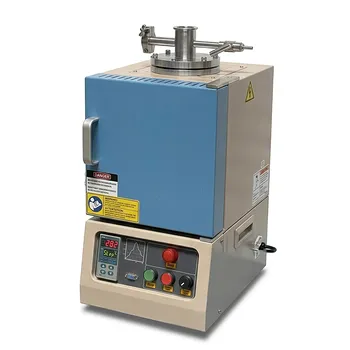
High Temperature Hybrid Muffle and Tube Furnace with Vacuum Capability and PID Control
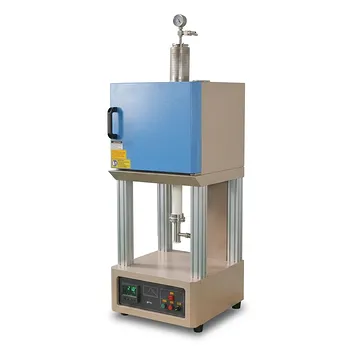
Hybrid High Temperature Tube and Box Furnace 1700C with 2 Inch Alumina Tube for Material Research
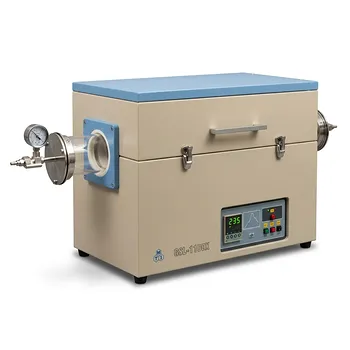
Single Zone Tube Furnace 5 Inch Quartz Tube 36 Inch Heating Zone Vacuum Flanges

High Temperature 1700C Vertical Tube Furnace for Powder Spherification and Material Sintering
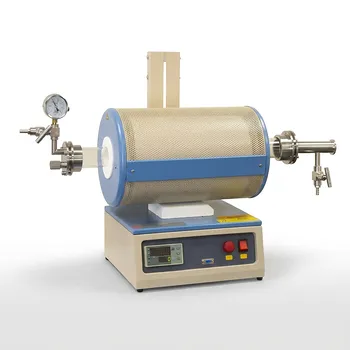
1100C Tube Furnace with Vacuum Flange and Programmable Temperature Controller for Material Science and Industrial Heat Treatment

High Temperature 1700C Tube Furnace with High Vacuum Turbomolecular Pump System and Multi Channel Mass Flow Controller Gas Mixer