Why is a laboratory oven used for the debinding treatment of CSSO:Ce,Cr,Li phosphor films? Optimize Optical Quality
Updated 3 months ago
The debinding of CSSO:Ce,Cr,Li phosphor films is a critical purification step. A laboratory oven is used to remove volatile organic components and binders from the film slurry at a controlled temperature—typically 130 °C for 24 hours—before the material undergoes high-temperature sintering. This process ensures the structural density and optical cleanliness of the final phosphor glass layer by preventing internal gas buildup and carbon residue formation.
The core purpose of laboratory oven debinding is to eliminate organic materials slowly and completely to prevent structural failure. This pre-treatment ensures that the subsequent sintering stage results in a dense, defect-free phosphor film with optimal light transmission properties.
The Role of Organic Removal in Optical Quality
Eliminating Volatile Binders
The slurry used to cast CSSO:Ce,Cr,Li films contains organic binders and volatile components necessary for the initial shaping of the film. A laboratory oven provides the sustained, low-level heat required to evaporate these substances without disturbing the distribution of the phosphor particles.
Preventing Carbonization Residues
If organic binders remain in the film during the high-temperature co-sintering stage, they can undergo carbonization, leaving dark residues behind. Using an oven for thorough debinding ensures the optical cleanliness of the phosphor glass layer by removing these potential contaminants before they can burn into the structure.
Maintaining Structural Integrity and Density
Avoiding Bubbles and Micro-Cracks
Rapidly heating a film that still contains volatile organics can lead to sudden gas expansion, which creates bubbles or "voids" within the material. The controlled environment of the laboratory oven allows these gases to escape slowly, maintaining the structural density of the film and preventing the formation of micro-cracks.
Stress Management During Phase Transition
Similar to the treatment of zeolite precursors or ceramic green bodies, slow heating prevents internal stresses caused by rapid vaporization. By managing the rate of decomposition, the oven ensures that the "green body" of the phosphor film remains intact as it transitions from a wet slurry to a dry, solid state.
Understanding the Trade-offs and Pitfalls
The Risk of Insufficient Debinding Time
While 24 hours may seem extensive, reducing the debinding time increases the risk of "trapped" organics within the deeper layers of the film. If these organics are trapped during the sintering phase, the resulting pressure will almost inevitably lead to structural failure or significant surface defects.
Balancing Temperature and Decomposition
Setting the oven temperature too high can cause the organic binders to decompose too aggressively, leading to the same structural damage the process is meant to avoid. Conversely, setting the temperature too low will fail to remove high-boiling point components, leaving the film vulnerable to carbonization during the furnace stage.
How to Apply This to Your Project
When preparing phosphor films or similar composite materials, the debinding stage must be treated as a foundational step rather than a mere drying period.
- If your primary focus is optical clarity: Ensure the debinding duration is sufficient to remove 100% of volatile organics to prevent carbon-based discoloration during sintering.
- If your primary focus is structural density: Use a strictly controlled heating rate to allow gases to escape without creating internal pressure or voids.
- If your primary focus is chemical purity: Verify that the oven environment is free of contaminants that could be absorbed by the film during the long 24-hour treatment cycle.
By meticulously controlling the debinding environment, you ensure that the final phosphor film achieves its intended luminescence and structural durability.
Summary Table:
| Process Phase | Temperature | Duration | Key Objectives |
|---|---|---|---|
| Debinding | ~130 °C | 24 Hours | Evaporate volatile binders, prevent carbonization & bubbles |
| Sintering | High Temp | Process Specific | Achieve structural density & final luminescence properties |
| Focus Area | Risk of Failure | Mitigation Strategy | End Result |
| R&D / Optical | Trapped Organics | Extended, low-temp oven treatment | Defect-free, transparent phosphor film |
Elevate Your Material Research with THERMUNITS Precision Equipment
Success in CSSO:Ce,Cr,Li phosphor development starts with precise thermal control. THERMUNITS is a leading manufacturer of high-performance laboratory equipment designed for demanding material science and industrial R&D. We provide the stability and uniformity required for critical stages like debinding and sintering.
Our comprehensive range includes:
- Muffle, Vacuum, and Atmosphere Furnaces for precise heat treatment.
- Tube & Rotary Furnaces for continuous or specialized processing.
- CVD/PECVD Systems & Hot Press Furnaces for advanced thin-film and material synthesis.
- Dental Furnaces, VIM (Vacuum Induction Melting), and Thermal Elements.
Don't let improper debinding compromise your optical films. Contact our technical team today to find the perfect thermal processing solution for your laboratory’s needs!
References
- Ping Sui, Yuansheng Wang. A Ca<sub>3</sub>Sc<sub>2</sub>Si<sub>3</sub>O<sub>12</sub>:Ce<sup>3+</sup>,Cr<sup>3+</sup>,Li<sup>+</sup> phosphor-in-glass film for high-power laser-driven near-infrared lighting. DOI: 10.1039/d4tc03017f
Mentioned Products
- 950C Rapid Thermal Processing Furnace for 12 Inch Wafer CSS Coating with Rotating Substrate Holder
- 1200C Sliding Internal Crucible Tube Furnace for Controlled Atmosphere Thin Film Deposition and Material Sublimation Research
- High Temperature 800C Rapid Thermal Processing Furnace with Rotating Sample Holder for Close Spaced Sublimation and Thin Film Solar Cell Research
- Two Zones CSS Furnace for Rapid Thermal Processing Thin Film Coating 3 Inch Diameter 650C
- High Temperature Muffle Furnace with Alloy Chamber for Debinding and Sintering Applications
People Also Ask
- What role does a SiC-coated graphite susceptor play in H2Se selenization? Boost RTP Thermal Uniformity & Film Purity.
- What are the functional advantages of an RTP system for surface deposition? Enhance Heterojunction Interface Integrity
- What are the advantages of RTPR for Pd1/PU catalyst synthesis? Achieve superior single-atom dispersion and stability.
- What is the purpose of coating ceramic sheets with platinum paste? Achieve Stable High-Temp Ohmic Contacts
- What technical advantages does an RTA furnace provide for nanoporous gold? Precision Control of Nanostructures.

Tech Team · ThermUnits
Last updated on Jun 02, 2026
Related Products
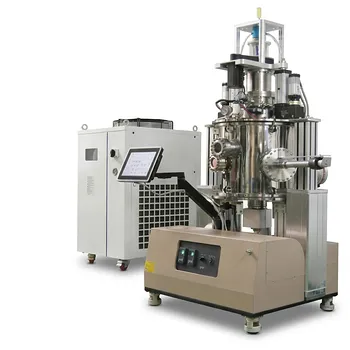
950C Rapid Thermal Processing Furnace for 12 Inch Wafer CSS Coating with Rotating Substrate Holder
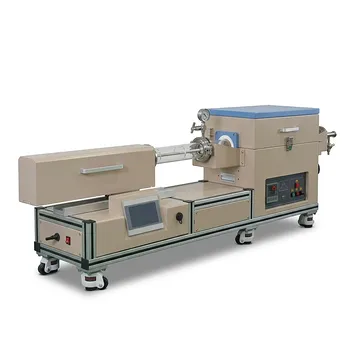
1200C Sliding Internal Crucible Tube Furnace for Controlled Atmosphere Thin Film Deposition and Material Sublimation Research
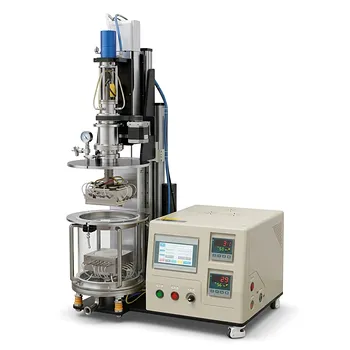
High Temperature 800C Rapid Thermal Processing Furnace with Rotating Sample Holder for Close Spaced Sublimation and Thin Film Solar Cell Research
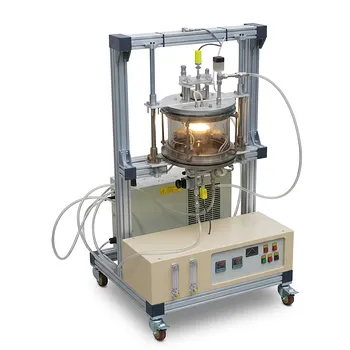
Two Zones CSS Furnace for Rapid Thermal Processing Thin Film Coating 3 Inch Diameter 650C
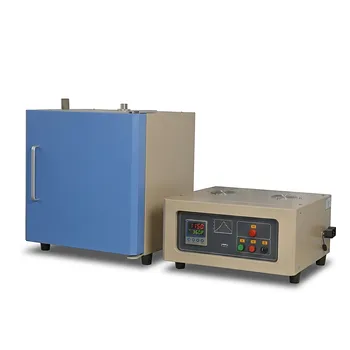
High Temperature Muffle Furnace with Alloy Chamber for Debinding and Sintering Applications