Why is a precision Mass Flow Controller (MFC) necessary in a MoS2 CVD system? Key to High-Quality 2D Monolayer Growth
Updated 3 months ago
Precision Mass Flow Controllers (MFCs) are the critical link between gas injection and atomic-scale crystal growth. In a Molybdenum Disulfide (MoS2) CVD system, the MFC regulates the carrier gas flow rate to precisely determine the flux of precursor vapors arriving at the substrate, which dictates whether the material grows as a multilayer or a high-quality monolayer.
The MFC serves as the primary system regulator for precursor concentration and transport dynamics. By maintaining a stable environment, it ensures the repeatability and uniformity required to produce large-area, single-layer MoS2 films with specific electronic properties.
Regulating Precursor Transport and Concentration
The Role of the Carrier Gas
The carrier gas, typically high-purity Argon or Nitrogen, acts as the transport medium for evaporated precursors like Sulfur and Molybdenum. The MFC ensures that this gas moves at a constant rate, which directly influences the transport efficiency and speed of the source vapors toward the reaction zone.
Managing Supersaturation Levels
Even minor fluctuations in gas flow can alter the supersaturation level in the reaction chamber. Precise control via the MFC maintains the correct chemical concentration gradient, preventing the growth chamber from becoming too lean or too saturated with reactants.
Defining the Boundary Layer
The flow rate set by the MFC determines the thickness of the gas boundary layer above the substrate. A stable boundary layer is essential for ensuring that precursors diffuse to the surface at a predictable rate, which is a prerequisite for uniform film thickness.
Controlling Crystal Nucleation and Morphology
Influencing Nucleation Density
The distribution of crystal nuclei—the "seeds" from which MoS2 grows—is highly sensitive to gas flow stability. An MFC allows researchers to optimize the initial injection of precursors to achieve a uniform distribution of these nuclei across the substrate.
Governing Grain Shape and Size
The final morphology of the MoS2 crystals, such as triangular or hexagonal shapes, is a result of the growth rate dictated by the MFC. Stably regulated flow promotes the growth of large-sized triangular grains, which are often sought for their superior electronic characteristics.
Transitioning Between Growth Modes
By adjusting the flow parameters, the MFC enables a controlled transition from multilayer growth to large-area monolayer growth. This level of precision is necessary to produce the ultra-thin, two-dimensional structures required for next-generation semiconductors.
Ensuring System Stability and Repeatability
Maintaining Internal Pressure
The MFC contributes to the stability of the total pressure within the reaction chamber. Fluctuations in pressure can cause turbulence, which disrupts the steady-state delivery of precursors and leads to defects in the crystal lattice.
Achieving Narrow Exciton Linewidths
High-quality MoS2 films are characterized by narrow exciton linewidths, a sign of structural perfection. A precision MFC ensures the reaction environment is repeatable, allowing for the consistent production of films with high optical and electronic integrity.
Preventing Amorphous Contamination
Precise flow control ensures a continuous supply of atoms to the growth site without overloading the system. This prevents amorphous contamination or growth stagnation, which can occur if the precursor ratios fall out of balance.
Understanding the Trade-offs
Precision vs. System Complexity
While high-precision MFCs provide superior control, they increase the complexity of the CVD setup. Using a lower-quality controller might save on initial costs, but it often results in non-uniform films and a high rate of batch failure due to inconsistent precursor delivery.
Flow Rate vs. Precursor Utilization
Higher flow rates can improve uniformity across large areas but often lead to lower precursor utilization. Effectively balancing these factors requires an MFC that can handle very fine adjustments to minimize waste while maintaining growth quality.
Applying MFC Precision to Your Growth Goals
How to Optimize Your System
To achieve the best results in MoS2 synthesis, your approach to flow control should align with your specific material requirements.
- If your primary focus is large-area monolayer uniformity: Use a high-precision MFC to maintain a constant, high-volume flow of Argon to minimize boundary layer thickness and ensure even precursor distribution.
- If your primary focus is controlling crystal morphology (e.g., triangular grains): Fine-tune the MFC to manage specific supersaturation levels that favor lateral growth over vertical stacking.
- If your primary focus is nanometer-scale superlattices: Prioritize an MFC with rapid response times and high-resolution timing to strictly regulate the injection of different gas-phase precursors.
Ultimately, the Mass Flow Controller is the decisive factor in transforming an unpredictable chemical reaction into a precise manufacturing process for 2D materials.
Summary Table:
| MFC Function | Impact on MoS2 Growth | Research Benefit |
|---|---|---|
| Flow Regulation | Controls precursor transport speed | Ensures uniform film thickness |
| Supersaturation | Manages chemical concentration | Prevents unwanted multilayer growth |
| Boundary Layer | Dictates precursor diffusion rate | Predictable atomic-scale deposition |
| Pressure Stability | Maintains steady-state environment | Reduces defects and exciton linewidths |
| Nucleation Control | Governs seed distribution | Optimizes crystal grain size and shape |
Elevate Your Material Research with THERMUNITS Precision
Achieving atomic-scale perfection in MoS2 synthesis requires a thermal system built for absolute stability. THERMUNITS is a leading manufacturer of high-temperature laboratory equipment for material science and industrial R&D. We provide the high-performance infrastructure necessary for cutting-edge 2D material growth and advanced metallurgy.
Our comprehensive range of thermal solutions includes:
- Advanced CVD/PECVD Systems specifically designed for 2D material synthesis.
- Precision Furnaces: Muffle, Vacuum, Atmosphere, Tube, Rotary, and Hot Press models.
- Specialized Equipment: Dental Furnaces, Electric Rotary Kilns, and Vacuum Induction Melting (VIM) furnaces.
- High-Quality Components: Thermal elements and custom heat treatment accessories.
Don't let inconsistent gas flow or temperature fluctuations compromise your research results. Partner with THERMUNITS to access industry-leading thermal expertise and robust hardware tailored to your specific R&D requirements.
Contact Our Engineering Team Today to Optimize Your Lab
References
- Ting Li, Shuhui Yu. Sodium chloride-assisted CVD enables controlled synthesis of large single-layered MoS<sub>2</sub>. DOI: 10.1039/d4ra02510e
Mentioned Products
- Cylindrical Resonator MPCVD Machine System for Microwave Plasma Chemical Vapor Deposition and Lab Diamond Growth
- 915MHz MPCVD Diamond Machine Microwave Plasma Chemical Vapor Deposition System Reactor
- Two Zone Rotary CVD Furnace with Automatic Feeding and Receiving System for Powder Processing
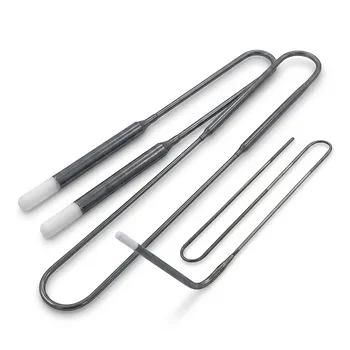
- Molybdenum Disilicide MoSi2 Thermal Elements Electric Furnace Heating Element High Temperature Resistance
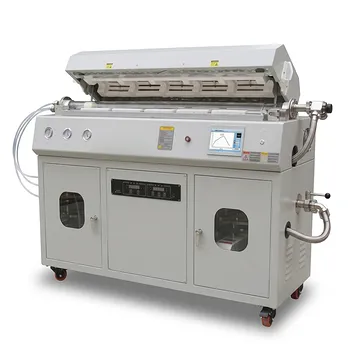
- Multi Heating Zones CVD Tube Furnace System for Precision Chemical Vapor Deposition and Advanced Material Synthesis
People Also Ask
- How does the high concentration of atomic hydrogen in MPCVD benefit diamond growth? The Key to Gem-Grade Quality.
- What are the typical operating pressure ranges and vacuum requirements for MPCVD systems? Optimize Your Material Growth
- What technical parameters are critical for optimizing the growth of single-crystal diamonds in MPCVD systems? Expert Guide
- What are the technical advantages of the electrodeless plasma design in MPCVD systems? Purity & Precision in Synthesis
- How does the versatility of gas compatibility in MPCVD systems compare to filament-based CVD methods? Purity & Doping.

Tech Team · ThermUnits
Last updated on Jun 03, 2026
Related Products
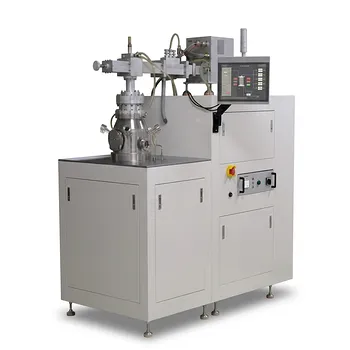
Cylindrical Resonator MPCVD Machine System for Microwave Plasma Chemical Vapor Deposition and Lab Diamond Growth
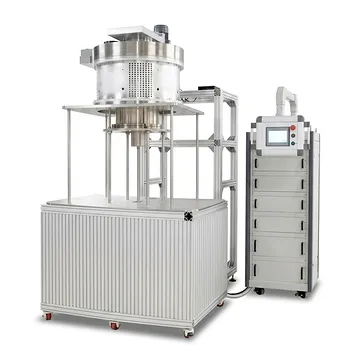
915MHz MPCVD Diamond Machine Microwave Plasma Chemical Vapor Deposition System Reactor
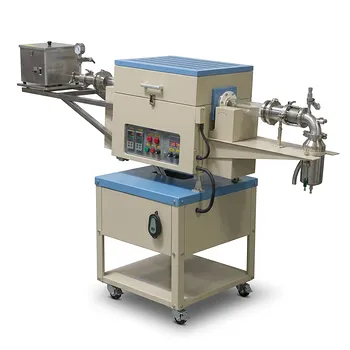
Two Zone Rotary CVD Furnace with Automatic Feeding and Receiving System for Powder Processing
Molybdenum Disilicide MoSi2 Thermal Elements Electric Furnace Heating Element High Temperature Resistance
Multi Heating Zones CVD Tube Furnace System for Precision Chemical Vapor Deposition and Advanced Material Synthesis
Three Zone Quartz Tube Furnace with 3 Channel Gas Mixer Vacuum Pump and Anti Corrosive Vacuum Gauge
Chemical Vapor Deposition CVD System Slide PECVD Tube Furnace with Liquid Gasifier PECVD Machine
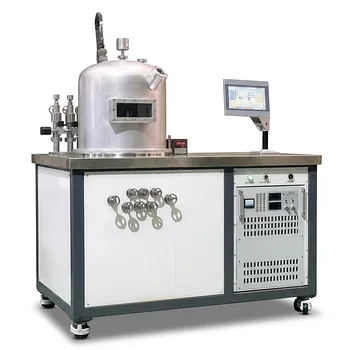
HFCVD Machine System for Nano Diamond Coating on Drawing Dies and Industrial Tools