Why is Pt-Re Catalyst Calcination Required in Muffle Furnaces? Achieve Stable Metal-Support Interaction
Updated 3 months ago
Calcination in a laboratory muffle furnace is a prerequisite for Pt-Re catalysts because it transforms unstable chemical precursors into stable metal oxides while anchoring them to the support. This thermal treatment ensures that the active metals are uniformly distributed and chemically bonded to the alumina carrier, preventing the metals from clumping together during the subsequent high-temperature hydrogen reduction.
Core Takeaway: Air calcination decomposes precursors like chloroplatinic acid and rhenium oxide into stable oxides, establishing a robust metal-support interaction. This structural foundation is essential for achieving high metal dispersion and preventing particle sintering during the final activation phase.
Transforming Precursors into Stable Oxides
Decomposition of Chemical Precursors
Platinum and rhenium are typically introduced to a support via liquid precursors like chloroplatinic acid. The muffle furnace provides the thermal energy necessary to break these complex chemical bonds, converting the "wet" impregnated species into stable metal oxides.
Removal of Residual Impurities
The high-temperature environment effectively eliminates unwanted residuals, such as nitrates or organic templates, left over from the synthesis process. Clearing these impurities from the catalyst surface and pores ensures that the active sites remain accessible for future reactants.
Establishing the Oxidation State
By heating the material in an air atmosphere, the metals reach a defined oxide state. This uniform starting point is critical for the subsequent reduction step, as it ensures the hydrogen can reduce the metals at a predictable rate and temperature.
Establishing the Metal-Support Foundation
Strengthening Anchoring and Interaction
Calcination promotes a strong chemical "anchor" between the metal species and the alumina support. Without this initial thermal bonding, the metal atoms would remain mobile, leading to poor stability and a loss of active surface area.
Preservation of Pore Structure
Controlled heating in a muffle furnace helps facilitate the formation of mesoporous structures. These pores are vital for the diffusion of molecules like methane, ensuring that the catalyst can handle high-throughput chemical reactions without becoming "clogged."
Regulating Particle Size
The precise temperature control of a muffle furnace allows researchers to regulate the size of the metal oxide particles. By maintaining a consistent temperature, such as 500 °C, the furnace prevents the uneven growth of particles that would diminish the catalyst's efficiency.
Understanding the Trade-offs and Pitfalls
The Risk of Thermal Sintering
While high heat is necessary, excessive temperatures can lead to sintering, where metal particles fuse together. This significantly reduces the available surface area and destroys the catalyst's effectiveness before it ever reaches the reduction stage.
Importance of the Ramp Rate
If the temperature increases too rapidly (e.g., exceeding 7 °C/min), the escaping gases from decomposing precursors can cause the support framework to collapse. A slow, programmed ramp rate is essential to maintain the structural integrity of the zeolite or alumina carrier.
Atmosphere Sensitivity
Air calcination is ideal for oxides, but if the precursors are sensitive to oxygen in a way that forms undesirable phases, a standard muffle furnace may be insufficient. In those specific cases, an atmosphere furnace would be required to manage oxygen levels, though this is less common for standard Pt-Re catalysts.
How to Apply This to Your Catalyst Synthesis
To achieve the best results during the calcination of Pt-Re catalysts, align your furnace parameters with your specific performance goals.
- If your primary focus is Maximum Dispersion: Utilize a slow heating rate (2–5 °C/min) to prevent the platinum species from agglomerating as they decompose.
- If your primary focus is Structural Stability: Ensure a long "soak time" at your target temperature (typically 5 hours) to fully anchor the metals to the alumina support.
- If your primary focus is Pore Accessibility: Verify that your calcination temperature is high enough to completely remove organic templates without collapsing the mesoporous framework.
Properly executed air calcination creates the stable, high-surface-area environment necessary for the catalyst to survive and thrive during hydrogen activation.
Summary Table:
| Calcination Factor | Functional Role | Resulting Advantage |
|---|---|---|
| Chemical Transformation | Converts precursors to stable metal oxides | Defined oxidation state for reduction |
| Impurity Removal | Eliminates nitrates and organic residuals | Accessible pores and active sites |
| Metal-Support Interaction | Anchors active metals to alumina carrier | Prevents metal clumping and sintering |
| Structural Control | Regulates particle size and mesoporosity | Higher catalyst efficiency and stability |
Elevate Your Material Research with THERMUNITS Precision
Achieving the perfect calcination environment is critical for high-performance Pt-Re catalysts. THERMUNITS is a leading manufacturer of high-temperature laboratory equipment for material science and industrial R&D. We offer a comprehensive range of thermal processing solutions, including Muffle, Vacuum, Atmosphere, Tube, and Rotary furnaces, as well as CVD/PECVD systems, Dental Furnaces, and Thermal Elements.
Whether you need precise ramp rates to prevent support collapse or uniform heat for maximum metal dispersion, our equipment is designed to meet the rigorous demands of modern catalyst synthesis and industrial heat treatment.
Ready to enhance your laboratory's efficiency and results?
Contact THERMUNITS Today to find the ideal high-temperature furnace solution tailored to your research needs!
References
- Domenic Strauch, Moritz Wolf. Bimetallic platinum rhenium catalyst for efficient low temperature dehydrogenation of perhydro benzyltoluene. DOI: 10.1039/d3cy01336g
Mentioned Products
- High Temperature 1500C Benchtop Muffle Furnace 3.6L Alumina Fiber Chamber Programmable Controller Sintering Annealing Carbonization Thermal Processing System
- 1750C Compact Muffle Furnace 1.7L Ultra High Temperature Laboratory Sintering System for Advanced Ceramics and Material Science Research
- 1800C Bench Top Muffle Furnace 18 Liters with Kanthal Super 1900 Heating Elements for High Purity Ceramic Sintering and Material Research
- High Temperature Bench Top Muffle Furnace 1700C with Integrated Evaporating Particle Collection and 8x8x8 Alumina Fiber Chamber
- 1800C Bench Top Muffle Furnace with Kanthal Super 1900 Heating Elements and 3.6L Alumina Fiber Chamber
People Also Ask
- Why is annealing in a high-temperature muffle furnace necessary for SiO2/Si substrate pretreatment before monolayer WS2 synthesis?
- What is the purpose of using muffle or tube furnaces in glass synthesis? Achieve Precise Melt-Quenching & Homogeneity
- What is the role of a high-temperature muffle furnace in the synthesis of graphitic carbon nitride (g-C3N4)? - Guide
- What is the necessity of 950 °C muffle furnace for aluminate spinel supports? Achieve Phase Purity & Lattice Integration
- What is the function of a high-temp muffle furnace in Ni-V oxide synthesis? Optimize your material's performance.

Tech Team · ThermUnits
Last updated on Jun 03, 2026
Related Products
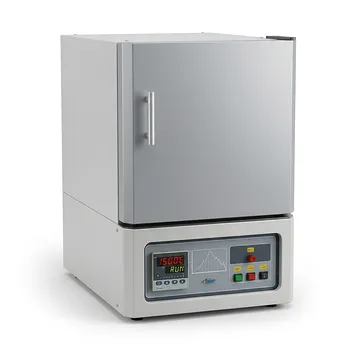
High Temperature 1500C Benchtop Muffle Furnace 3.6L Alumina Fiber Chamber Programmable Controller Sintering Annealing Carbonization Thermal Processing System
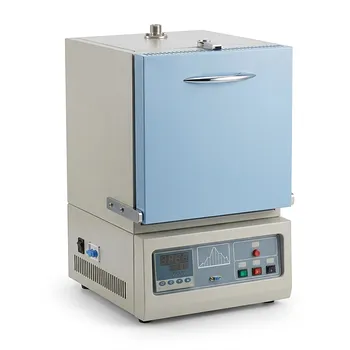
1750C Compact Muffle Furnace 1.7L Ultra High Temperature Laboratory Sintering System for Advanced Ceramics and Material Science Research
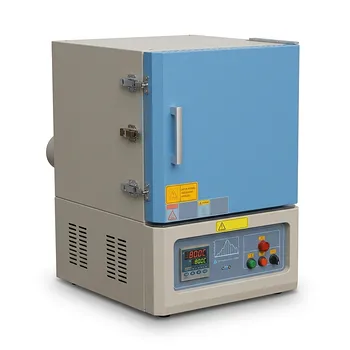
1800C Bench Top Muffle Furnace 18 Liters with Kanthal Super 1900 Heating Elements for High Purity Ceramic Sintering and Material Research
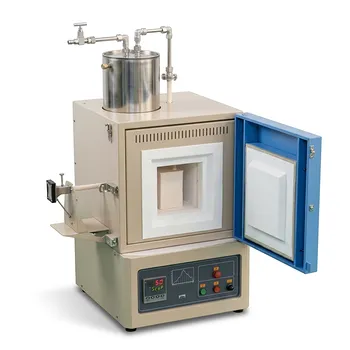
High Temperature Bench Top Muffle Furnace 1700C with Integrated Evaporating Particle Collection and 8x8x8 Alumina Fiber Chamber
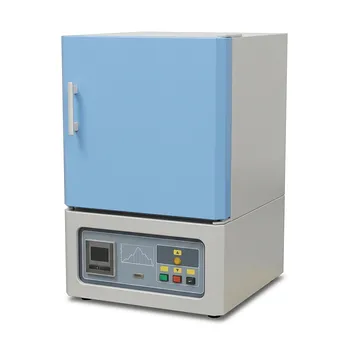
1800C Bench Top Muffle Furnace with Kanthal Super 1900 Heating Elements and 3.6L Alumina Fiber Chamber
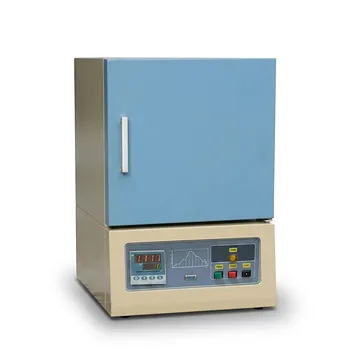
Ultra High Temperature Bench Top Muffle Furnace 1750C Sintering System with Kanthal Super Heating Elements and Precision Digital Control
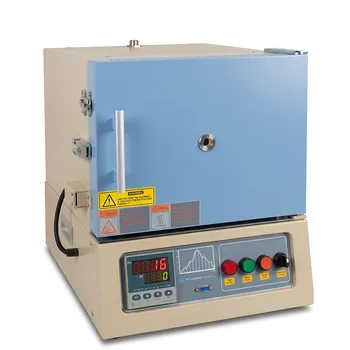
1200C Muffle Furnace 12x8x5 7.2L Heating Chamber with Quartz Observation Window and Vent Port
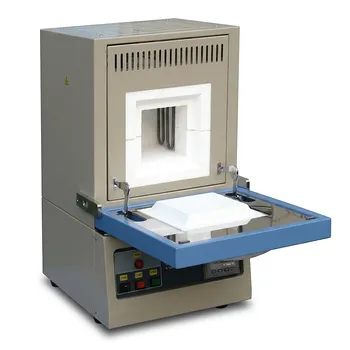
High Temperature 1800C Compact Muffle Furnace with Kanthal Super 1900 Heating Elements and 1.7L Alumina Chamber
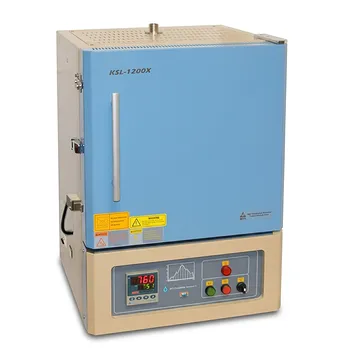
High Temperature 1200C Muffle Furnace 27L Volume 12x12x12 Chamber with Programmable PID Controller for Laboratory Material Science
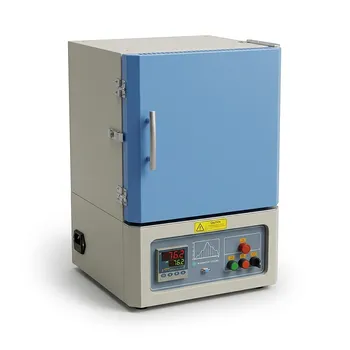
1750C Bench Top Muffle Furnace 3.6L High Grade Molybdenum Disilicide Heating Elements Laboratory Heat Treatment Equipment
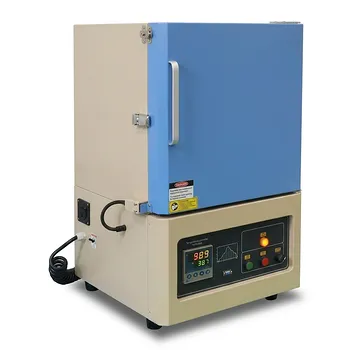
1200°C High Temperature Muffle Furnace 19L Chamber with 50 Segment Programmable Controller
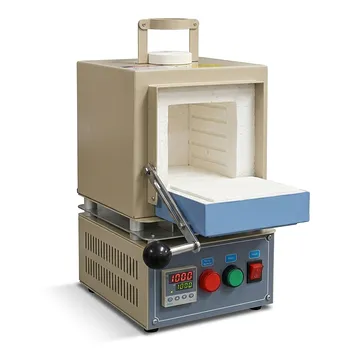
Compact 1000C Muffle Furnace with Programmable Controller and 2 Inch Top Port for Vacuum and Atmosphere Material Research
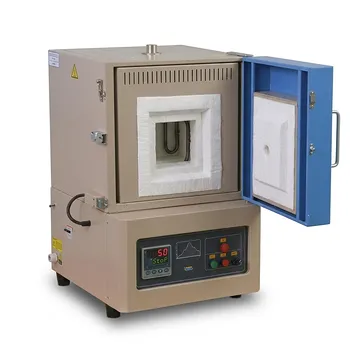
1800°C Bench Top Ultra High Temperature Muffle Furnace with Sapphire Observation Window and Top Feeding Port for Materials Research and Thermal Processing
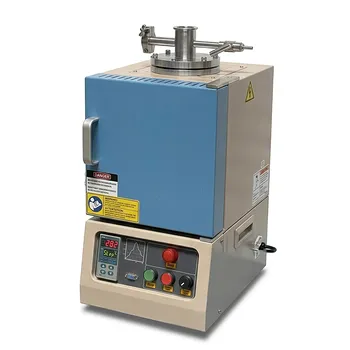
High Temperature Hybrid Muffle and Tube Furnace with Vacuum Capability and PID Control
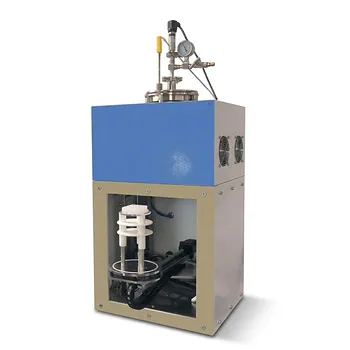
Rapid Thermal Processing Furnace 1100C Atmosphere Controlled Bottom Loading RTP System for Wafer Annealing and Catalysis Research
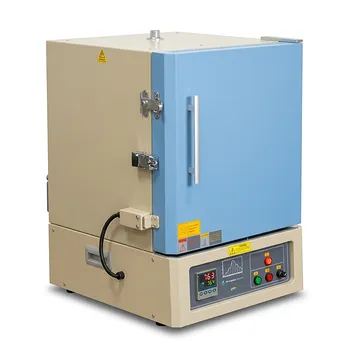
Large Capacity 1200C Muffle Furnace 64 Liter Chamber with Digital PID Controller and Built In Venting Port
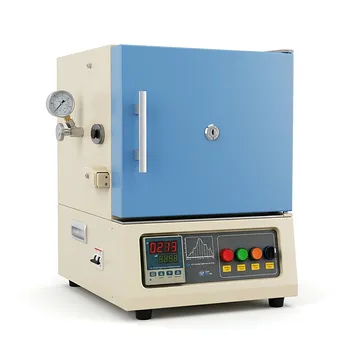
1200C Hybrid Muffle and Tube Furnace for Material Research with Dual Atmosphere Control Quartz Tubes
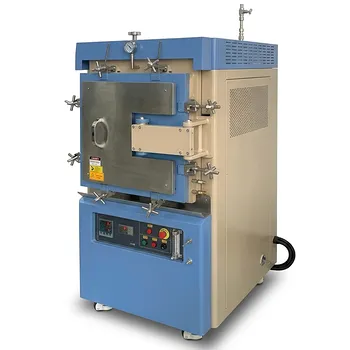
Atmosphere Controlled Muffle Furnace 1700C Maximum Temperature 80L High Capacity Vacuum Inert Gas Box Furnace

1800C High Temperature Compact Vacuum Tube Furnace with 60mm OD Alumina Tube and Kanthal MoSi2 Heating Elements