Why is an alumina crucible with a lid used for C3N5 synthesis? Optimize Yield and Purity in Your Muffle Furnace
Updated 3 months ago
The use of an alumina crucible with a lid is essential for creating a stable, semi-closed micro-environment that maximizes product yield and ensures chemical purity. This specific setup prevents the loss of volatile precursors during thermal decomposition and protects the sample from reacting with the furnace environment or introducing unwanted impurities at high temperatures.
This configuration serves a dual purpose: the alumina material provides the chemical inertness required to prevent contamination, while the lid manages the internal atmosphere to promote the complete polycondensation of precursors into the $C_3N_5$ framework.
The Critical Role of Alumina as a Material
Superior Chemical Inertness
Alumina ($Al_2O_3$) is chosen primarily for its chemical neutrality. During synthesis at temperatures such as 550 °C, it does not react with the precursors or the highly active intermediate gases produced during decomposition.
Prevention of Impurity Leaching
High-purity alumina ensures that no non-metallic or metallic elements leach from the container into the sample. This is vital for maintaining the compositional accuracy of the $C_3N_5$ product, especially when the material is intended for sensitive applications like electrocatalysis.
High Thermal Stability
Alumina offers exceptional refractoriness, allowing it to withstand the thermal stress of a muffle furnace without degrading. It remains structurally sound and chemically stable well beyond the temperatures required for carbon nitride synthesis.
Managing the Reaction Micro-Environment
Creation of Micro-Positive Pressure
The lid transforms the crucible into a semi-closed system, which generates a local atmosphere of micro-positive pressure. This pressure is crucial for inhibiting the excessive volatilization of precursors before they reach the necessary reaction temperature.
Promoting Gas-Phase Interaction
By slowing the escape of reaction byproducts and intermediate gases (such as ammonia), the lid ensures these components remain in contact with the solid phase. This sufficient interaction is necessary for the nucleation and growth of the $C_3N_5$ precursor, directly increasing the final product yield.
Facilitating Complete Polycondensation
A stable reaction atmosphere allows the precursors to undergo thorough thermal polycondensation. The lid helps maintain the specific concentration and pressure conditions required to form a complete, well-defined crystalline structure rather than a defective framework.
Understanding the Trade-offs
The Risk of Pressure Buildup
While a semi-closed environment is beneficial, the seal must not be completely airtight. If the gases generated during decomposition cannot vent at all, the resulting excessive pressure could lead to crucible failure or unpredictable morphology in the final product.
Material Porosity and Cleaning
Lower-grade alumina may have higher porosity, which can trap residues from previous experiments. To avoid cross-contamination, high-purity alumina is required, and it must be meticulously cleaned between uses to ensure the integrity of the synthesis.
Thermal Gradient Sensitivity
Alumina is sensitive to rapid temperature changes, which can cause cracking. Users must manage heating and cooling rates carefully within the muffle furnace to protect the crucible, even if the $C_3N_5$ synthesis itself allows for faster transitions.
Applying This Setup to Your Synthesis Goals
The decision to use this specific configuration depends on your primary objective for the material being produced.
- If your primary focus is Maximum Yield: Use a well-fitted lid to minimize the escape of melamine or other precursors, ensuring more material is converted into the solid $C_3N_5$ product.
- If your primary focus is Chemical Purity: Prioritize high-purity (99%+) alumina crucibles to ensure that no trace elements from the ceramic interfere with the analytical results of your synthesis.
- If your primary focus is Structural Integrity: Ensure the lid provides a consistent semi-closed environment to maintain the gas-phase concentration necessary for a characteristic layered crystalline structure.
By meticulously controlling the micro-environment within the crucible, you transition from simple heating to a precise chemical synthesis.
Summary Table:
| Component | Role in Synthesis | Primary Benefit |
|---|---|---|
| Alumina Material | Superior chemical inertness | Prevents impurity leaching and contamination |
| Crucible Lid | Semi-closed environment | Maximizes yield by preventing precursor loss |
| Micro-environment | Micro-positive pressure | Promotes complete thermal polycondensation |
| Thermal Stability | High refractoriness | Maintains structural integrity under thermal stress |
Power Your Research with THERMUNITS High-Temperature Solutions
Achieving the perfect C3N5 crystalline structure requires precise environmental control. THERMUNITS is a leading manufacturer of high-temperature laboratory equipment dedicated to material science and industrial R&D. We empower researchers with high-performance thermal processing solutions designed for accuracy and durability.
Our comprehensive product range includes:
- Muffle, Vacuum, Atmosphere, and Tube Furnaces
- CVD/PECVD Systems & Hot Press Furnaces
- Rotary Kilns & Vacuum Induction Melting (VIM) Furnaces
- Dental Furnaces & High-Purity Thermal Elements
Whether you are scaling up synthesis or conducting fundamental material research, THERMUNITS provides the reliability your lab demands.
Contact THERMUNITS Today to Optimize Your Lab Setup
References
- Boyu Liang, Runhua Liao. Performance of Cobalt-Doped C3N5 Electrocatalysis Nitrate in Ammonia Production. DOI: 10.3390/coatings14101327
Mentioned Products
- 600°C Vertical Crucible Furnace with SS316 Alloy Reactor and 6 Port Vacuum Flange
- 1100C Crucible Melting Furnace with Stirring Function for Glovebox and Air Sensitive Alloy Research
- High Temperature Bench Top Muffle Furnace 1700C with Integrated Evaporating Particle Collection and 8x8x8 Alumina Fiber Chamber
- High Temperature Vertical Crucible Furnace with 22L Heating Chamber and 1200C Maximum Temperature
- 1200C Sliding Internal Crucible Tube Furnace for Controlled Atmosphere Thin Film Deposition and Material Sublimation Research
People Also Ask
- How does a high vacuum sintering furnace at 600 Celsius affect the microstructure of Al-TiC composites? Expert Analysis
- How should the choice between a Quartz crucible and an Alumina crucible be made for La2O2S? Optimize Material Purity
- Why use ceramic crucibles for coal nano-hybrid heat treatment? Ensure Purity and Thermal Stability.
- What role does a vacuum tube furnace play in palladium membrane treatment? Achieve 600°C Stability & Prevent Brittle Phases
- Why is a high-temperature furnace with precise temperature control necessary for Ag8SiS6 alloy synthesis? Ensure Safety.

Tech Team · ThermUnits
Last updated on Jun 03, 2026
Related Products
600°C Vertical Crucible Furnace with SS316 Alloy Reactor and 6 Port Vacuum Flange
1100C Crucible Melting Furnace with Stirring Function for Glovebox and Air Sensitive Alloy Research
High Temperature Bench Top Muffle Furnace 1700C with Integrated Evaporating Particle Collection and 8x8x8 Alumina Fiber Chamber
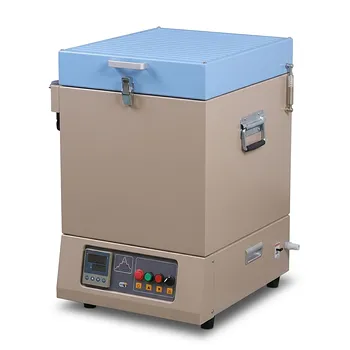
High Temperature Vertical Crucible Furnace with 22L Heating Chamber and 1200C Maximum Temperature
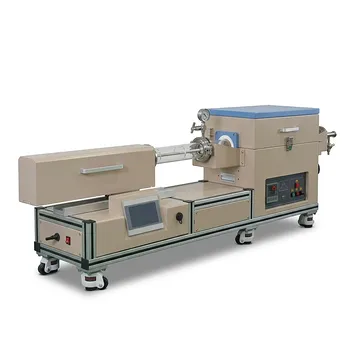
1200C Sliding Internal Crucible Tube Furnace for Controlled Atmosphere Thin Film Deposition and Material Sublimation Research
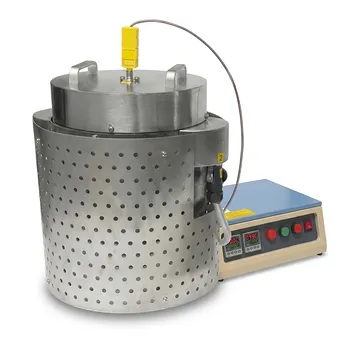
Vertical Crucible Furnace 1000C High Temperature Laboratory Equipment 4.7 Inch Diameter Chamber SS316 Anti Corrosive Enclosure
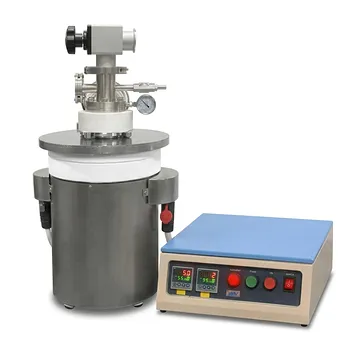
1100C High Temperature Vacuum Crucible Furnace with Quartz Chamber for Thermal Processing and Sintering
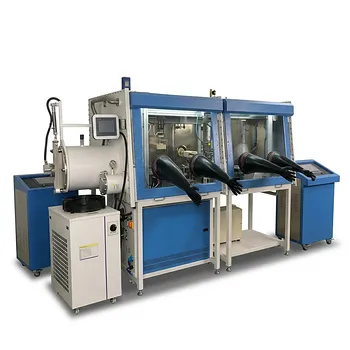
Automatic 10 Crucible Induction Melting and Casting System with Stirring Function and Glovebox Integration 2000C
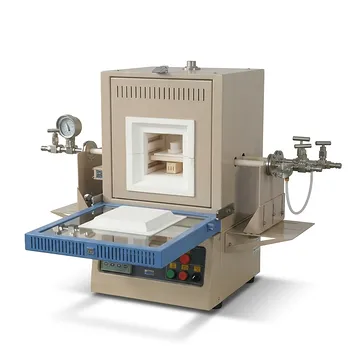
1700C Compact Hybrid Furnace with Dual Layer Box Sintering and Controlled Atmosphere Alumina Tubes
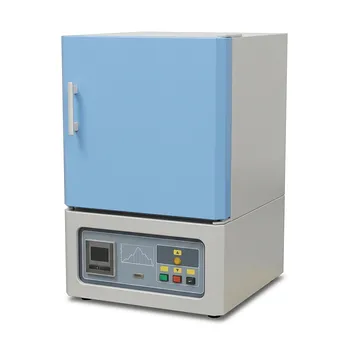
1800C Bench Top Muffle Furnace with Kanthal Super 1900 Heating Elements and 3.6L Alumina Fiber Chamber
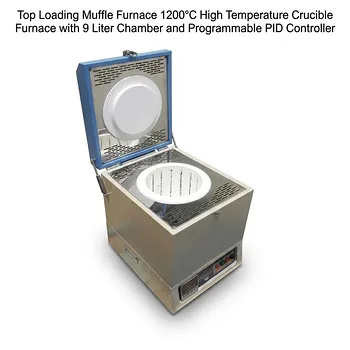
Top Loading Muffle Furnace 1200°C High Temperature Crucible Furnace with 9 Liter Chamber and Programmable PID Controller
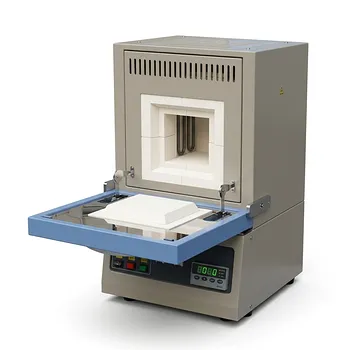
Five Sided Heating Muffle Furnace High Uniformity 1200C Lab Box Furnace 27L Alumina Fiber Chamber
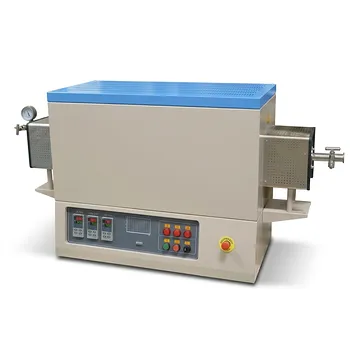
Three Zone Alumina Tube Furnace with Vacuum Flanges High Temperature 1700C Thermal Gradient CVD System
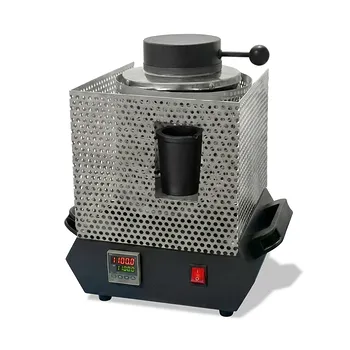
Compact Crucible Melting Furnace 1100C Programmable Temperature Controller Metal Sintering Equipment
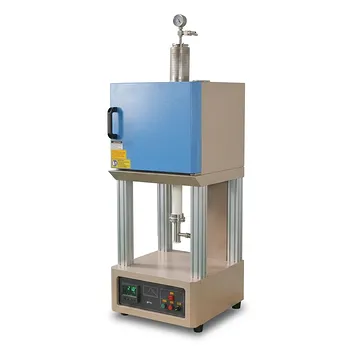
Hybrid High Temperature Tube and Box Furnace 1700C with 2 Inch Alumina Tube for Material Research

1800C High Temperature Compact Vacuum Tube Furnace with 60mm OD Alumina Tube and Kanthal MoSi2 Heating Elements