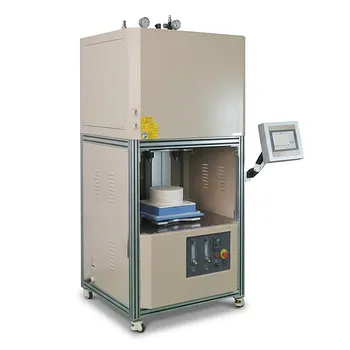
Why is an atmosphere control system required for the high-temperature thermal treatment of animal-derived waste?
Updated 3 months ago
Atmosphere control systems are the defining factor in high-temperature waste processing. An atmosphere control system is required for animal-derived waste because it excludes oxygen from the reactor via inert gas injection, preventing direct incineration. This allows the waste to undergo pyrolysis or gasification, resulting in the production of high-value outputs like bio-char and syngas rather than simple ash.
By maintaining an oxygen-free environment, atmosphere control systems shift the process from combustion to controlled thermal decomposition. This preserves the chemical structure of the waste, enabling the recovery of energy-rich gases and stable carbon products.
Preventing Incineration through Oxygen Exclusion
The Role of Inert Gases
An atmosphere control system introduces inert gases, such as nitrogen or argon, into the furnace environment. These gases displace oxygen, which is the primary catalyst for combustion.
Shifting from Combustion to Pyrolysis
Without oxygen, animal-derived waste cannot burn in the traditional sense. Instead, it undergoes thermal decomposition, a process where high heat breaks down complex organic molecules without the material catching fire.
Maximizing Resource Recovery
Production of Bio-char and Syngas
The primary goal of treating animal waste is often to create high-value byproducts. Atmosphere control ensures the production of bio-char (a carbon-rich solid) and syngas (a combustible gas mixture), both of which are destroyed during open-air incineration.
Volatile Component Removal
Controlled atmospheres allow for the effective removal of volatile components from the waste. This process leaves behind a carbon-rich char precursor, which is essential for creating the skeletal structure of advanced carbon materials.
Precision Control in Thermal Processing
Regulating Temperature and Heating Rates
Atmosphere control furnaces provide a precise heating rate and a constant carbonization temperature, often maintained below 700 °C. This precision ensures the waste is processed uniformly, preventing "hot spots" that could degrade the quality of the final product.
Structural Integrity of the Carbon Matrix
By controlling the environment, technicians can influence the initial skeletal structure of the resulting carbon. This is critical when the goal is to produce materials with specific porosity or surface area characteristics.
Understanding the Trade-offs
Operational Complexity and Cost
Implementing an atmosphere control system increases capital and operational expenditures. The need for a constant supply of pressurized inert gases and specialized airtight reactors adds layers of complexity compared to simple incinerators.
Monitoring and Safety Risks
While excluding oxygen prevents fire, it creates a risk of gas buildup. Operators must use sophisticated sensors to monitor pressure and gas composition to prevent leaks or mechanical failures in the furnace.
Implementing Atmosphere Control for Waste Treatment
To achieve the best results in animal-derived waste treatment, your choice of atmosphere control should align with your specific output requirements.
- If your primary focus is Bio-char production: Prioritize a system that maintains a constant carbonization temperature below 700 °C and uses nitrogen to ensure a stable carbon skeletal structure.
- If your primary focus is Syngas recovery: Invest in high-precision gas flow controls that allow for the manipulation of the thermal decomposition rate to maximize the release of combustible volatiles.
- If your primary focus is Volume reduction: Ensure the atmosphere control system is robust enough to handle high-temperature fluctuations while maintaining a strictly oxygen-free environment to prevent mass loss through combustion.
Precise atmospheric management transforms waste from a disposal burden into a valuable source of energy and specialized carbon materials.
Summary Table:
| Feature | Function in Waste Treatment | Key Benefit |
|---|---|---|
| Oxygen Exclusion | Prevents direct incineration | Enables pyrolysis & gasification |
| Inert Gas Injection | Displaces reactive air with Nitrogen/Argon | Preserves carbon skeletal structure |
| Precision Heating | Maintains stable temp (often <700°C) | Ensures uniform bio-char quality |
| Volatile Management | Controlled removal of gas components | Maximizes high-value syngas recovery |
Transform Waste into Value with THERMUNITS Thermal Solutions
Are you looking to optimize your waste-to-energy or bio-char production processes? THERMUNITS is a leading manufacturer of high-performance laboratory and industrial thermal equipment for material science and industrial R&D.
We provide a comprehensive range of thermal processing solutions, including:
- Atmosphere & Vacuum Furnaces for precise oxygen-free pyrolysis.
- Rotary Kilns & Tube Furnaces for continuous waste processing.
- CVD/PECVD Systems for advanced carbon material research.
- Hot Press & Vacuum Induction Melting (VIM) Furnaces for specialized industrial applications.
Our equipment ensures the precise atmospheric management required to turn animal-derived waste into valuable energy and specialized materials. Contact our experts today to find the perfect furnace for your R&D or production needs!
References
- Mircea Gabriel Macavei, Aneta Magdziarz. Thermochemical Conversion of Animal-Derived Waste: A Mini-Review with a Focus on Chicken Bone Waste. DOI: 10.3390/pr12020358
Mentioned Products
- Rapid Thermal Processing Furnace 1100C Atmosphere Controlled Bottom Loading RTP System for Wafer Annealing and Catalysis Research
- Compact Atmosphere Controlled Rapid Thermal Processing RTP Furnace with 4 Inch ID Quartz Tube 1100C
- Automatic Flammable Gas Control and Disposal Device for Hydrogen Atmosphere Furnaces
- High Temperature Oxygen and Inert Atmosphere Controlled Furnace 8 Liter 1700C Sintering System for Advanced Materials RD
- Rapid Thermal Processing RTP Atmosphere Controlled Bottom Loading Furnace 1100C High Throughput 50C per Second Heating Rate
People Also Ask
- What role does a SiC-coated graphite susceptor play in H2Se selenization? Boost RTP Thermal Uniformity & Film Purity.
- What are the functional advantages of an RTP system for surface deposition? Enhance Heterojunction Interface Integrity
- Why is an atmosphere-controlled annealing furnace required for the post-treatment of synthesized KTiOPO4 thin films? KTP
- What are the advantages of RTPR for Pd1/PU catalyst synthesis? Achieve superior single-atom dispersion and stability.
- Why is 1100°C in situ annealing required after LZO and DTO deposition? Achieve High-Quality Thin Film Synthesis

Tech Team · ThermUnits
Last updated on Jun 02, 2026
Related Products
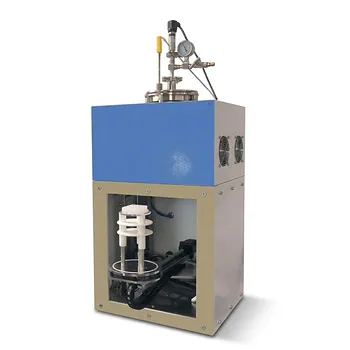
Rapid Thermal Processing Furnace 1100C Atmosphere Controlled Bottom Loading RTP System for Wafer Annealing and Catalysis Research
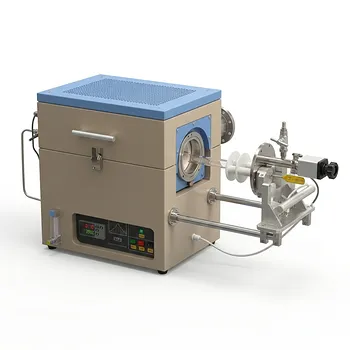
Compact Atmosphere Controlled Rapid Thermal Processing RTP Furnace with 4 Inch ID Quartz Tube 1100C
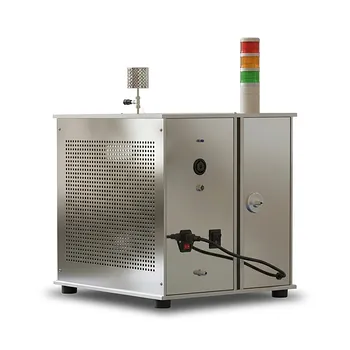
Automatic Flammable Gas Control and Disposal Device for Hydrogen Atmosphere Furnaces
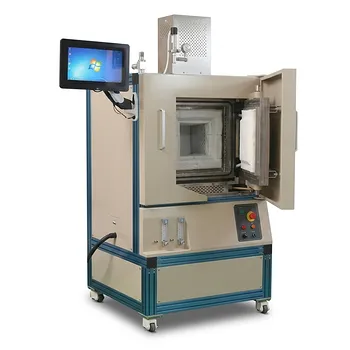
High Temperature Oxygen and Inert Atmosphere Controlled Furnace 8 Liter 1700C Sintering System for Advanced Materials RD
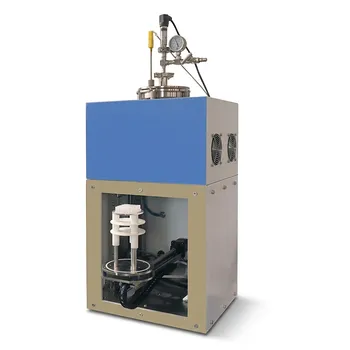
Rapid Thermal Processing RTP Atmosphere Controlled Bottom Loading Furnace 1100C High Throughput 50C per Second Heating Rate