Why is an external graphite crucible required when conducting experiments in a high-temperature tube furnace? Key Roles
Updated 3 months ago
The requirement for an external graphite crucible is driven primarily by its role as a sacrificial deoxidizer. In high-temperature tube furnaces, typically operating around 1723 K, the graphite reacts preferentially with any residual oxygen remaining in the system. This chemical intervention creates and maintains the reducing atmosphere necessary to prevent the oxidation and loss of sensitive reaction materials, such as carbon sources in slag studies.
An external graphite crucible acts as a chemical and thermal buffer that protects the integrity of the experiment. It ensures a stable reducing environment while providing the high thermal conductivity required for uniform heating and sample purity.
Controlling the Reaction Atmosphere
The Role of Sacrificial Deoxidation
In high-temperature environments, even trace amounts of residual oxygen can compromise experimental results. The external graphite crucible serves as a sacrificial barrier, reacting with oxygen before it can reach the primary reaction zone.
Maintaining Carbon-Oxygen Balance
For specific syntheses, such as producing Ti3O5 from rutile TiO2, a precise carbon-oxygen balance is mandatory. The graphite crucible helps maintain a CO-rich reducing atmosphere, ensuring the material follows the correct path on the binary phase diagram.
Physical Shielding and Gas Retention
When used with a lid, the crucible creates a localized oxygen-limited environment that prevents the complete combustion of biomass. This setup also helps retain decomposition gases, which can assist in processes like pore formation or heteroatom doping in biochar.
Enhancing Thermal Dynamics and Efficiency
Superior Heat Distribution
Graphite is selected for its exceptional thermal conductivity and stability against thermal shock. These properties allow the crucible to transfer heat from the furnace elements to the sample rapidly and uniformly, preventing localized hot spots.
Function as an Induction Susceptor
In high-frequency induction furnaces, the graphite crucible acts as a susceptor due to its excellent electrical conductivity. It absorbs electromagnetic energy and converts it into heat, providing the ultra-high temperature field necessary for reducing metal oxides.
Structural Reorganization at Ultra-High Temperatures
At temperatures reaching 2800°C, the stable heat provided by graphite crucibles drives the structural rearrangement of carbon atoms. This is critical for processes like graphitization, where organic macromolecules are transformed into ordered, layered structures.
Preserving Sample Purity and Integrity
Chemical Inertness with Molten Metals
Graphite maintains high-temperature chemical stability, making it an ideal vessel for melting aluminum, bismuth, or copper alloys. It does not react with these specific molten metals, ensuring the sample remains free from crucible-derived contamination.
Prevention of Metallic Impurities
The use of high-purity graphite prevents the infiltration of metallic impurities into the melt. This is vital for thermal processing where the objective is to maintain the strict chemical purity of the final alloy or compound.
Understanding the Trade-offs
Sacrificial Consumption and Longevity
Because the crucible acts as a sacrificial deoxidizer, it is consumed over time through oxidation. Researchers must monitor the structural integrity of the crucible, as its wall thickness will decrease with repeated exposure to residual oxygen at high temperatures.
Carbon Pickup Risks
While graphite is inert to many metals, it can lead to unintentional carbon pickup in materials with a high affinity for carbon. In such cases, the benefit of the reducing atmosphere must be weighed against the risk of altering the sample's chemical composition.
Porosity and Gas Permeability
Graphite is naturally porous, which can lead to the absorption of certain vapors or fluxes. If not managed, this porosity can result in cross-contamination between different experimental runs if the same external crucible is reused.
How to Apply This to Your Project
Making the Right Choice for Your Goal
- If your primary focus is preventing sample oxidation: Utilize a high-purity external graphite crucible to act as a sacrificial deoxidizer and maintain a reducing environment.
- If your primary focus is induction heating efficiency: Ensure the graphite crucible is sized correctly to act as an effective susceptor for the electromagnetic field.
- If your primary focus is material purity in metal melts: Verify that the specific alloy being processed does not have a high chemical affinity for carbon to avoid contamination.
- If your primary focus is localized atmosphere control: Use a lidded graphite configuration to trap reaction gases and exclude oxygen without requiring a vacuum.
By strategically using a graphite crucible, you can transform a standard furnace environment into a precision-controlled reaction chamber tailored for high-temperature stability.
Summary Table:
| Function | Key Benefit | Ideal Application |
|---|---|---|
| Sacrificial Deoxidizer | Prevents sample oxidation | Slag studies, Biochar |
| Thermal Susceptor | High-efficiency heat conversion | Induction furnaces |
| Atmosphere Control | Maintains reducing environment | Metal oxide reduction |
| Thermal Buffer | Ensures uniform heat distribution | Material synthesis |
Elevate Your Research with THERMUNITS
As a leading manufacturer of high-temperature laboratory equipment for material science and industrial R&D, THERMUNITS provides the precision tools you need for success. Whether you require Tube, Muffle, Vacuum, or Rotary furnaces, or advanced CVD/PECVD systems, our equipment is designed for stability and performance.
Optimize your thermal processing today:
- Expert Solutions: Custom thermal elements and furnaces tailored to your specific research needs.
- Broad Range: From Dental Furnaces to Vacuum Induction Melting (VIM) furnaces and electric rotary kilns.
- Proven Quality: Trusted by R&D professionals for high-purity heat treatment.
Contact THERMUNITS Today to Request a Quote
References
- Qiuju Li, Bowen Han. Dissolution of Carbon-Containing Species in CaO–SiO<sub>2</sub>–Al<sub>2</sub>O<sub>3</sub> Slag. DOI: 10.2355/isijinternational.isijint-2023-353
Mentioned Products
- Vertical Crucible Furnace 1000C High Temperature Laboratory Equipment 4.7 Inch Diameter Chamber SS316 Anti Corrosive Enclosure
- High Temperature Vertical Crucible Furnace with 22L Heating Chamber and 1200C Maximum Temperature
- 600°C Vertical Crucible Furnace with SS316 Alloy Reactor and 6 Port Vacuum Flange
- Compact Crucible Melting Furnace 1100C Programmable Temperature Controller Metal Sintering Equipment
- 1100C Crucible Melting Furnace with Stirring Function for Glovebox and Air Sensitive Alloy Research
People Also Ask
- What is the function of a high-temperature laboratory furnace in the synthesis of Crystalline Carbon Nitride (PTI)?
- How Lab Furnaces Simulate Industrial Conditions for CPCM Stability: Optimize Your Thermal Cycling R&D
- Why is a low initial heating rate of 1 °C/min required for Rh–WNO precursors? Ensuring Structural Integrity & Dispersion
- Why is a laboratory furnace with ultra-high heating rate capabilities necessary for simulating coal injection processes?
- What is the objective of performing long-term annealing at 653 K on quenched PbTe-Ag2Te? Drive Ostwald Ripening.

Tech Team · ThermUnits
Last updated on Jun 03, 2026
Related Products
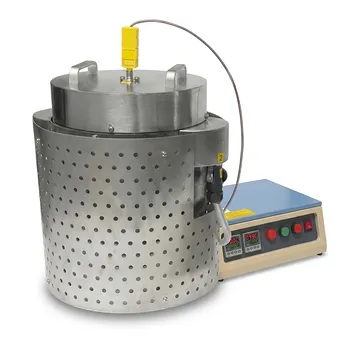
Vertical Crucible Furnace 1000C High Temperature Laboratory Equipment 4.7 Inch Diameter Chamber SS316 Anti Corrosive Enclosure
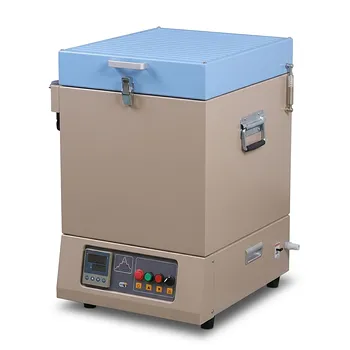
High Temperature Vertical Crucible Furnace with 22L Heating Chamber and 1200C Maximum Temperature
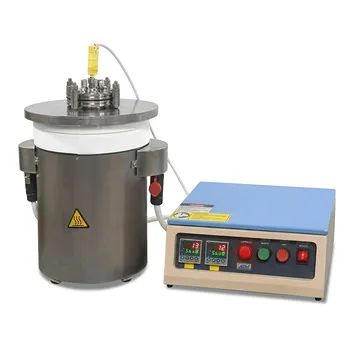
600°C Vertical Crucible Furnace with SS316 Alloy Reactor and 6 Port Vacuum Flange
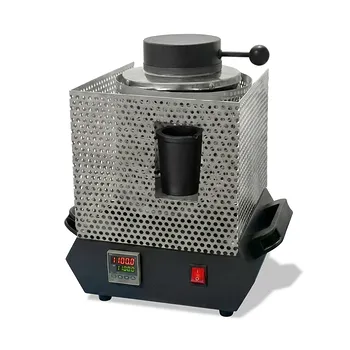
Compact Crucible Melting Furnace 1100C Programmable Temperature Controller Metal Sintering Equipment
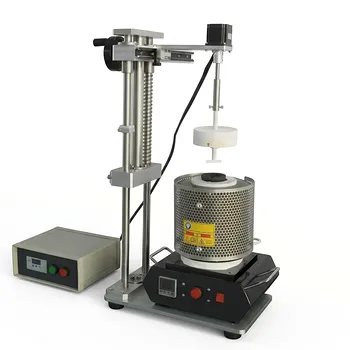
1100C Crucible Melting Furnace with Stirring Function for Glovebox and Air Sensitive Alloy Research
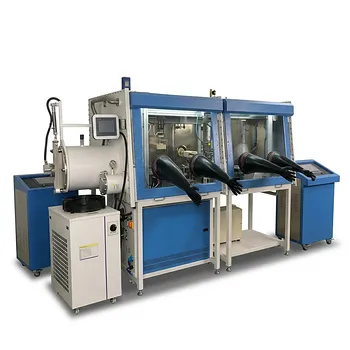
Automatic 10 Crucible Induction Melting and Casting System with Stirring Function and Glovebox Integration 2000C
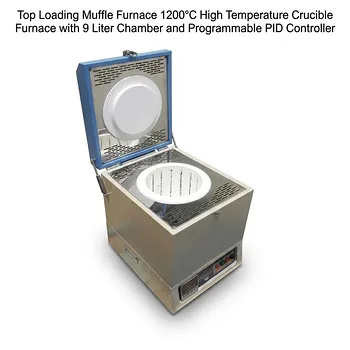
Top Loading Muffle Furnace 1200°C High Temperature Crucible Furnace with 9 Liter Chamber and Programmable PID Controller
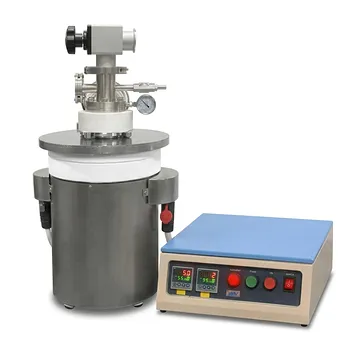
1100C High Temperature Vacuum Crucible Furnace with Quartz Chamber for Thermal Processing and Sintering
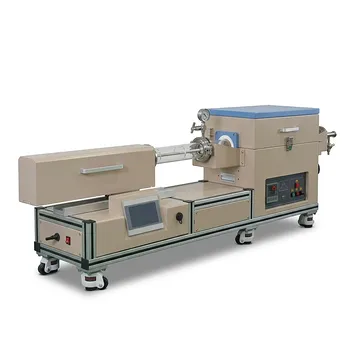
1200C Sliding Internal Crucible Tube Furnace for Controlled Atmosphere Thin Film Deposition and Material Sublimation Research
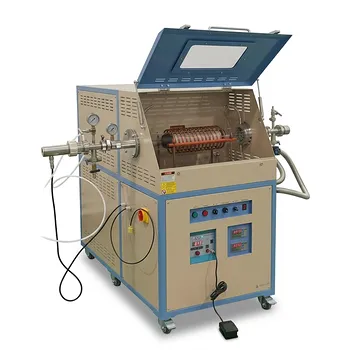
Ultra High Temperature 2300C Induction Heated Graphite Tube Furnace with Infrared Control